- Exhibit by Matteo Perrone and Nicholas Dole
This exhibit showcases the early history of Italian laborers in California. This site is divided into two major parts. The first includes pages about the types of industries the majority of these laborers would work for, and the other is about the McCloud Lumber Mill strike in 1909 as an example of Italian labor activism.
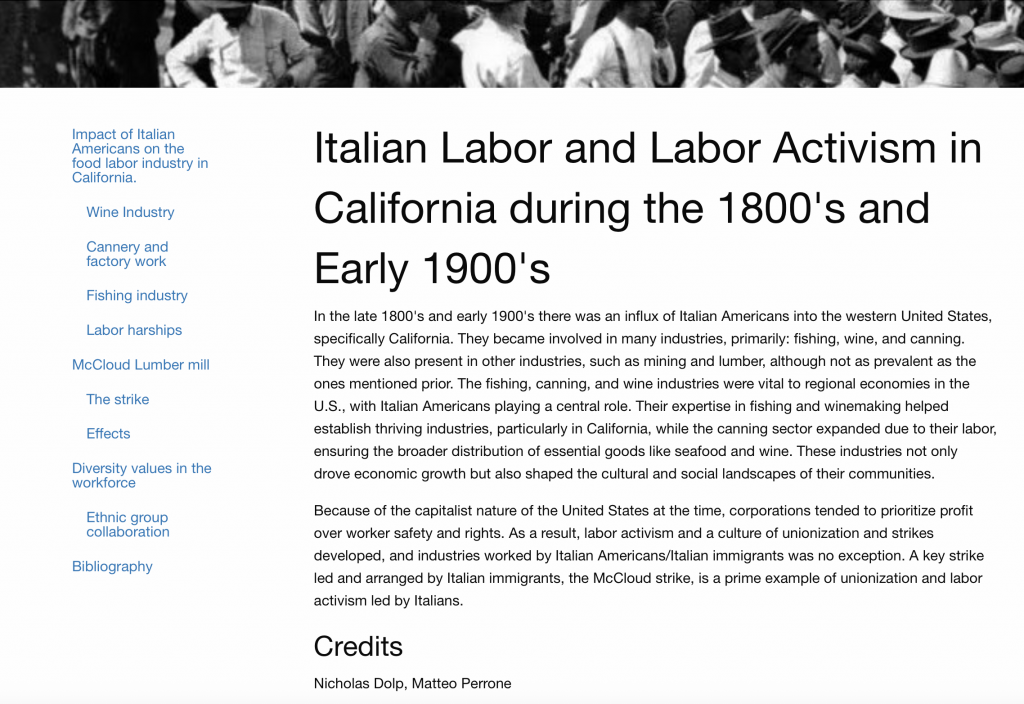
Below are sample pages by the authors of the exhibit.
Fishing Industry
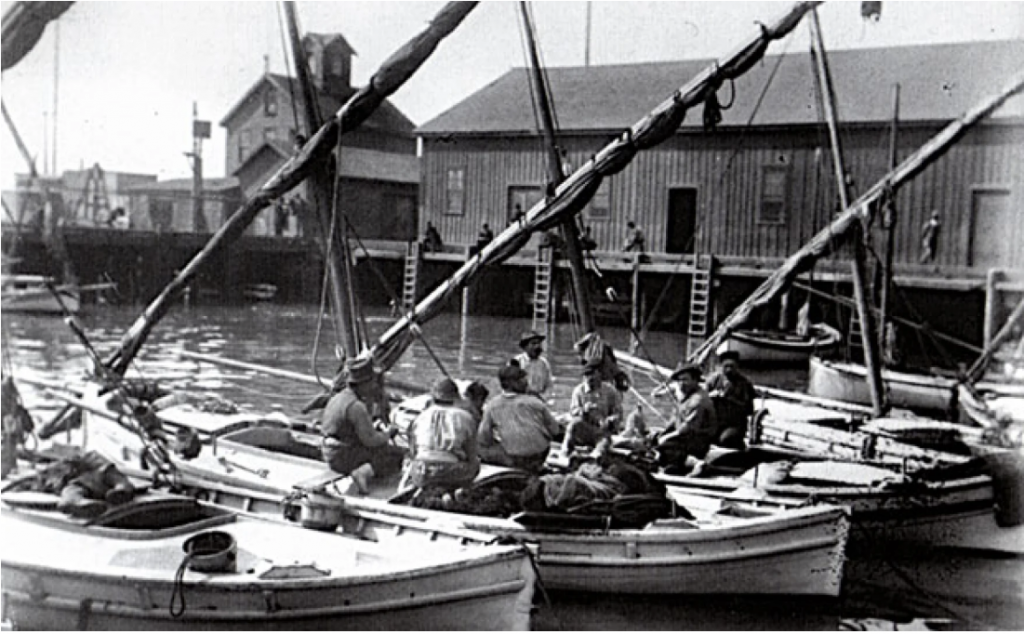
Italian American fishermen were particularly influential in the sardine industry, which became a cornerstone of California’s coastal economy. Monterey, known as the “Sardine Capital of the World,” was home to many Italian-owned fishing boats. They worked long, grueling hours on the water, using their knowledge of the sea to maximize catches. These efforts supplied the ever-growing canning industry, providing jobs for entire communities and driving economic growth.
Beyond sardines, Italian American fishermen also harvested other valuable seafood like anchovies, squid, and tuna. Their skills and family-owned businesses allowed them to control larger portions of the supply chain, from catching to processing and distributing seafood.
In areas like San Francisco and Monterey, Italian American fishermen played a critical role. They organized efforts to improve fishing regulations and working conditions, establishing cooperatives and associations to represent their interests and resist exploitative practices from large canneries and seafood companies. Fishing was something Italian Americans were used to as it was a labor practice that resembled life back home. “When you are a fisherman, it’s in your blood. You have to fish. You have to follow the fish. You have to be at sea. It’s a way of life. That’s what I used to tell the children when they would complain about [their father] being gone so much. ‘This is our way of life,’ I would tell them.”— The words of Catherine Cardinale one of the women McKibben interviewed with Catherine Cardinale, September 7, 1999* (McKibben, [Page 13]).
The dominance of Italian Americans in the fishing industry not only strengthened California’s economy but also shaped the cultural identity of coastal communities. Traditions such as the Blessing of the Fleet and the preservation of seafood recipes ensured that their heritage remained a part of California’s coastal culture. Despite challenges like overfishing and environmental changes, their legacy remains.
Student Author
Matteo Perrone
The Workers Strike
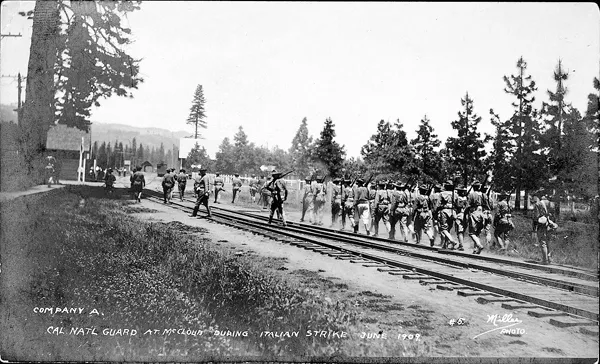
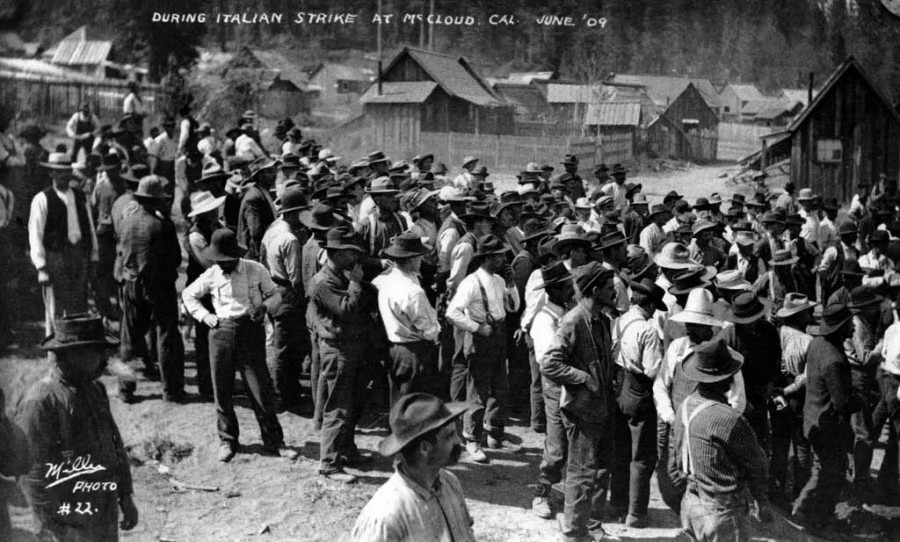
Labor activism during the late 19th and early 20th century was an ever-increasing topic of discussion among the working class in the U.S. A key Italian-led labor movement during this time period was the McCloud lumber strike, as prefaced on the previous slide. In summary, the grievances listed by the Italian workers were long hours, abysmal pay, and constant discrimination within the town and while working. On May 27th, 1909, the Italians struck. The number of strikers is estimated at around 500–700 Italians. There was no union, no contract; the agreement to strike was initially held only by Italians because of their heritage (The McCloud Strike). The Italian workers seized the lumber mill, and when deputies arrived, they threatened to destroy the mill. The Italian strikers then marched to the nearby town, cutting down telephone wires, shutting down the power plant, and convincing other people in the town such as mechanics and store owners to join them in their strike. Newspapers reported on this event, and some claimed that they had seized a powder house, giving them access to explosives and possibly firearms. While this was later disproved, it spurred the National Guard to step in, as shown in the first photograph. This created pressure on the strikers and put them in an uncertain position, as the National Guard forcefully demanded the arrest of the strike’s leaders. Along with the National Guard, the Italian Consul in San Francisco dispatched S. L. Rocca and Ambrose Gherini to hopefully subdue the situation and come to an amicable agreement (Consul Leaves). The pressure from the National Guard and subsequent arrests of the strike organizers led to a less-than-desired end to the strike for the Italian workers. On June 8th, the strike fell. The Italian workers lost their jobs; however, they received fair evaluations for their cabins, seen behind the workers in the second photo, allowing them to escape from McCloud and the unethical, predatory, and dangerous hand of the McCloud River Lumber Company.
Student Author
Nicholas Dolp
Pingback: The Italian American Experience – Online Exhibits of Italian American History in the Bay Area – Italian Studies