
- Exhibit by Sophia Sordello, Faith Fitzpatrick, and Anna Edwards
This exhibit explores the impact of food on Italian American culture in California. This can be seen in agricultural practices, food writing, and consumer shops and restaurants. For example, the popularity of Valley Fair’s Eataly restaurant and store.
The exhibit explores Eataly as well as the agricultural practices of growing apricots in the Santa Clara Valley and an interview with author Luisa Giulianetti on her book Agrodolce. This is a unique exhibit that contains a full audio recording of the interview, and it can be listened to directly on the page.

Below are samples from the pages in the exhibit, including the audio clips from the interview with Luisa Giulianetti.
Luisa Giulianetti’s “Agrodolce”

Luisa Giulianetti, author of the collection of poems entitled Agrodolce, has lived in the Bay Area her entire life and often refers to her nonna’s kitchen as being her first classroom (pg. 77)*. Giulianetti demonstrates her connection to her Italian roots and what it means to her to be Italian American clearly throughout the collection of poems. Consistent with the title, which translates to “bitter-sweet” or “sour-sweet,” Giulianetti’s poems cover ideas ranging from the feeling of cultural connectedness that traditional food preparations can bring to grieving for one’s homeland and loved ones. Giulianetti’s poems greatly encapsulate the centrality of food in Italian culture not only through the growing and preparation of food but also through the meaning of food to many Italian Americans as an expression of love. In an interview, Giulianetti attributes this centrality to how Italy was formed as a nation through the Risorgimento and the continued existence of regional pride even after Italy became a country. This regionalism traveled with Italian immigrants to the United States, where she states that “food became a way to preserve traditions from home” and a method of maintaining that regional sense of pride.
Furthermore, food being a way to express love in Italian American culture is greatly demonstrated in Agrodolce, largely through the first poem in the collection, entitled “Kneading,” which focuses on Giulianetti’s memories of making bread with her nonna. However, Giulianetti also makes it clear that for her nonna, and for many other first-generation Italian Americans, food was not only an act of love but also an act of survival. In the essay entitled “Red, White, and Boiled,” Giulianetti states that for her nonna, “cooking for, and sharing food with her family was an act of love. A testament to survival” (pg. 77). In this essay, Giulianetti describes the hardships her nonna has faced in her life, such as losing three children before having Giulianetti’s mom and uncle, and losing her husband shortly after leaving her homeland of Sicily behind. She shares that her nonna was almost obsessive over her and the rest of her family while she was growing up, as if cooking for her acted as “a way to literally and symbolically nourish us … and stay connected to the land she regrets leaving.” This recollection of her nonna’s experience demonstrates the struggles many Italian immigrants faced after leaving Italy—between personal hardship, assimilating in a new country, and trying to re-create home to cope with the difficulties of the immigrant experience.
This experience of grieving for one’s homeland is further highlighted through Giulianetti’s poem entitled “Pasta con Finocchietto,” which discusses her nonna’s preparation of a traditional Italian dish to honor her homeland (pgs. 54–55). In the poem, Giulianetti mentions that “finocchietti are wild . . . they shoot up in empty lots, fields, cracks in the road” (pg. 54). This can be interpreted as an homage to the Italian immigrant experience of taking up “less noticeable” spaces and job positions, such as through fishing, working in canneries, cleaning up garbage, or selling fruit, as many Italian immigrants in California took on. Later in the poem, Giulianetti states:
“displacement lives on fingertips tipped by knife cuts. On the unsated tongue. Even after thirty years and three cities, the body knows what it knows. What it lacks: Mount Etna silting stems. The Mediterranean brining her (her nonna’s) mouth” (Agrodolce, p. 55).
The poem’s message of grieving Italy and her nonna’s attempts to remain in touch with her Sicilian roots through food is beautifully demonstrated and is a testament to the power food writing can hold in sharing the deeper meaning of food preparations and the memories they represent.
Student Author
Faith Fitzpatrick
Italian Americans Working in the Fields
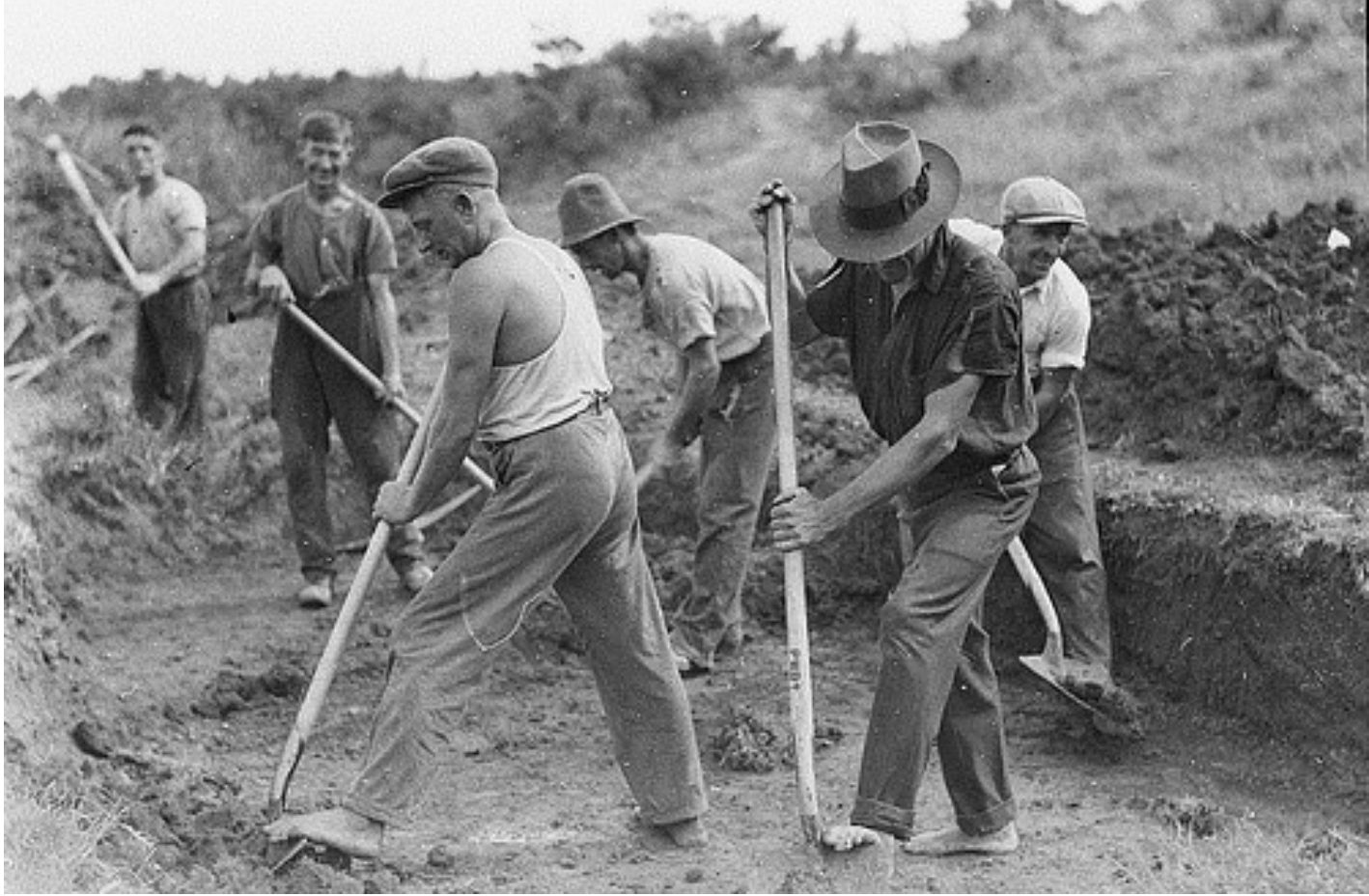
In the 1890s, many Italian American immigrants lived in California not only because of the gold rush, but also because of the news spreading that Italian immigrants flourished there due to their contributions to the agricultural industry. While many became fishermen, others went to the valleys to grow fruits (Found SF). As stated by Found SF in their publication on the San Francisco Fisherman’s Wharf website, Italian crop farmers produced goods in such abundance that, altogether, their crops were worth nineteen million dollars.
While Italian Americans also struggled—as most came to America with nothing in their pockets—many felt at home because of their family and the paesani, the Italian immigrants they met and worked with who shared their values. Jobs in America were hard to find for Italian immigrants, so they worked whatever jobs they could find in order to support their families. “Men dug ditches, mined coal and ore, worked the farm or hauled heavy hod containers up ladders. Women also worked long hours, in textile sweatshops, as domestics, or as a family, on farms” (Traficante). Although Italians brought a lot of good work to the agricultural and fishing industries, many still faced hardships as immigrants. It was stated that the Italian Americans working in the fields experienced threats and acts of discrimination, “and even witnessed their brethren dangle by the neck at the end of ropes” (Traficante). Even though their work in the orchards was praised—as they brought great agricultural skills from Italy—they still faced hardships like those in the East. Despite the acts of discrimination they faced even while working in the fields, Italian Americans remained determined and resilient people, continuing to work through these difficulties in hopes of being able to live the American Dream (Traficante). Their hard work and resilience led many to become very successful and able to support their families as needed.
Student Author
Sophia Sordello
The Impact of Eataly

Eataly has aimed to emphasize the desire to create a sense of community by prioritizing human connection when customers enter the stores. On top of that, the final touches in all Eataly locations help to enhance the feeling of being in Italy, and many claim that you can visit Italy without leaving America simply by going to Eataly. It is also clear that everything you could want can be found there. The recently opened Eataly at Westfield Valley Fair near Santa Clara spans multiple floors and is over 45,000 square feet. It contains three restaurants, a to-go counter, and a marketplace that fulfills every shopping list. It is a very immersive experience, as customers are able to explore different floors and shop as if they were walking the streets of Italy. One floor includes a wine section that resembles a museum of Italian wines, organized by region. There are also spaces where customers can enjoy traditional Italian coffee while wandering through the store.
Additionally, as part of Oscar Farinetti’s vision to help educate people about food, Eataly offers a wide range of classes, such as pasta-making and cocktail-making. Even the final decorative touches—such as the displays and layout—are designed to replicate what one might see in Italy. For example, there are many plants and minimal packaging on items like fruits and vegetables. All of these features have been introduced with the goal of creating a community rooted in Italian food culture (Singer).
Eataly also emphasizes the farm-to-table aspect of its stores, claiming to directly connect producers to consumers. This resonates with many Italian American families, who were used to growing their own food and knowing exactly where it came from. Even after immigrating to America, many Italians began planting their own vegetables, as they appreciated having locally grown food without chemicals, which tasted fresher and resembled the food they had in Italy. Additionally, there was a significant Italian presence in agriculture in the Santa Clara Valley, which was once known as the Valley of Heart’s Delight. This is highlighted in the “Growing Apricots in the Santa Clara Valley” section of the exhibit, where Sophia Sordello reflects on her family’s role in the region’s apricot-growing history.
To grow some of Eataly’s produce locally, the company capitalizes on this agricultural legacy—bridging local history and global markets by offering these products in their stores. Before opening the first location, Oscar Farinetti conducted extensive research by traveling across all twenty regions of Italy to identify and source high-quality items that align with Eataly’s founding principles of “good, clean, and fair” food (“Our Story”). This alignment with Italian American values has helped make Eataly the hugely popular and dominant Italian store in America.
Student Author
Anna Edwards