- Exhibit by: Joey Pandit, Liv Vaughan, Nick Pecora, Simon Gold, Taliya Peiris

Dorothy Bryant & Interview with Family
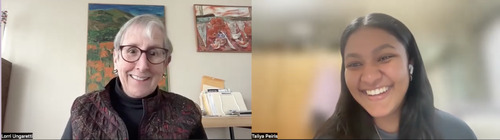
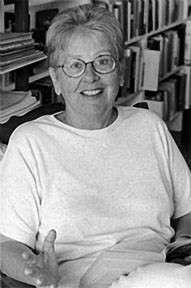
One of the most prominent and influential writers to come from the Bay Area Italian American literary scene is Dorothy Bryant. A native of the Bay Area and the daughter of Italian immigrants, Bryant’s works—which include a wide array of novels and plays—reflect the intersectionality of her Italian American identity and her engagement with broader social justice issues. Her exploration of familial relationships and the pursuit of identity resonates with readers, offering a nuanced portrayal of the Italian American experience. Through Bryant’s lens, readers are invited to reflect on their own lives, relationships, and the broader human condition, while still connecting with themes rooted in Italian heritage. Her narratives transcend the limitations of a specific cultural context, making her themes universally relatable while preserving the distinctiveness of the Italian American experience. Bryant sadly passed away in 2017, but her legacy lives on through the preservation of her works by her daughter, Lorri Ungaretti. I had the privilege of speaking with Ungaretti, who graciously provided me with insight into Bryant’s life, the work she created, and how her upbringing as a first-generation immigrant shaped her into the outspoken and driven writer and educator she was.
Bryant’s parents, grandparents, and great-grandparents were all born in a small village in Northwest Italy called Balangero, but all immigrated to Silicon Valley at various points throughout the late 1800s and early 1900s. Bryant and her sister were born in America. According to Ungaretti, Bryant did not necessarily embrace her Italian heritage until later in life: “It’s very interesting because my mother’s parents came [to the U.S.] when they were children and raised their children to be American. … My grandparents didn’t have them speak Italian at home; they were kids when they came so they learned English … It wasn’t until my mother was in her 50s, that she decided to go meet the relatives in Italy and she had to take an Italian class because she didn’t speak” (Ungaretti).
Regardless of her later connection to Italian culture, Bryant credited her unique upbringing with shaping her literary aptitude and her outspokenness on social justice issues that were prevalent in the Bay Area at the time—especially women’s rights, racial injustice and segregation, and LGBTQ+ inclusion. Ungaretti recalls: “She wrote about discovering the [mission branch of the San Francisco Public] library, and that is one memory [I have of her], and that isn’t an Italian thing. She loved books, she loved to read, and when she discovered [the library] it was heaven for her…. I can tell you much more about who she was as a woman.… She never communicated [about facing social injustice] with an Italian background, as the mission was primarily Italian and Irish and so that was all around her, but the gender where she did [face injustice]. She was a feminist long before anyone ever thought about those terms, so some of what she wrote down was far ahead of her time and did many things that were extraordinary for that time period” (Ungaretti).
Bryant used her experiences as a woman during a time when sexism was widespread to show empathy for others, fight for the rights of minority groups, and contribute to a more inclusive society.
References
Bryant, Dorothy. “Dorothy Bryant.” Contemporary Authors Autobiographical Series, vol. 26, Gale Research Inc, 1997, pp. 47–63. Contemporary Authors Autobiography Series.
Bryant, Dorothy. Miss Giardino. The Feminist Press at the City University of New York, 1997.
Bryant, Dorothy. “This Quiet Hall.” Lorri Ungaretti.
Ferraro, Eveljn. Place and transmemory in California Italian American literary narratives: Dorothy Bryant’s Miss Giardino. Forum Italicum, 2023, https://doi.org/10.1177/00145858231172780
Marazzi, Martino. “Part I. Changing Culture: Chapter 2 Changing Culture – European Immigrants and New York City Literature, 1870–1940.” Through the Periscope: Changing Culture, Italian America, 1st ed., State University of New York Press, 2022, pp. 31–44. SUNY Series in Italian/American Culture Series.
Martone, Eric. “Part IV. Science and Humanities – Contributions to Science, Literature, and the Arts: Literature, Italian American.” Italian Americans: The History and Culture of a People, 1st ed., Bloomsbury Publishing USA, 2016, pp. 243–248.
Ungaretti, Lorri. “Biography.” Dorothy Bryant, Jimdo, www.dorothybryant.com/biography/
Ungaretti, Lorri. Personal interview. 6 March 2024.
Student Authors
Taliya Peiris
The Biography of Gino Sbrana
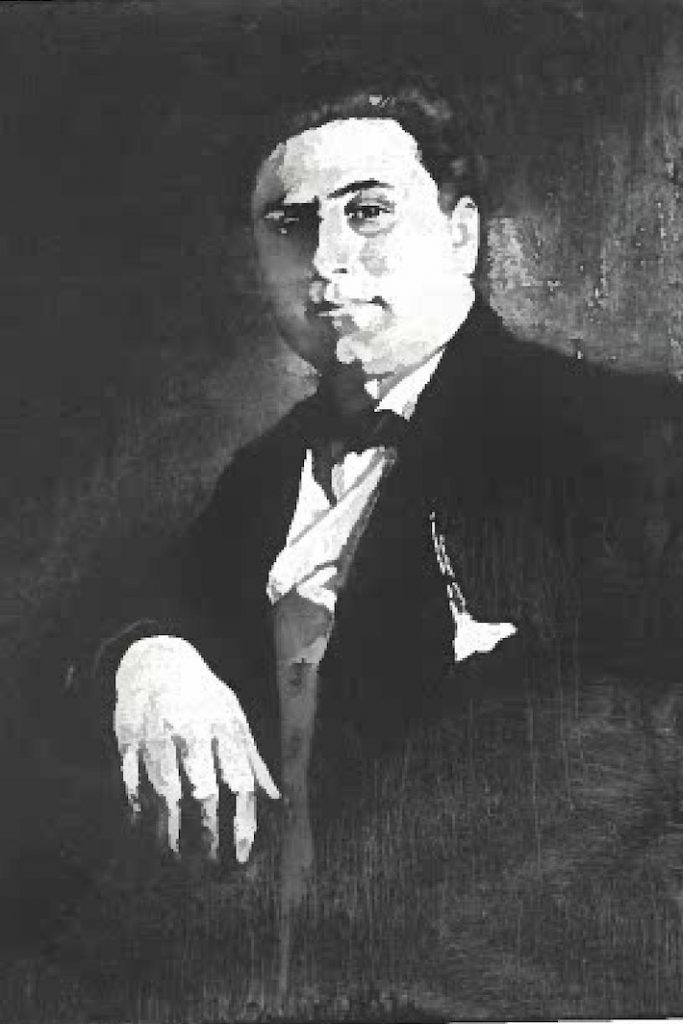
In about 1910, Gino Sbrana made his first foray into the field that would immortalize him in Bay Area history: photography. That year, Sbrana and his brother Carlo opened Pisa Photo, a photography studio at the intersection of Columbus and Broadway in San Francisco’s North Beach neighborhood. During their lifetimes, Carlo was the better-known of the two Sbrana brothers. Carlo served as the director of the drawing department at Santa Clara University—then known as the University of Santa Clara—beginning in about 1905, and frequently offered drawing lessons to the broader community (Drawing; Italiae Polytechnicum). By September of 1913, The San Francisco Examiner referred to Carlo as a “former drawing instructor,” suggesting that his time on the SCU faculty had come to an end (“Threatening” 5). Carlo was last mentioned in L’Italia in 1914, and it is unclear what happened to him after his time at Santa Clara University. It’s also worth noting that Gino’s work only became widely known after his death, at which point his relative popularity exceeded that of his brother.
While Carlo was frequently mentioned in L’Italia, both in advertisements and in articles, Gino remained fairly anonymous, even in the Italian newspaper. Gino’s name appears only four times in L’Italia, and never in reference to his photography. He is twice mentioned (six days apart) as being part of a physical brawl (“Rissa” 5; “Assolti” 5). He is mentioned again as having contributed 25 cents to the repatriation fund for an ill member of the community (“Pel” 5). His last mention in the paper, in 1908, places him on the guest list for a 25th wedding anniversary party (“Nozze” 8).
In 1913, Gino and his new wife made their way to the East Bay, where he opened a photography studio in Oakland. He and his family remained there until 1918, when they moved to San Jose. There, he opened a studio on the property of his family home on Locust Street. This served as Sbrana’s final studio, and his photos were discovered beneath this location in the mid-20th century following his death. After a 20-year retirement forced by injuries sustained in a car wreck, Sbrana died in 1947. He was buried in Santa Clara Mission Cemetery, less than a mile from Santa Clara University, where his brother had served for at least a decade as a celebrated professor of drawing.
References
“Assolti.” L’Italia, 20 Aug. 1902, p. 5.
Bowden Jr., Carlos. Italians of the Bay Area: The Photographs of Gino Sbrana. Arcadia, 2006.
Drawing advertisement. L’Italia, 31 Aug. 1913, p. 31.
Italiae Polytechnicum advertisement. L’Italia, 11 Aug. 1913, p. 2.
“Italian Festa.” The San Francisco Examiner, Oct. 4 1992, p. 207.
Laurino, Maria. The Italian Americans: A History. Available from: Yuzu, W. W. Norton, 2014.
Masullo, Robert A. “Immigrant Images.” The Sacramento Bee, 9 Apr. 1989, p. 50.
“Nozze d’Argento.” L’Italia, 31 Dec. 1908, p. 8.
“Pel Rimpatrio di un Connazionale.” L’Italia, 20 Oct. 1902, p. 5.
“Rissa Fra Italiani.” L’Italia, 14 Aug. 1902, p. 5.
“Threatening Letter Sent to Judge Troutt.” The San Francisco Examiner, 1913 Sept. 20, p. 5.
Student Authors
Nick Pecora