- Exhibit by: Mia Locatelli
This online exhibit is unique in that is was completed as part of an independent study course rather than through ITAL 185. It was worked on by Mia Locatelli (’24), and is about the history of Italian and Italian American identity in her native town of Santa Cruz.
The project spans between WWII to the present day, and is told by the experiences of family relatives and other Italian American natives of Santa Cruz, including author Ivano Franco Comelli. Below are sample pages from the exhibit, showcasing the effect of WWII on the community and the stories of Mia’s family.
To view the full content of the exhibit, click on the link above. The titles of the tabs also link to the page where the excerpts are from.
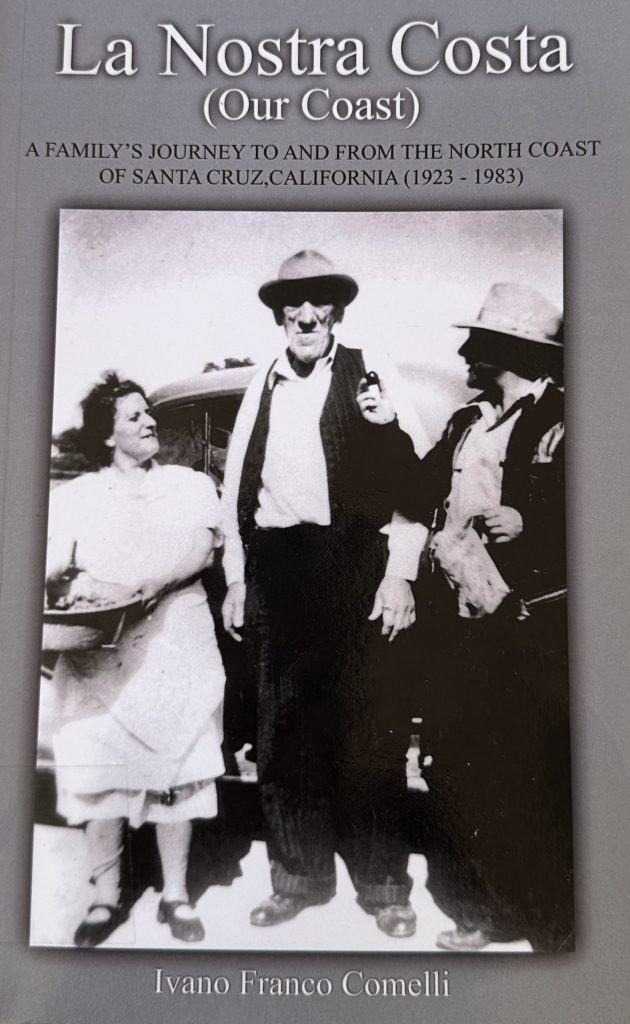
On March 1, 2024, I conducted an interview with author of the novel, La Nostra Costa (Our Coast): A Family’s Journey to and From the North Coast of Santa Cruz, California (1923-1983), Ivan(o) Franco Comelli, a second generation Italian American born and raised in Santa Cruz, California, during which he spoke of his and his family’s experiences on the North Coast of Santa Cruz during World War II.
…
According to Comelli, the North Coast at this time was almost strictly Italian, though, there were few Swiss immigrants, as well as some Greek immigrants. He grew up thinking that the coast was primarily for Italians, which is the reason why he named his book “La Nostra Costa.”
…
During the interview, Comelli recalls life on the coast as a child. He states, “One thing you’ll never forget about the Coast is the wind and the smell of letame [manure].” He continues, stating, “The old Italians, the first thing they wanted to do was get off of the coast. They hated the coast; they worked there, it was their living, but they didn’t like the wind, and they didn’t like the cement dust, which was really demoralizing. The first thing they wanted to do was to get a new car because it was a symbol of status, and proof of a good year on the ranch. In about 1948 or ‘49 things started getting better on the ranches, so most of them got new cars. We got a brand new 1949 Chevrolet, and boy, were we proud of that! The second thing they wanted to do was get a house in Santa Cruz, to get off the coast. That’s what we did in 1954.” Italian Americans would then commute to work on their ranches from Santa Cruz.
…
Comelli addressed the enemy alien proclamations established by Roosevelt during wartime, stating, “In 1942 when Benito Mussolini made a declaration of war and joined the Nazis, we were deemed enemy aliens–we weren’t friendly aliens anymore, we were enemy aliens.”
He continues, describing the experiences of his family, stating, “They divided the coast into restricted and unrestricted zones, using the white line of Highway 1 as the divide. Everyone on the East side of that road was okay, but if you lived on the West side, closest to the ocean, that was a restricted area and you couldn’t go there. The majority of the Gulch Ranch was across the road, on the West side near the ocean, and my father couldn’t work that, so there was very little for him to do on the Ranch. So, he had to get another job at the Salz Tannery in Santa Cruz for about six months.”
…
“This time was scary, and from that experience of being considered enemy aliens, my parents said, ‘Never again.’ In fact, they both became American citizens–my father, during the War in 1944 became an American citizen, and my mother shortly after, in 1945 or ‘46. They weren’t gonna go through that again. It was a scary situation.”
…
Comelli concluded our interview by reflecting on life for his family following these proclamations and resulting circumstances, stating, “Other than that, they put this experience behind them. They saw an opportunity after the war that things were getting better on the coast, and they could make a better living for their kids, and they put that behind them. They went on.”
Student Author
Mia Locatelli
…
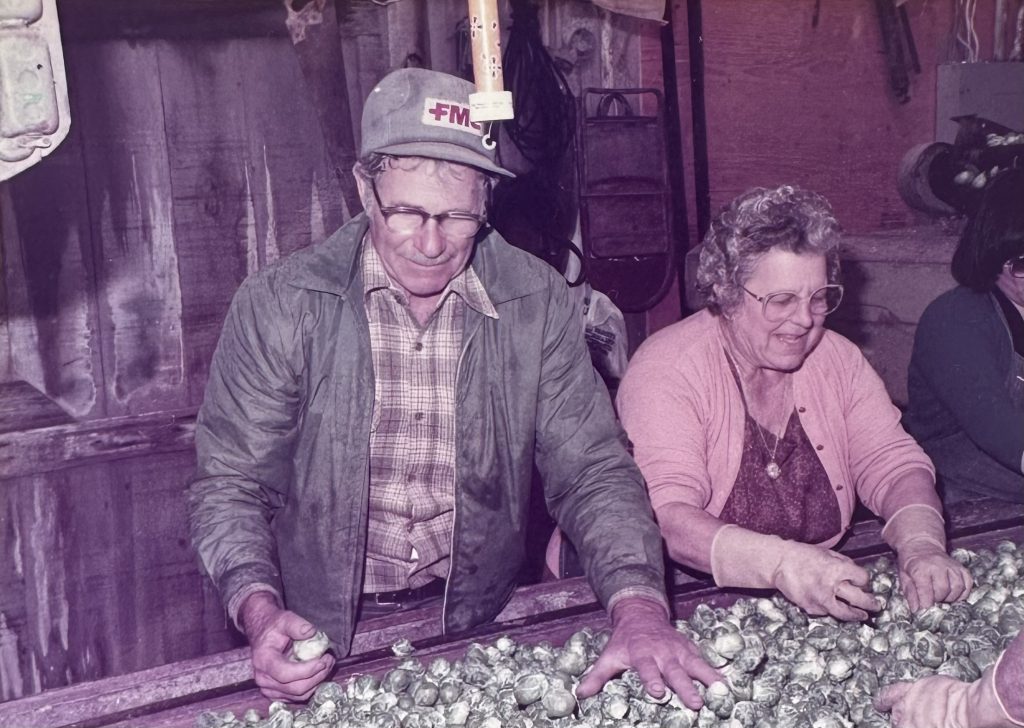
In an interview conducted in 2005 of my Nonno [grandfather], Giovanni (John) Colombini, and my great uncle, Zio Osvaldo (Jimmy) Colombini, they briefly illustrate their personal immigration experiences from Italy to America. Additionally, they discuss their lives once they settled in America, their experiences in World War II, and their life after war’s end.
John immigrated to the United States through Ellis Island in 1936, as did Jimmy in 1938. Once in America, each brother completed their journey by train to San Francisco where they later found work. In San Francisco, John first worked for Petri Wine Company. When Jimmy first found a job in San Francisco, he worked as a manufacturer/salesperson at Lucca Ravioli. Just as Laurino introduces the notion of repatriation, John and Jimmy sent portions of the money they made to their parents and family in Italy. As children growing up in Italy, they realized their family faced many hardships. While their parents did their best to provide for their three children, they made little money, especially when my great-grandfather left to fight in World War I. The ideal of the American Dream and the goal of achieving a more prosperous life encouraged these two brothers to leave their home country and their family for a chance at success.
…
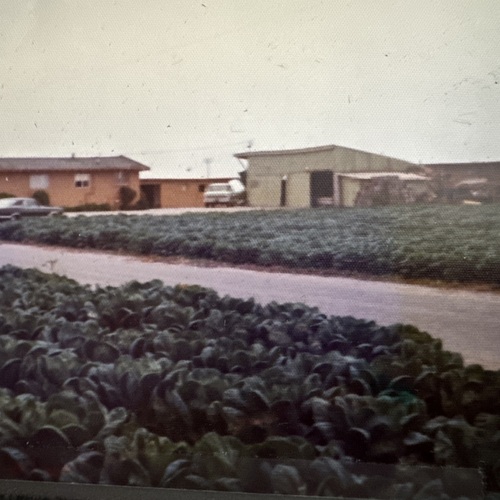
The same Highway in which was used as the restricting line for Enemy Aliens in earlier years, during World War, can be seen.
My mother continued to share memories of her father’s daily life, “Mio padre era molto contento quando ogni mattina incontrava gli altri immigranti italiani. Tutti parlavano delle loro esperienze, dando gli altri idee, consigli, o nomi di persone che potevano aiutare nelle cose quotidiane. I miei genitori erano membri di molti club Italo-Americani dove erano invitati, dove potevano sentirsi ad agio, e dove tenevano la nostalgia dell’Italia.” (“My father was very happy every morning when he met with other Italian immigrants. They all spoke of their experiences, giving one another ideas, advice, or names of people who could help with their daily needs. My parents were members of many Italian American clubs where they were invited, where they were welcomed and comfortable, and where they had nostalgia for Italy.”) My mom recalled my Nonna’s desire and proposal to go on a cruise with her husband, but my Nonno invariably responded by saying, “sono andato in due crociere: la prima-quando sono venuto in America, e la seconda-quando sono andato in Giappone per la guerra. Basta!” (“I went on two cruises: the first-when I came to America, and the second-when I went to Japan for the war. Enough!”)
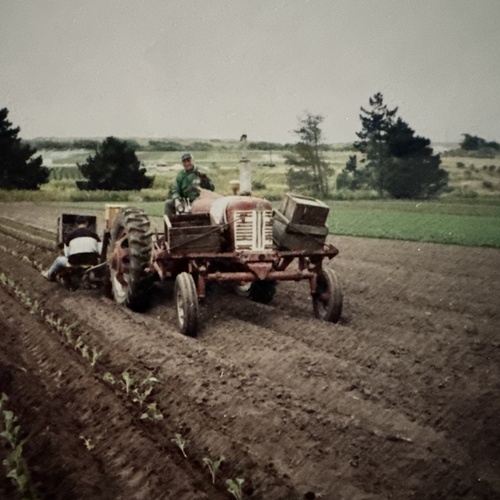
Besides enjoying life with fellow Italians, Nonno also loved farming alongside farmers of diverse backgrounds along the California coast. In a Santa Cruz Sentinel article titled “Farming in the Alternative,” my Nonno was celebrated along with another “ethnic” farmer, Johnathon Steinburg. The article states that Steinburg’s hero, “John Colombini, an Italian immigrant who has farmed the North Coast for 40-plus years” was a part of the diversity he loved in the farming community of Santa Cruz (Schilling). Though my Nonno and other Italian Americans faced adversity in farming, the successful industry and community they were a part of was fortunate to prosper.
I additionally asked my mother about her perspective and experiences of being an Italian American in Santa Cruz. She recalled her youth, “Frequentavo la scuola parrocchiale con altri ragazzi come me. Nel tempo libero, andavo con la mia famiglia alle feste con altri Italo-Americani. La mia famiglia non aveva tanti soldi quando ero giovane però eravamo orgogliosi della nostra eredità Italiana.” (I went to parochial school with kids like me [kids of immigrants who were working class citizens]. In my free time, I went with my family to parties with other Italian Americans. My family did not have much money when I was young, but we were proud of our Italian heritage.”)
Student Author
Mia Locatelli
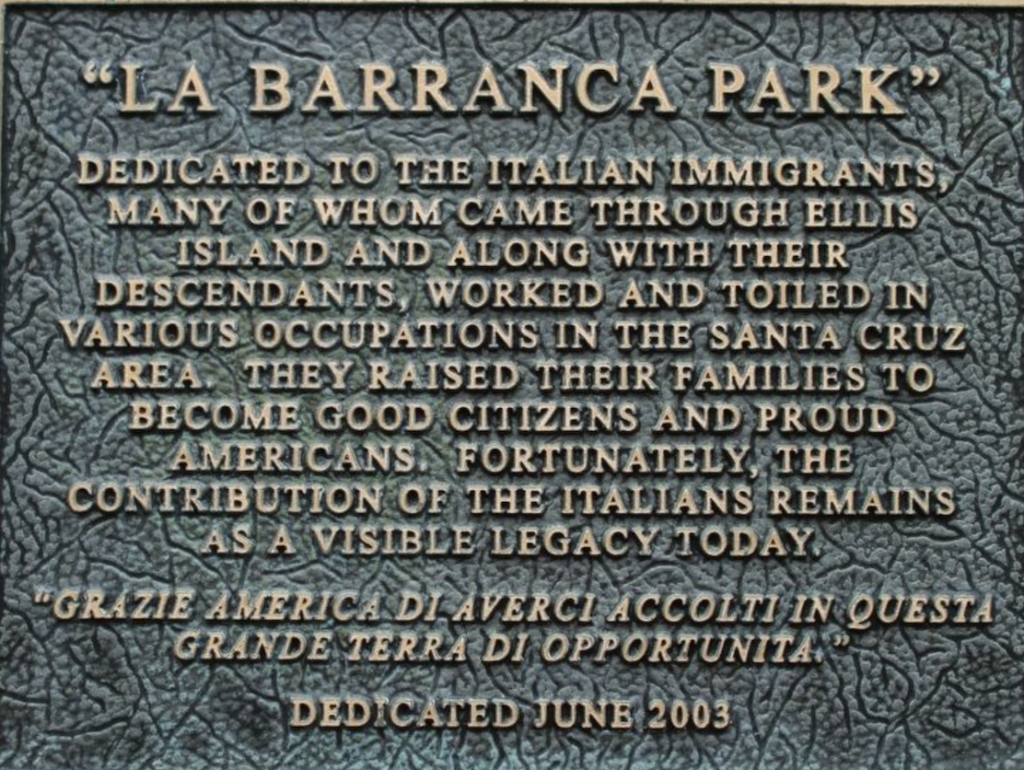
Despite the unfortunate experiences and poor treatment of Italian Americans during World War II, this resilient community continued to work hard, ceaselessly determined to create a better life for themselves and for their families. It is for this reason, and for all of the contributions the Italian American community made to the larger Santa Cruz community, that La Barranca Park recognizes Italians and their legacies in Santa Cruz.
Dedicated on June 20, 2003, and conceived by Fred Moro, the inscription reads, “With its natural beauty and rich coastal resources…
Santa Cruz has always attracted a diverse group of people whose cultural roots form the essence of this unique community. One such group, the Italians, have made lasting contributions that have transformed the local landscape of Santa Cruz for over a century […] fishermen from the Northern Province of Genova began emigrating with their families in the late 1800’s. Later, Italians emigrated from all parts of Italy and soon formed a strong community of Italians in the Santa Cruz area. Many became farmers, others blended into the society taking work in all fields of endeavor!”
Italia fu la nostra patria
Italy was our native land
Student Author
Mia Locatelli