A short flight from Kathmandu to Janakpur on Sunday, June 26 marks the beginning of our first lengthy excursion into the field to conduct research. Being perched among the clouds with a cascade of mountains in the distance was surreal. This is a view that many dream of, but few receive the opportunity to witness. I felt immensely privileged to experience it, and while confronting privilege is often as uncomfortable as it is awakening, it is an integral and prevalent motif in the reflection of my journey thus far.
Empower Generation facilitates the establishment of autonomous, women-led solar distribution enterprises. Empower Generation provides business acumen training and support to women entrepreneurs and their sales agents to promote the development of each enterprise. Through our research and publication, we hope to help Empower Generation better understand its social impact on each women-led enterprise, their sales agents and customers in order to better serve them. In this pursuit, I have found impact assessment research tremendously challenging and equally rewarding. Our questionnaire varies in depth from simple economic inquiries such as estimated familial income to complex questions regarding empowerment, and communal respect and status as a result of business ownership. Naturally, these questions lead to stories regarding the personal background of each entrepreneur. I continuously find myself marveled and inspired at the trials and tribulations of daily life and business ownership that these women overcome and continue to face in the context of a male-dominated society, exacerbated by the devastation of last year’s earthquake. The conclusion of each interview leaves me awestruck at the poise, perseverance, and kindness displayed by each woman.
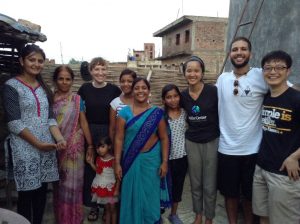
The Empower Generation team with Runa (center), a solar entrepreneur in Janakpur.
These feelings are also accompanied by feelings of dejection. I feel exceptionally privileged to be given such an intimate insight into these women’s lives, especially as a man. Discussing topics such as domestic violence, human trafficking, conjugal power structures, and educational and vocational opportunities for women in Nepal is extremely difficult. As much as I try and learn about the oppressive nature of living as a woman in a patriarchal society, I can never truly understand it. I consider myself a feminist, but I will never have to face the same hurdles that women face globally. I can sympathize, but not empathize. Creating connections with research participants is among the most rewarding aspects of action research, and attempting to understand the struggle for women’s empowerment from a male perspective adds to the existing lingual and cultural barriers to establishing a personal connection.
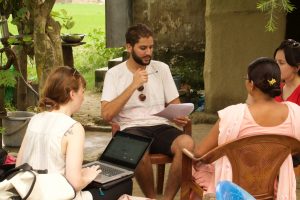
Mid-interview.
Our initial interview lasted nearly 2.5 hours, and as we began to get into the rhythm of interviewing through a translator, the duration of each interview shortened to less than 90 minutes. It feels strange to spend so little time with individuals that I can learn so much from, especially regarding the subjects and themes we are exploring. The stories and experiences of these women are such that it feels each deserves a timeframe fitting for its powerfully unique nature. We are operating under a time constraint and through a language barrier, so I understand the difficulty in establishing a connection that crosses both culture and gender, but I am still searching for a balance of personification and efficiency that feels just right. I am worried, however, that I will never find that balance. I am interjected into the lives and homes of these women, and feel honored to hear their stories and garner their insights. But I have the privilege of reflecting upon these conversations from the comfort of an air-conditioned room at the local hotel, and on a deeper level, as a male with the luxuries of an American citizenship and support of a world-class institution. Why am I afforded the benefit of this experience, to be an observer of the adversity faced by these women? I want my experience in Nepal to be mutually beneficial, as an invaluable learning experience for me and an impactful report for Empower Generation to facilitate the scale of its impact. I know that our work will substantially contribute to Empower Generation’s understanding of its impact and how to better serve its entrepreneurs, sales, agents, and customers, but this question of privilege persists in my mind.
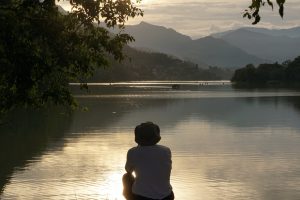
Watching the sunset over Fewa Lake in Pokhara.
Confronting one’s own privilege is challenging, but important. I am continuously searching for ways to utilize my increased awareness and recognition of my privilege to induce positive social change. It is a thought-provoking topic, and I know that I still have a lot to learn regarding my privilege and the promotion of positive social change. I can already feel the lessons I’ve learned having a profound impact on my vocational discernment and future aspirations.
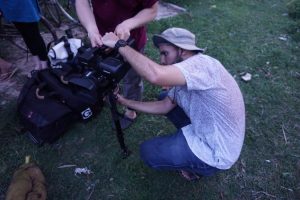
Nice and sweaty.
Despite the discomfort and struggles, my time in Nepal has been nothing short of exhilarating. While I have always had a passion for social justice and action research, I could never have anticipated just how difficult and gratifying impact research could be. The joy, satisfaction, and fulfillment that I receive from data collection in the field isn’t comparable to any other work I’ve previously done—no matter how hot it is or how many mosquito bites I receive.
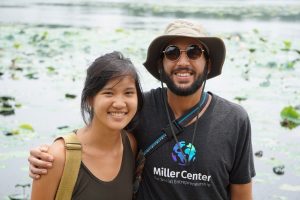
The EG summer fellows.