Looking Backwards and Forwards

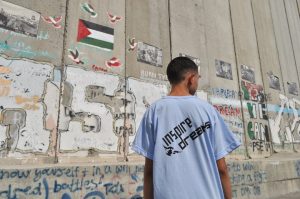
My experience with Inspire Dreams in the Dheisheh refugee camp in the West Bank in 2011 demonstrated the profound impact an educational opportunity can have on young individuals that are not usually afforded such. Many of the participants in this camp were all around my age at the time, and it was electrifying to see the faces of my peers illuminate with joy and excitement with each day of educational workshops. But it was also bittersweet. I had so much in common with many of the participants, yet we were also worlds apart.
45403_670673837105_5248316_n

I am Palestinian-American, and that hyphen carries a tremendous amount of privileged status. It was sobering to realize that I was and would be given opportunities that many in the world will not receive due primarily to my parent’s income and the geographic area of the world I grew up in. I cannot imagine where I would be in life right now had I not been fortunate enough to be born to American citizens, allowing my family to escape the West Bank during the violence of the Second Intifada and start anew in California.
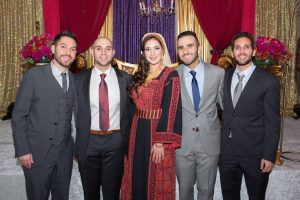
My brothers and sister-in-law.

My brothers and sister-in-law.

Life under Israeli-Occupation and the assertion that I am from a non-existent homeland and a member of an imaginary people has had a profound impact on my worldview, serving as motivation and crafting a proverbial chip on my shoulder. Marginalization has only bolstered my convictions, and witnessing injustice and violence in the West Bank has led me to have a passion in social justice—not just in the arena of the Palestinian-Israeli Conflict, but wherever systematic injustices and inequalities exist. I cannot imagine myself finding joy out of a career that does not have a strong emphasis on social value creation. I aspire to use my knowledge and experience to create a platform to help those that did not have the same opportunities I did due to the socio-political constraints of the societies that they live in. This desire, as well as my background and studies, links me back to the Middle East.
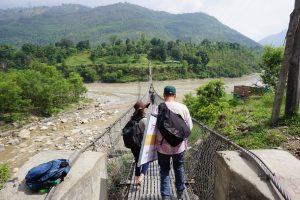
The crossing to Kala's house.

The crossing to Kala’s house.

I study Political Science and Arabic, Islamic, and Middle Eastern Studies at Santa Clara University. I’ve long been motivated to create change within Palestine and the broader Middle East, but had held the conviction that political channels were the only avenues to drive the change I wanted to see. During my study abroad term in Morocco, I conducted a small independent study research project with young Moroccans about individual freedom within Moroccan society. While a small study and a short period, I was academically exhilarated. I really enjoyed discussing topics such as religious and sexual freedom in a Muslim state with individuals that live in said state to gain a unique and different perspective that no online or scholarly source could convey. I had long felt that my studies had confined me to a career of macro foreign policy and that this route was the most effective to my aspirations of social change, but this small research project in Morocco had shaken that notion and I felt as a loss as to how to proceed. When I discovered the Global Social Benefit Fellowship, I felt as if fate had driven me to a solution to the dilemma of how to continue my professional and personal development through the application of my passions. GSBF offered the opportunity to aid an organization in the developing world that is making a positive impact in the community that it operates in. I wanted to spend more time immersed in the developing world and was intrigued about the potential intersection between social science and business as tools for positive social change. I was curious to see if I could handle the challenges of conducting a large research project in the developing world for an extended period of time and learn about social entrepreneurship as a strategy for social impact.
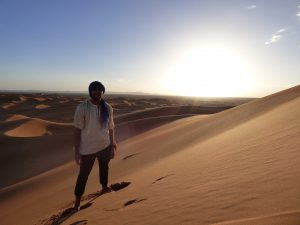
Soaking up the Sahara Sun.

Soaking up the Sahara Sun during my study abroad term.

GSBF showed me all of that and more. I learned just how challenging and rewarding action research could be, and that working to disrupt unjust social equilibriums is my passion. My time with Empower Generation this past summer also demonstrated that I have the skillset necessary to engage in a dialogue about complex, socio-economic issues on a grassroots, communal level. I learned about the viability and importance of social entrepreneurship as a driving force for social change. I have gained a tremendous amount of respect for and belief in the social entrepreneurship model and grassroots, bottom-up approach to social change. I still believe that macro-level policy and (rightly guided) government action is essential to creating change. But social enterprises and individuals that operate on communal levels to induce positive social change that is specialized towards the unique problems facing each community is paramount to meet the complex challenges the global community is facing today.
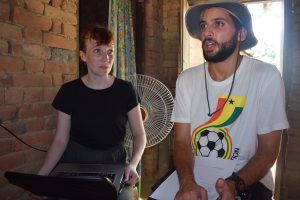
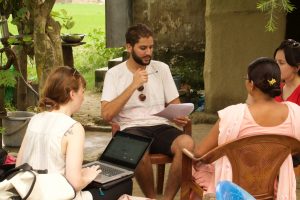
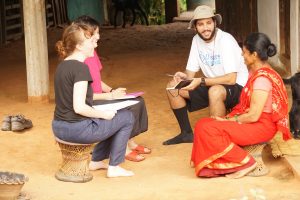
Candid mid-interview shot.

Candid mid-interview shot.

Looking back one year ago, it is difficult to have imagined just how transformative this fellowship would be. Despite the vocational insights GSBF has helped me realize, I still don’t know what the next step is. As I peruse through graduate study programs, I am torn between what fields I want to study. International Affairs, International Development, or law school all feel like attractive and logical choices. It is a daunting decision to make, due in part to the significant personal and fiscal resources required for graduate studies. I do know I have a clear focus on researching, developing, and implementing sustainable solutions to socioeconomic and political problems in the Middle East. This focus is why I have decided to take a gap year between the completion of my undergraduate studies and pursuit of a graduate degree. I hope to enroll in an intensive Arabic immersion program abroad, to achieve fluency in Arabic and get closer to realizing my career aspirations.
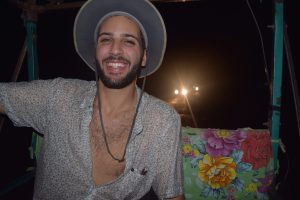
Very sweaty, very happy.
Very sweaty, very happy.
Posted in Uncategorized | Leave a comment

A Reflection on Personal Impact

There is a tendency in American pop-culture to view the poor of developing countries with a lens of pity. We see commercials featuring images of malnourished children with sad music playing in the background. The narrator speaks in a somber tone, urging the viewer to take action in the form of a monetary donation to “save” the subjects of these advertisements. This savior complex is incredibly damaging and insulting. It establishes a hierarchy amongst global individuals on the basis of their possessions. Worst of all, this view implies that those in poorer countries are helpless or lack dignity. As critical as I am of this view, I noticed quickly in Nepal that I still had to unlearn a few characteristics of it in my own worldview.

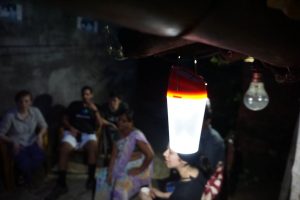
The EG excursion team at Runa's house, using one of Runa's solar lights to be able to see.

The EG excursion team at Runa’s house, using one of Runa’s solar lights to be able to see.

Prior to my departure, I had studied social entrepreneurship and the mission of Empower Generation for a full academic quarter. Social entrepreneurship derides the notion that the world’s poor are helpless, and aims to rectify the root issues of social inequalities and injustices by shifting unjust equilibriums. Due to my newly acquired knowledge, I (wrongly) felt as though I had a strong idea of the type of impact my research would document; that due to Empower Generation and business ownership, women entrepreneurs become confident and driven. However, this sentiment is as damaging as the advertising I decried earlier. A much better, and exceedingly more accurate phrase is that “Empower Generation allows women to develop their business acumen, leading to more confidence in public speaking and conviction in voicing their opinions in local politics.”

Not only is the second phrase much more specific, but it conveys the dignity and skillsets that these women entrepreneurs possess. The first sentiment wrongly assumes and implies that prior to business ownership, entrepreneurs were not driven or lacked confidence. I’m ashamed and frustrated at myself for my inability to notice the ignorance inherent in that first statement. But I am happy to have realized the damage that this subtle difference in language can have.

I was inspired by the strength and tenacity that these women entrepreneurs displayed. Many were and continue to be social leaders prior to starting their solar light enterprise. Some of these women served as presidents of women’s cooperatives. Others held positions as local representatives for national political parties. One woman, Kala, transitioned her enterprise into an emergency relief distribution operation, distributing solar lights to nearby communities that were without light or electricity following the April, 2015 earthquake. In all cases, many of these women were incredibly confident and driven before becoming entrepreneurs. Empower Generation did not instill these traits into them, but gave these women the opportunity to demonstrate and develop these skills through business ownership—an opportunity that a patriarchal society largely denied them. This distinction is imperative.

Interviewing Kala at her home in Dhading, Nepal.

Interviewing Kala at her home in Dhading, Nepal.

It’s been two months since my arrival back into the United States, and I’m still digesting my experience abroad. This experience was truly transformative in the sense that it led me to explore many social issues through a different outlook. It also led to introspection and my own role in perpetuating and ending social inequalities. I learned an immense amount about my privileged status as an American male on a global scale. The recognition of my privilege, previously, was diminished by the unjust treatment I’ve received as a Muslim-Palestinian in the United States. These are sobering lessons and I’m still unpacking many of these feelings on my journey of self-discovery.

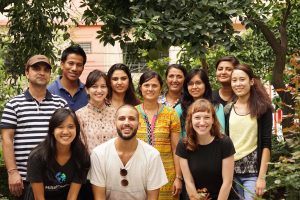
The EG exursion team (minus Clarissa).

The EG exursion team (minus Clarissa).

I had previously felt that my studies of political science and the Middle East had confined me to a career of macro foreign policy, although I desired to engage the issues facing the region on a grassroots, communal level. I applied for the Global Social Benefit Fellowship after a period of uncertainty following my study abroad term in Morocco. I wanted to spend more time immersed in the developing world and to see the intersection between social science and business as tools for positive social change. My time conducting action research with Empower Generation showed me that and more.

My experience in Nepal demonstrated that working to disrupt unjust social equilibriums with the individuals facing them is my calling. I could not have anticipated just how challenging, yet rewarding action research can be. The joy, satisfaction, and fulfillment that I receive from data collection in the field is incomparable to other work I’ve done. Yet, I still don’t know which direction the “next step” is. As I peruse graduate study programs, I am torn between International Affairs and International Development. It is a daunting decision to make. Regardless, I know that I have a clear focus on inducing positive social change in the communities and areas that need it the most.

The entire EG team at the central office in Kathmandu.

The entire EG team at the central office in Kathmandu.

Posted in Uncategorized | Leave a comment

Poise, Perseverance, and Privilege.

A short flight from Kathmandu to Janakpur on Sunday, June 26 marks the beginning of our first lengthy excursion into the field to conduct research. Being perched among the clouds with a cascade of mountains in the distance was surreal. This is a view that many dream of, but few receive the opportunity to witness. I felt immensely privileged to experience it, and while confronting privilege is often as uncomfortable as it is awakening, it is an integral and prevalent motif in the reflection of my journey thus far.

IMG_0688

Empower Generation facilitates the establishment of autonomous, women-led solar distribution enterprises. Empower Generation provides business acumen training and support to women entrepreneurs and their sales agents to promote the development of each enterprise. Through our research and publication, we hope to help Empower Generation better understand its social impact on each women-led enterprise, their sales agents and customers in order to better serve them. In this pursuit, I have found impact assessment research tremendously challenging and equally rewarding. Our questionnaire varies in depth from simple economic inquiries such as estimated familial income to complex questions regarding empowerment, and communal respect and status as a result of business ownership. Naturally, these questions lead to stories regarding the personal background of each entrepreneur. I continuously find myself marveled and inspired at the trials and tribulations of daily life and business ownership that these women overcome and continue to face in the context of a male-dominated society, exacerbated by the devastation of last year’s earthquake. The conclusion of each interview leaves me awestruck at the poise, perseverance, and kindness displayed by each woman.

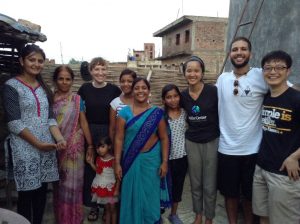
The Empower Generation team with Runa (center), a solar entrepreneur in Janakpur.

The Empower Generation team with Runa (center), a solar entrepreneur in Janakpur.

These feelings are also accompanied by feelings of dejection. I feel exceptionally privileged to be given such an intimate insight into these women’s lives, especially as a man. Discussing topics such as domestic violence, human trafficking, conjugal power structures, and educational and vocational opportunities for women in Nepal is extremely difficult. As much as I try and learn about the oppressive nature of living as a woman in a patriarchal society, I can never truly understand it. I consider myself a feminist, but I will never have to face the same hurdles that women face globally. I can sympathize, but not empathize. Creating connections with research participants is among the most rewarding aspects of action research, and attempting to understand the struggle for women’s empowerment from a male perspective adds to the existing lingual and cultural barriers to establishing a personal connection.

Mid-interview.

Mid-interview.

Our initial interview lasted nearly 2.5 hours, and as we began to get into the rhythm of interviewing through a translator, the duration of each interview shortened to less than 90 minutes. It feels strange to spend so little time with individuals that I can learn so much from, especially regarding the subjects and themes we are exploring. The stories and experiences of these women are such that it feels each deserves a timeframe fitting for its powerfully unique nature. We are operating under a time constraint and through a language barrier, so I understand the difficulty in establishing a connection that crosses both culture and gender, but I am still searching for a balance of personification and efficiency that feels just right. I am worried, however, that I will never find that balance. I am interjected into the lives and homes of these women, and feel honored to hear their stories and garner their insights. But I have the privilege of reflecting upon these conversations from the comfort of an air-conditioned room at the local hotel, and on a deeper level, as a male with the luxuries of an American citizenship and support of a world-class institution. Why am I afforded the benefit of this experience, to be an observer of the adversity faced by these women? I want my experience in Nepal to be mutually beneficial, as an invaluable learning experience for me and an impactful report for Empower Generation to facilitate the scale of its impact. I know that our work will substantially contribute to Empower Generation’s understanding of its impact and how to better serve its entrepreneurs, sales, agents, and customers, but this question of privilege persists in my mind.

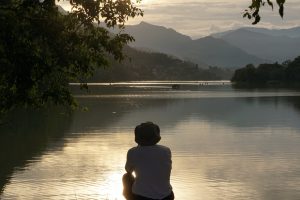
Watching the sunset over Fewa Lake in Pokhara.

Watching the sunset over Fewa Lake in Pokhara.

Confronting one’s own privilege is challenging, but important. I am continuously searching for ways to utilize my increased awareness and recognition of my privilege to induce positive social change. It is a thought-provoking topic, and I know that I still have a lot to learn regarding my privilege and the promotion of positive social change. I can already feel the lessons I’ve learned having a profound impact on my vocational discernment and future aspirations.

Nice and sweaty.

Nice and sweaty.

Despite the discomfort and struggles, my time in Nepal has been nothing short of exhilarating. While I have always had a passion for social justice and action research, I could never have anticipated just how difficult and gratifying impact research could be. The joy, satisfaction, and fulfillment that I receive from data collection in the field isn’t comparable to any other work I’ve previously done—no matter how hot it is or how many mosquito bites I receive.

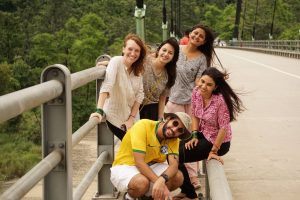
The EG summer fellows.

The EG summer fellows.

Posted in Uncategorized | Leave a comment

A Reflection on Vocation

In the summer of 2011, following my sophomore year of high school, I returned to the West Bank for only the second time since immigrating to the United States, and for the first time in nearly nine years. During this time period, my oldest brother had pioneered Inspire Dreams, a non-profit organization that provided academic, athletic, and arts-based education programs to Palestinian refugee youth. One of the main components of Inspire Dreams was Camp “I Have a Dream”, a weeklong program for refugee youth between the ages of 12-16. The program focused on teaching non-violence, leadership skills, and career development through mediums such as basketball, poetry, and computer based applications. I volunteered for one of these camps in the Dheisheh refugee camp, and it was the first major paradigm-shifting experience in my young life. The youth participating in this camp were all around my age at the time, and it was electrifying to see the faces of my peers illuminate with joy and excitement with each day of these workshops. Furthermore, I was struck by the strength and generosity of these individuals and their families, despite the sociopolitical context in which they lived. I was overwhelmed by the generosity displayed to me. Regardless of how much a family had, I was extended numerous invites into people’s homes for a meal or coffee. This experience played a significant role in shaping my worldview and aspirations.

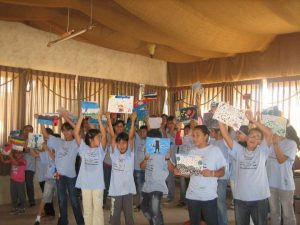
Some Youth during Camp "I Have a Dream"

Excited youth showing off their artwork during Camp “I Have a Dream”

Prior to my experience in the Dheisheh refugee camp, I had never really realized or reflected upon the privileged experience and upbringing I was blessed with in the US. I noticed socioeconomic inequalities when my middle school basketball team would play at schools in different cities, noticing differences in the maintenance of their school campus in comparison to the schools in my more affluent East Bay community. Despite awareness of these differences, poverty was still a hard concept for me to grasp due to its distance from my comfortable upbringing. I knew of the existence of millions of people who lack access to the most basic life necessities, but I was still engrossed in my own world and the adolescent problems I was facing. Working with Palestinian youth in Dheisheh was a “wake-up” in the sense that it instilled a sense of responsibility and accountability. I was no longer distant from poverty or oppression. I couldn’t choose to remain ignorant. I couldn’t convince myself that I was unable contribute in the alleviation of these problems any longer.

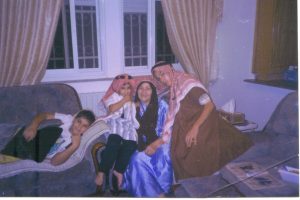
My brother Jawad, myself, my grandmother, and my other brother Hammad.

My brother Jawad, myself, my grandmother, and my other brother Hammad.

I was born in the West Bank and lived there until the age of five. A bombing near my brothers’ school uprooted my family, and we found ourselves on a one-way flight to the United States. Growing up as a Palestinian-American in post 9/11 America has been a tremendous challenge, as I often found myself the recipient of ignorant and hateful remarks directed at both my nationality and religion. In addition to my ABC’s and times tables, I navigated feelings of “otherness” and the creation of an American identity that was often presented as incompatible with my Muslim, Palestinian heritage, leading to a long internal struggle with my own identity.

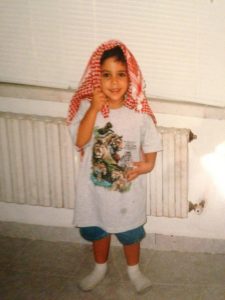
Me at a young age

Me at a young age

I am fiercely proud of being a Muslim Palestinian, and I have embraced the notion that my identity is almost wholly Palestinian and Muslim, despite a lack of fluency in Arabic, non-observance, and American upbringing. Life under Israeli-Occupation and the assertion that I am from a non-existent homeland and a member of an imaginary people has had a profound impact on my worldview, serving as motivation and crafting a proverbial chip on my shoulder. Marginalization has only bolstered my convictions, and witnessing injustice and violence in the West Bank has led me to have an interest in social justice—not just in the arena of the Palestinian-Israeli Conflict, but wherever systematic injustices and inequalities exist.

My religious and ethnic background has a large influence on my worldview, but my Palestinian heritage is blended with my American upbringing and the socio-political movements I have witnessed in the US. This diverse mix of a Muslim and American heritage is often forgotten given the Islamophobia that has so often characterized American mass media and the role of Islam as the “other” in contemporary American society. I am a human manifestation of two distinct identities blended together into something continuously transforming, challenging foreign notions of American-ness and demonstrating firsthand the coexistence of an Arabic, Muslim, and American identity. The articulation of my heritage and its relation to my identity is paramount to my character and future aspirations.

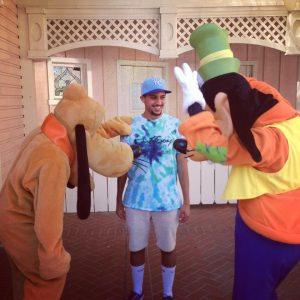
Sharing a laugh with Goofy and Pluto

Sharing a laugh with Goofy and Pluto

I currently study Political Science and Arab, Islamic, and Middle Eastern Studies at Santa Clara University. I have always been fascinated by the politics, culture, and history of the Middle East, and I have become immersed with the state of international affairs beyond the role of the nation-state and intrigued with the history of interactions, and the political and apolitical factors that have influenced relations between nation-states. I became more invested in the region through each related class, leading to enrollment in a semester long program with SIT in Rabat, Morocco. The semester long program culminated with a three-week period in which I was able to conduct qualitative research with young Moroccans on their definitions of individual freedoms. While a short period, I found the experience tremendously valuable and academically exhilarating. The nature of my studies has always drawn me towards action research on socio-political and economic issues. Early level undergraduate work, however, often involves a small amount of primary research and it was a very challenging and fulfilling experience to conduct primary research for the first time while abroad.

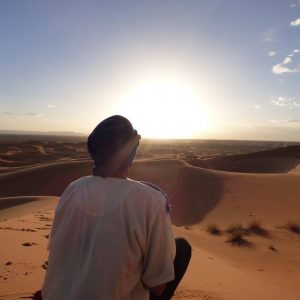
Awestruck by the Sahara in Morocco

Awestruck by the Sahara in Morocco

Santa Clara’s Jesuit education has been the most transformative component of my educational endeavor. During my time at Santa Clara, I have met professors, faculty, and students who share a common vision of social progress and human advancement that inspires them to pursue knowledge outside of an academic setting, while challenging preconceived notions and problematic paradigms.  Santa Clara has allowed me to parlay my academic interests of politics, international affairs, conflict resolution, and the Middle East into applicable opportunities to promote positive social change.

My time in Morocco had ignited a fire inside of me that could not be extinguished and I felt lost as to how to proceed in a positive direction. The return was so abrupt; there was no debriefing, no time to reflect before readjusting to American life and a daily routine. When I discovered the Global Social Benefit Fellowship, I felt as if fate had driven me to a solution to the dilemma of how to continue my professional and personal development through the application of my passions. I loved the social research component of my program and operating in the context of a foreign setting. I’m tremendously excited and honored to apply my passion for research and social justice with Empower Generation in Nepal.

unnamed2

My brothers Jawad (27), Hammad (30), and I celebrating Jawad’s marriage with our entire family


Posted in Uncategorized | Leave a comment