Looking Back and Looking Forward: Where to Go From Here

I’m a very different person than I was a year ago. Well, that’s a grotesque understatement. Every time I reflect on this fellowship and how it has changed me, the first coherent thought that comes to mind is that I have changed so much in the span of nine months.
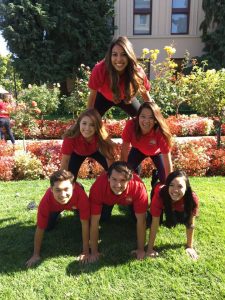
My current Residence Life staff at our inauguration.

When I first heard about the fellowship it was through an email from Dr. Schindewolf, one of the professors from the Spanish department who would later become my faculty research mentor. Upon reading the description and researching ILUMÉXICO, I was immediately inspired to apply. I had been searching for some sort of opportunity to address social justice in a meaningful way but until then had been having difficulty finding something. At the time, I had only been volunteering for non-profit organizations, creating educational programs through my job as a Community Facilitator, and being an activist for change on campus. Even though I was, in my own way, trying to fight against the injustices of the world, I felt like I wasn’t doing anything substantial, like the work I was doing wasn’t having a lasting impact. In a way, I felt like something was lacking. I was obviously doing things, but were they actually impactful, were they actually helping to improve the world? To a degree I felt lost and like I was moving aimlessly, simply trying to help wherever I could. I had a boundless youthful energy and passion for social justice, but I had an equal amount of uncertainty about how to go about my ridiculously wild ambitions. So when I saw Dr. Schindewolf’s email, I figured, I’ll just go for it and see what happens.

Looking back now on the person I was a year ago, I hardly recognize myself. I’ve become a very different person. My passion for social justice and ambitions to be a life-long agent for change remain, but now they blaze brighter than ever. My boundless energy has matured and become more focused. After having encountered obstacles and limits I could never have imagined, I’m even stronger now and have a new concept of what it means to have grit. Because of this fellowship and the entrepreneurial skills I have gained, I think about systems more critically. What seemed like a daunting and intimidating challenge before now is an exciting puzzle for me to tease apart.

Last year, I had absolutely no idea how to go about creating lasting change. I thought that if I kept working and simply helping people, something would happen and the world would somehow be a better place. It was an unsettling feeling riddled with a certain anxiety that my actions would not be enough. However, now I have a few, slightly more concrete ideas about how to alleviate poverty and tackle the complex issues surrounding it and feel more reassured as a result. After all, I have the skill set and mindset to do so—to analyze the deeply complex issues I will encounter, to imagine innovative (and perhaps even wild) solutions, and to shift my plans at any given notice. I still do not know specifically what I will do or the role I will play in alleviating poverty, but I feel comfortable with not knowing everything right now because I understand that my passions and my strengths will guide me and I don’t have to occupy one role for the rest of my life.

I don’t want to be a part of social entrepreneurship just yet, but I will apply entrepreneurial thinking to my work. I used to believe that if whatever solutions I came up with failed, then I had failed. However, failure is another learning opportunity—it is the chance for me to understand the outcomes of my attempts and to try again. This mindset is especially pertinent to tackling global health issues as such issues are comprised of multiple intertwining factors.
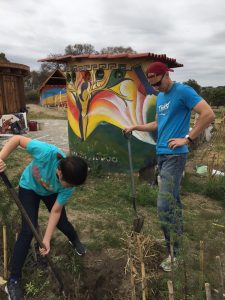
Planting a tree on a farm in Puebla, Mexico.

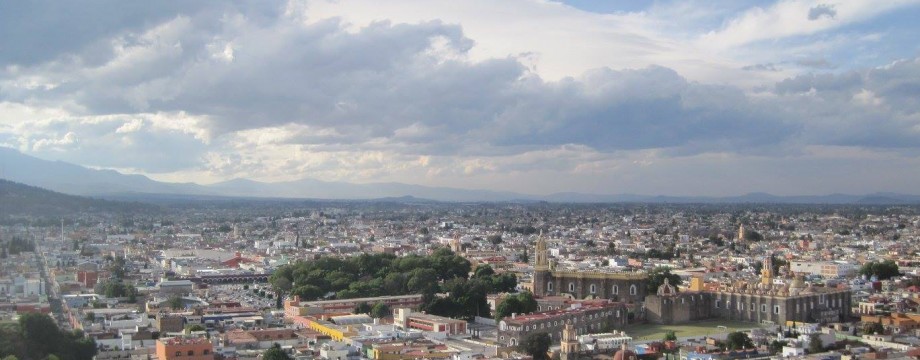
During my immersion trip to Puebla last March, I met an inspiring woman who fought for indigenous rights by conducting research about the environmental impacts on indigenous populations. She empirically studies how popular environmental policies and practices in Mexico harm the health and economies of marginalized communities. She told me that throughout her life she has used her education and research to fuel the fight against injustices and giving a voice to indigenous people. From her and from this fellowship, I want to be able to use my education to conduct action research to help marginalized communities throughout the Americas. I want to dialogue and interact in a meaningful way with marginalized communities so that I can learn from them and and understand the different factors— socioeconomic, psychological, and spiritual—that influence their health and wellbeing. In this way, we can all work together to build a better world. However, this requires higher educational degrees on my part and will likely come at a later point in my life. For now, I am trying to find work that engages Spanish speaking communities from a health perspective. I want to be able to learn more about health from a social services perspective. In that way, I can develop a more intimate relationship with the community and therefore better understand how I can create impactful programs for marginalized groups.

I’ll admit: I’m still afraid the work I do in my lifetime won’t have a meaningful impact in the fight against poverty, but I’m a little more confident now, a little more assured that it can be done.
Categories: Uncategorized | Leave a comment

I Wasn’t Expecting That

From the very beginning of this fellowship, I knew I would be challenged to new heights. I knew that I would gain new insights into the world. I knew I would come out of this experience a different person. But to what degree? That I didn’t know.

I’ve always been aware of poverty as it is an integral part of my family’s history. However, awareness is vastly different from seeing such poverty first hand. Growing up my family would describe poverty as terrible and as something they refused to ever return to—rightfully so, of course—but because of how my family spoke of poverty and the language they used to describe it, I developed this idea that to be in poverty was to perpetually live in despair and desperation. I thought that poverty consumed every thought, every waking moment of a person’s life. With poverty present, how could you have the time or energy to think of or do anything happy or uplifting? My time in the field showed me otherwise.

jorge_installation

One of the community engineers, Jorge installing panels in Esperancita

I have no specific instance, no exact point in time in which my perspective on poverty changed, but I can recall quite a few small moments in which my preconceptions slowly began to evolve. Like the time we were in Chilam Balan when the family we were staying with was so eager to talk to us and get to know us. They kept asking me questions about where I’m from, what my life is like in the States, and how on earth I got my mother’s permission to travel so far away from home. Or when one man we interviewed was so relieved that we hadn’t taken any pictures of him that day because he had a small, bloody cut on his face that made him feel self-conscious and then proceeded to offer us the two mangos he had just collected that day. Or when one woman we interviewed in Esperancita offered us juice and chatted with us long after the interview itself was over about what has brought all of us to Esperancita. Or when I was in Tabasco,while I was waiting for more people to arrive for interviews, a couple of people I had previously interviewed sat and simply talked with me about how that day was especially hot and how lucky they were to have cold Coca Cola from Señora Blanca’s refrigerator. All of these simple and fleeting moments cued me into the lives these people have beyond the pressing issue of poverty.

In Chilam Balan getting more supplies for more installations

Whenever I hear or talk about poverty, the conversation highlights the matter as a dark mark in our world, as something completely terrible, bleak, and miserable. It’s true: poverty shouldn’t exist, especially given how far technology has developed. However, in every community we went to, I found myself most taken aback by the sincere kindness and openness I witnessed. All of the people I interacted with had their own story to tell and were so incredibly willing to share a piece of their life with me. I wasn’t expecting them to want to know more about me. I wasn’t expecting them to offer me juice and mangos. I wasn’t expecting them to smile and joke with me. The moments I described earlier appear to be so small and brief yet they have had a profound impact on me because I did not anticipate these sorts of interactions.

In many ways, I feel that we have focused so much on the horrors and bleakness of poverty that we have forgotten the humanity of those living in these situations day to day. We’ve forgotten that they too are people who want to make connections, who are inherently curious about novelties, who talk about the weather, who are self-conscious, who have their own stories that they want to share. To a certain extent, I feel that we unintentionally perpetuate the otherization of people who live in poverty as we allow a dismal situation to become their whole identity. I’m not trying to say poverty is pleasant or something to be admired in any way; we should work to eradicate poverty, but we should remember that just because someone lives in poverty and is deeply affected by it doesn’t mean that poverty defines the entirety of their existence.

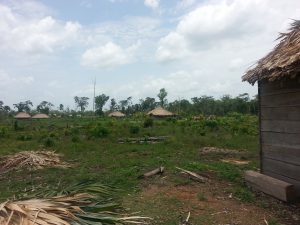
One of the very first views I had of Chilam Balan

I may have left Mexico early for my own personal reasons, but I often find myself missing Mexico and wanting to go back, to return to these communities so that I can converse with them just a little bit more. I want to hear more of their stories, to continue to get to know them, to laugh with them, to simply enjoy their company. This fellowship, with all of its ups and downs, has shifted my perspective and has most certainly cemented my desire to work with people in poverty. I thought this fellowship would show me exactly what job I want. While it didn’t do that, GSBF has certainly clarified more of my career—I want to listen to more stories and to help those stories be heard because they are important, too. How will I do that exactly? That’s a good question; I’m still not sure and that’s ok. If there’s any other important lesson I’ll take away from this experience, it’s that no matter what happens, no matter how many surprises I encounter, I’ll keep pivoting and embrace the unexpected.

Categories: Uncategorized | Leave a comment

Surprise!

The past month in a country foreign to me has been filled with many, many different surprises that I would’ve never imagined. As I was leaving California, I was absolutely eager to travel to a different country for the first time in my adult life and to start conducting research with Isabel. Our first surprise came within a week: protests in Oaxaca. The night before we were supposed to hop on a bus and leave for Oaxaca to start our research projects, protests escalated in the state, halting public transportation. We scrambled a little at first, but then quickly adjusted to the current events and went off to Campeche.

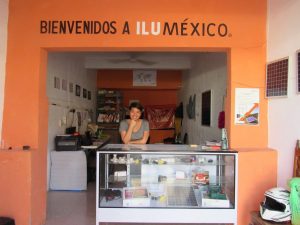
ILUCentro

At the ILUCentro ready to work!

In spite of the setback, we arrived in Campeche, still ready to work. We began collecting data with Isabel doing all the talking and I doing all the note taking until–Surprise! I was experiencing a language barrier. The people we were interviewing spoke in a way that I was not accustomed to and were using words I had not heard before. I was only hearing a small fraction of what was being said, making it difficult to record what was going on around me because I simply could not understand. It is one of the few (and very frustrating) moments in my life where I had to be reliant on someone else. Even with the language barrier, Isabel and I worked out an extensive solution so that we could communicate better and collect quality data. Our little plan worked! We were more in sync with each other during the interviews and were able to capture meaningful information.

But then Isabel contracted some sort of stomach infection and had to stay in bed for 2 days. Surprise. The person I had been relying on for fully understanding what was happening around me was decommissioned and I had no other choice than to go conduct research by myself. Nervously, I went out to the field and encountered yet another surprise: everyone knew I wasn’t fully fluent and helped me out.

As likely the only Asian in the area, I stick out like a sore thumb, especially in these communities we visited. As I conducted my interviews, people spoke more slowly for me so that I could understand every word they were saying. If I had trouble communicating something, people had an incredible amount of patience with me and would often work with me to help me get my point across. I remember in one particular group interview, one of the questions I asked was not understood by the people I was talking with. I was running out of synonyms to describe what I was trying to say and quite clearly becoming flustered. Noting this, a woman said, “Oh, is this what you mean?” One of the men in response said, “No, I think she means this.” I sighed in relief and said “Yes, that’s what I mean.” The two days I spent on my own in the field went surprisingly smoothly.

Isabel eventually recovered and we kept on with our research. Since the Oaxaca situation was not improving and did not seem likely to improve anytime soon, we created a new plan of action for the remainder of our trip. Surprise: we had to throw out that plan because of security issues. At this point, Isabel and I have no idea what the rest of our time in Mexico will look like. We’ve dealt with many, many surprises, but I think the most surprising moment we’ve had thus far is when we were helping install systems in a community called Chilam-balan.

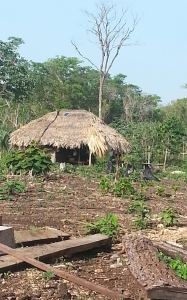
One of the many houses that had solar systems installed in Chilam-balan.

One of the many houses that had solar systems installed in Chilam-balan.

When we first arrived in Chilam-balan with the community engineers, I was shocked by the poverty I saw. I knew this existed. I had been learning about this and had seen pictures of nearly identical scenery from different parts of the globe for the last 6 months through my classes. I had been told stories about these kinds of places since I was a little girl by my mother and my grandmother. Yet even as I observed and walked through this community and installed several solar systems in several households, I still couldn’t believe what I was seeing. None of what I was doing felt “real” until we installed the last house of the day as the last rays of sunlight began to fade away.

At this point, the community engineers, Isabel, and I were exhausted from a hot, humid day full of installations. We still had more houses to install, but the sun was working against us. We hurriedly installed one final house for the day. When we started, the sun had nearly set and with every passing minute, it was getting harder and harder to see. Eventually, I could barely make out the details of the house–only dark figures of objects, people, and animals. But then, someone flipped the switch and the mood immediately shifted. One of the young children of the house screamed, pointing at the light, “Mamí! Mira, mira!” In that moment, not only did a physical bulb turn on, but also a metaphorical one in my mind. Everything we had done that day was finally hitting me and all of the stories my mother and grandmother told me about their lives in Vietnam became more vivid than ever. As soon as we returned to our hotel, I called my mother and told her about Chilam-balan. When I finished telling her my story, I asked her, “Is this how you really lived? Is this how Grandma and her parents lived?” She said yes. We continued to have a lengthy conversation about poverty and human dignity. I knew that I would see poverty firsthand this summer; it was part of the description after all. I just didn’t expect to get a glimpse of my family’s life.

My time in Mexico has been nothing short of surprises and twists and turns. I’m honestly tired of having to pivot, of plans being so up in the air, yet I’m somehow still excited. I’m not as eager or as bright-eyed as I was when we left, and I have absolutely no idea what we will be doing or where we will be for the next three weeks, but I think I still have enough energy for a few more adventures. So here’s to more surprises.

Categories: Uncategorized | Leave a comment

Base of My Pyramid: Family

Being a Bay Area native, I live in a particular bubble of privilege. I am surrounded by the latest and greatest technological advances that the Silicon Valley has to offer. I can easily drive over to the headquarters of various famous companies like Facebook and Google. As a Californian, I experience essentially perfect weather every day and have access to a diverse set of food on any given occasion. I attended a very prestigious private Catholic high school that has produced many outstanding individuals, including three Olympians. In many respects, yes, I am very privileged, but I was born into an immigrant family—a family that never lets me forget the privileges I have.

338934_10150365129250935_843005909_o

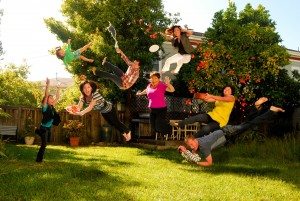
One of the most fun and terrifying photoshoots to which my uncle (featured in the middle) subjected us.

As a result of the Vietnam War, my family migrated to the United States in hopes of finding a better life away from the violence and corruption. In spite of the obstacles they encountered, they worked hard and achieved their goals. Even though my family has provided me with a variety of the privileges and experiences I have today, they always remind me (whether directly or indirectly) of the work that goes into whatever I receive and how I should be appreciative as many others in the world are not as lucky. My family raised me on the notion that the more “good” I accumulate in life—both material and non material—the more I should give back to the community. Not only did they tell me this, but they also showed me how to give back. Starting from my great grandparents, my family has a long history of generosity. In Vietnam, my great grandparents were wealthy farmers who had two servants, built their own houses, and were able to afford sending all nine of their children to varying degrees of school. With such wealth, my great grandparents kept in mind the adversities they once faced in their journey and would often distribute food and money to other villagers. They were incredibly respected in the village that even after the war, their servants and other villagers would come to them for help, in spite of the fact that they had lost a majority of their possessions. Their generosity was passed down to my grandmother who has always given what she can to others. Today, in spite of having little income, she continues to give back nearly every opportunity she gets. She sponsors students in Vietnam every month and always donates some clothes or toys or books to orphans when she visits her homeland. The generosity gene continued through my mother and eventually down to me. I am constantly reminded by my family members of how there are people both in my immediate and global community who are not as fortunate as I am and how if certain factors of my life were different, I would have been just like them. They instilled in me the idea that I am no different from others; my privileges and my inherent wealth as a US citizen does not make me any more special than the next person. My family, especially my mother, always emphasized that at our very core, we are all human and deserve to be treated as such.

23315638466_7841dcfaed_m

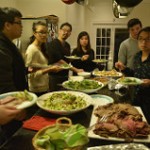
Patiently waiting for the host to tell us we can eat.

Compounding my generosity, education has also played a huge part in my discernment. It was through school that I learned more about the world and its problems. While I was exposed to all the wealth the Bay Area has, I grew up with an extremely diverse set of people. In my elementary school, students spoke English in class, but as soon as we were on the playground, I primarily heard Spanish, Vietnamese, Mandarin, Cantonese, and Tagalog. My friends and I would often ask each other how to say certain words in our respective languages. From them, I learned not only about languages, but also about different cultures, traditions, and customs. Often times at lunch, we had packed lunches of traditional ethnic foods, seeing as most of us (if not all of us) were the children of immigrants. We would trade bits of our lunches with each other and what was supposed to be individual lunches became communal ones. It was these school lunches that cultivated my love for food, community, and diversity.

As I entered high school, I continued to learn more about the globalized world we live in. My high school, Archbishop Mitty, is not a Jesuit institution, but it undoubtedly acts like one. All the faculty and staff encourage the “education of the whole person” and challenge us to think critically about our views of the world and the kind of impact we have on others. As part of the school requirement, I volunteered regularly throughout high school. Many high school volunteers would half heartedly complete their volunteer hours, but because of my classes and my family background, I tried to be very intentional about the way I volunteered my time. I used my multilingual skills to help low income (usually immigrant) families fill out applications and to give them their much needed goods. I also used my musical skills to entertain older adults in nursing homes. I always kept in mind that while what I am doing is for school, the people I interacted with gained so much more than I could fathom as a teenager. Being at Mitty truly taught me how to be a more conscientious and compassionate person by giving me insight into the ethical dilemmas of the world and allowing me multiple opportunities to witness these dilemmas for myself. My high school, in spite of its flaws, paved the way for my decision to come to Santa Clara University.

Gaway Gaway

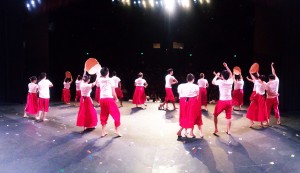
Performing a traditional dance for Pilipino Cultural Night (PCN)

Coming to Santa Clara was a rather natural choice. As I looked into campus life and spoke with Mitty alumni who are SCU students, I found that Santa Clara culture was basically my high school, but bigger. Our university, in many regards, makes education come to life. Most people have the tendency to view education as one dimensional and restricted to classrooms, libraries, and millions of dull words and facts in need of memorization. But for me, education is something very intimate and quite alive. As a Psychology & Spanish double major and Public Health Science minor and as a very active community member, I yearn to learn as much as I possibly can and apply the knowledge and information I have to our world as my way of saying thank you to my family and my community for making me the person I am today. In light of this, applying to become a Global Social Benefits Fellow was easy: all of its values, missions, and goals were in perfect alignment with mine—the desire to use the skills available to us to improve the lives of others; the promotion of social justice in society through creative, multimodal action; and the dream of creating a more equitable and sustainable world for everyone.

Categories: Uncategorized | Leave a comment