When I first walked into the Kampala Yunus Social Business office for a meeting with the Uganda director and partnerships coordinator—a meeting that we were almost late to because the numbering system on the buildings was so complicated that even Google Maps couldn’t save us—I was first taken aback by the view of the city. Nestled on the fourth floor of a large office building, the Yunus employees look out their balcony onto the hills of Northern Kampala. From this point of view, there appears to be a certain order, an organized pattern to the slanted red roofs, the roundabouts in the streets, and the landscaping throughout. As I looked out for a moment, I couldn’t help but think that the view is both breathtaking and deceptive. The Kampala that I have come to know and love in the last five weeks seems to lack any order and pattern.
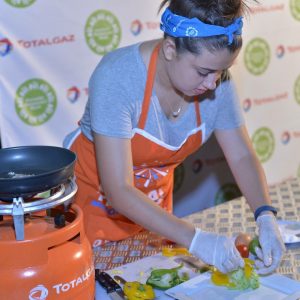
Kampala Restaurant Week cooking competition
Although I certainly cannot say that I fully understand this city in just five weeks, I have developed a certain appreciation for this organized chaos. There seems to always be something going on in the city, whether it be a spontaneous cooking competition during Kampala Restaurant Week, or a networking event for social entrepreneurs held at a local bar. There have been times in which this all feels completely overwhelming, but for the most part, I have thoroughly enjoyed living in a city with such a diverse scenery and population.
While Indy and I live and work in Kampala near the Teach a Man to Fish (TAMTF) headquarters, our work has taken us all over the country. In our ongoing quest to identify social value products that TAMTF partner schools could sell in their enterprise programs, we have spent our time here interviewing current partner schools and various social enterprises currently selling such products in the Ugandan market. Without a doubt, the school visits have been my favorite part of our project. For our very first school visit at McKay Memorial College, Indy and I found ourselves in the middle of the school’s Bicentennial Celebration with hundreds (if not thousands?) of students, teachers, and community members, in a three-hour long mass, followed by a performance from the student dance troupe.

Dance troupe at McKay College
Looking back on it, it is truly incredible to me how warmly we were welcomed by each and every person we met with that day. When we first walked in, I worried that we may be intruding on a community event and interrupting busy teachers and administrators to ask them questions related to our project while they were trying to supervise and coordinate the big event. To some extent, this was probably true, but not one person made us feel this way. Several teachers and students were eager to talk to us and show off all of the enterprises their TAMTF program has launched in the last few years. They took us to their chicken coop, their farming land, and even toured us around the piggery. It is difficult to put into words, but this day, arguably my favorite this summer thus far, truly captured the spirit of the Ugandan culture and people in the most perfect way.
While these school visits, though most were not quite as eventful as that first one, have been my favorite experiences, the meetings with the social enterprises have been a close second. As we are sitting in these meetings, often across a desk from the enterprise’s founders or COO’s, I find myself thinking that it is one thing to read about these players in the social enterprise movement—the ones who have successfully launched a new enterprise and have achieved a measurable, positive social impact—and an entirely different thing to sit down with them and have them discuss their business with you. I have left each of these meetings inspired by the entrepreneurs’ passion, dedication, and excitement for the work they do and the people whose lives they improve. This is not something that I ever realized was missing from my previous internships working for government water utility agencies, but have since realized interviewing and working with people so devoted to helping others through innovation and entrepreneurship.
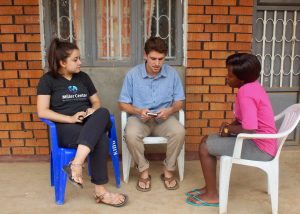
Interviewing one of the Bana Champions during our visit to Mpigi
Although I would like to say that my experience in Uganda thus far has been all piggeries and boda rides, I am beginning to feel as if I am leaving the country soon with more questions and less understanding than I came in with. Specifically, I came in thinking I had a basic understanding of the primary and secondary school system in Uganda and the need for relevant vocational training in these schools that TAMTF hopes to address. With each school visit though, especially the visits to the schools in the Northern region of the country, this understanding is challenged.
I realize now that I came into Uganda with the basic assumption that Ugandans seek primary and secondary education for children for the same reasons that Americans do. While American and Ugandan parents do share many similar priorities in regards to their children’s education, there appears to be a much greater emphasis on teaching practical life skills to young students. For example, the principal of a primary school in peri-urban Mpigi explained to us that he chose to have the students make and sell soap as part of the TAMTF-sponsored enterprise largely because he wanted students to learn how to make soap for their own families and improve their hygiene. Nearly every teacher we met and interviewed in the North expressed similar sentiments regarding their school’s agriculture enterprises, explaining that the earlier students learned to plant and manage crops, the better.
While this realization that parents and teachers place a greater emphasis on the development of practical skills at an earlier age is not particularly surprising when considering that students are not expected to continue onto tertiary education in the same way that American students might be, it changes my perspective on our project. While we aim to identify social value products that will positively impact the community and help design partnerships between existing enterprises who sell these products and TAMTF, I have begun to fear that we could lose focus on the students and their development of practical skills like farming that could ultimately benefit them the most.
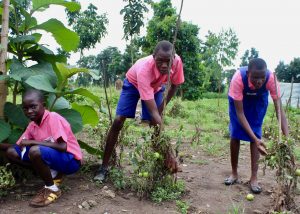
Students tend to tomato plants at a school outside of Dokolo
This was not originally a concern of mine because my experience in primary and secondary school was wholly different than the Ugandan students we have met and visited. When I sold Girl Scout cookies in fourth grade, for example, I did so to raise money for our troop and the organization, not to learn sales and marketing skills as the TAMTF students do in their enterprise programs. I also did not see a major shift in the TAMTF model—from schools choosing their own enterprises to operating the suggested social value product enterprises—as problematic because I was thinking first and foremost about the value lanterns, pads, filters, or briquettes could add to the schools’ communities.
This being said, I still believe in our project—it’s just slightly more complicated now. If schools are to start and operate enterprises selling social value products in a way that allows students to develop necessary practical skills, we must suggest partnerships that provide students with intensive, continuous business training. In many of the schools we have met with, students are taught to manage the enterprise’s finances and are responsible for handling all the money that comes through. This is a practice that must be continued, even if the schools are working with a social enterprise. Furthermore, I developed a new appreciation for the agricultural enterprises during our trip to the North. Although I see why TAMTF has struggled to assist these enterprises, which are often faced with setbacks due to droughts and pests, I believe these programs are extremely beneficial to students in helping their family’s manage their crops. Therefore, I hope we can design partnerships that will allow schools to continue to operate their agriculture businesses as they launch their social value product business.

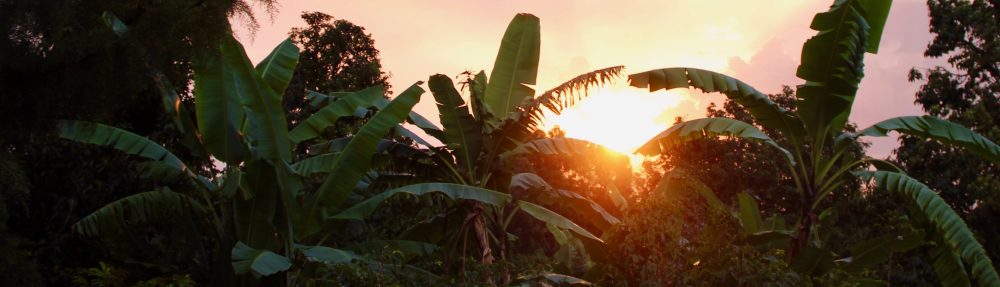
Sunset in Sipi
I still find myself thinking of that view over Kampala from the Yunus office frequently as we travel around Uganda and continue to learn more and more about the country and the people. I believe it acts as a metaphor for what it was like to study and research Uganda before I came. Just like the view of Kampala from four stories up, our project, the educational system, and the country as a whole, made so much more sense before we arrived. That isn’t to say that I don’t love the view from the ground and the challenge that comes with navigating the various streets and systems in place here, only that it is more than I expected. Understanding the complexities of the existing infrastructure and social equilibriums, however, is as perplexing as it is exciting. I may come back to GSBI with more questions than answers, but I also return with the desire to return to Uganda one day and find answers to these questions. I am beginning to feel as if GSBF is just the first step in a much longer journey and I am anxious to see what is ahead.