I am a senior in college, a proud woman in electrical engineering, a perpetual bassist-in-training, and a quiet analytical thinker. After the summer with the Global Social Benefit Fellowship I am a Solar Sister. You can find me in any semiconductor, circuits, or power systems course available at Santa Clara University and I am in the beginning stages of designing a locally manufacturable and serviceable solar home system for Senior Design. After this year I will continue on through a fifth year at Santa Clara as a masters student in Electronics, ideally following the completion of an internship in photovoltaic cell fabrication or power transmission with a utility that puts a strong emphasis on smart grid implementation and the incorporation of solar into the grid’s energy portfolio. To this I’d bring my experience working with distributed energy in an emerging market and a passion for solar photovoltaics. Everything beyond this is unplanned and quite likely something I have yet to explore.
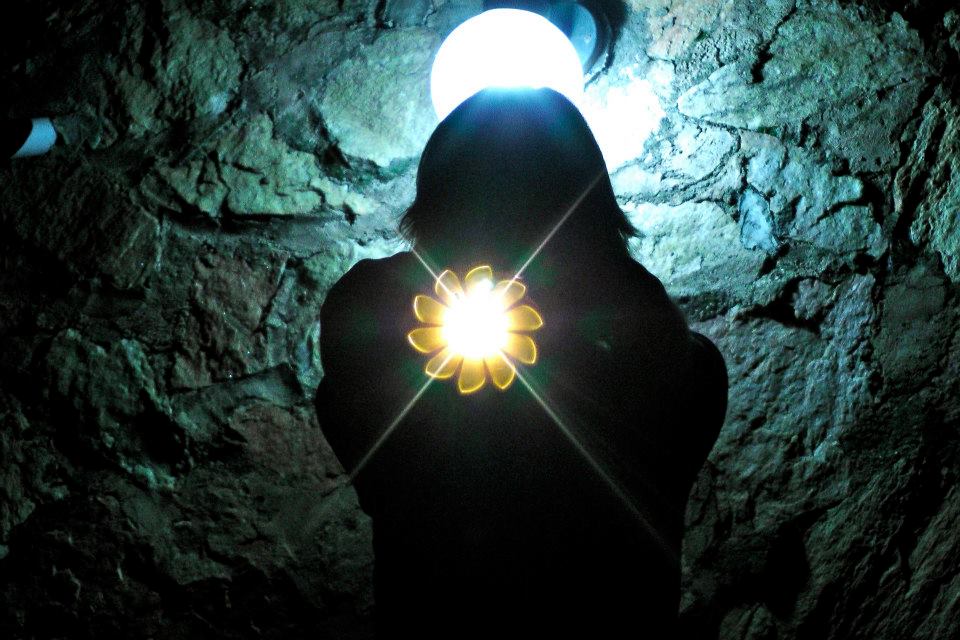
Me holding a Little Sun portable solar lantern
To get here began with one enormous choice. Making important decisions is characteristically difficult when I care so strongly about the opinions of my peers, professors, family, and mentors – my own opinion easily gets hidden. This was particularly poignant in deciding to accept the offer to be a Global Social Benefit Fellow. Studying social entrepreneurship, working abroad in an emerging country, and focusing on frugal innovation in the context of a developing nation is somewhat unconventional for an undergraduate student in engineering and as a result it is often difficult to explain to others the choice to pursue such a fellowship instead of the traditional technical internship. I can honestly say the rebellious nature of such a choice and a desire to travel beyond my comfort zone influenced my decision. More than that, however, I had an innate goal to be a part of a program actively removing the “this is how we’ve always done in” attitude and to have the opportunity to see firsthand a very meaningful, far-removed from Silicon Valley, application of a technology so close to my heart – photovoltaics.
The dismissal of “this is how we’ve always done it” is addressed through the study of social entrepreneurship as a vehicle for creating sustainable, positive social change – an alternative to handout and aid programs which provide only temporary solutions. Projects in the latter category made me uneasy as they can create a hierarchical divide between those giving and those receiving. What drew me to the course’s case studies of social entrepreneurs were the innovative solutions to the world’s most pressing problems – particularly those driven by community involvement and integration of the talents of all players. For example, it is always stated that 1.3 billion people live without access to electricity and there are countless solutions to this problem – subsidized and freely given electrical systems, international service projects that install electrical systems and leave, grid extension to the far reaches of every village. Then there is the beautifully simple model of Solar Sister. Through pre-existing social networks, create a women-centered Avon-style model for the last-mile distribution of affordable home-scale portable solar products. This provides economic opportunity for the Solar Sister entrepreneurs and empowers the respective communities by bringing light and energy – factors which improve health, safety, and education.
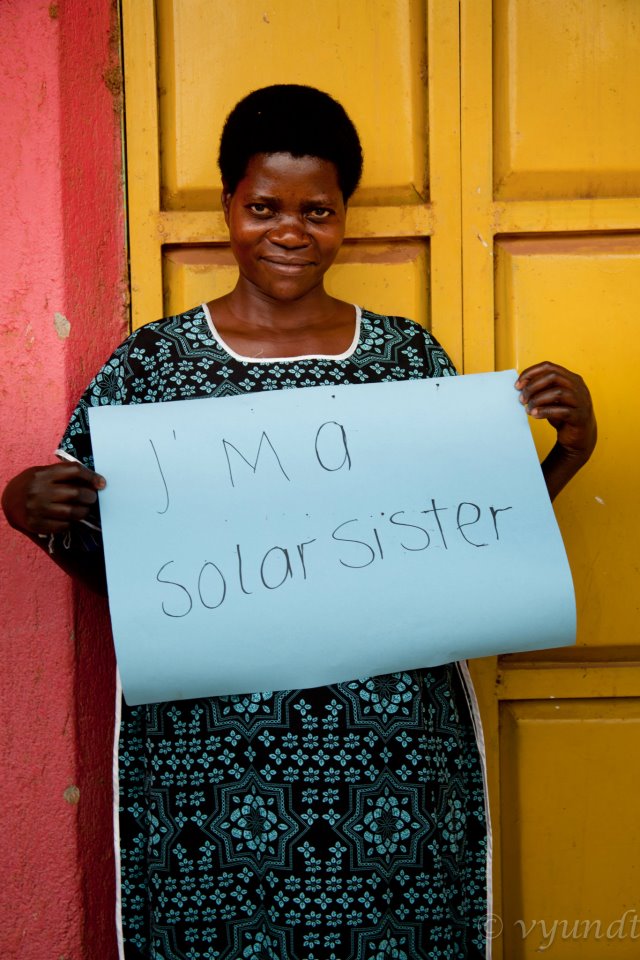
A Solar Sister Entrepreneur from Masaka, Uganda
The spring course, Seminar in Social Entrepreneurship, created a crash course in business plans, existing social enterprises, emerging markets, and related policy and projects. I ate this up with excitement – in conjunction with experiencing engineering for the developing world with We Care Solar, this created a completely new world to me with unrealized magnitude. I wanted to be 100% immersed in it, which created a somewhat compulsive draw to any reading, presentation, and seminar on the subject. At this point I was coming from a, somewhat contrived, period of believing my interests were all top level; that I could not hold a passionate conversation with strong opinions or understand a specialized subject on the most intricate level. Social Entrepreneurship as a method of eradicating energy poverty was an area where I found that missing piece. It seemed to me that engineering for the emerging markets was on the verge of producing great opportunities within the Santa Clara University community. I talked to everyone, my housemates, professors, and friends, about everything new I learned – microfinance techniques, advances in mobile banking, issues of accessing clean drinking water. I probably talked a few people’s ears off – not a usual characteristic of mine. As a side-effect, by speaking so much of my experiences since becoming a fellow, I have greatly improved my ability to speak publically and present my ideas. I found something I am passionate about, can talk about, and have strong opinions on. I can truthfully say I have found great enjoyment in doing so.
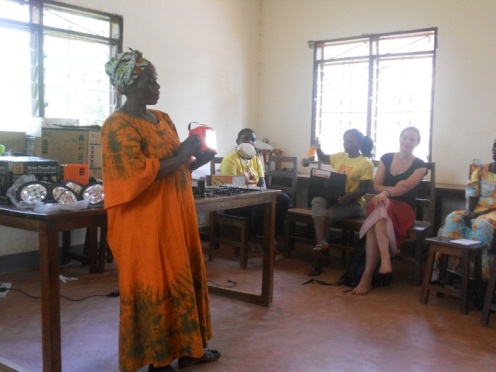
Finally the time came to travel to Uganda and to experience working in an interdisciplinary partnership with two very awesome and talented non-engineers. Our project was to film a trio of videos – one intended as a general commercial, one geared toward an audience of donors, and one to serve as a conversation starter for training sessions. By not having a project directly linked to my background in solar technology, as I had originally envisioned, I often felt frustrated, as though I did not have my own niche in our project. In my head my contribution did not seem as tangable as being a photographer or the videographer and I struggled with times of feeling of little use. I was gaining and using skills in conducting interviews and assisting with film and camera work. Rather than succumbing to the negative thoughts, with the help of a few integral people I was able to realize that I simply had to rework my vision of the situation – every day I experienced instanced that involved “thinking like an engineer,” most notably in in assisting with a Solar Sister technical Training Session. My experiences in the Latimer Energy Lab teaching solar technologies to people without a technical background easily linked to a presentation at a monthly training session for the Solar Sisters. These are training sessions the Solar Sisters elect to attend as a part of lifelong learning and advancement in their expertise as solar entrepreneurs. As a team we found that all three of us had important knowledge and skills to contribute and I was happy that if anything technical arose I got to be the resident techie and could understand the products very well.
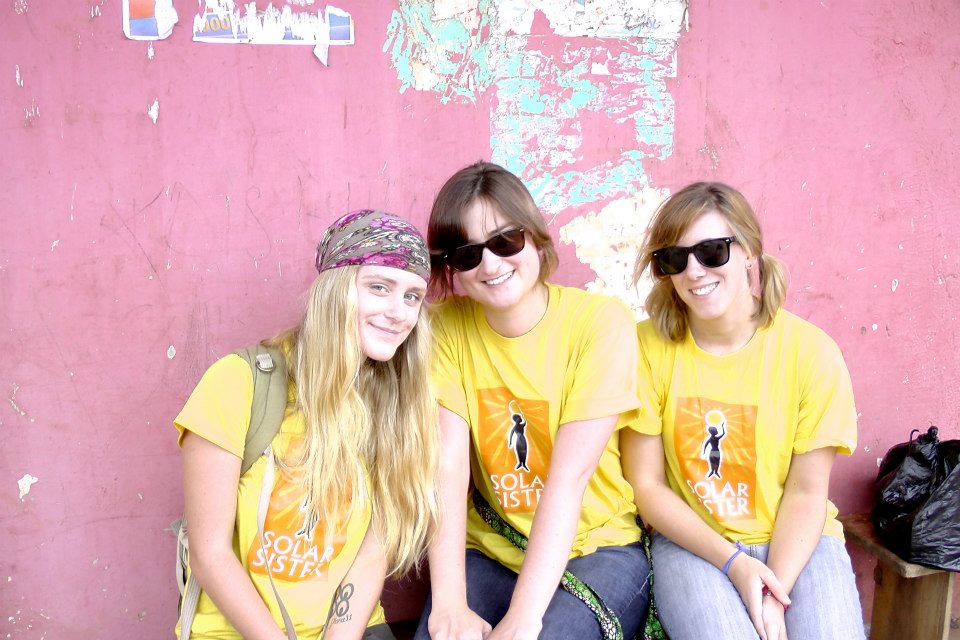
Toi, Kirsten, and Misa – Honorary Solar Sisters!
What I found quite remarkable about my experience in Uganda was how I did not feel dramatically different in a developing country. My expectations were heightened because I was often reminded by others that it would be my first experience in a developing country and that it would be incomparable to the United States or my study abroad experience in Copenhagen. I felt I need to be emotionally prepared. Instead this experience has helped me to realize that our respective locations are not all so different insofar as we all have the same basic needs and desires – to be happy, to be healthy, to get an education, to have access to electricity, to enjoy entertainment. The differences lie in the accessibility such things for sure, but getting to know the people and put a face to the solar projects I have learned so much about – a face with personality, attitude, and sense of humor not just the anonymous “end user” – demystifies Africa and working in international partnerships.

Talking with Solar Sisters about Panel Placement
Through interviews with customers and Solar Sisters it was clear that troubleshooting, repair, and battery replacement of solar products was a necessity and frequently a mission component in the distribution chain. If a products stops working it does not bode well for the widespread adoption of solar. A product may be affordable, rugged, and useable, but it is of little use if there is no way to service it, especially for easy fixes like battery replacements. Failed systems can remain unserviced and this stimulates market spoilage.
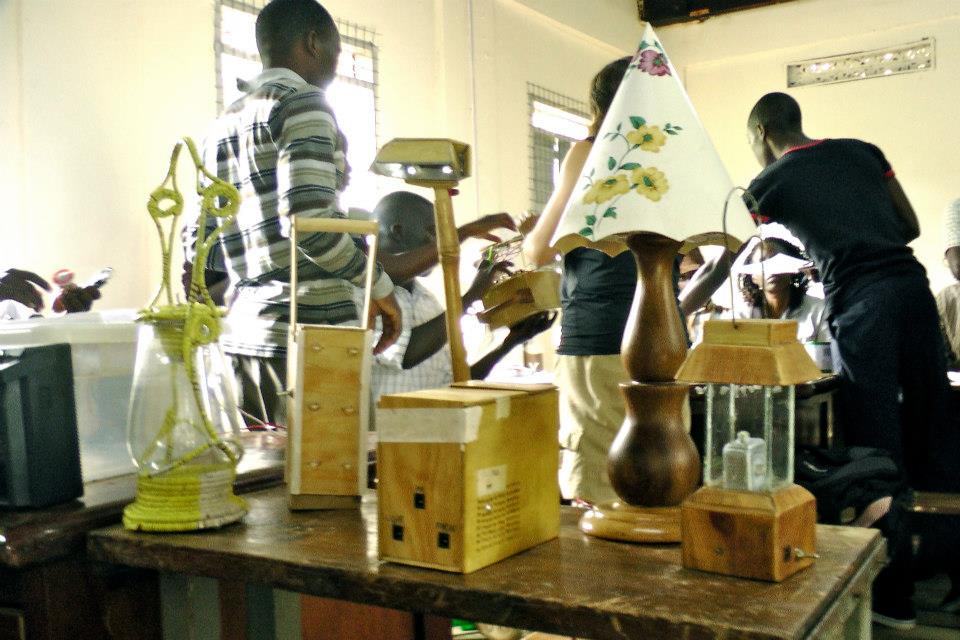
To combat the issue of failed solar systems and increase technical capacity on a local-scale, the Nsamizi Training Institute for Social Development, one of the oldest in-service Government Training Institutions in Uganda, contains a certificate course in solar technology which covers basic engineering design, manufacturing, installation, and repair of solar home systems and lanterns. At the end of the internship I met these students and was able to spend the day in their lab. Here was a place I felt at home – I did not realize how much I missed looking at circuit diagrams! I built a low pass filter and determined why a diode circuit was not working and these little tasks made me feel the most content. I am happiest when getting to use engineering and it satisfies me to know that I picked the right major – lucky because it was rather by chance.
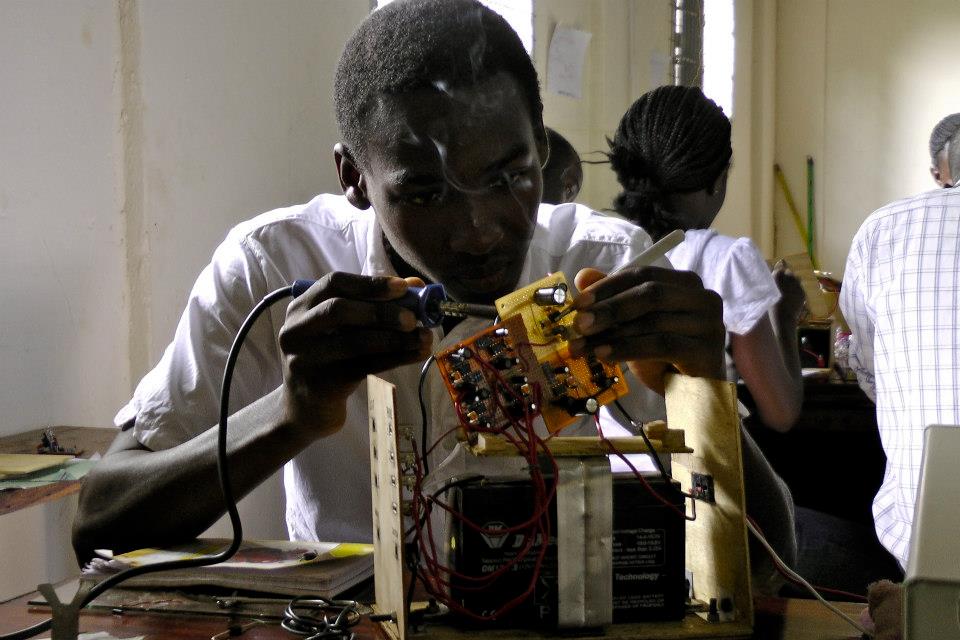
A Student at Nsamizi Solar Technology Lab soldering a DC DC converter
While at Nsamizi I saw the joy solar can bring into the lives of students in particular. These students were my peers; fellow technologists in their early 20s with a passion for bringing solar to their respective communities. This visit was the catalyst for what would grow to be a technical network much bigger than my single contribution and eventual senior design. My senior design project is to optimize the electronic design of a Solar Home System in terms of efficiency, affordability, safety, serviceability, and meeting the customers’ needs. The design parameters are dictated by Energy Made in Uganda as well as the design for the rugged and attractive housing for the system and lights.
This research fosters community-centric involvement in eradicating energy poverty, focusing on developing human capacity in the form of transferrable skills attained from learning manufacturing, installation, and servicing of solar energy products – the same idea I admired in the case studies read at the beginning of the fellowship. As a result, international partnerships will form and provide mutual benefit. GSBI alum involved in solar product dissemination, such as Solar Sister, will gain access to a network of technicians able to service the products they sell. University students will learn appropriate technology, engineering with a mission, and the approaches of community-based projects.
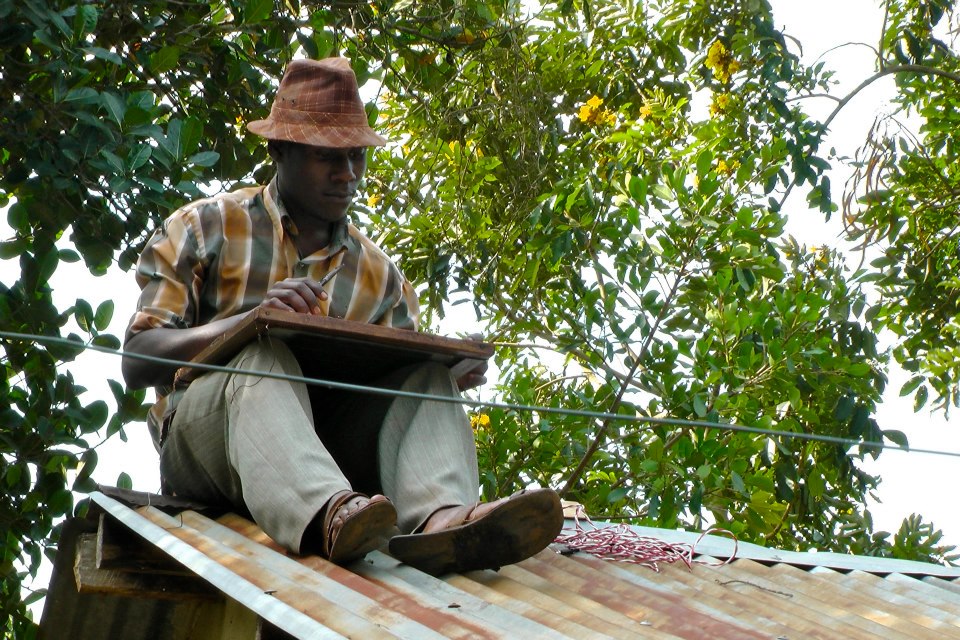
A Solar Panel being installed on a roof by a student
I hope for this to serve as a venue for students involved with the Center for Science, Technology, and Society to gain exposure to socially-minded projects, learn valuable lessons on engineering in the developing world, and continue this focus on “engineering with a mission” as envisioned by the Santa Clara University’s School of Engineering. Students I deliberately chose to continue the fifth year at Santa Clara University because the unfolding of my vocation feels to be at a crucial point. Webs are being formed and I do not feel like my work here will be done in two quarters. It excites me to see how passionate the School of Engineering is toward incorporating projects and partnerships with the developing world and I anticipate this to be only the beginning. From here I want to take the experiences of the fellowship and be involved in our country’s energy sector or in semiconductor development in Silicon Valley, strategically looking for corporations with outstanding Corporate Social Responsibility programs – particularly if they are involved with support of social enterprises, improving the quality of life for those they serve.
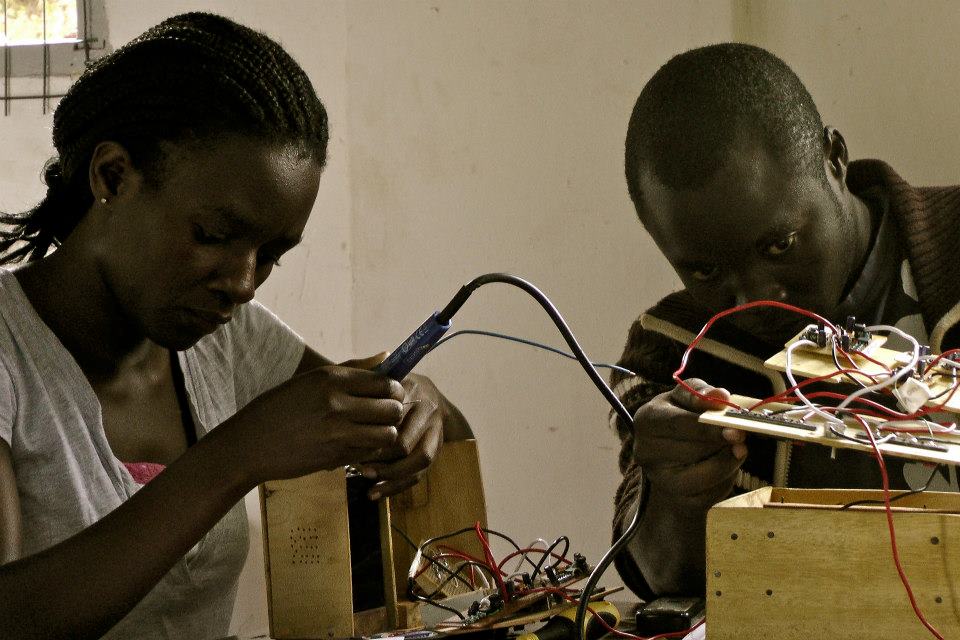
Two students manufacturing Solar Home Systems
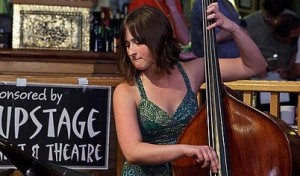 breaking into the world of the upright bass, classical and afrio-cuban music followed. Music became a vehicle through which I explored other peoples and cultures, from the hippie folk-music lifestyles I experienced in Darrington, WA to the traditional Cuban musicians of the the Buena Vista Social Club whose virtuosity I could only appreciate through documentary and recordings. One particular email from my orchestra director, however, opened my eyes to the social change possibilities inspired by music. The email contained a YouTube video about the Venezualean National Youth Orchestra and its transformative presence in the lives of at risk youths, and the effect of providing instruments for the students who could not afford them, thus making classical music accessible for any economic level.
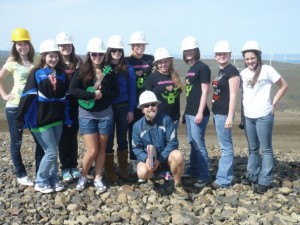 During the AWGE trip we visited LIGO, the Wild Horse Wind and Solar Facility, and the Tri-City Astronomy Club. Getting out to the Wind and Solar facility and standing amongst vast solar arrays and wind turbine fields I knew I wanted to be involved with that somehow. That exposure, paired with the comradery of fellow females in the sciences lead me to two conclusions, I wanted to be involved with renewable energy and I never wanted to give up the supportive community of women in the sciences.
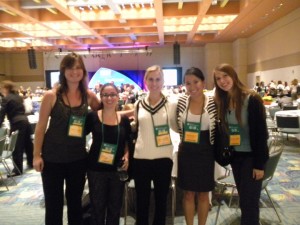 Contrary to my engineering theme, I took a course focused on ethnomusicology and continued to discover the magnitude of knowledge one can gain about a culture from their music and it was in this class I first heard the traditional Marimba music of Uganda. At the time I craved a connection to keep music and social change on my radar. The first year or so of engineering can be rather dry and methodical, and to be honest I occasionally lost sight of the bigger picture of why I was doing it. I took Spirituality and Sustainability and first learned the concept of vocation and how my skills in electrical engineering ARE needed, and that there is an ability to provide my skills as a resource for those in need. This notion, especially in times where the math and science abilities were not coming so easily for me, motivated me immensely. Shortly after, the weekend I spent with We Care Solar set my sights on the developing world. Through their workshop, “Stand Alone Solar Electricity for the Developing World,” I got the chance to build Solar Suitcases, a suitcase-sized solar module with an LED lamp designed for use by midwives in northern Nigerian maternal health clinics. That weekend I witnessed engineering with a purpose first-hand. It was clear; through attainable skills of significant interest to me, I could make a difference. I wanted in on this industry.
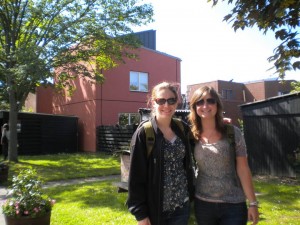 It was interesting to learn that just twenty years prior, Hyldespjældet was considered a “problem” neighborhood. They started with adding a hen yard, later a very elaborate recycling and reusing yard, then compost containers were added, clothes swap shop opened, an organic vegetable garden grew along with a community kitchen, and a plethora of energy efficiency changes took place including the installation of thermoplane glazed windows. It was a remarkable combination of social, economic, and environmental benefit. For the people I met during my stay in Copenhagen, sustainable practices just seemed second nature, from personal choices like biking instead of driving to governmental decisions like installing District Heating.