When I was in high school and would think about my future, I always thought I would work abroad or in D.C. I wanted to save the world, or at least our country, but before beginning the fellowship, we watched a video about the ethics of international volunteerism, “An African’s Message for America” by Cassandra Herrman. In this video, Kenyan activist, Boniface Mwangi asks “Why don’t you start local before you go international?”
This question hit me hard. I couldn’t quite name why I wanted to go abroad, I just knew I liked to travel and meet new people and cultures. After some thought, I didn’t view his question as an outright criticism of international work; however, it is a question we need to ask ourselves as we navigate our vocational path. Why do we feel called to work internationally rather than domestically?
As humans, I believe we have an obligation to help those living in poverty and unjust systems, but we must also be critical of the methods in which we choose to help others. Will we truly listen to those who we aim to help? Will we help give agency to our intended beneficiaries? As I learned about social entrepreneurship, I felt that it was an approach that does these things. Social entrepreneurship disrupts unjust systems, by listening and empowering those in poverty. It believes that those at the base of the pyramid are fully capable of participating in the market and aims to include them. Although I personally do not feel called to entrepreneurship, I found truth in this approach.

All my life, I have loved school. I have parents who did whatever they could and provided everything I needed to do well in school. I was motivated to do well, because I knew it would pay off, and I knew the sacrifices my parents and grandparents had made to get me to that point. I had amazing teachers who believed in me, and my friends and I motivated each other. I know this is not the case for everyone. For some, school is a miserable experience. There are different social, economic, and political factors that influence the education a child is able to receive. I want to bring down these boundaries to ensure that every child is educated fully and that the whole child is educated, not just those aspects that can be shown through test scores. I believe that the entrepreneurial approach is one way of achieving this. By accepting that all children, regardless of color, socioeconomic status, language abilities, or academic performance can participate meaningfully in the school setting, we can begin to break down the boundaries that prevent students from learning.
I’ve thought of different ways I can best advocate for children and their education. I considered educational law, teaching, and school administration. In fact, I am still exploring these paths. Through my experience in the fellowship, I have learned how important it is to truly understand the cause you are fighting for and how important it is to be a good listener and observer. I have decided that the best way to be an advocate for students is to teach, at least at first. I know that later I will be called to advocate for students legally or through administrative roles in schools, or even at the state level. I want to “disrupt the system,” but first I need to experience for myself, in the classroom, what students, educators, and parents face.
Addressing the question of working domestically or internationally, I know that there are children, and especially girls, that need a quality education in different parts of the world, but I feel that I am called to do work here, at home. I want to erase the myth that English-language learners, low-performing students, and poor communities are a burden on the educational system. Educating all students reduces poverty, crime, and incarceration. Besides the beneficial effects on society, it is a right all students have under law, one that I don’t feel is currently being fully upheld.
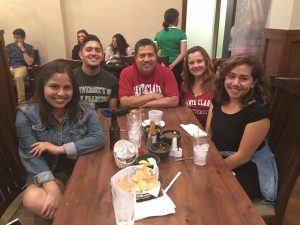
One reason I feel called to work in California, and especially Los Angeles, is my family. For me, family has always been number one. Although I love traveling and experiencing other cultures, I also know how much family means to me. Being away for a while, even months is fine, but I don’t like the idea of a permanent or even semi-permanent responsibility keeping me from responsibilities at home. When I came to this realization, at first I felt disappointed with myself. I have always considered myself an independent person. Since high school, I’ve taken every opportunity to get out and see something new, and although I have cherished each and everyone of these experiences, a long-term obligation away from home doesn’t seem right. I know that I can be successful on my own, it’s what I’ve been doing for the past three years at SCU. I know that my family can survive without me, too, but part of what I have learned through the fellowship is that self-awareness is key and vocation is not just about a job. For me, family is a part of my vocation.
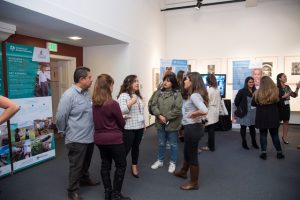
Another reason I have decided to stay in California is the specific community I wish to serve. As the granddaughter of Mexican immigrants, I’ve always held my culture as a huge part of my identity, but my time with Sistema Biobolsa and interacting with people in Mexico City helped me realize that I don’t know everything about Mexico. What I do understand more fully is the Mexican-American experience, especially inter-generationally. My time in college has also made me aware of different experiences I previously knew nothing about. I know that my background and interactions with others from diverse backgrounds can help me be a sensitive and culturally competent educator.
I know that I started off by saying that I used to want to “save the world.” Although I no longer have aspirations to be president of the United States or single-handedly cure world hunger, the fellowship has revived in me that “heroic ambition” we read about in Chris Lowney’s Heroic Leadership. The fellowship has reminded me that there are different ways to make an impact. In high school and college, I started to stray from pursuing teaching and education because people told me I was “too smart” to be a teacher and there were more prestigious and higher paying jobs. (I now realize that none of the people telling me this were teachers.) Through self-awareness, I have realized that I don’t care too much about money or prestige. As a teacher, I will have the power to make sure our future is educated and compassionate. To me, that sounds like just what the world needs right now.