“If you’re from the US, why do you speak Spanish so well?” This was a question I faced just about every time I met anyone in Mexico and Nicaragua. Internally, I would think “how could I not?” Not speaking Spanish would mean not knowing three out of my four grandparents who didn’t speak English. Speaking the language made me feel connected to them and our roots.
In the US, “what are you?” is not an uncommon question (although a little rude, at times). I was born in the US, sure, but I am Mexican. It’s the defining category I check on forms and the experience that I live. It’s what many see when they first look at me. It also means culture, traditions, a way of thinking, food, and family.
Ni de aquí, ni de allá: neither from here, nor there, is a state that many children of Mexican immigrants are familiar with. The feeling of belonging in neither culture can strain a sense of identity and self-acceptance. As a second-generation Mexican-American, I am blessed enough to have felt this only rarely. I have privileges such as citizenship, fluency in English, and others that make me more “acceptable” to the standards set by American society. Still, the characteristics that make me more acceptable to American society can sometimes seem to be distancing me from my heritage. Am I less Mexican because I’m vegetarian? Because I don’t understand a lot of the Mexican slang my peers speak and hadn’t visited the country in six years?
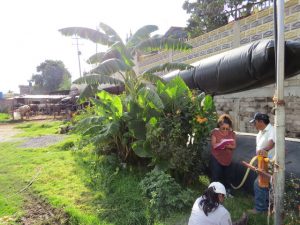
In the field in Mexico, in my Nike sneakers and unaware of local farming traditions, units of measurement, and local geography, I often felt it was glaringly obvious I didn’t belong. Despite my efforts to retain my culture, in Mexico, I was American. My grandparents might have been born in Mexico, but I was American. When people looked at me, I was a foreigner. The way I dressed, took pictures of every meal, and the Spanglish I fought to suppress exposed me. The culture that I loved and felt coursing through my veins did not view me as its own. It stung a little. Still, instead of the skepticism that I expected, the people that we met welcomed us with open arms. Sistema Biobolsa clients opened their homes to show us their biodigesters and animals, while potential customers shared their experiences and hopes for obtaining a biodigester. They answered our surveys happily and even thanked us for choosing them to visit. Not one person we visited refused to lend us their time or denied any questions.
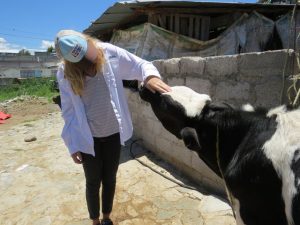
My status as an outsider that I assigned to myself didn’t affect the way the people I met treated me as much as I had expected it to. Labels and backgrounds can play a huge role in who we are and how we feel if we chose to let them; however, I found that they don’t always affect how people treat you. The farmers and Sistema Biobolsa employees that we met certainly didn’t let it affect how they treated us.