
The Key to Development is Cooperation
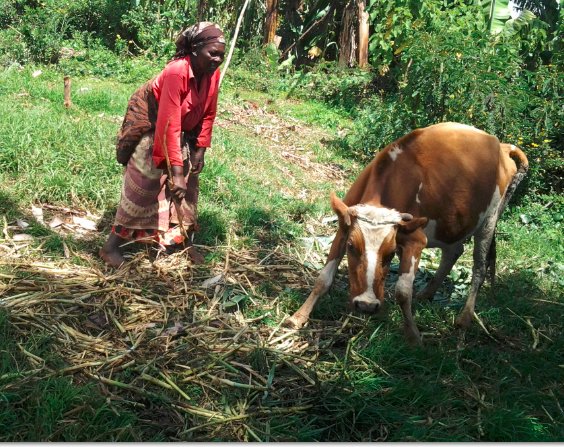
Cooperation between Kiva and Juhudi Kilimo enabled Moraa, a mother of three, to purchase a dairy cow. With training, she has leaned how to manage her loan responsibly (source).
Juhudi Kilimo and Kiva present two examples of microfinance operations that each utilize innovative finance models and technologies for a greater social good. In doing so, they sucessfully bridge the gap between an area of resources and wealth, and those in need — they successfully apply financial technologies with a direct social purpose. While they operate in different ways – be it their respective business models or scaling techniques – there is great benefit that comes from joining forces. In tackling the problem of unmet needs amongst developing communities through the use of financial technologies – an enormous challenge – these organizations recognize that they can not achieve their goals on their own. Instead, they must join forces to reach their ends: that is exactly what these two organizations have done. Their models and scaling techniques are complimentary, exemplified by Juhudi Kilimo being one of Kiva’s field partners!
Further, both of these organizations are at the cutting edge of business model development for social benefit. Juhudi Kilimo is the first agricultural asset-backed MFI, and Kiva is the first ever example or person-to-person lending. These two cases were examined not only for their originality, but their success at developing modes of scaling that enable the organizations to benefit a greater number of people, at a greater scale. Common to both cases is a motivation to scale not for financial return, but for a positive social impact.
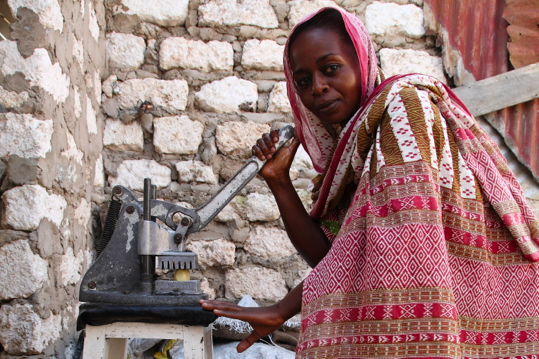
Reaching out to entrepreneurs in Kenya is a resource intensive process. Collaboration between Kiva and a MFI parter enabled Dogo to purchase goods for her business. Source.
There is much for the development community to learn from social entrepreneurship, especially these two case studies. Today, development is presented as a seemingly insurmountable ‘problem.’ These two organizations display how to turn what many view as a problem into a great opportunity – an opportunity to help those in need in innovative ways. Just as Juhudi Kilimo and Kiva both recognize that they cannot advance rural livelihoods and development on their own, the bilateral and multilateral aid community should recognize the same. It is time for these parties to come together, recognize what each party brings, continue to push the envelope in terms of innovation with a purpose, and work together for greater social impact.