Uncertainty and Calls to Action

I came to the fellowship largely to learn about, and get immersed in, social entrepreneurship. Early on, the simplest definition I heard about the field was that it was mixing for-profit business practices and social impact initiatives, creating companies that value profits and impact. Not only did this idea give me the lightbulb-illuminating-over-my-head feeling, but it also felt like it should be the obvious choice for most everyone to pursue vocationally. How could someone not be compelled by this? How could so many people want to enter the business world, but not want to incorporate, across different industries, positive impact on the world if they weren’t giving up the traditional monetary success to do so?
Nine months ago I wanted to be told and taught how to contribute to this field. I was still glowing with a certain electricity after feeling like I had found like-minded peers, hungry to change the world, and I was confident that this was an experience that would shape me forever. Done were the immersion and service trips which provided a social change high that faded quickly over the following months. I was ready and eager to get pulled into an experience that I couldn’t shake; pulled into a field that I could never turn away from.

Over this time I’ve had so many perspective changes its hard to recall exactly where I stood beforehand, or to really focus on one over another. One thing that’s obviously clear is that I had an imperfect impression of both social entrepreneurship as a field, and how the fellowship experience would affect me. While social entrepreneurship results in amazing companies and action-driven change, it also isn’t close to perfected. The field is clearly still figuring itself out. Its like we’re trying to smash an oval peg (social entrepreneurship) into a round hole (the capitalist market), which just isn’t quite built for social impact to be incorporated inline with profits and monetary valuations (yet, more on this later). Two realizations built that opinion. The first is that the work doesn’t stay with you as much as I thought it would. It absolutely changed how I view my role in the world and how I view business forever, but its not as different from an immersion or service trip as you may think. As corporations around the Bay Area started their recruiting processes and my experience got further and further away, I could feel the high start to subdue. It wasn’t as if I couldn’t imagine pursuing a career outside of social entrepreneurship, or couldn’t get intrigued by different entry level jobs in tech or consulting—these still made me excited and hopeful and nervous. Now I was just trying to find any way (even if it was a stretch) to convince myself that taking the corporate position wasn’t selling out or bringing me irreversibly away from the social entrepreneurship field.

I think this has a lot to do with the second realization, which is that there isn’t a clear career track with social entrepreneurship. I expected to be funneled through the fellowship program into a set path towards next-step jobs in my search toward social impact, but instead the next step is incredibly ambiguous. Of course, it’s impossible to have a job or job category that fits widely diverse skill-sets and interests, but the ambiguity and uncertainty of where to place myself in the field is intimidating, especially in the face of big name companies’ recruiting and friends signing full time offers. I don’t mean to sound like I’m not impressed by and drawn to the field, but rather I want to introduce my changed vocational pursuit, and the frustrations that formed it.
The big question that I’m currently facing is the big one that everyone faces coming out of the fellowship: do I pursue social enterprise work immediately or do I go get trained at a big company and come back to the field later on? And these previously mentioned realizations make the question incredibly intimidating, because I know the social impact high could fade. The jump into an uncertain field and career is scary in a way, but so is the idea that I could get lost in the corporate track as responsibilities build with age and the developing country experience gets farther and farther away. Through this thought process, I’ve come to understand how much I want to tackle the bigger, systematic changes. Go after changing the field and making it work with the capitalist market, rather than trying to find work around or adopt idealistic views. My changing understanding about social entrepreneurship has built into an opinion that I want to aim at addressing throughout my career: Social benefit can’t continue to be a burden for careers or businesses.

It can’t be a trade-off where often businesses are left sacrificing sales or prices or valuations and the most talented people in the world often have to sacrifice prosperity and more esteemed careers in order to positively impact the world and tackle injustices. Somehow we have to change how we value companies. Get rid of the notion that increasing profits is the only way to increase value, and affirm the idea that social impact is a measureable form of value as well. There will never be the same level of talent, flood of entrepreneurs and disruption-seekers, or capital investment than what we see around us in the Bay Area within the social entrepreneurship otherwise, and that’s the type of rapid, hard-fought change needed. And before taking the view that I am taking any sort of cynical view of humanity let me note that I am only saying this out of an intense realization that very few get the same opportunity to, especially on an international level, see the problems, learn about solutions, and meet the change-makers that I, and many of you reading, get. And even worse, that call to action can fade in people that get the experiences! We need that clear career track, that obvious choice for people to pursue vocationally.
This experience has given me the opportunity to meet amazingly talented people working tirelessly toward social impact, people who are changing the lives of many people and foregoing those traditionally high-profile careers in the process. The more I meet, and the more about them I learn, the more I take on the opinion that these are the people that are leading the world toward change. There just isn’t enough of them, yet.

Included in these people are my fellow fellows and the professors and mentors from the Miller Center. Talk about amazing people that are going to change, or already are changing, the world. Like I mentioned at the beginning of this post, I came into the fellowship because of the people and they have irreversibly changed the way I view the world. Special thanks to Lauren for letting me ramble to her for nine months about the most and least important things in life. Best 2017 TAMTF GSBF partner ever.
New Idols

One question has been asked repeatedly to me since my return to the States, and it gave me a lot of trouble at first. What was the most amazing part? It hasn’t only been posed by friends and family as a first dive into hearing about the experience, but also in other, deeper and more vocationally reflective forms such as What are you going to hold onto (or remember) the most? Or something along these lines. And it was difficult to sort out—how do you value travel versus the cultural experience of living somewhere completely different versus the impact of the work versus the inner development? I could answer the question by mentioning these general categories, but it lingered with me for awhile. What will I hold on to? What really changed me?

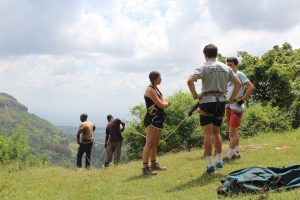
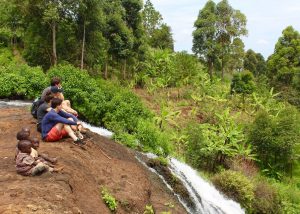
8 people enjoying the view in Sipi Falls

Only recently has the answer become obvious: the people. The people changed me. Not only individuals I closely worked with, communicated with, or even met (though they drove this realization); but also the people that filled the streets and were apart of the background. The people that sometimes made me feel like more of an outsider than I’ve ever felt when walking down the street trying to smile at the stares and yells of “Hey mzungu!” The people that filled the streets with indescribable energy and congeniality. The people that crowded to meet me at schools due to my skin color. The people that welcomed me into their homes and communities with more warmth than I’ve ever experienced from stranger.

But, like I mentioned, more than anything I’ll be pulled to remember the people Lauren and I met and worked with. I was inspired by American social entrepreneurs that had left careers that I had been dreaming about in favor of pursuing social impact in Uganda, but some interactions with local change makers left me in awe.

Steve, an inspiring social entrepreneur who started a coffee tour business to bring jobs and attention to widows in the Sipi Falls, showing us how to roast coffee beans

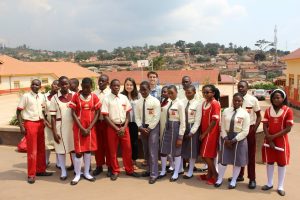
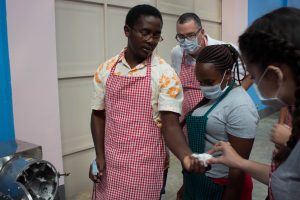
One school that we visited early in the in-field period provided me my first experience of this. We were meeting with Cathy, the teacher in charge of the school’s Teach A Man To Fish program, and were immediately taken aback by her assertiveness and confidence. This was shown through things as diverse as calling out the exact amount of minutes we were late to going into confident detail about different menstrual care product options during our interview. We loved her from the first moment of meeting her. We first were introduced to the whole team of students, who gave us a demonstration of the donut making business. Lauren and I were beaming during it from the excitement of realizing that these programs really work, the impressiveness and professionalism of the students running the school business, and the kindness that had been shown to us—and this was before sitting down with Cathy for the interview.

A group photo with Cathy’s school business team

We expected simplicity from the school business that we could adapt and improve (I mean, we were the ones who had traveled from Silicon Valley to introduce a new program to the TAMTF schools right?), but were shocked to find she had been pursuing our project of having the schools sell social impact products, specifically sanitary pads, within her TAMTF program for years. Not only had she pursued the initiative, but she had implemented complexities to the school business that we never imagined we’d be able to achieve. She had created a stock-based company that the students utilize to raise funds for the business and divide profits. She had created a partnership with an Asian school with a similar program to exchange products and therefore increase each schools market…internationally. At one point, we laughed and decided to lay down the entirety of our project in front of her for her advice and critique. Cathy wasn’t a research subject; she was a mentor. She was a young teacher, who also sat on multiple national boards and worked with refugees, looking to change the world. I mentioned in a past blog post that part of the reason I chose the fellowship was because I felt like I had found likeminded peers, unhappy with the system in the other fellows. Cathy epitomized that call to action, and angry response, but she aggressively pursued that change without the resources, privileges, and gifts we had been given to help us start our mission. Maybe pursuing social impact felt at times risky for me, or felt like I had to give up things to go down this different path, but here was an example of what being a social entrepreneur really meant. A win-at-all-cost individual willing to go down a million different paths in order to change the world. Someone that truly knows the problem, the injustice, and what’s at stake more than I ever could.

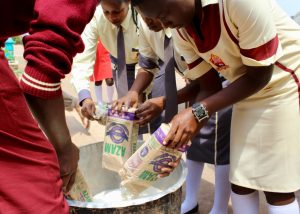
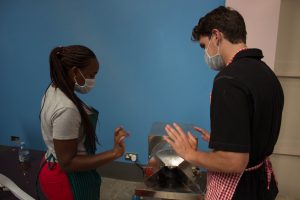
Students demonstrating their donut-making school business

This experience has given me an interesting, big-picture perspective of the social enterprise movement as well. I had been admiring the people back in the United States that were willing to dedicate time and resources toward making a difference in the world, but maybe these shouldn’t be my idols—and definitely shouldn’t be who I think about when I think of the social enterprise movement. It’s phenomenal what these people with resources do in order to help push the world in the right direction, but it’s also easy. Dedicating a couple hours, a week, a month, a small percentage of your disposable income to social impact is easy! It requires caring and seeking change, but that is the easy part. There are others, such as Cathy, fighting and scrambling to create change every day. They aren’t leveraging the Silicon Valley innovative thinking or have business models reviewed by individuals that started this company and sold that one, but they don’t need that either. They’re just going to keep fighting at all costs and through all outlets regardless of who offers their advice time or money. Whether two Santa Clara students come to discuss the new initiative they’ve been planning or if they stay at home. I feel like I’ve been putting in an incredible amount of time working on the Action Research and perfecting the recommendation and market analysis for TAMTF’s business development but realistically have I? I can turn off the switch anytime I want; I pursue other activities, think about other things, and interview for other career paths.

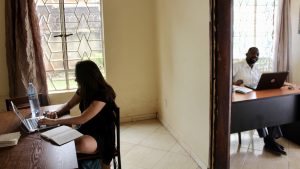
Inside the TAMTF office on our last day. A shot of Lauren and Jordan, one of our managers, hard at work

It’s been a roundabout way to get there but I think my point is this: I need to idolize the change makers on the ground floor of the movement, seek to empower their solutions, and never feel superior or important because of donating a fraction of time or effort or money to this movement. The complexity has overwhelmed me, and frustrated me, like little else has, but getting to decide to work toward change or not is possibly the biggest privilege I have. There are an amazing amount of local innovators and activists that are the most important layer of this movement, and they are the important drivers. Cathy was just one example of the many people rethinking the system that have I’ve had the privilege to meet and let change the way I view the world and my role within it.

Dangling Off A Cliff, A Time for Reflection

Wow the fear of heights was kicking in with a vengeance. I had just seen Lauren and then Will disappear down and off the edge of Sipi Falls facing Grace and I and holding on to a rock climbing rope bolted into a bare part of the grassy cliff near my feet. We hadn’t even come to Sipi to repel down its largest waterfall’s 100-meter face. I was promised coffee tours and hike and… ground. Safe, solid, comfortable ground. Not supported-by-a-harness-with-feet-on-side-of-cliff-type ground. But, with sweaty hands and nervous laughs, I too let the guides attach my harness to the ropes, leaned back off the cliff, and began my way down. After 30 meters of staring at the rock wall in-front of me and focusing on controlling my speed, the rope began to make me spin and the rock disappeared. What I saw was far reaching, jungle-filled hills on one side, and a massive waterfall on the other. I’ve had my breath taken away by nature before, but this was something different. This was complete shock and awe. As I dangled off the side of a cliff an all-important question came to mind: What the hell am I doing here? And thus my reflection began with the work Lauren and I had done up until that moment.

Trying to talk about something other than going off that edge

The Work

Our research is split between two categories. Visiting schools that work with Teach A Man To Fish and meeting Ugandan social businesses that operate in our areas of product research (solar lanterns, water filters, alternative cooking fuels, and sanitary pads). The school visits have taken us all around the country. While many of the schools are in the central region around Kampala, many more have led to trips of five, six, seven hour drives to different parts of the Ugandan border. One visit the week prior was taking us so deep into rural, northwestern Uganda that we were compelled to check Google Maps to ensure that we were still in Uganda, not the DRC. We were. (But only by a couple miles.) During the school visits, we have received an odd, inflated level of ethos that feels welcoming, empowering, and uncomfortable all at the same time. The teachers, principals, and students are always ecstatic to see us. Once an entire primary school stopped what they were doing entirely to herd around us yelling “mzungu” (white person) as we exited the car. A school the week before told us that students didn’t believe their new TAMTF club was a real, organization-backed program, but that us arriving that day was all the credibility they needed and that the turnout tomorrow would be enormous. While the negatives to the treatment are, of course, entirely internal, the visits never fail to leave me unsettled with the undeserved reception and appreciation we receive.

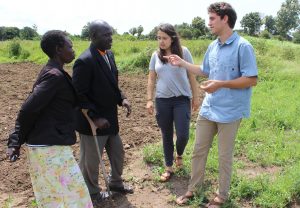
The principal and lead teacher of a school in Arua showing us the school agriculture business

The social business side of the research has been vocationally inspiring, even more so than I expected. This part of the work has been extremely autonomous in that Lauren and I are reaching out to the social businesses, scheduling meetings, and discussing partnerships and company operations on our own accord. It has even been similar to the school visits in that companies treat us with a higher level of respect and credibility than I’ve been accustomed to through various internships. In this regard it’s particularly nice to know it isn’t because of our ethnicity, but rather it’s stemmed from our preparation and the green-light provided by TAMTF. The meetings have led us into the door of executives at many of the most prominent social enterprises operating in Uganda, and each one has been a new opportunity to hear a perspective of another entrepreneur dedicating their life to social entrepreneurship. Seeing the diverse backgrounds of people that have dropped many of the promising, traditional careers that I am considering in order to work on the ground in Uganda’s social enterprise movement validates the career path for me. Not only do incredibly smart, driven people dedicate their careers to this, but they move away from top-tier companies to do so.

A Bana employee telling me to slow down making pads because I was working too hard

The Career Development

I’m often considered a laid-back person, but maybe I’m angrier than I thought. Something happens when social business is involved that forces any passivity out the window. I find myself judging social enterprises with a much more critical eye than typical companies; I think it’s because I see them with a much greater responsibility, and therefore much less room to have inconsistent leadership or underdeveloped products. There was a moment after a visit with Yunus Social Business, a large impact investing firm, that I sighed, turned to Lauren, and articulated a realization that I could never work for a social enterprise. The Yunus employees had offered yet another perspective that added yet another layer to the complex, problem-riddled ecosystem of Uganda’s developing market. They had argued that while the social products we were researching had good intentions, the firm had turned its focus to making agriculture more prosperous, as the workforce is primarily dependent on farming and the root cause of these various problems is the lack of capital to purchase a water filter, solar light, cooking stove, sanitary pad, and so on. But, I argued back, successfully doing so would only result in an even further dependence on farming as a means for income, though I saw their point as well (as well as the complex duplicity that we were facing). It wasn’t that I didn’t want to work in the field of social entrepreneurship, or work toward change. It was that I knew I am too opinionated, angry, big picture-looking, and overwhelmed by the huge scope of the problem when working in this field to ever be satisfied working in a role. I’d have to start my own enterprise or work toward the large, systematic changes to ever maintain my sanity. How could anything ever truly change if there isn’t a fundamental shift? Can people really be expected to save up their limited cash to spend it on a product that partly satisfies only one of the many huge needs? Questions danced in my head as each problem seemed endlessly more complex the further it was looked into—my career development is looking the same way.

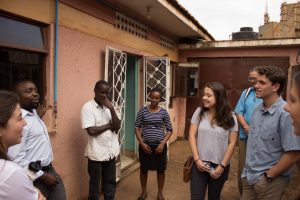
Lauren and I meeting the TAMTF team

The Country

To switch tone completely, the country is different and more astounding than I expected. Dense, green jungle (and the noises that come with it) intertwine with streets in Kampala, just as much as they do dominate the countryside. The country is packed full of breathtaking nature in every corner, whether it be the Nile, waterfalls, mountains, or game parks that are empty of tourists but full of huge animals.

The patriarchal and less progressive nature of society can be harsh, uncomfortable, and in-your-face, but its also combined with an incredibly friendly and energized population—which also draws to mind how many people there are here. When driving out to the countryside, there are small towns and trading centers seemingly every half hour. Each is almost identical to any other, in that they all consist of short buildings surrounding and facing only the main road running through. The buildings are all painted as colorful company advertisements (companies who, if their advertising goal was enormously high frequency and repetition, are doing fantastically). The road is always surrounded by people, whether that be people selling chicken-on-a-stick in Coca-Cola zip-up collared shirts, or just locals playing games and buying airtime. The way I’ve been putting the population density in perspective to myself is that Uganda is roughly the same size of Oregon, but outnumbers it in population 39 million to 4 million. Of course some areas of Kampala are overflowing, but the country feels more moderately full of people everywhere, rather than truly as crowded as the statistic suggests. (This is also a good indicator of the importance of last-mile distribution, rather than just serving the urban population.)

The most striking thing about the society has potentially been the distrust in police. That has manifested itself into my experience as police stopping our cars to ask for bribes just to keep driving, as well as an extremely hectic experience of getting two Ubers stopped and the cars confiscated by policemen, who didn’t explain anything to us, just as an effort to promote taxi use over Uber. Drivers talk of policeman as purely a nuisance. We’ve even had a driver clip a boda boda while getting pulled over by traffic police, only to have the policeman shrug and chuckle as he examined if there were any scratches on our driver’s car.

The one thought I can’t shake, which keeps nudging into the present moment every time I visit a school or repel down Sipi Falls or just take a moment to reflect and look at the city, is that this experience is special. It’s crazy. I’ve done immersion trips, I’ve traveled to developing and developed and in-between countries, I’ve lived abroad. But living, working, and exploring a country as foreign as Uganda is something my parents have never done (who are my baseline measure of people who have traveled a lot) and only few friends and family can say differently. At this point, there’s something laughable about the idea of me working in an investment bank this summer as originally planned—I have a feeling that will forever stay ridiculous. The feeling makes me feel infected in an irreversible manner, more uncertain as I’ve ever been about my life path, and completely satisfied about those two ideas.

My train of thought was broken by the heat being created by the quickening rope against my gloved hands. Maybe the gardening gloves weren’t the best choice for this, I thought to myself as I had a memory of the other, much thicker glove options I had decided against 80 meters ago. I was nearing the bottom of the falls and increased my pace further in excitement to feel the happiness (and safety) of completing the task. I was received by our guides that had gone before me and ran across the grass and rocks to the natural swimming pool at the base of the falls to join Will and Lauren in the feeling that is only describable as a mix of pure relief and a throbbing adrenaline rush. After a minute, I submerged myself into the pool and remained treading water while watching Grace undergo her descent.

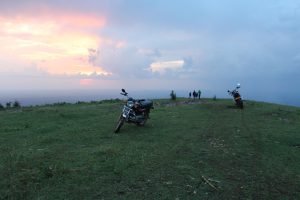
A couple of boda bodas and a Sipi sunset


A Series of Micro-Leaps (April 2017)

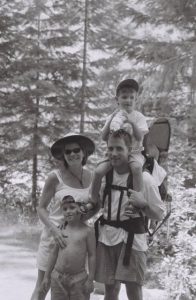
My family when I was very young on a hike
One of many family hikes (Kathy, Matt, Casey, Kedi, & myself)

My life has been characterized by a series of micro-leaps that have built on each other surrounding the common theme of seeking purpose. I’d almost call it ironic that these micro-leaps have all followed the same idea of choosing discomfort, challenge, and individuality considering both that I have repeatedly planned out a normal life for myself throughout growing up and that my family and friends drive the person that I am.

I’m the oldest of three boys in my parents’—Matt and Kathy Hickman—extremely competitive, close knit family. Both of my parents come from sibling-filled families of their own, making for expansive extended family gatherings and influencers, but nothing has ever matched the comfort, camaraderie, and rapport that surrounds the five of us when circled around a dinner table or crammed into a car for a road trip. With these fantastic people, I was engaged at a young age in travel and thirst for the outdoors, whether that be constant hikes through the forests in my home state of Oregon, scuba diving in the Great Barrier Reef off the coast of Australia, or attempting to surf in Costa Rica.

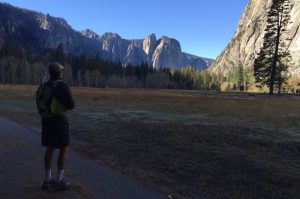
Hiking in Yosemite National Park

I call my journey toward this fellowship a series of micro-leaps because through the process of pursuing and accepting the fellowship, it became clear that my journey has been a path of stepping stones that has been in progress for a long time. Only a few times have I been faced with a challenging decision that I have seen as life-altering, and each time that decision has pushed me toward the more uncomfortable, challenging road. I chose the term micro-leap because while I was leaping out of my comfort zone, I wasn’t doing it alone. While my dad has always been my role model, my mom has always been my guide through these decisions. Despite boasting personalities that tend to clash, I always turn to deep discussions with my mom when confronting decisions. Most of the time her opinion frustrates me, as she has always, and will always, push me toward challenges. Somehow she is able to see the road that is set in front of me before I can.

I identified two clear micro-leaps prior to this fellowship that pushed me toward discomfort and purpose this past winter when in reflection over where my early career should take me. The first micro-leap was choosing to attend the private, Jesuit high school in Portland rather than the smaller high school with my middle schools friends. Always an indecisive person on the small things in life, choosing something that would without a doubt push my life in another direction took months of internal battles, but also gave me the first experience of this purposeful calling. It wasn’t that I couldn’t make up my mind, but rather the difficulty came with that I had to let go of the comfortable normal that I had built. The moment I toured the school and met the students and teachers, I could feel that I could never look away from the challenge and growth that a school with six times the students and a Jesuit influence could offer.

The second was, in a similar vein, choosing to attend Santa Clara. After the applications and campus tours were over and I was staring down yet another clearly life-altering decision, I turned to my comfort zone. The University of Oregon offered four more years going to school with some of my best friends, staying close to home, and a clear life path. As I came to decide on attending the university, I felt uneasy and double-checked my thought process with, of course, my mom. She knew I wanted to attend Oregon and hesitated, but convinced me, to my frustration, to visit Santa Clara with her one last time and let on that she felt that it was where I was meant to be. Upon meeting students and seeing the same themes I had come to love from my high school I first saddened as I knew, once again, I’d have to give up what I built in pursuit of something stronger.

These micro-leaps have prefaced life stages, which is why I find the fellowship to be the third in the series. The first was my move onto secondary schooling, the second into college, and the third toward a career. The first two decisions have been laced with rich development. At Jesuit High School I found a spiritual identity through religious experiences and taking leadership roles during retreats, I experienced loss and found the safety net that deep relationships provide, and I began to piece together my view of injustice in the world through intense social justice teachers and working with the marginalized both in the country and with an NGO in Nicaragua.

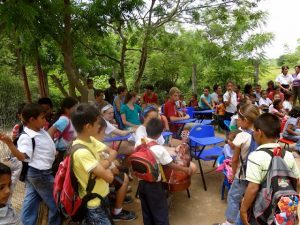
A large group of young Nicaraguan students with backpacks and American students sitting at desks outside
A mixture of Nicaraguan, my fellow American students, and myself engaging in homework

These micro-leaps have prefaced life stages, which is why I find the fellowship to be the third in the series. The first was my move onto secondary schooling, the second into college, and the third toward a career. The first two decisions have been laced with rich development. At Jesuit High School I found a spiritual identity through religious experiences and taking leadership roles during retreats, I experienced loss and found the safety net that deep relationships provide, and I began to piece together my view of injustice in the world through intense social justice teachers and working with the marginalized both in the country and with an NGO in Nicaragua.

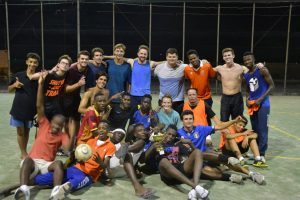
Group of American abroad students and adolescent African migrants on a concrete soccer court
Post soccer game with the North African migrants I stayed with in Sicily

At Santa Clara I found my people, developed myself academically, and been exposed to more experiences that drove contemplation and changed my view of the world than I can count. In the pursuit of the Jesuit ideals that I experienced in high school, I was given the opportunity to consult for a taqueria in an impoverished, local area over a twenty week period. This reignited my hunger for a greater purpose and led me to studying abroad in Bologna, Italy through a social justice program this past fall. For the orientation, I spent ten days in Sicily working with and living with migrants around my age from North Africa. This was a sudden catalyst that began four months of a perspective shift that will continue to shape my life. The view of myself in the world quickly shrank, and suddenly I understood what an incredibly powerful privilege I was given for no reason past pure, dumb luck. As the trip concluded and everyone in my group reflected on how interesting it was to meet these migrants, an anger built up inside me. I realized this was just another immersion trip to serve our own experiences and view of the world as many of my peers, despite the opportunity to first hand experience the injustice, weren’t seeing the call to action. From then on, I spent days breaking down my planned life filled with financial sector jobs, easy monetary success, and simple retirement through canceling interviews, changing my major and minor, and reorienting the priorities of my career search.

This is when I found the Miller Center and its fellowship offering. Suddenly the micro-leaps that had led me to this point seemed incredibly pointed.  The past micro-leaps had been grounded in my mom’s advice to surround myself with my people in order to find happiness, so I was nervous to meet the people connected to the center which would confirm the calling I felt. My first contact was during the first stage of the selection process via a one-on-one screening with a past fellow. I could feel my breath quicken and the urge to crack my knuckles surge as the nerves set in and conversation started. In one moment, my tension was released as a line from the past fellow grabbed me: “Living a normal, successful life is easy, but boring. There has to be something bigger to pursue and serve.” I exhaled; these were the people I needed to leap toward next.

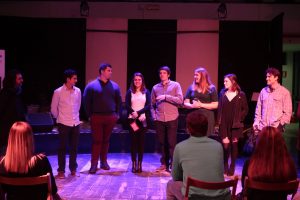
A group of students and I standing in front of a crowd discussing the documentary we made
My classmates and I presenting a social justice documentary in Bologna, Italy

Before accepting the fellowship as my third micro-leap, and stop me if you heard this before, I called my guide of a mother. Again, I felt the familiar feeling I had felt only few, notable moments in my life come over me, so I sighed. I knew the drill: the sigh was of disappoint as my image of interning at a notable corporation and spending one last summer with my high school friends dissipated, and then a warm excitement that grew as I articulated my understanding to my mom. The understanding was that maybe everything has been building to something big, bigger than comfortable employment and time with friends.

For the first time in a long time we revisited why I went to Jesuit High School and why I was attending Santa Clara. I only then understood that these seemingly separate decisions were all the same, forcing me to jump into a challenging unknown to chase my life’s purpose and look toward an unordinary life that I cannot plan—no matter how hard and often I try. The anger I had experienced in Sicily was a flashing warning in my head that I wouldn’t be able to escape the need to pursue using my privilege and my life to changing the world; it was time to take the next leap in a larger climb.

GSBI Fellows: Indy Hickman