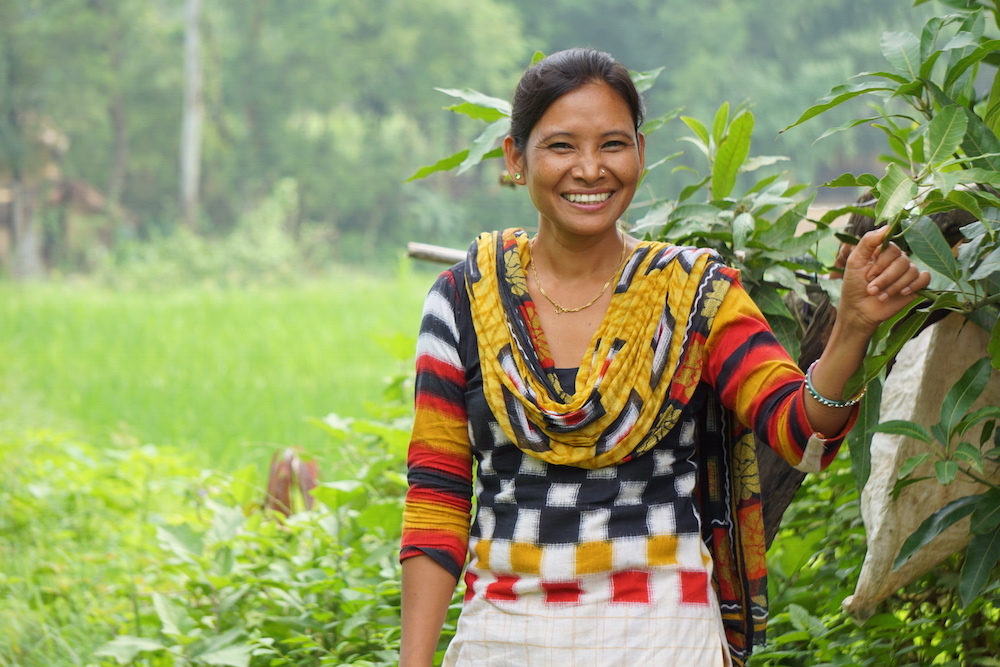
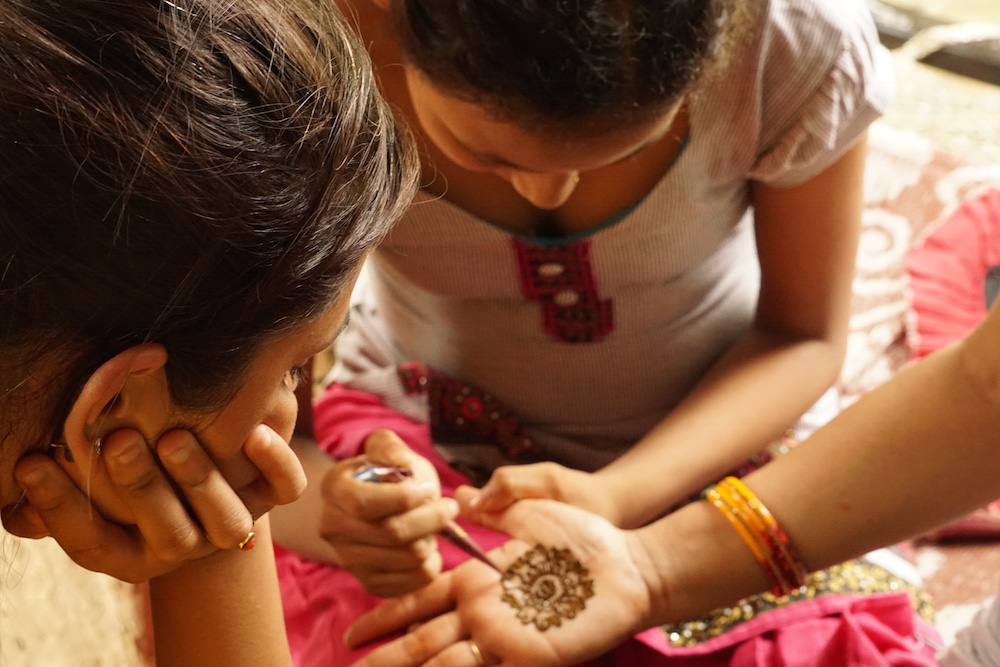
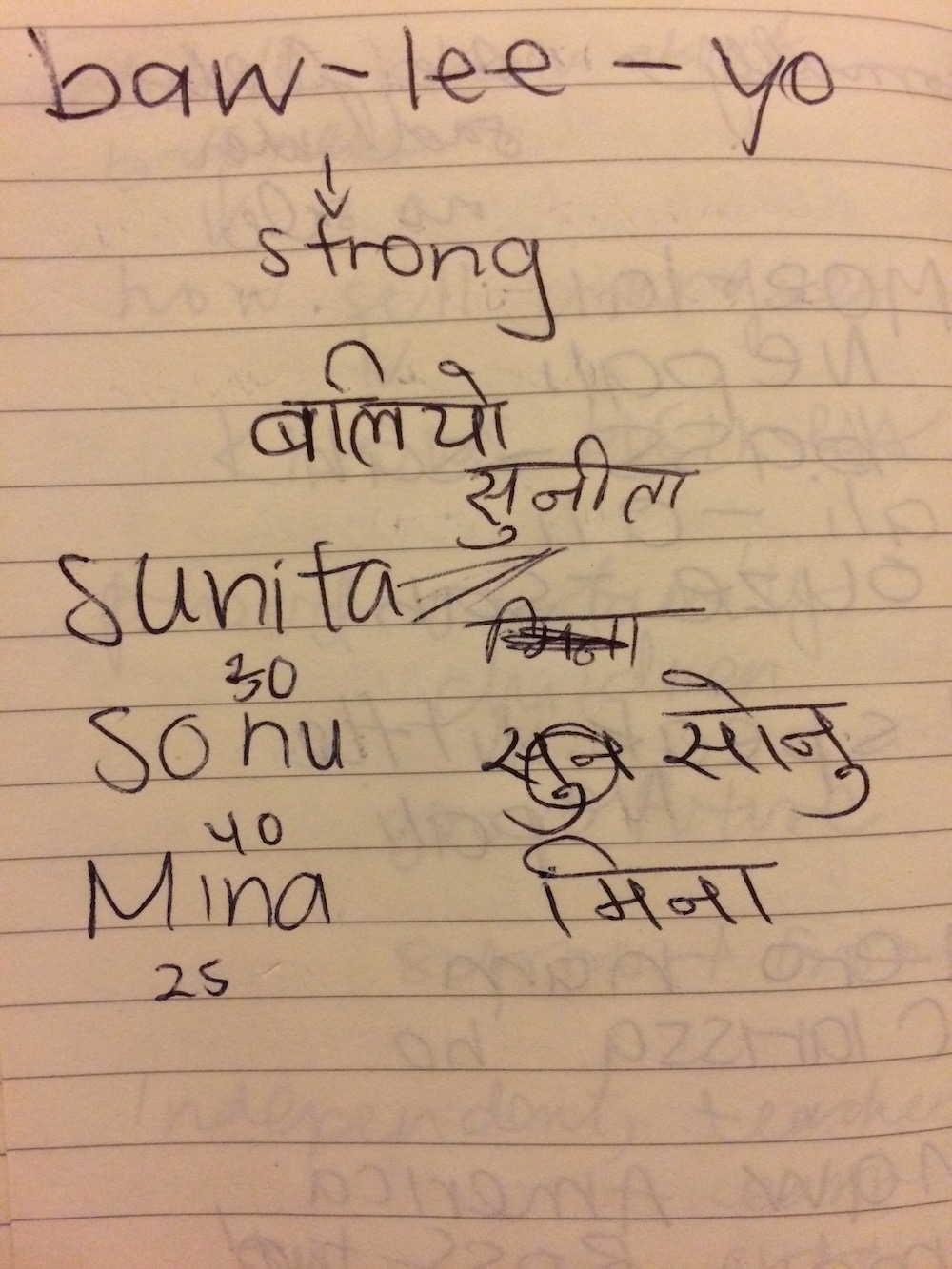
One of my favorite words I learned in Nepal was “बलियो” pronouced “baliyō” which translates to strong. I learned this word as I laid on the hardwood floor of my hotel room with three strangers.
I went to Nepal believing that Empower Generation was the “silver bullet” for the lack of safe, reliable light sources and women’s economic empowerment. How could I not? Ash and I had spent our entire spring quarter understanding the business model: “Empower Generation works to provide women with technical training and support to establish and grow clean energy businesses.” But during my first interview with Kala Khatiwada, I realized that the solutions I passionately believed in, were actually incredibly complicated.
When we drove 2 hours down windy, narrow roads through the hills of Nepal, I was in awe by the lush, green land. Aakriti, the social media manager, was accompanying us as a translator, and told us beforehand that the drive was just an “hour”. Note to everyone: “Nepali time” is a real thing a.k.a. an “hour” means a lot more. By the time we arrived to Kala’s village, I was a bit nauseous but excited to learn about the impact Empower Generation had on Kala. I had heard and read stories about her, but nothing could have prepared me for actually meeting her.
After crossing a long, metal bridge over the river, we hiked about 20 minutes to Kala’s home. There, she approached us with a warm smile and brought us into her quaint home. There was a small T.V., a wooden bed with blankets, and two rooms, one where her children stayed, and one for her office. After settling in, and sitting down on the blue carpet in her office, I was nervous for my interview. I wanted to make sure I asked the right questions – where are you from? what inspired you to work with Empower Generation? what do you do with the extra income you earn from selling solar lights?
And then Kala said, “I use that income to send my kids to school. I want them to travel the world. I don’t want them to be looked down on like me.”
I was taken aback. Here was this beautiful woman, who spoke with such a tender, loving tone – still able to communicate in broken English – but felt as though she wasn’t good enough. When I learned that she married at a young age, and education was not a priority in her life, it reinforced the privileges I have as a young college student. But Kala wasn’t spiteful – instead, she wanted to make sure that her three daughters would have the education they deserved, and Empower Generation was helping her support them. But when I asked her about other sources of income, she told me that she still needed to work the fields to sell crops, her husband still needed to work, and selling solar lights was not always a steady source of income. It hit me pretty hard; Kala was doing everything she could to provide a good life for herself and children, and still, it didn’t seem like it was enough.
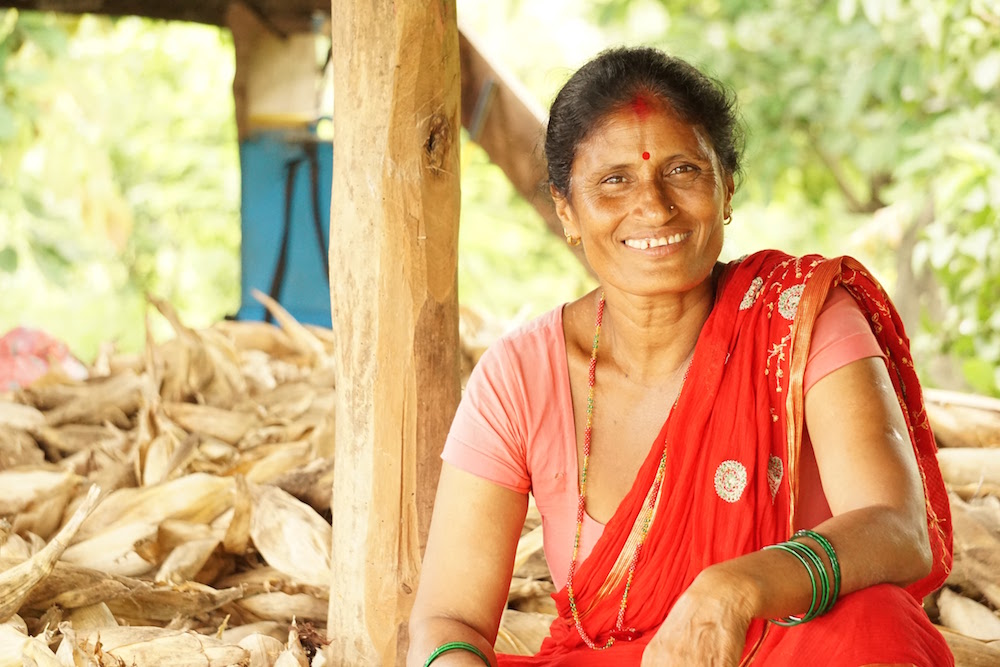
All my interviews had the same general flow as Kala. Most women still needed to work on the side, and if they didn’t, it usually was because their husband had a steady income or they lived in an area where solar lights were more in demand. I had a hard time seeing the positive impacts of Empower Generation. My mind just kept fixating on the fact that it wasn’t enough.
Before I knew it, I began moping in my hotel room with these thoughts, and heard a knock on the door. I opened the door, and three women in lavender kurtis were at the front. I opened the door slightly, and when I realized they were there to clean my room, I politely said “We don’t need our room to be cleaned”. I started to shut the door, so I could go back to moping by myself, but one of the women pushed the door with a heart warming smile, and suddenly there were three strangers in my room.
I moved my laptop off my bed, and watched as they neatly refolded my bed sheets, and emptied the trash. I felt bad that these women were cleaning after me, and offered to help. We then started to converse in broken English and hand gestures and one of them, Mina, laid on the hardwood floor. We started laughing, and one by one, we sprawled down on the ground, where it was much cooler. Sonu, who was short and plump and had wrinkles at the side of her eyes, was the best at English. She tried her best to translate Mina and Sunita’s life story, in addition to her own.
Sunita, who was very petite and appeared young, had been married for eight years to a loving husband. They had two children together, but after he unexpectedly died, they were taken away from her by his family. She got remarried to a man who abused her, and abandoned her and their son. Mina had just had a baby and felt guilty not being home to take care of her newborn. Sonu had the loudest personality, and it was directly correlated with having five children, including a daughter who apparently looked just like me.
I took my video camera out of my bag to explain to them what I was doing in Nepal. “I…work…NGO..video camera women.” They all smiled at me, and we continued to speak to each other in smiles, laughs, Nepali, English, and my hands moved in ways I had never seen before. Somehow, two hours passed, and I never wanted them to leave. These three women had become my friends, on the hardwood floor of a hotel in Chitwan. Sonu offered me chewing tobacco that was called “superpower”, and we all broke into laughter. Eventually they had to leave my room, but their imprints on my life will never leave my mind. I still think of them often.
It was after that connection, that I realized these women were just like me. We laughed at the same jokes in their most raw form, we all wanted to make each other happy, and even though we did not share the same language, we were all human. And that to me was so special.
After meeting them, I felt a renewed sense of hope. I knew that these woman could benefit from the business model of Empower Generation. Though it didn’t provide the economic benefits I had thought, it still gave women support, training, and hope that trickled down into all facets of their life. All the women I met had dreams for more – and if not for them, then their children.
I feel incredibly fortunate to have listened to many life stories, and hear about the sheer strength many of these women embody. After leaving Nepal, I knew that I needed to continue my education and build upon my skills so I can provide real advice and support for social enterprises like Empower Generation. I enjoyed working with a tight-knit group and constantly learning new skills and honing my photography and videography. I know that I would like to continue pursuing business that fuses social change and maybe one that I can be like Anya Cherneff (co-founder of Empower Generation). Empower Generation taught me that even though social entrepreneurship can complicated, incredibly difficult, and sometimes the results are hard to see, actively doing something about it is what leads to the shift in unjust equilibriums. When I reflect back to Nepal, I feel as though all the people I met propelled me to find my inner strength – my baliyō – and for that, I must continue making changes in myself for the better.