When I applied for the fellowship, I remember writing about how I hope to one day be a compassionate, curious, and mindful human being. Though it has only been a year, I really believe that the fellowship and the people working to power the Miller Center, have given me the support and skills necessary to be exactly that – compassionate, curious, and mindful.
I really can’t believe that a year has gone by since I applied to be a part of the fellowship. It seems like just yesterday, I was sitting across the table from Spencer and Keith – explaining why I wanted to be a Global Social Benefit Fellow. I remember hearing the words, “Empower Generation’s mission is to empower women to power the world…and that’s my where my passion lays, that’s where my heart is,” and thinking how good that felt to say out loud. And how incredibly powerful it felt to say it to supportive people who understood my desperate need to do something good for the world.
As I reflect on how the fellowship has shaped my vocational goals and views on social engagement, I can’t help but to be incredibly grateful. Without the fellowship, I sometimes wonder if I would be the same person I am today. A year ago, I was insecure and unable to articulate what I wanted to do with my life. Now, I can proudly say, “I want to be a badass businesswoman.” But this process wasn’t easy, and it took the team at the Miller Center, the 17 other fellows, and a trip to Nepal to fully come to fruition.
Before leaving for Nepal, I spent a lot of time talking to Keith about my life, and how experiences in my life have shaped me to be the person I am today. I struggled a lot at Santa Clara, understanding what it meant to be a daughter of Vietnamese refugees. Having the support from someone like Keith, one of the most kind, caring, and compassionate people I know, allowed me to heal in ways that gave me the inner strength to go on a trip to Nepal, and hear stories from the women entrepreneurs, and hear about how different and alike their lives are to mine.
When I think back to Nepal, I always think fondly of Priya, Runa’s youngest daughter, and how she wanted to work in the bank. I think about how I might never get the chance to see her again, but how she forever changed the way I viewed my life. In many ways, she inspired me to come back to Santa Clara and find my true purpose. And though I am still not sure exactly what that means, I know that I want to take care of myself, stay well-informed and expand my educational opportunities, and adopt skills and talents that will allow me to be that badass woman – for Priya, for Runa, and for all the strong and incredibly powerful women I met during my time in Nepal.
And when it comes to the entrepreneurial mindset, and ways of addressing the world’s most pressing needs, I’ve come to respect the social entrepreneurship model. When people address problems from the bottom up as opposed to the top down, there is a better understanding of what issues need to be solved. The women working behind Empower Generation saw a need for not only clean energy, but also economic opportunity for women, and they addressed that by providing business training and skills so that women could become their own boss. That kind of agency and economic empowerment allowed these women to feel more confident about themselves and their ability to take on the world. And after seeing that, I know that if I become a badass businesswomen, I will be able to show young girls every where that they can do anything they put their mind to – and that their gender, race, and sexuality should not hinder them from becoming what they want to be.
After this experience with the fellowship, I have so much hope for the future and the world. Being around 17 amazing fellows, Keith, Thane, and Spencer, has really showed me that if we all embrace hope and love, we can absolutely make this world a better place.
I am not the same person I was before the fellowship. And though I may be working a corporate job next year or traveling the world, one thing is for certain – I will always love with my full heart and strive to be a good person, because like social entrepreneurship, change starts from the bottom up.
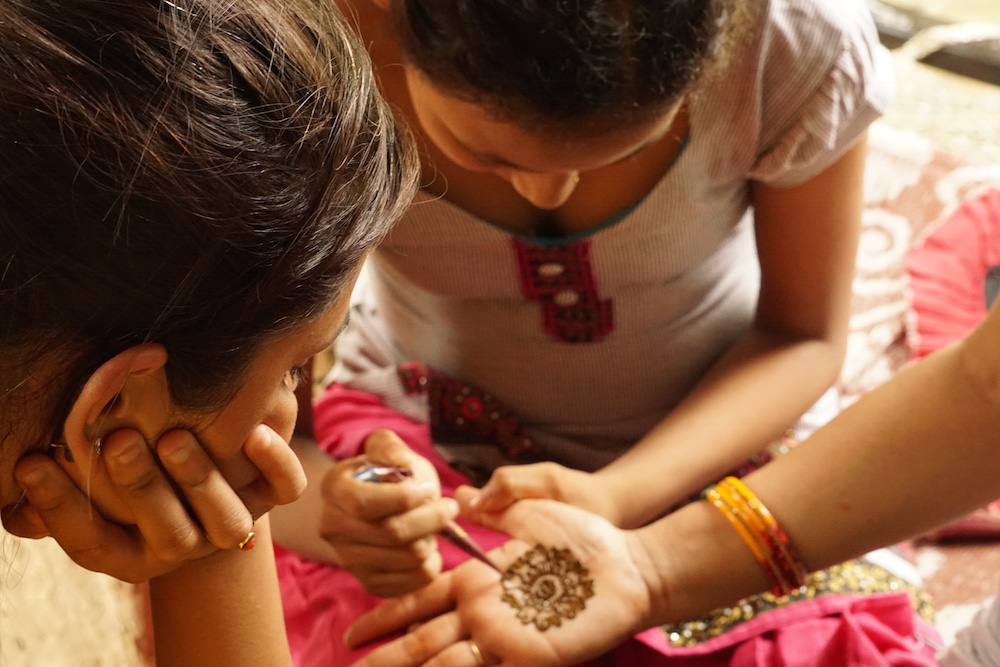
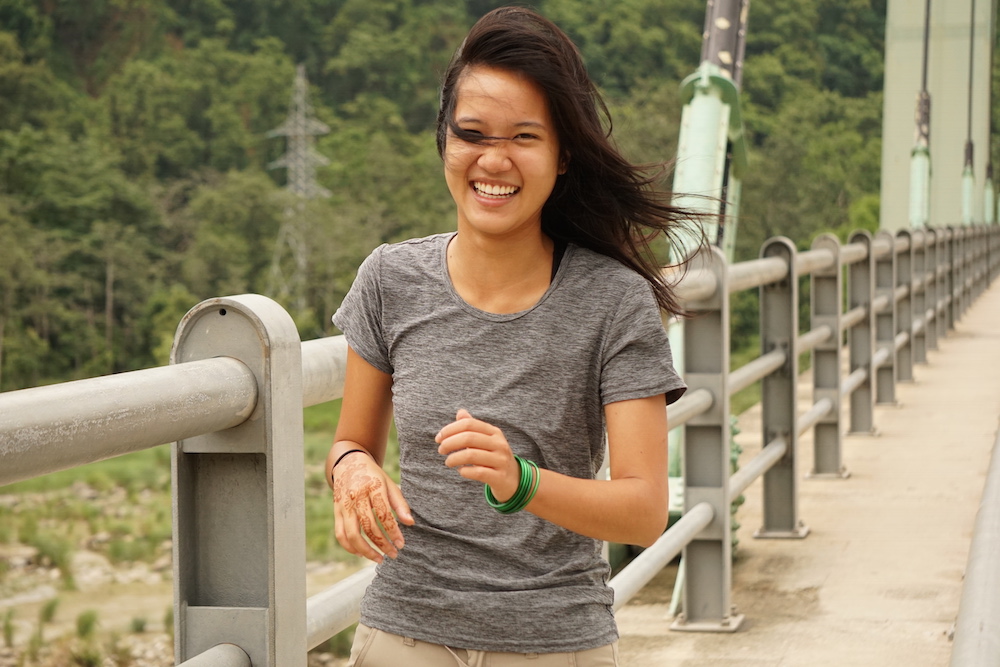
All of us (Rishta, Hannah, Aakriti, Kabita, and I) had our henna done by Basanti’s neighbors who were incredible artists.
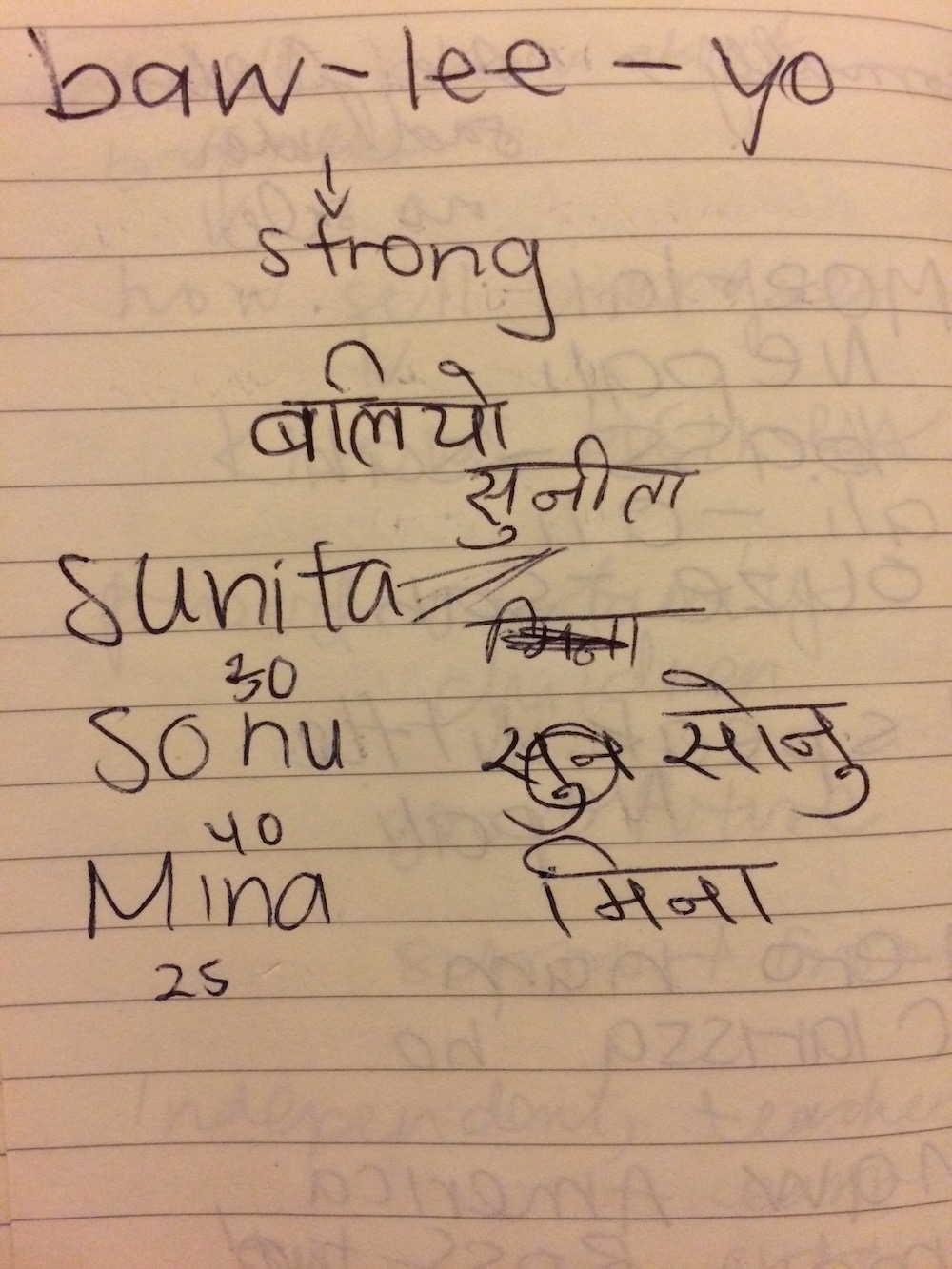
One of my favorite words I learned in Nepal was “बलियो” pronouced “baliyō” which translates to strong. I learned this word as I laid on the hardwood floor of my hotel room with three strangers.
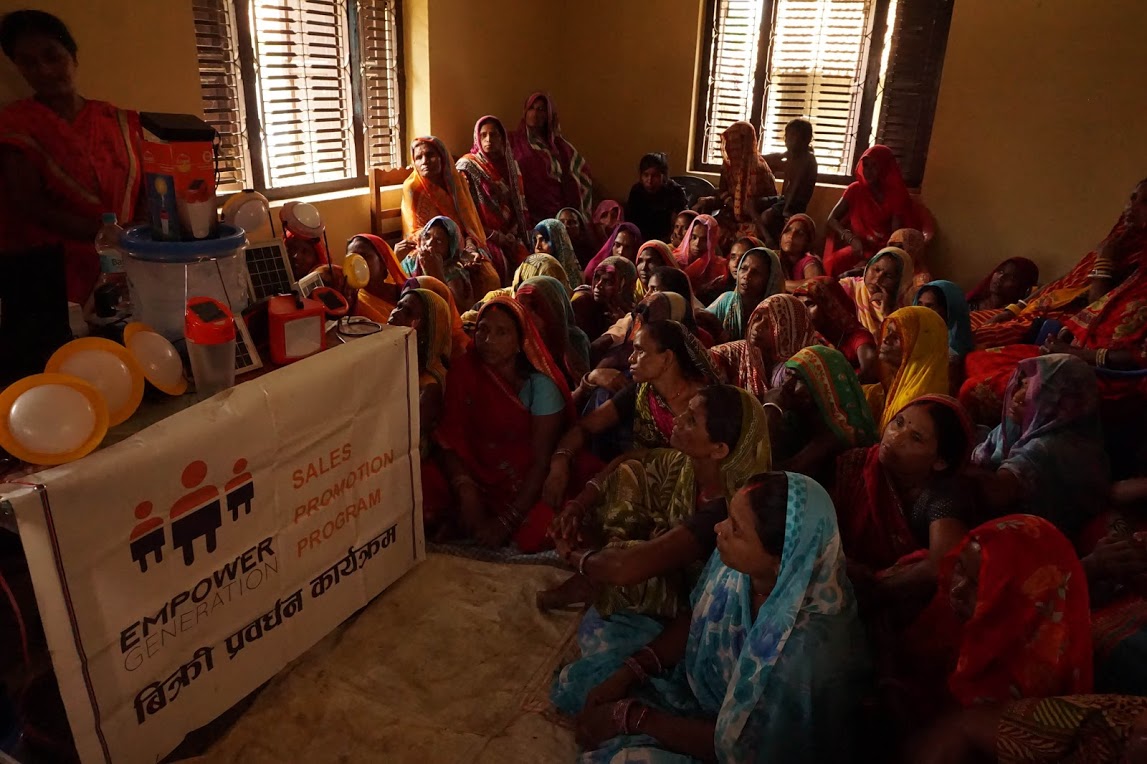
I went to Nepal believing that Empower Generation was the “silver bullet” for the lack of safe, reliable light sources and women’s economic empowerment. How could I not? Ash and I had spent our entire spring quarter understanding the business model: “Empower Generation works to provide women with technical training and support to establish and grow clean energy businesses.” But during my first interview with Kala Khatiwada, I realized that the solutions I passionately believed in, were actually incredibly complicated.
When we drove 2 hours down windy, narrow roads through the hills of Nepal, I was in awe by the lush, green land. Aakriti, the social media manager, was accompanying us as a translator, and told us beforehand that the drive was just an “hour”. Note to everyone: “Nepali time” is a real thing a.k.a. an “hour” means a lot more. By the time we arrived to Kala’s village, I was a bit nauseous but excited to learn about the impact Empower Generation had on Kala. I had heard and read stories about her, but nothing could have prepared me for actually meeting her.
After crossing a long, metal bridge over the river, we hiked about 20 minutes to Kala’s home. There, she approached us with a warm smile and brought us into her quaint home. There was a small T.V., a wooden bed with blankets, and two rooms, one where her children stayed, and one for her office. After settling in, and sitting down on the blue carpet in her office, I was nervous for my interview. I wanted to make sure I asked the right questions – where are you from? what inspired you to work with Empower Generation? what do you do with the extra income you earn from selling solar lights?
And then Kala said, “I use that income to send my kids to school. I want them to travel the world. I don’t want them to be looked down on like me.”
I was taken aback. Here was this beautiful woman, who spoke with such a tender, loving tone – still able to communicate in broken English – but felt as though she wasn’t good enough. When I learned that she married at a young age, and education was not a priority in her life, it reinforced the privileges I have as a young college student. But Kala wasn’t spiteful – instead, she wanted to make sure that her three daughters would have the education they deserved, and Empower Generation was helping her support them. But when I asked her about other sources of income, she told me that she still needed to work the fields to sell crops, her husband still needed to work, and selling solar lights was not always a steady source of income. It hit me pretty hard; Kala was doing everything she could to provide a good life for herself and children, and still, it didn’t seem like it was enough.
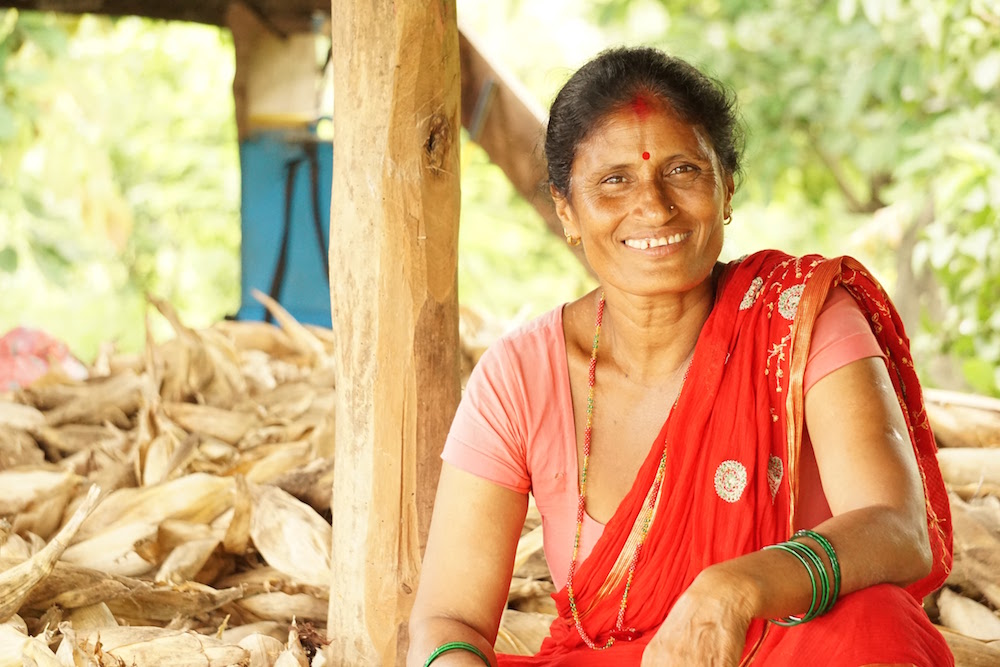
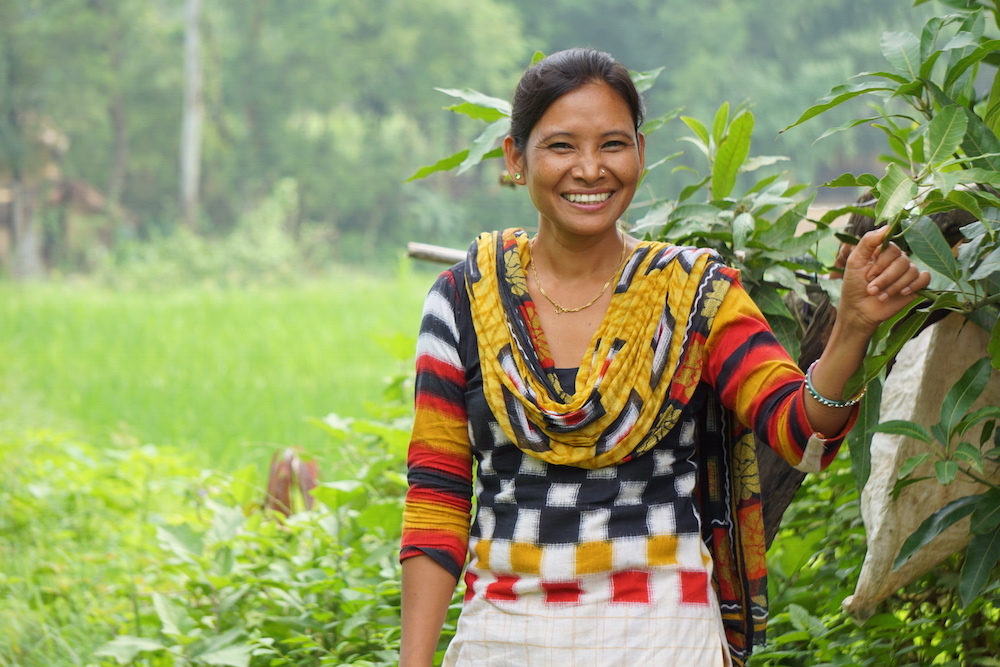
Kala with bright and beautiful smile by her stockpile of crops
All my interviews had the same general flow as Kala. Most women still needed to work on the side, and if they didn’t, it usually was because their husband had a steady income or they lived in an area where solar lights were more in demand. I had a hard time seeing the positive impacts of Empower Generation. My mind just kept fixating on the fact that it wasn’t enough.
Before I knew it, I began moping in my hotel room with these thoughts, and heard a knock on the door. I opened the door, and three women in lavender kurtis were at the front. I opened the door slightly, and when I realized they were there to clean my room, I politely said “We don’t need our room to be cleaned”. I started to shut the door, so I could go back to moping by myself, but one of the women pushed the door with a heart warming smile, and suddenly there were three strangers in my room.
I moved my laptop off my bed, and watched as they neatly refolded my bed sheets, and emptied the trash. I felt bad that these women were cleaning after me, and offered to help. We then started to converse in broken English and hand gestures and one of them, Mina, laid on the hardwood floor. We started laughing, and one by one, we sprawled down on the ground, where it was much cooler. Sonu, who was short and plump and had wrinkles at the side of her eyes, was the best at English. She tried her best to translate Mina and Sunita’s life story, in addition to her own.
Sunita, who was very petite and appeared young, had been married for eight years to a loving husband. They had two children together, but after he unexpectedly died, they were taken away from her by his family. She got remarried to a man who abused her, and abandoned her and their son. Mina had just had a baby and felt guilty not being home to take care of her newborn. Sonu had the loudest personality, and it was directly correlated with having five children, including a daughter who apparently looked just like me.
I took my video camera out of my bag to explain to them what I was doing in Nepal. “I…work…NGO..video camera women.” They all smiled at me, and we continued to speak to each other in smiles, laughs, Nepali, English, and my hands moved in ways I had never seen before. Somehow, two hours passed, and I never wanted them to leave. These three women had become my friends, on the hardwood floor of a hotel in Chitwan. Sonu offered me chewing tobacco that was called “superpower”, and we all broke into laughter. Eventually they had to leave my room, but their imprints on my life will never leave my mind. I still think of them often.
The only memory I have of them in my journal. I asked them to write their names in Nepali for me.
It was after that connection, that I realized these women were just like me. We laughed at the same jokes in their most raw form, we all wanted to make each other happy, and even though we did not share the same language, we were all human. And that to me was so special.
After meeting them, I felt a renewed sense of hope. I knew that these woman could benefit from the business model of Empower Generation. Though it didn’t provide the economic benefits I had thought, it still gave women support, training, and hope that trickled down into all facets of their life. All the women I met had dreams for more – and if not for them, then their children.
I feel incredibly fortunate to have listened to many life stories, and hear about the sheer strength many of these women embody. After leaving Nepal, I knew that I needed to continue my education and build upon my skills so I can provide real advice and support for social enterprises like Empower Generation. I enjoyed working with a tight-knit group and constantly learning new skills and honing my photography and videography. I know that I would like to continue pursuing business that fuses social change and maybe one that I can be like Anya Cherneff (co-founder of Empower Generation). Empower Generation taught me that even though social entrepreneurship can complicated, incredibly difficult, and sometimes the results are hard to see, actively doing something about it is what leads to the shift in unjust equilibriums. When I reflect back to Nepal, I feel as though all the people I met propelled me to find my inner strength – my baliyō – and for that, I must continue making changes in myself for the better.
One of my favorite candid portraits. Basanti wanted to pose with the tree, and we all started laughing.
During my time in Nepal, I have been confronted with the ‘existential crisis’ of discovering my true cultural identity. Numerous times, I have been frankly asked “You from China?” To which I would reply, “No, I’m from the U.S.”
My answer left many people in a perpetually confused daze. With a follow up of more questions, it eventually led me to irritably simplifying my answer to “I’m Vietnamese”. I was tired of explaining myself. My yellow face obviously did not embody the common portrayal of the young female from United States. And even though I knew most people in Nepal were just curious about where I was from, it left me a little flustered. This wasn’t the first time someone had a difficult time grasping my American identity – I have been asked this same question many times back home.
The confrontation of my identity is something I’ve been pondering for a while…something that might have taken a trek to another country to fully reflect upon. Raised with Vietnamese ideals at home, and American ideals at school, it was difficult to find equilibrium with the two. I was taught to live a life in accord to my family and that I needed to do everything I could to provide for my them. While in school, I learned to seek my true passion (women’s equal rights y’all!). This led to the great opportunity to work with Empower Generation; something I believed beautifully fused the two beliefs. So I left on this journey thinking to myself, is my purpose to live a life for my family or myself, or is there actually a perfect balance of the two?
With this daunting question looming over my every day thoughts, I believed my answers would be found in the land of Nepal.
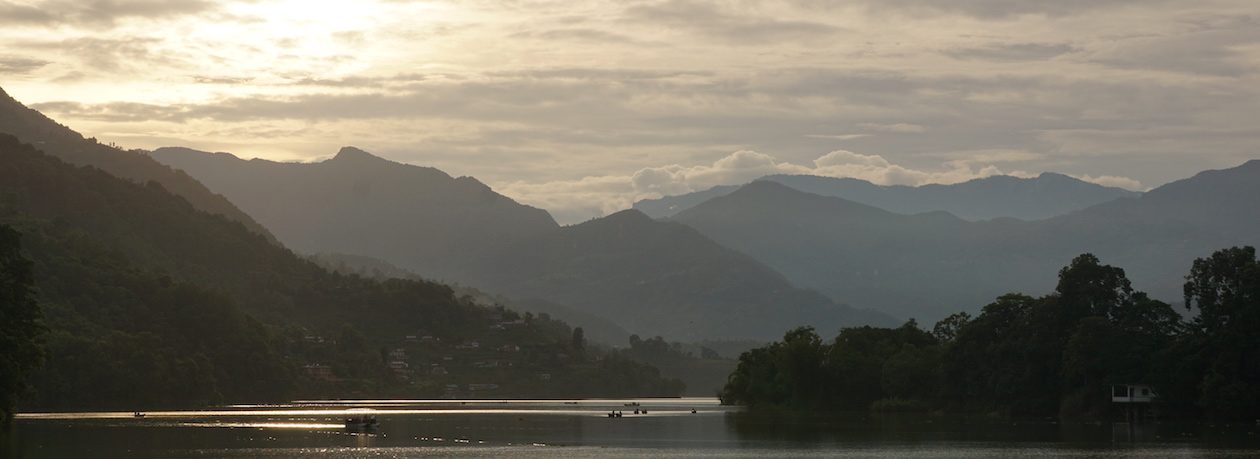
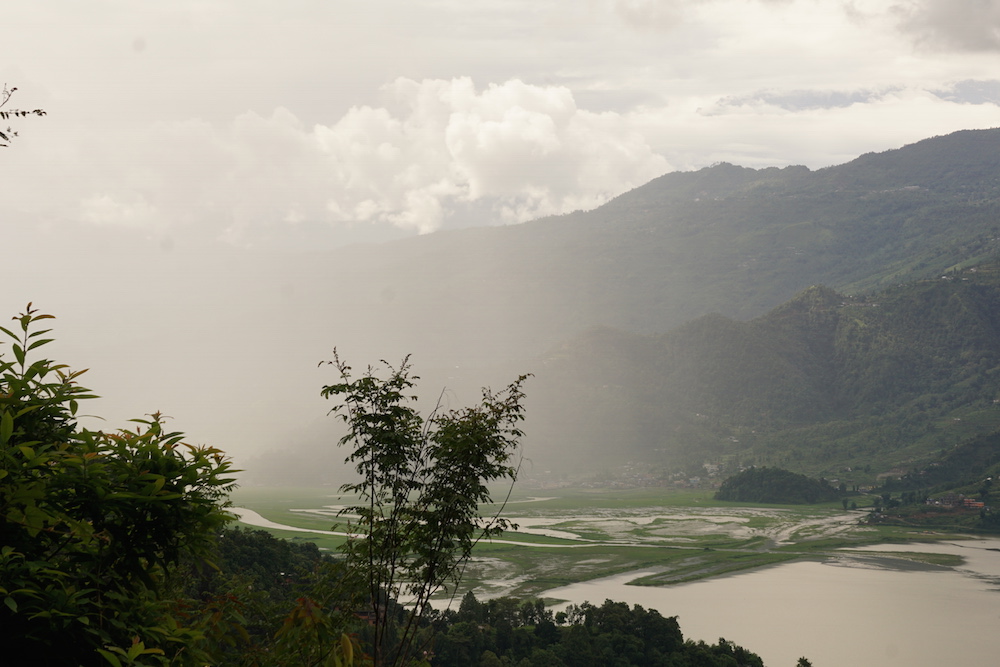
overlooking Phewa Lake in Pokhara
On our way, I started to read “The Book of Salt”, a novel by Monique Truong about a young gay Vietnamese man living as a chef during the 1920s in Paris. You know how a book can sometimes shake your world in indescribable ways? Well, this book left me in a state of wonder.
“To walk by without blinking an eye is to say to each other that we are human, whole, a man or a woman like any other, two lungfuls of air, a heart pumping blood, a stomach hungry for home-cooked food, a body in constant search for the warmth of the sun.”
I yearn for that sense of comfort – something I am hopeful for when I finally get the chance to visit Vietnam. But in many ways, I recognize remarkable similarities with Nepal and the stories my parents shared from growing up in Vietnam – the busy, trash ridden streets jam-packed with motor bikes and cars filled with more people than normal capacity, small businesses every where, and FRESH FRUIT on carts! And during our first field visit, I noticed that many homes housed the entire extended family – similar to my mother’s situation in Vietnam. The women entrepreneurs with children my age were also raised a bit like me. They were instilled with great love and affection for their family, and were pursuing life paths that would eventually help their families. Runa’s 10-year-old daughter, Priya, wanted to work at a bank, because she thought that is where all the money is. I choked up when she shared that with our team, and felt a profound connection with her dream to uproot her family from deep poverty, and into a more comfortable life.
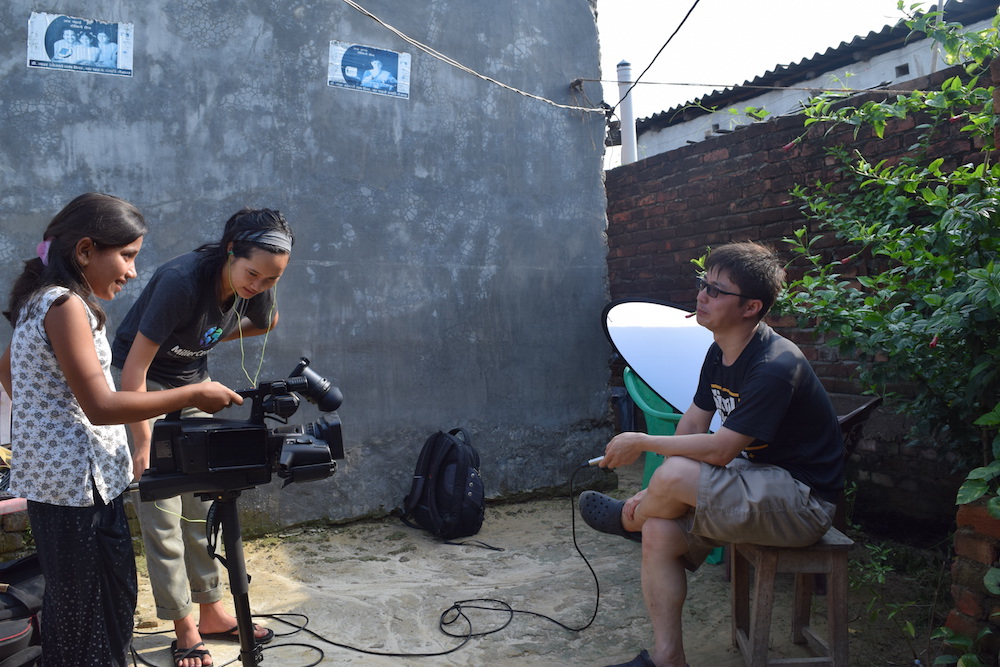
Priya, P.J., and I testing the camera before interviewing Runa
After my encounter with Priya, I reflected on my life and how extraordinarily lucky I am. Here I am, a perfectly healthy 21-year old, able to pursue a college education with both parents and a supportive household. I have my own room, I can do whatever I please when I’m on my period (yeah, practicing Hindu girls in Nepal are not allowed to go into the kitchen during the time of the month), and have a profound number and accessibility to resources. And when it came time to do my first video interview with her mother, Priya held the camera for me as I checked the sound, and when the scorching sun left my face drenched with perspiration, she grabbed an umbrella and sat down next to me to provide shade. Though we only shared a few words, I saw so much of what I aspire to be in her. Her kindness and thoughtfulness did not require the same native tongue, and I knew at this moment, no matter what field I go into, I hope to continue to encounter girls like her who genuinely make the world a better place.
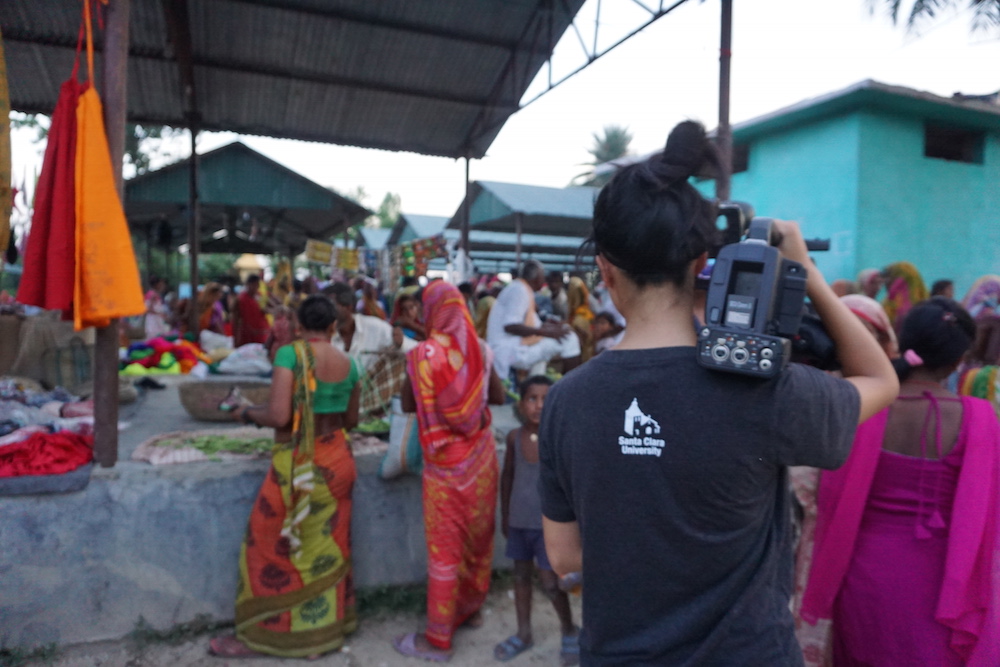
Having Father P.J. by my side through this process was also incredible, in fact, “heaven-sent” as he would say! For those of you who do not know Father P.J., he is the most compassionate, caring, and warm person I’ve ever had the good fortune of meeting. Initially I was hesitant, as he had mentioned that he had no real prior experience with a video camera, and could talk my ear off. But his presence taught me practical compassion. Always willing to give me a helping hand with open ears, he was a supportive partner. When P.J. left to join team ONergy, I initially felt fear and hesitation, as I wasn’t fully confident in my abilities to interview the women and make them as comfortable as he so easily did with his huge smile. But that fear soon transformed to confidence, with the help and support of my teammates Ash and Hannah, which propelled me to successfully accomplish all seven video profiles of the women entrepreneurs!
filming solar entrepreneur Lalita at the night market
Through my videography and photography, I have learned that every woman working for Empower Generation has deeply appreciated the business skills that they’ve been able to learn and use practically. They all have said that they feel more confident in their abilities to speak in front of crowds, and are able to finance some of their children’s education, groceries, and medical bills. I am so honored to hear the stories of these incredible women, who inspire me to come back to Santa Clara and be the best that I can be!
So after our first 10-day in-field experience, I was asked again by a local shopkeeper, “Where are you from?” to which I replied, “I’m a Vietnamese-American from California”, and to my surprise, the shopkeeper smiled and said, “Welcome to Nepal”. It finally dawned on me that Nepal might not have the answers to all my questions, and Vietnam might not either, but I am realizing that the answers are within myself – a body of land cultivated by my mother and father. I feel so incredibly empowered by this experience. I am proud of my heritage, my unconditional love for my family and people, and most importantly, I am so incredibly proud of myself.
Thank you Miller Center for allowing me to prosper in the beautiful land of Nepal, and for affording me an opportunity of a lifetime.
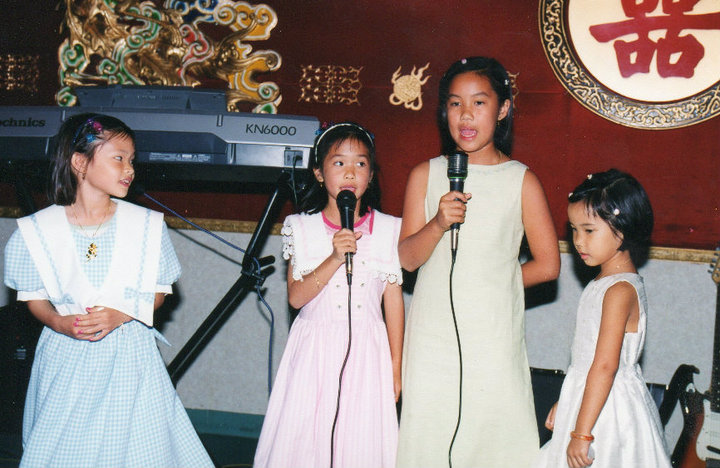
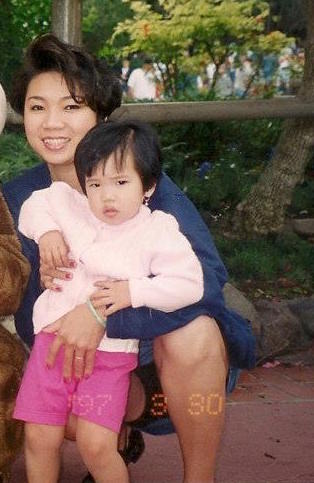
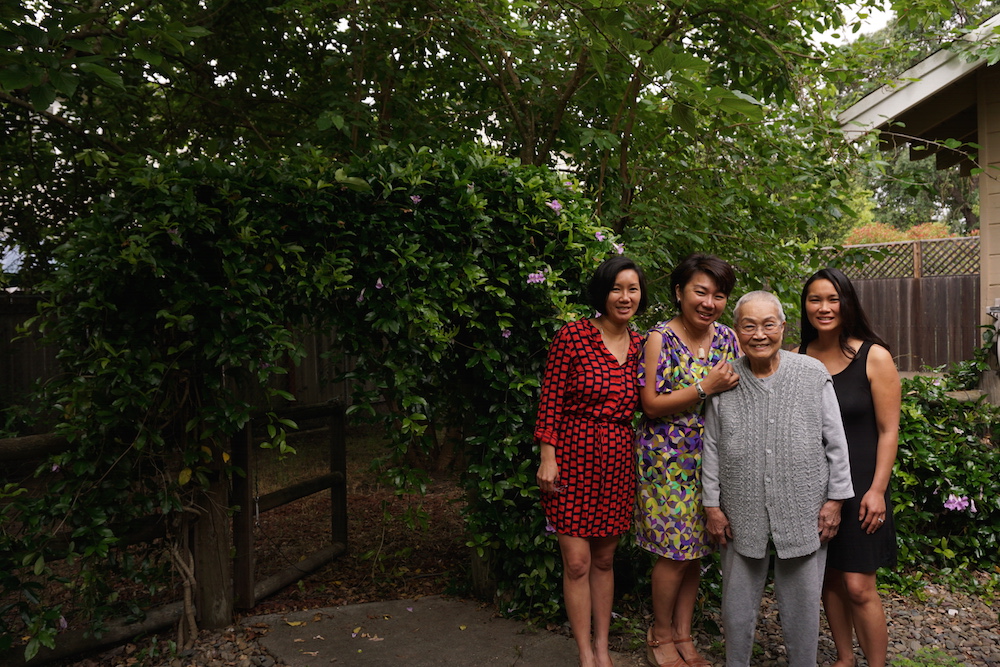
Family has always been at the center of my life. I grew up in Fremont, California with my three siblings, two brothers and one sister. My parents both immigrated to the United States at a young age, my father when he was 10 and my mother when she was 17. They did everything they could to support us and teach us to be thoughtful and compassionate people. You could say that my family is loud, loving, and always entertaining. We celebrate Tet, the Vietnamese New Year, every year at our grandparents’ house with over 50 (or however many go) of our other relatives. Every year I leave with ringing ears, cheeks swollen from pinches from my aunts and uncles, and a belly still rumbling from enormous portions of pho, banh xeo, and spring rolls (just to name a few). Most of my best childhood memories took place at large family events such as these. Once, when my two cousins, older sister, and I decided we could become famous superstars by lip-syncing Britney Spears, our oldest uncle, Bac Cuong, let us perform at his son’s wedding. Shortly after this picture was taken, I tripped on the microphone cable, and provided some of the best entertainment that night.
Christine, Tiffany, Charlene (sister), and me.
With my whole family spread throughout the Bay Area, my grandparents on my father’s side and my grandma made sure we gathered twice a month in San Francisco. My father’s parents owned a large amount of property in South Vietnam near Saigon. During the Vietnam War they hosted a U.S. army base in one of their buildings. They were fierce business leaders and were respected by many. When the war escalated, and the country was no longer safe, my grandpa was able to bring fourteen children and his wife to the U.S. while leaving behind their home, their land, their business, and two grown daughters (whom they have never heard from since). Though they initially struggled acclimating to the U.S., my grandpa experienced a great deal of success in the restaurant business, operating a Vietnamese-American fusion restaurant on Haight Street in San Francisco. There, my father and his siblings helped in the kitchen, and my father was able to pursue a higher education at San Francisco State University, where my parents met 1989.
My mother has a quite different story. At the age of 10, she was separated from her family and left behind in Vietnam to live with her aunts. When many escaped from Vietnam, families had to combine their money to plan an escape. In order for the escape to be successful however, my mother had to be left with the other family and the other family’s eldest son was left with my mother’s family. This way, the families would not escape without one another. When my mother’s family successfully made it to the boat that was traveling to find refuge, the police came and my mother’s family had no choice but to leave, as they had two young daughters with them, and the choice was to either leave my mother behind or die. My mother spent 6 years without her family in Vietnam, before they were able to find compile the proper documentation, save enough money, and find an American family to sponsor her over.
The pain I have seen in both my parents differ, but shape the ways in which they have raised me.
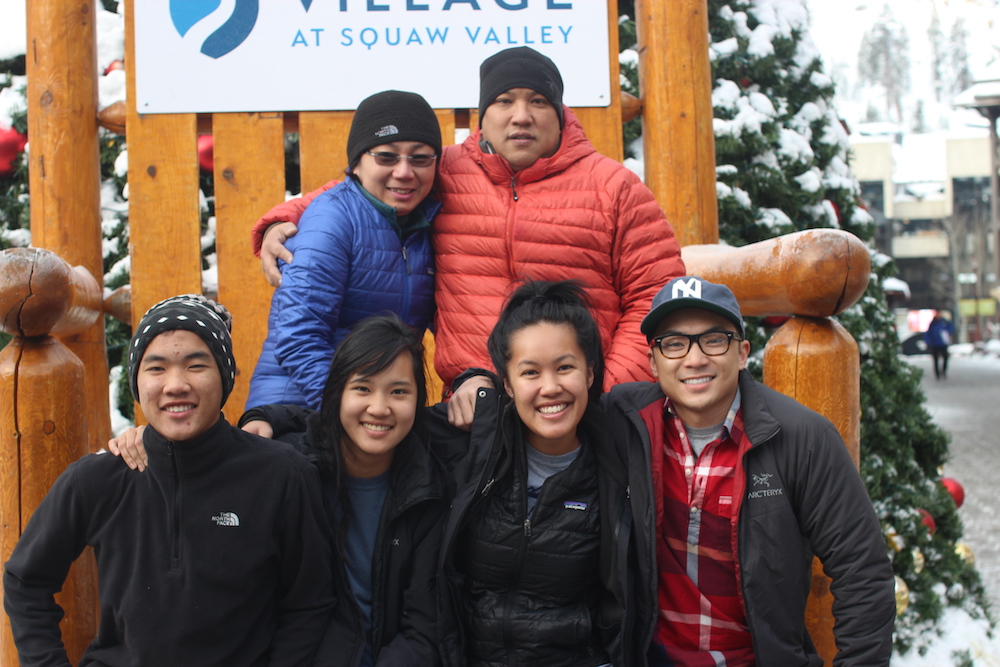
my beautiful family – Clifton (15) , Me (20), Charlene (24), Charles (23)
My father is the hardest working person I know. As a kid, I would wake up every morning at 5:30 A.M. to catch my dad in the bathroom. It was a special time in the day when I could spend some alone time with him and ask him the same question, “When are you coming home?” To which he would reply, “6:30 P.M.” My parents often found me passed out on the carpet outside the bathroom. As an engineer, he works to maintain large machines that create chips for solar products. But upward mobility in the company has proven difficult, and he has had to work two jobs to support our family.
My mom did an incredible job raising us, and made sure we knew how much we were loved and the importance of loving others. As a preschool teacher at a local private school in Fremont, she was able to send us there for a few years before we moved to a better area with a renowned public school system. On Saturdays, we would drive up to the mountains and play with acorns, as she took us around the temple and told us about the philosophy of Buddha. She dragged us to Vietnamese school every Sunday too, and waited for us by the candy counter where we would be rewarded after a long day of class. Her selflessness and unconditional love is something I admire, and something that definitely took time to truly appreciate.
us at temple
As I grew older, love to me meant worrying about my family’s well being. I quickly learned the importance of money and I realized that if my family had more, my dad could work less, my mom wouldn’t be as stressed, and I wouldn’t have to worry. Understanding this, I went in to college with the intention of going into business and pursuing a career that would allow me to provide for my family and myself.
When I started applying to college, I thought I knew exactly what I wanted to do. I wanted to study business as an undergrad, and eventually work at a Silicon Valley company where I would earn a large income to pay off my student loans and help my family out. I had seen my sister accomplish that goal, by working at Salesforce while pursuing a joint JD/MBA degree, and I knew that with her guidance, and my parents’ support, I would become successful as well.
During my first year, I applied to be a marketing intern at the Office of Marketing and Communications on campus. The opportunity at OMC allowed me to grow as a photographer, and somewhat of a marketing connoisseur. I filmed b-roll for videos, took pictures of numerous campus events and helped managed many of the school’s social media accounts. I felt like my talents were appreciated and I found a community of people that supported my work and endeavors. I enjoyed this work, but often times wanted more creative freedom as my work was confined to representing Santa Clara.
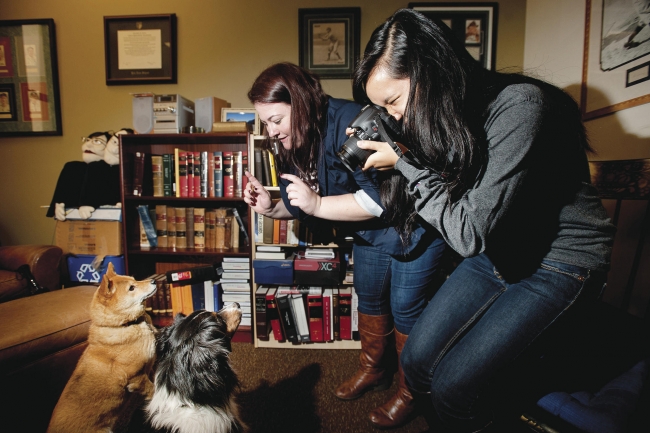
me and my amazing boss, Marika!
Last summer, I landed a finance internship for a large technology corporation during my sophomore year. I spent forty hours a week working on Excel spreadsheets, I enjoyed making what seemed to be like a lot of money, but I was left uninspired by the work our department was creating, and could not imagine doing that kind of work for the rest of my life. I wanted something more.
I went home and talked to my parents about my unhappiness. I thought that they would be disappointed in me if I did not continue my internship, but instead, they suggested that I do something more fulfilling. They assured me that it wasn’t my purpose to worry for them as much as I thought I needed to.
This was a huge turning point in my life. After much self-reflection, I left my internship in pursuit of finding what makes me truly happy.
When I came back to SCU for my junior year, I was ready to figure out what my passion in life was. I enrolled in introductory public health science and sociology courses to broaden my thinking. In these classes, I came to understand the injustices faced by so many and the privileges I have. Though many struggles resonated with my family, I realized how fortunate I was to attend college, to have a loving family, and to have a supportive community of people with expectations of me thriving. I realized after these courses and through many thought-provoking conversations with my parents and friends that I wanted to be apart of something bigger than myself; that I wanted to be a part of creating positive change for the world.
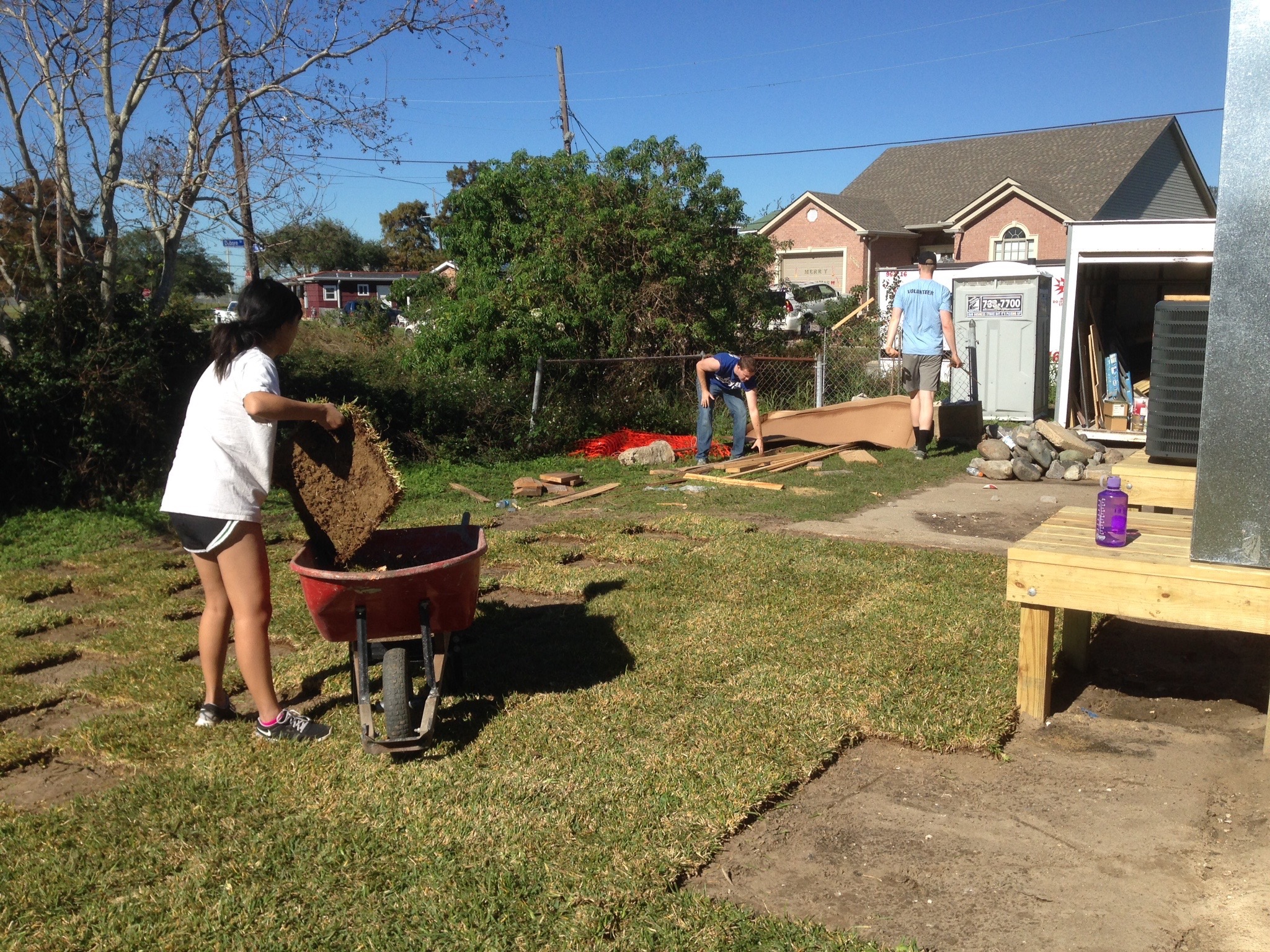
I was inspired to apply for an immersion trip my junior year winter break. After being selected for the New Orleans trip, I called my mother full of excitement. She left me with wise words, “Clarissa, you need to understand this trip is not about you, it is about others.” she was right. During the seven-day journey, we stayed a community center, ate simple meals with the homeless, visited a Public Defender office, worked on homes with the St. Bernard’s Project, and engaged with the local community to learn about the devastation of Hurricane Katrina. It was a shock to the system to realize how blind I was to the unjust criminal system in the U.S., and specifically in Louisiana. I learned that during the hurricane, the prisoners were left in the prison with cells flooding with water, without prior knowledge of the hurricane. They were treated as less than human, and when the public defender told us of the criminal justice system in New Orleans, I realized that I yearned to talk about my work as passionately and whole-heartedly as he.
laying sod out in Trenise’s new home
There was a beautiful moment I shared with Trenise, a woman we were building a home for, and she told me about her adopted son who has bipolar disorder and autism. We shared a moment so pure, in which we shared stories about our families and our lives, and both ended up in tears and laughter. Being able to listen to her story and help her move into her new home was such an incredible moment for me, and I knew that listening to others and doing something impactful was what I needed to do. It was what made my heart flutter.
The fellowship and the field of social entrepreneurship allow me to transcend what I thought success meant and live according to my own understanding of it. Being a GSBF represents my grandparents and parents’ sacrifices to come to this country to create a better life for themselves and their children. It fuses my passion for people and business, and allows me to practice my business skills and knowledge to create social change. I am now inspired by the work I will be doing, and the people I will get to know. I am so grateful for this opportunity and I cannot wait for what lays ahead.
and with new wisdom, she flies to a new beginning
Clarissa Ngoc-Vy Nguyen | Global Social Benefit Fellow
 the phoenix, she dies with her wings burning,