Brighter Eyes and Sharper Vision

After a challenging, humbling, and rewarding nine months, the fellowship has officially come to an end. Every step of this process has been a positive learning experience and has given me a stronger understanding of social entrepreneurship, others, and myself. Although I am still discerning the concrete career path(s) for me post-college, the fellowship has certainly played a significant role in shaping my desire to serve others and engage in creative work that is personally meaningful to me. The Solar Sister and social entrepreneurs whom I met and read about through this program have particularly impacted me. Many of them are not well-off in the traditional sense of typical Silicon Valley entrepreneurs, but each of them is extremely passionate about his or her work, demonstrating innovative thinking and tenacity to pursue their goals. Although they are young, the fellows in my cohort possess this same type of spirit. Simply surrounding myself and interacting with such dedicated people has further affirmed my desire to seek a profession that I truly, wholeheartedly believe in, regardless of financially superior alternatives out there. I look forward to carrying out this goal moving forward and seeing what the future will bring.
img_0085

I’ve learned so much from working with this talented team!

Through this fellowship, I have also concluded that although international social entrepreneurship remains a field that I admire and respect deeply, it is not the route for me. My exposure to social entrepreneurship has certainly allowed me to gain new cultural awareness, greater compassion, better understanding of those living in poverty, and hope for the future, but at the same time, I am realizing that I am more equipped to impact my fellow neighboring Americans living in poverty before I can make a real contribution anywhere else. I struggle with this, because perhaps people are generally much worse off in other countries and I should commit to addressing that. However, I also feel the need to be honest with myself about the skills that I do possess, the best way that I can apply them, the difference that I am capable of making, and the reality that Americans need help too. This is not to say that people should not go out into the world to help people in other places, as they certainly should if they can. However, for me, I feel that it is important to live in a host country and familiarize myself with its society first in order to be an effective agent of change. Otherwise, I won’t understand the very people that I am trying to help.

There were so many things that I didn’t know in Tanzania, including how to speak Swahili, how to get around, where places were, what people ate, and general cultural customs. My lack of knowledge in all of these areas held me back from being efficient and fully incorporating myself into the local community. Because I couldn’t communicate with many Tanzanians, it was hard for me to build strong relationships and perform the research in a timely manner. In many ways, the research assistants were much better at conducting surveys because the participants trusted them and they could at least hold a conversation. On one of our days in Tanga, I did around 10 surveys compared to Revina, one of our research assistants, who did 18–nearly double–in the same amount of time, and this type of occurrence was not uncommon. As much as I loved being abroad, I’m not sure I had much to offer to the people there besides being a companion and friend, unless I was there in the long-term. Even though the focus of this fellowship was to produce deliverables in service to a social enterprise, and I wasn’t there necessarily to “change the world,” overall it seemed to me that instead of doing this type of work ourselves, maybe our focus should be to train locals to do it, as they might be more capable and productive than foreigners.
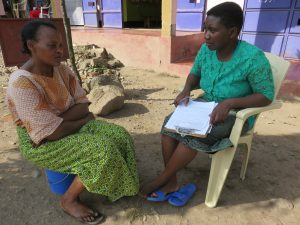
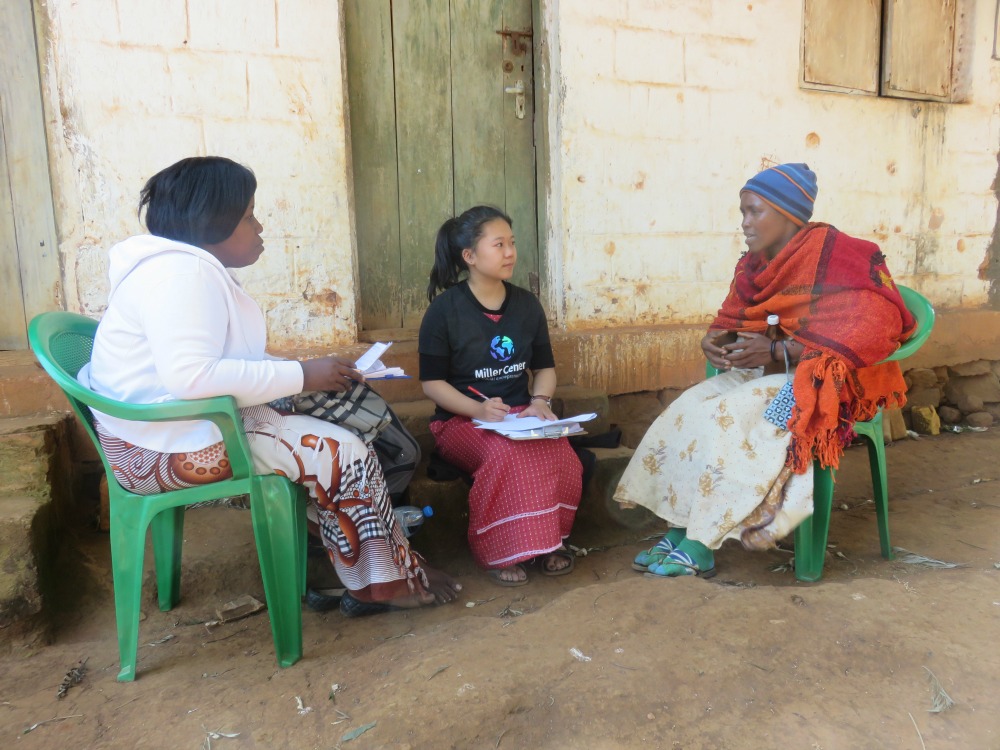
Here, Revina is conducting an interview with a Solar Sister customer.

Revina conducts an interview with a Solar Sister customer in Swahili.

Furthermore, the fellowship has caused me to reflect a great deal on how I can help people fulfill their spiritual needs. My experience with social entrepreneurship thus far has focused primarily on addressing basic material considerations for the poor. Lately I’ve been wondering that if people are only being nourished in this way without regard for the state of their souls, then is there really any deeper meaning to what we’re doing? I’m not sure how social entrepreneurship currently plays and/or would play a role in a more spiritual sense, but it’s definitely something to think about. To me, spiritual needs are even more important than physical ones (John 6:27). Recently, my pastor prayed at the end of a sermon, “God, we know that we aren’t just here to survive.” That statement really stood out to me, because it immediately made me think about the Tanzanians that I met this past summer–a lot of whom lived humble lifestyles on minimal resources in rural villages without electricity. When my pastor spoke that sentence, I thought to myself that indeed the rural poor in Tanzania aren’t just alive to survive, because life isn’t just about surviving. They exist for a reason, though in fact, many of them are simply trying to survive. Their futures are filled with uncertainty as they live day by day just getting by. In my mind, this world that they know can’t possibly be it for them. There must be hope, and while I do believe that the mission of development work is good, I am beginning to wonder if it is enough.
img_8823

A couple of weeks ago, I passed by a bookstore downtown that featured Anita Moorjani’s What If This is Heaven? While I haven’t read the book so I don’t know its content, the title at face value brings up a good point, because some people do live like this world is it, like the problems that people face in this world are their most pressing need. I, on the other hand, believe that this is not the case. There’s no way that earth is the end. If this world is it, then how can living in poverty be all there is for some people? If that were the case, then life would be a grave injustice in that certain people are simply born into prosperity while others are not. There has to be something more. (I would be curious to know what some of the people who I met in Tanzania would say about this.) Being in a developing country likewise led me to think about questions such as: how can a good God exist if He allows suffering to happen? While I’m not at all a reader, I did end up buying C.S. Lewis’s The Problem of Pain at a bookstore in Uganda on the way back home this summer and would highly recommend anyone interested in this question to look into it. I’m not quite sure where I’m going with this, but I guess that these are just a few thoughts that I am still wrestling through and exploring further. Nevertheless, one thing that I have settled on is that I’m not perfect and I can’t meet anyone’s spiritual needs, but I know someone who can, and His name is Jesus. I want to take part in meeting people’s earthly needs but beyond that, also take an active role in pointing people to the truth, which I believe is spiritually fulfilling and embodied in John 3:16, which says, “For God so loved the world that He gave His one and only begotten Son that whoever believes in Him shall not perish but have everlasting life.”
img_6718

As a result of this fellowship, I feel that volunteering and working for an organization with social programs/initiatives are the best kinds of social engagement for me, as nothing can replace face-to-face connections with others, which can be fruitful and meaningful to both the receiver(s) and giver. While I didn’t exactly volunteer in Tanzania, I did spend a lot of time with people from different backgrounds, and just being with them gave me joy. Even though I wasn’t able to develop very profound relationships during my time abroad, I loved listening to people’s stories and learning about their culture. In fact, as President of UNICEF Campus Initiative at SCU this year, I decided along with the rest of the leadership board that our club would incorporate volunteering as part of our focus in addition to existing fundraising efforts. Based on my personal experience, I believe that serving people and spending time with them provides value to all involved.

Moreover, humanitarianism is no longer an extraneous part of my life that I pursue only if I have free time or when I am doing well. Living out a lifestyle focused on altruism and achieving greater good in Tanzania compelled me to believe even more that in all circumstances, it is essential to consider others as best as I can, as that is one of God’s major purposes for my life. As a result, I am very interested in finding a job after graduation that allows me to engage in nonprofit work. I am specifically considering working on a company’s community outreach team, leveraging my communication writing and marketing skills. I do not know exactly what this will look like, but using my professional career to promote causes that are personal to me, such as community engagement and education, appeals to me very strongly.
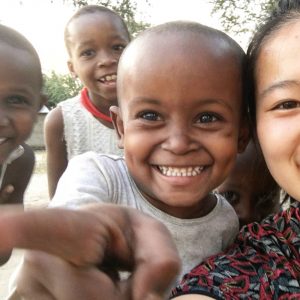
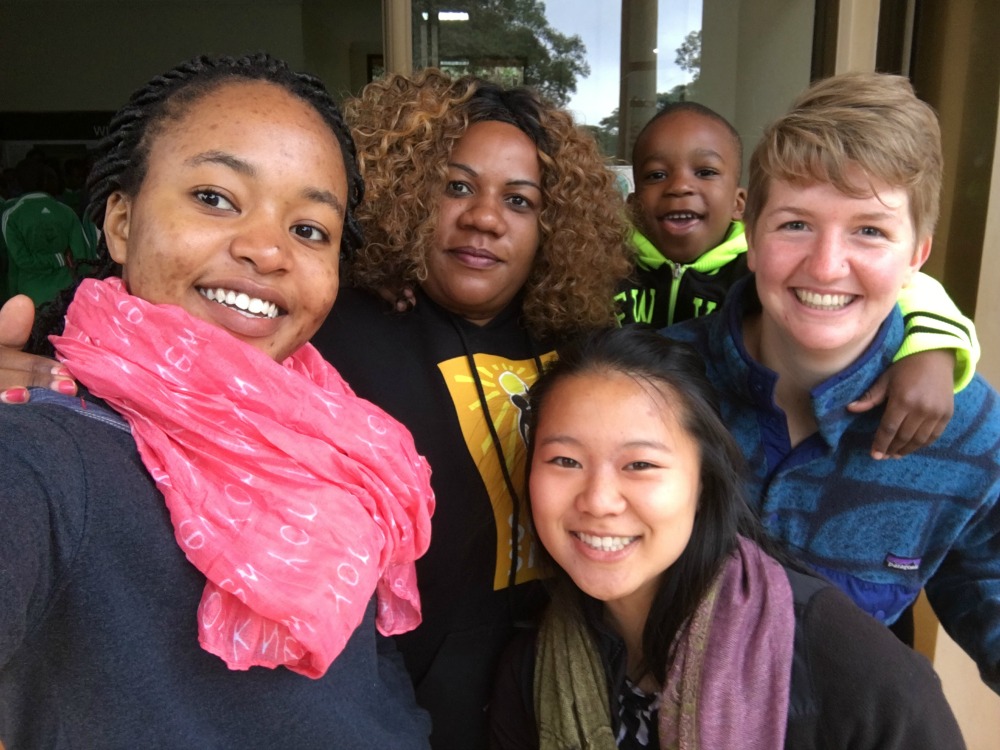
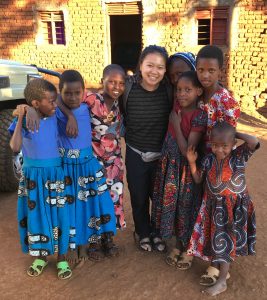
After we finished our research in this village, we had some time to play with the kids and take fun selfies.

After we finished our research in this village, we had some time to play with the kids and take fun selfies. I absolutely loved hanging out with them!

Another vocational route that I would like to explore at this time is teaching. Although I never envisioned myself as a teacher growing up, I started considering it as a possibility after working with Tanzanian research assistants over the summer who were good at English but still learning. In reviewing their surveys every day and teaching them the meanings of certain phrases and words, while trying to understand their notes as well, I discovered how much I enjoyed sharing with them about the English language and seeing the light bulbs go off in moments of understanding. When I returned home, I was inspired to research various teaching English as a Second Language (ESL) abroad programs in addition to teaching programs in general. I ended up applying for an ESL teaching assistant scholarship abroad and signed up to teach children’s Sunday school at my church in December for the first time. I’ve never done teaching before, but I’m excited to try something new and see how these opportunities turn out.
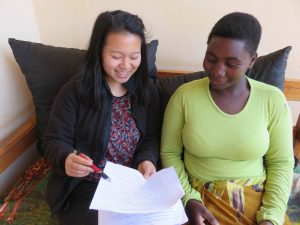
At the end of each day in the field, I reviewed Revina's surveys and would go over them with her the next morning to make sure that we were always on the same page. Throughout the process, I was able to teach her more about the English language and better understand how she was thinking about the survey.

At the end of each day in the field, I reviewed Revina’s surveys and would go over them with her the next morning to make sure that we were always on the same page. Throughout the process, I was able to teach her more about the English language and better understand how she was thinking about the survey.

When people ask me about the fellowship, I always think back to spring quarter of sophomore year, because that’s when I truly began this journey and first learned about social entrepreneurship. I was enrolled in HNRS 120AW: Entrepreneurship for Social Justice, where Dr. Kreiner introduced me to the ways in which social entrepreneurship differs from charity. Now that I’ve been involved with social entrepreneurship and witnessed how it works through Solar Sister, I have come to believe that both charity and social entrepreneurship are necessary for addressing the world’s problems, and that one is not better than the other. Being in-country allowed me to identify up close the imperfections of social entrepreneurship, as well as recognize how philanthropy can fill in the gaps and provide the necessary resources. Social entrepreneurship, in theory, is ideal, but its real-life implications revealed to me some of its practical shortcomings. Charity is needed to start and fund social enterprises, at least initially, though sustainable solutions are what truly create long-term change.

In terms of what has evolved since the beginning of the fellowship itself, I feel like so much has changed. I’ve grown so much as a person from this experience and did so many things that I didn’t think that I was capable of doing, such as traveling internationally alone, temporarily managing a major research project, contributing to a pending white paper, keeping up with such accomplished research partners, learning a little bit of Swahili, meeting so many new people, and surviving the workload of the fellowship. At the same time, I now see that the world is a much more broken place than I previously thought, and thus, many opportunities exist for me to make a difference. I’ve always heard about poverty and environmental issues in Africa, but I admit that previously it was difficult for me to feel connected to the people there affected by these issues. Visiting Tanzania has made me feel far less removed, reminding me that these issues do exist and showing me how they play out. It’s as if I’ve always had a blurry understanding in kind of knowing about these things, but for the first time, I actually put on my glasses and saw for myself how people in another part of the world live.
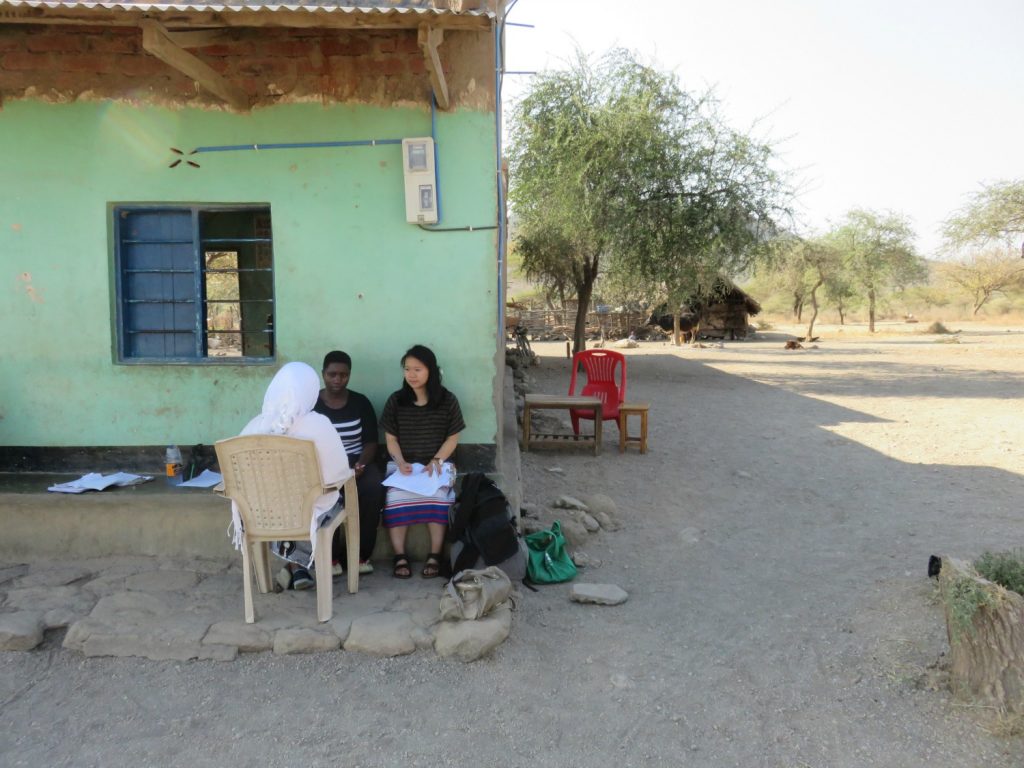
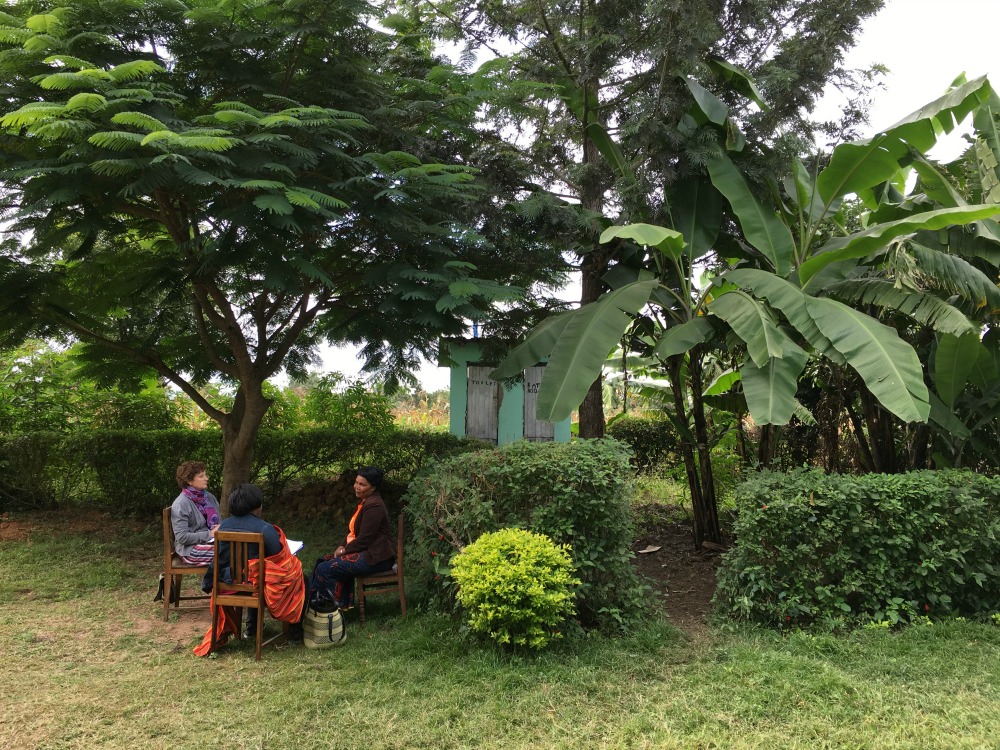
In this picture, Revina and I are surveying a Solar Sister Entrepreneur in Karatu. We conducted the interview outside of her restaurant. She is an amazing woman and takes care of over 10 orphans and ran

In this picture, Revina and I are surveying a Solar Sister Entrepreneur in Karatu. We conducted the interview outside of her restaurant. Not only does she manage multiple jobs but she also takes care of more than 10 orphans.

I firmly believe that we cannot stay in our Silicon Valley bubble, living a comfortable life without dedicating any attention or action towards addressing the fact that there are people suffering greatly, and yet call ourselves good people. Serving humanity doesn’t necessarily have to occur through social entrepreneurship specifically, though I do believe in the value of social entrepreneurship in helping people. Considering what I witnessed and experienced in Tanzania, it’s impossible for me to come away from this fellowship unchanged. Especially now that I have seen with my own eyes the reality outside of my little world, I feel a responsibility to do something about it. I can’t continue living the life that I have and pretend that I never saw anything. As I come away from this fellowship, I am humbled by the blessings that I do have, the opportunity to perform meaningful research, and the chance to immerse myself in a new culture and country. While I don’t know what’s next for me after graduation, through this fellowship I have learned to be much more comfortable with this uncertainty. No internship or class could replace how the GSBF program has transformed me, and while it was by no means an easy fellowship, it has given me a much stronger sense of who I am, what I care about, and what I’m looking for in life.
img_1292

Last but not least, I would like to give a huge thank you to the Miller Center for Social Entrepreneurship, Keith, Thane, Solar Sister, Dr. Gray, Spencer, Alaina, and the rest of my fellowship cohort. Each and every one of you has been a major part of my GSBF experience. It’s been a pleasure.
Looking Back, Moving Forward

I still remember getting off the plane at the Kilimanjaro International Airport on June 20th, full of awe at the beautiful sunflowers and open landscapes surrounding me. It’d been five years since I traveled outside of the U.S., and I’d forgotten what it was like to be somewhere completely foreign.

We landed in Tanzania around sunset.

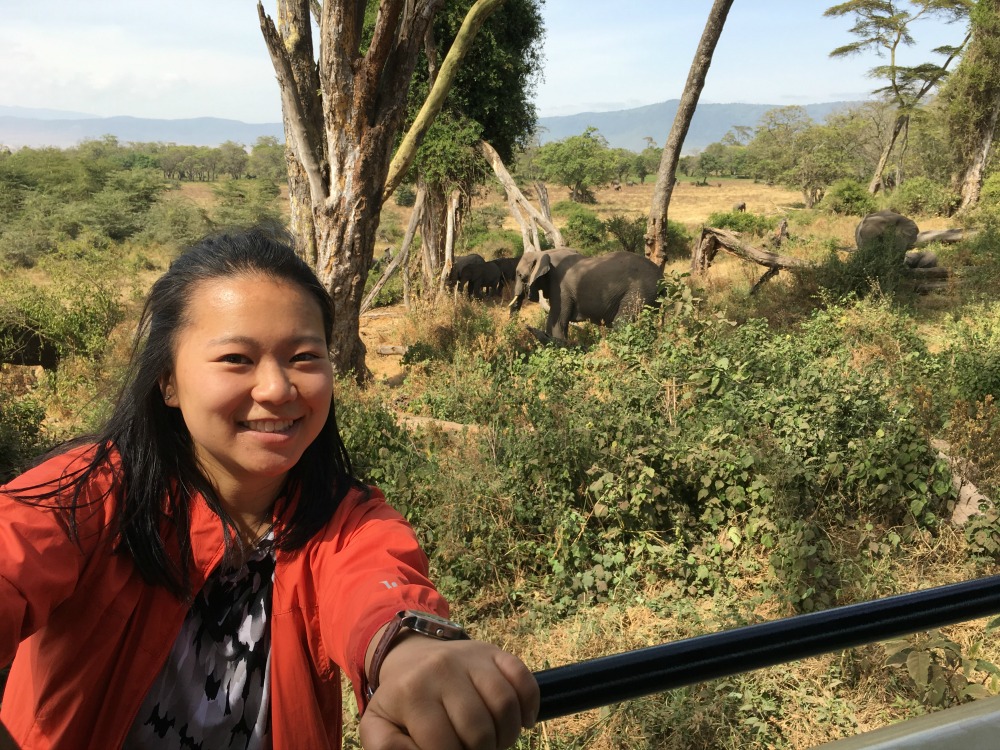
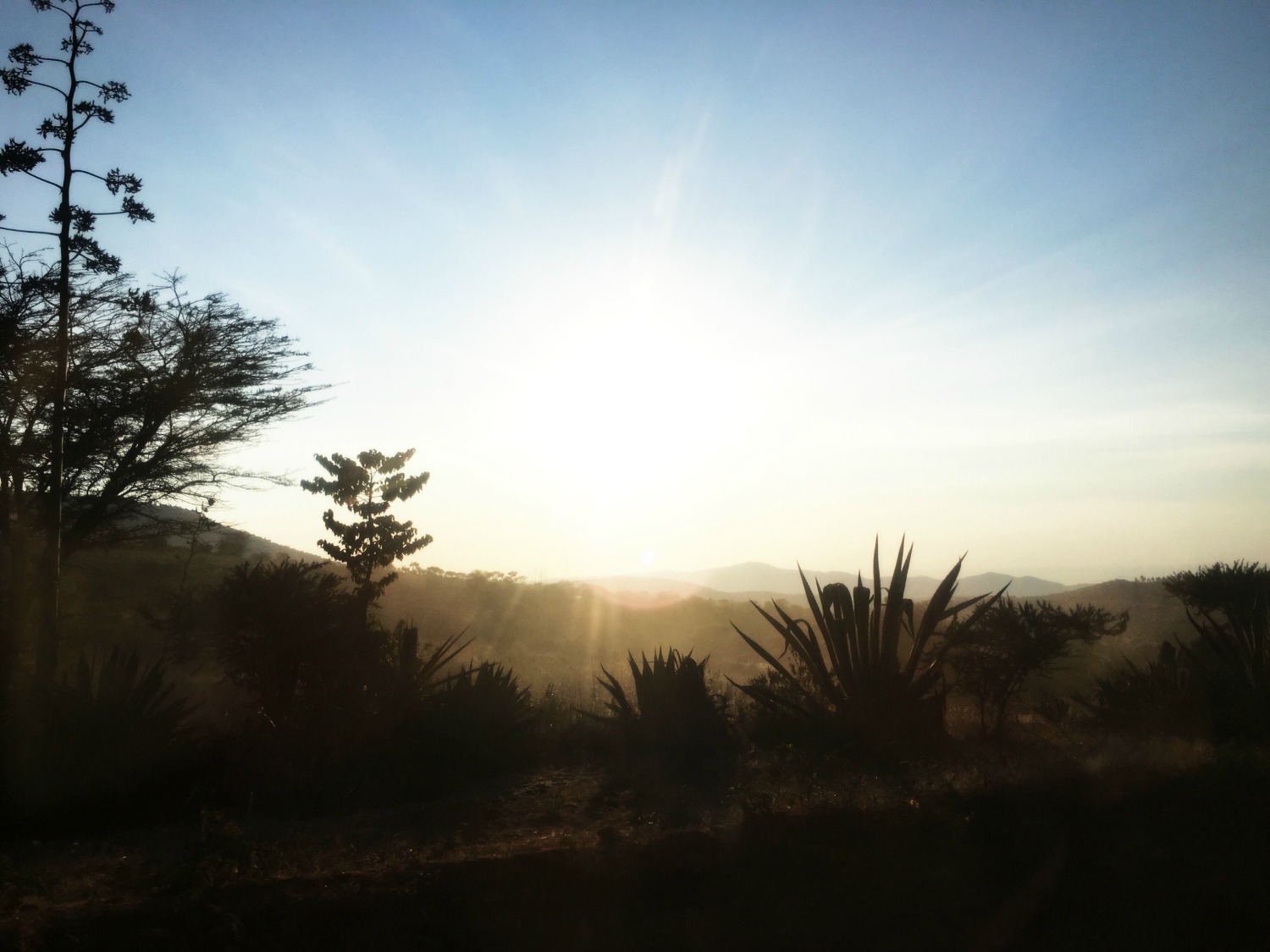
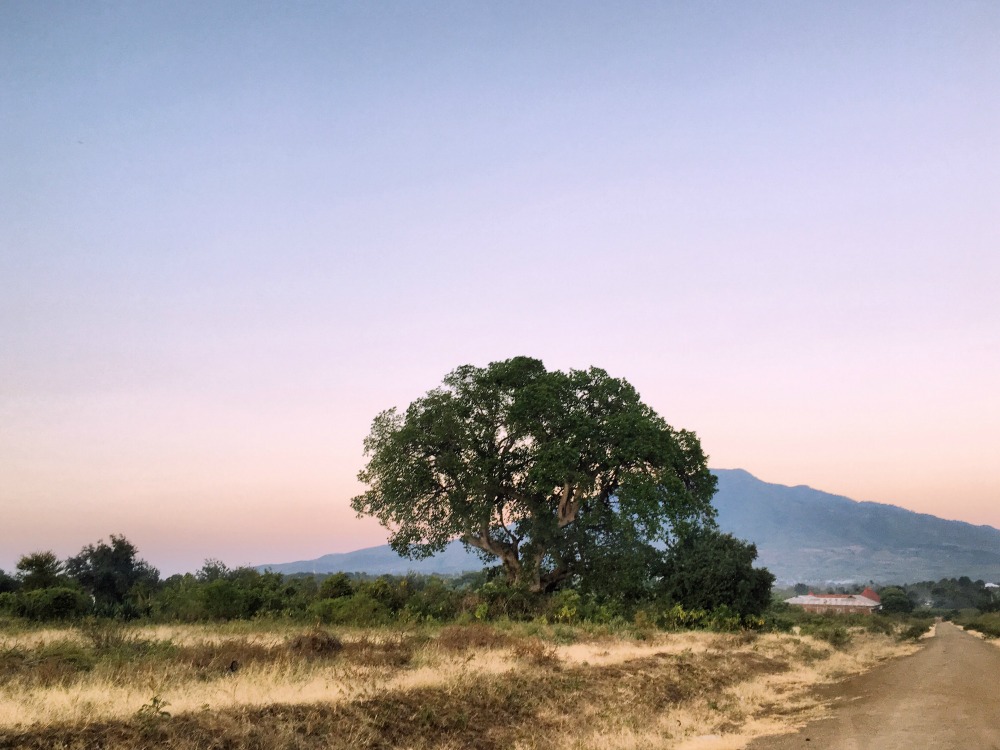
I miss this view.

It’s been nearly two months now since I’ve returned home, and I’m still processing everything that happened over the summer.

During my time in Tanzania, we made a total of five field visits to various villages in the Babati, Moshi, Arusha, Karatu, and Tanga regions, each for about a week at a time. Upon arriving in a village, we provided a brief introduction and received informed consent before pairing up with local research assistants to conduct individual surveys. At the end, we gave each respondent a bag of sugar to thank him or her for participating. Some days, 15-20 customers would show up, while on others, only 5-8 would come. Despite the unpredictability in attendance, however, the number of surveys that we collected amounted to 257.

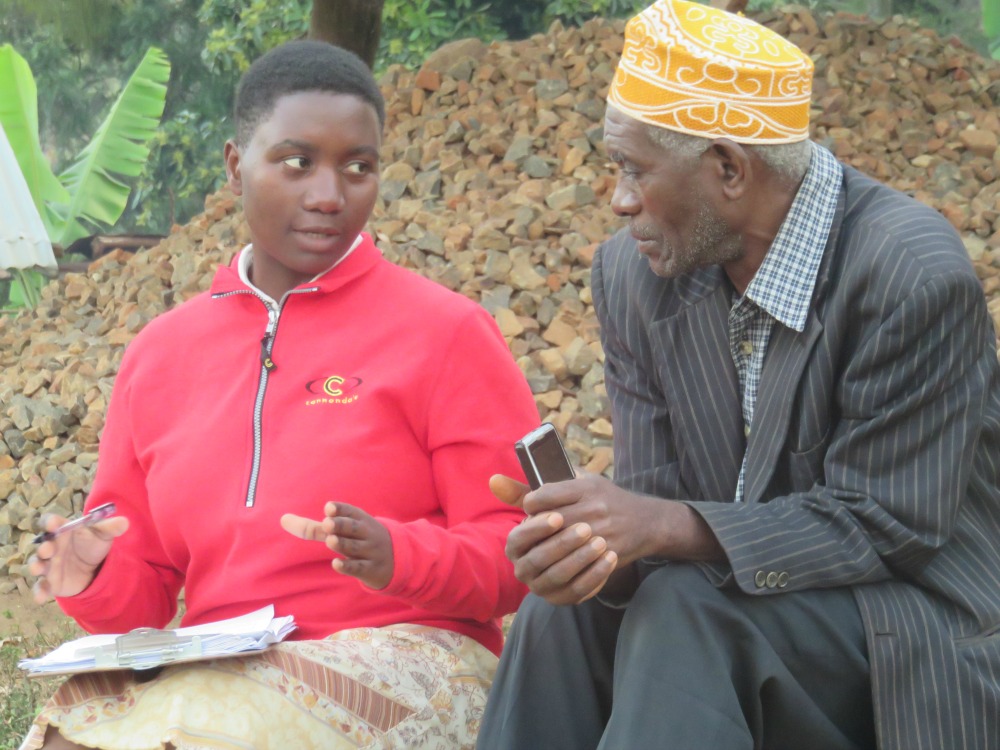
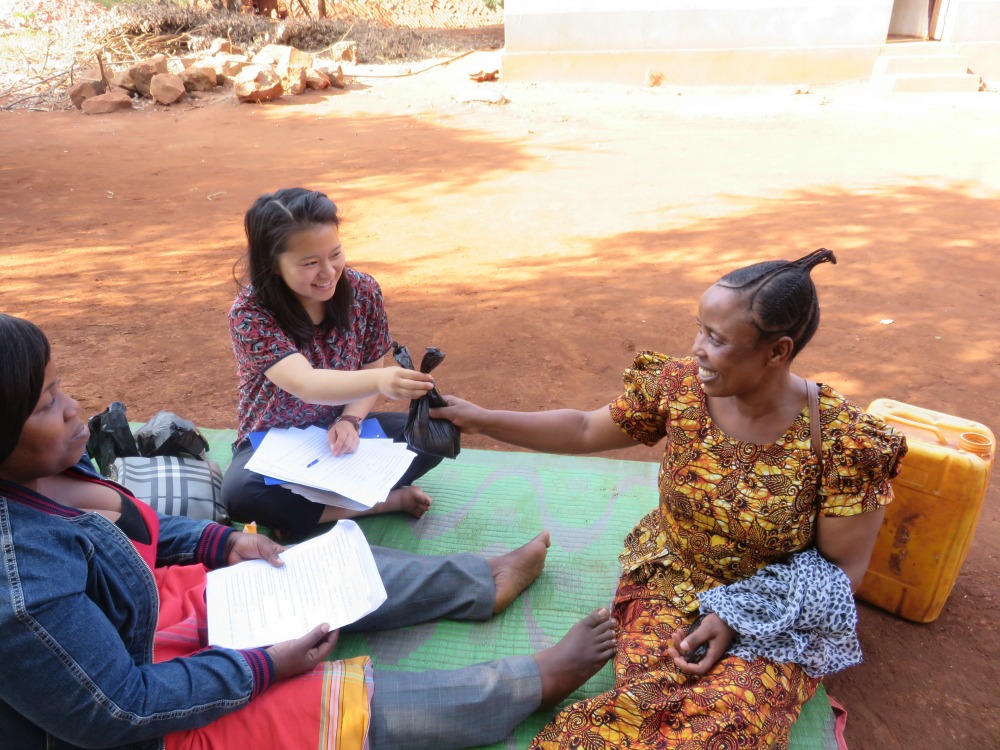
A snapshot of the action research process in progress, with Doreen on the left and a Solar Sister customer on the right

Leslie conducting a survey in Arusha

Dr. Gray, our research mentor, traveled with us during our first few weeks in the field and is pictured here conducting a survey in Arusha.

Coming into this experience, I definitely didn’t know what to expect. I certainly didn’t foresee the quantity and quality of research that our team ended up accomplishing, nor did I truly realize the value that would come from the research process as a whole, and the lessons that I would learn.

To work effectively with a social enterprise, I realized that it truly requires both passion for its social mission and understanding of it as a business, though balancing such elements in reality is quite challenging. I found myself constantly excited about Solar Sister but also needing to remind myself to be critical so that my favorable opinion of the organization would not distract me from being an objective researcher. I likewise struggled with navigating how to help other organizations with goals and services similar to that of Solar Sister. At one one point when visiting the CEO of another solar company operating in the Moshi region, I noticed a vibe of carefulness about sharing information. After all, even though both businesses desire to address energy poverty, they are ultimately in competition. In retrospect, I learned a lot from working alongside a social enterprise, and with only three Solar Sister staff members in the local office and a few employees in D.C., it felt like we were a small family doing something big in the world.

The SCU research team

The SCU research team

A few of us members on the research team

We spent a lot of time with Solar Sister’s Tanzania Country Manager Fatma and her family. We always had a great time together.

In addition to partnering with Solar Sister, I received the opportunity to engage closely with some of the communities that it serves. Even though I started out with the intention of attending to their interests through our research, they ended up giving me so much more. From my encounters with them, I learned early on that almost everybody within the community knew their neighbors personally, regardless of whether they lived nearby or farther away. The rough, rural, and undeveloped land that separated their houses from one another didn’t stop them from making time to chat and maintain friendships. In fact, people often reported purchasing from Solar Sister simply because a neighbor told them about the product, and they trusted him or her. Here in America, we live so close to our neighbors–literally within feet of them–but sadly, we hardly interact or even know their names. Seeing people in Tanzania cherish community with such dedication and commitment inspired me to make more of an effort to reach out to my neighbors back at home. Thus, when I returned to the states, I actually reconnected with some old friends that I had not spoken to in a very long time.

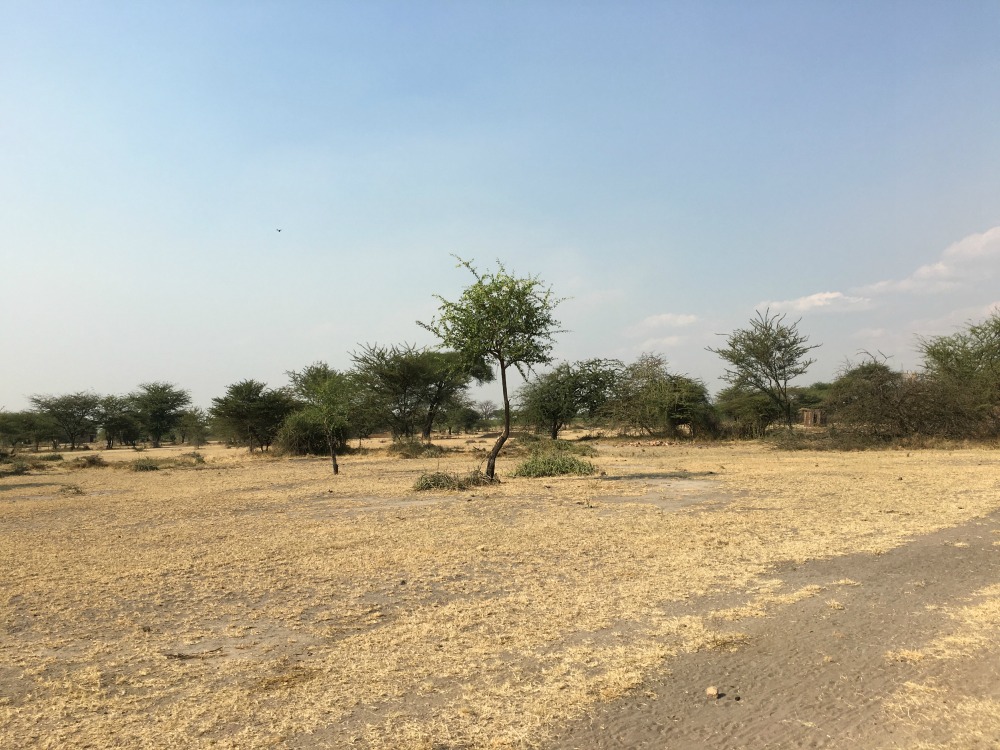
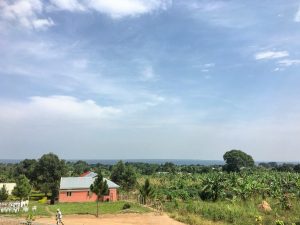
The landscape of Babati

Homes were dispersed throughout Babati but everybody still knew everybody else. I was very impressed!

The contentment and easygoing nature of the local people further struck me. We sometimes arrived 30 minutes later to the field than we said, but the people never appeared angry or upset. When we stayed longer than expected, our hosts were always accommodating. On one of the nights in Babati, a Solar Sister Entrepreneur made all eight of us dinner despite our failure to let her know in advance that we would stay. Living in the Silicon Valley, I am so used to planning and scheduling my time to the minute, unlike many off-grid communities in Tanzania. I marveled at their willingness to go with the flow and emerge unphased. They displayed a calmness and patience with the pace of life, not appearing at all entitled to their own time but always remaining the most hospitable hosts.

A Solar Sister Entrepreneur and most excellent host

This Solar Sister customer kindly showed us around her house and offered us fresh milk from her cow.

I have to say, though, that above all, I admired their work ethic. Many of the individuals that we interviewed, especially the women, managed multiple business activities simultaneously while taking care of their families. Although they made little income and lived simply, they all held personal goals and, for the most part, contributed to their families financially. Even after a full day’s worth of work, a lot of women continued business activities throughout the evening while completing household chores and caring for their children. Then, they would wake up early the next morning to farm. These women, who work extremely hard, led me to realize the humanity of these people in a much deeper way. People in poverty are not helpless or incapable. Many of them are actually very tenacious and tough. The world often stereotypes the poor as lazy, having chosen that life for themselves when in fact that is not always the case. Take one of the women that I met in Babati, for example. She not only supported her family as a Solar Sister Entrepreneur but also earned income through weaving baskets, farming, and making jewelry, on top of being a mother to young children and performing secretary duties at church.

With one of the biggest hearts that I have ever known, she blessed me in a way that I will never forget. Before we left her village, she freely gifted us nine stunning, intricately handwoven baskets to take home, one for each of us, and an extra one for our research assistant Doreen, because she knew that Doreen really liked it. We insisted on paying for them, but she firmly refused. Her generosity and love towards us nearly brought me to tears that night, as I was absolutely blown away by her kindness. She changed my life infinitely more than I was able to impact her. Every time I see the basket now, I see her face, and I remember that the poor are not simply passive recipients of charity. They have something to offer and contribute to this world too, and they have the potential to do it.

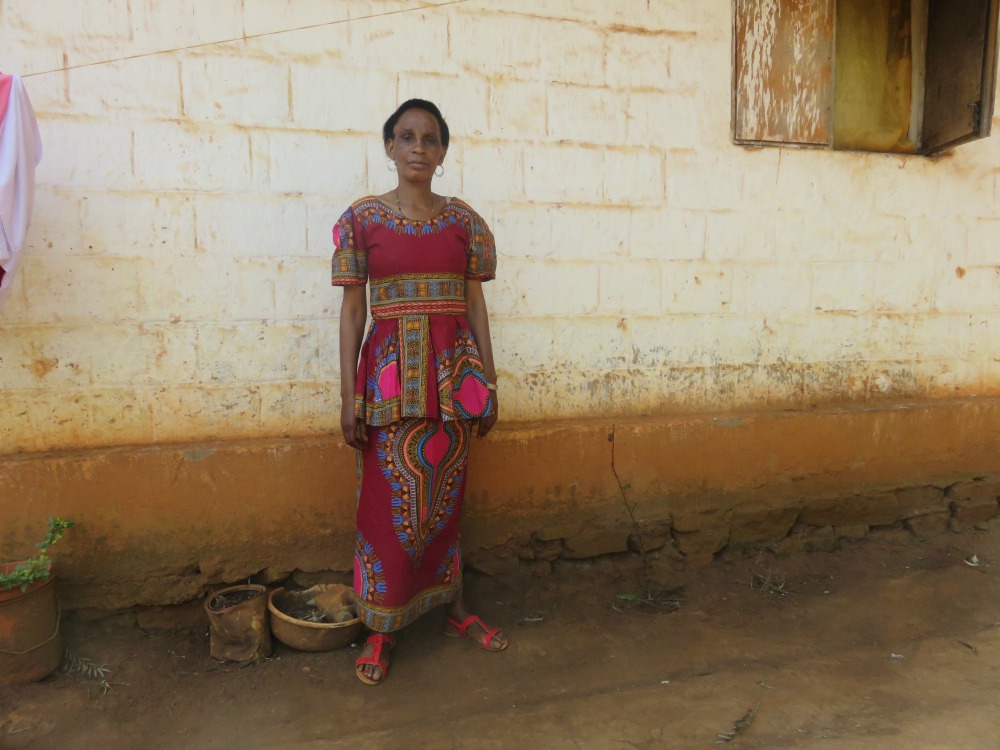
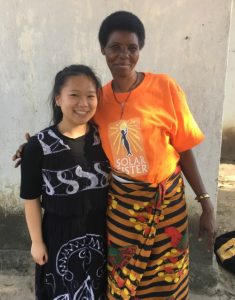
A Solar Sister Entrepreneur, teacher, and mother

A Solar Sister Entrepreneur, teacher, and mother

Unfortunately, not all my encounters were as smooth sailing. I felt particularly overwhelmed in one Maasai village by the crowd of men and women that had gathered around my interview station, listening in. Feeling awkward and also wanting to protect the privacy of my interviewee, I asked Doreen to request some space. After exchanging some words with them, she told me, “There’s nothing I can do. That’s just the way they are.” Unsure of how to react, I nervously smiled and asked if the interviewee was O.K. with them being around, to which she said yes. However, I soon discovered that the interviewee did not speak fluent Swahili and therefore needed the Solar Sister Entrepreneur who knew the local dialect to do double translation for us. At times during the interview, it seemed like the translator was answering the questions for herself rather than speaking for the customer, so I’d check to make sure that the customer truly said those things. Sometimes participants left part way through or got distracted, and I remember just feeling frustrated in those moments, feeling like I was a failure when it came to communication, which was especially disappointing for me because I have studied intercultural communication as a communication major. It was a hard experience, but also very humbling. In general, I think that translation proved the hardest part in our entire research. Despite my efforts to verbally engage the local people by learning Swahili from the research assistants and my language book, I lacked proficiency and it presented a major challenge.

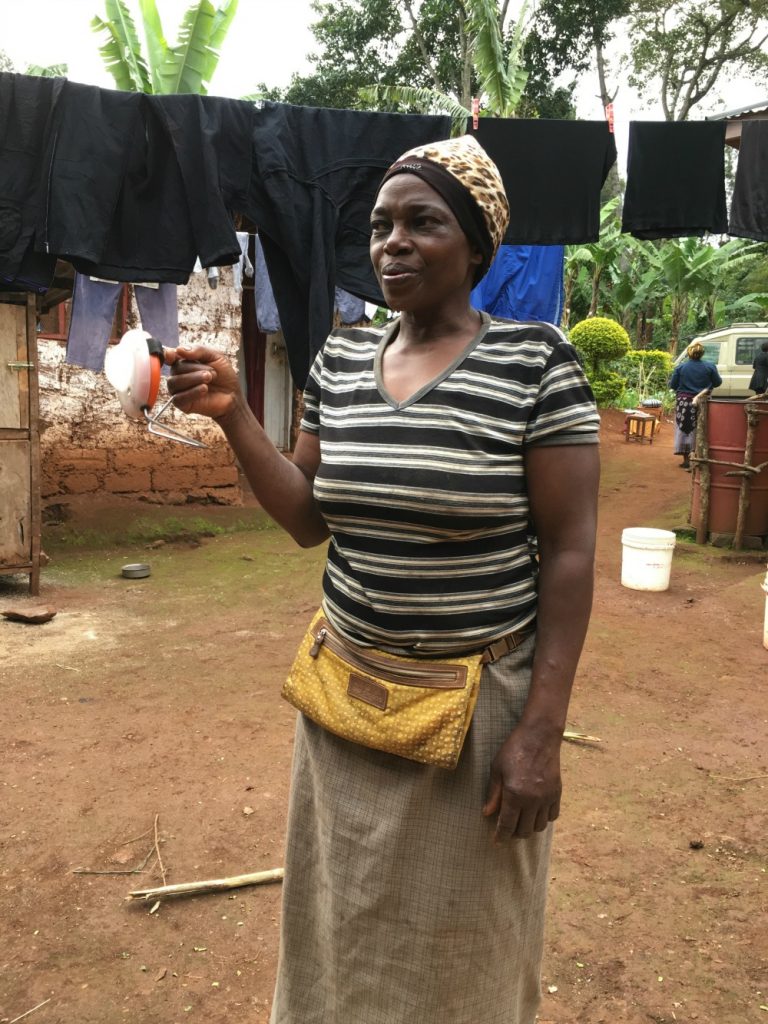
Revina, one of our research assistants, is a native Swahili speaker and could conduct surveys much faster than I could.

Revina, one of our research assistants who is pictured on the left, is a native Swahili speaker and could conduct surveys much faster than I could.

Nonetheless, Tanzania will always hold a special place in my heart. My experience there grew me in so many ways and gave me an abundance of beautiful memories that I will never forget, which I recorded in my journal. (I actually wrote through a whole blank journal during my stay and needed to buy a new one.) In Tanzania, I witnessed and experienced for myself how people everyday live without access to many basic components that I typically take for granted in America. Hot water, reliable electricity, local hospitals, clean water, uncontaminated food, internet connection, laundry machines, a stove that does not require matches, and cell phone minutes/texting are all privileges. I realized that private transportation, such as bikes or cars, are not necessarily easy for people in other places around the world to afford, and I really need to be more grateful. I lived without many of these things for only eight weeks, but some people live without these things for their whole lives.

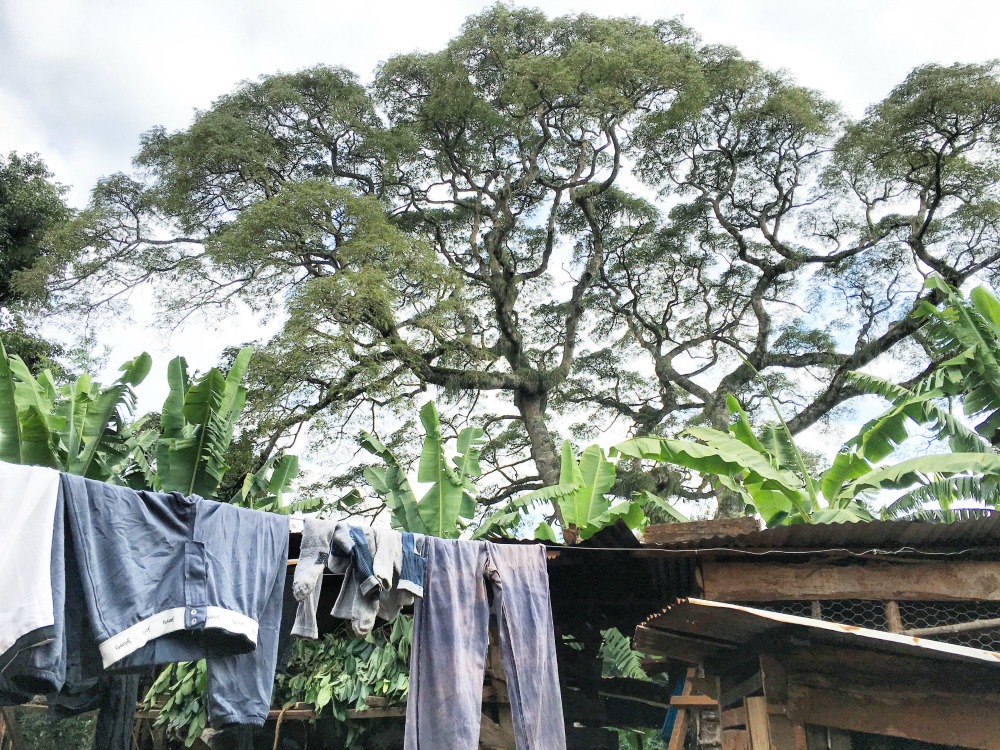
No laundry machines :'(

No laundry machines…

...but I still love this place!

…but I still love this place!

One time while we were on the road, I saw a boy dressed in dirty clothes, kneeling on the street alone as pedestrians and loud cars zoomed by. With sad eyes, he held out cupped hands in perfect form, as if he had been instructed on how to beg.

He completely broke my heart.

Just a couple seconds of seeing this boy further reminded me of my privileges.

Apart from recognizing my privileges, I learned that though I am physically small and often feel small inside, I can be a lot stronger than I think. If I knew back in January that I’d have to fly internationally on my own and work alone in the field for two weeks, I definitely wouldn’t have applied for the fellowship, because I would’ve been scared to death. Yet my experience challenged me to become a better leader and adapt to new situations. When I look back, I’m incredulous that I stayed behind after Dr. Gray and Alaina left, though I did receive an incredible amount of support from them, the Miller Center, and the host enterprise, which made my independence possible. I also discovered that I really enjoy making a direct impact on individuals and ultimately desire to pursue a career where I can focus on doing that. I think that research is interesting and necessary for helping the world become a better place, but the change that I would create on that level is not nearly as satisfying or meaningful to me compared to spending time alongside people on a daily basis. The relationships that I built with the research assistants, in which I would review surveys with them at the end of each day to ensure comprehensive and clear understanding of their notes, presented me with the opportunity to teach them more English, as well as receive insight into their thinking process. I liked playing a role in helping them acquire the skills that they hoped to develop through their job as research assistants. Additionally, I simply loved being immersed in a foreign culture, meeting people from all parts of the world, and taking on a new adventure.

The best summer yet!

Moving forward, I know without a doubt that my vocation consists of helping and serving people. In terms of what that looks like concretely, I have yet to find out. I am still considering my diverse career possibilities, but I do know that I would like to work internationally, impact individuals directly, and seek a job environment that I find exciting and stimulating. I really enjoyed living in a different part of the world, learning about culture, hearing people’s stories, and working with the research assistants, as well as training them, but I’m still figuring out what the next steps are that would best combine my passions, interests, and abilities. As much as I hoped to have everything figured out by the end of this fellowship, it really doesn’t work like that. I can’t force myself to know right now what I was made for, because it’s a process of discovery that can take a lifetime. I’ve come a long way considering that before college, I literally had no clue as to what I wanted to do with my life. I still have a distance to go, but I believe that as I seek God’s plan and calling for me through exploring new opportunities and continually putting myself in new situations, God in His own perfect timing will reveal what He has in store for my life.

img_6210

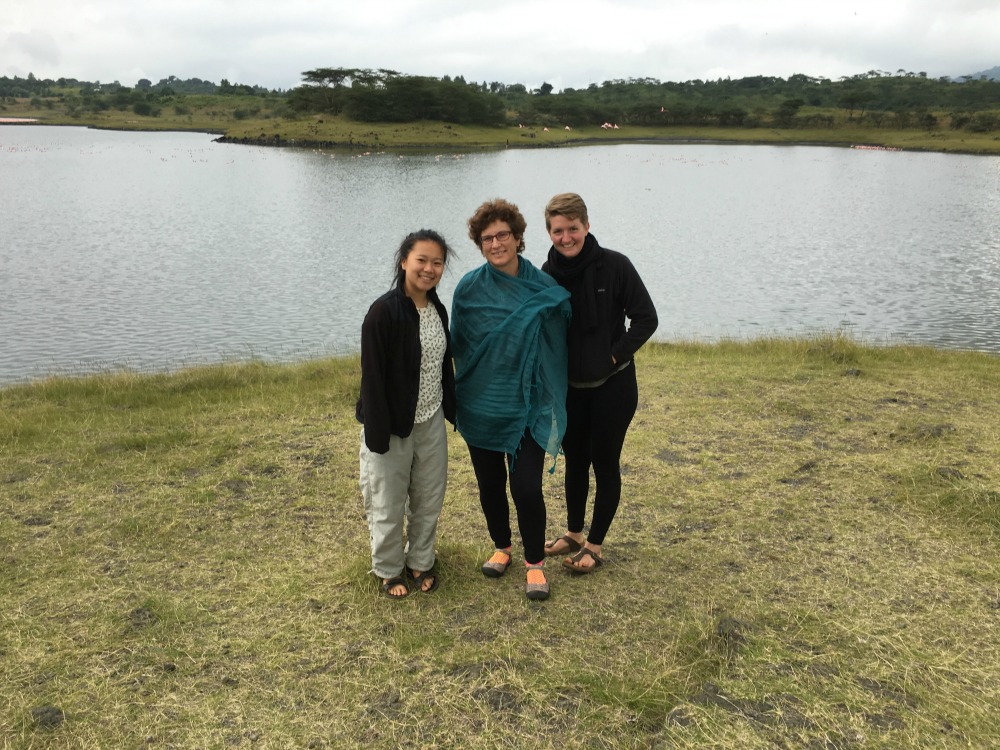
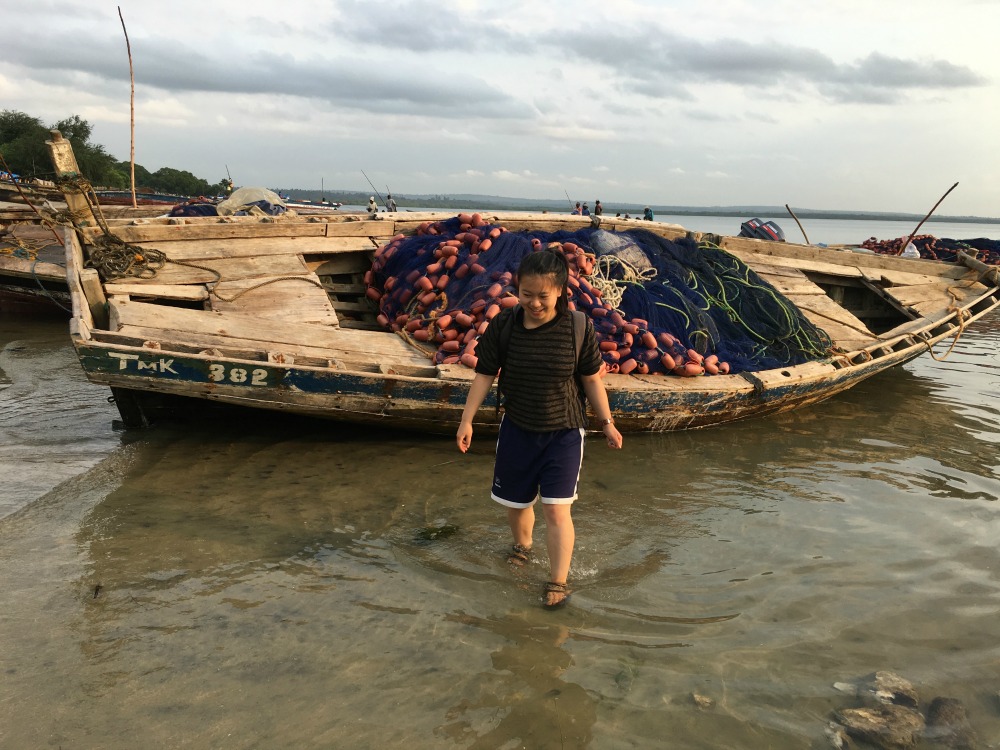
I spent my last day in Tanzania exploring new waters, and I can’t wait to explore new ones in the future!


Greetings from Arusha!

I’ve been in Tanzania for over three weeks now, and it’s been such an incredible, humbling learning experience thus far. The people that I’ve met, the local culture, and the action research process as a whole have challenged me to go out of my comfort zone in positive ways that I never anticipated. I am truly grateful to be here.

Arusha

We previously spent one week in Babati and another week in Kilimanjaro where we conducted over 100 surveys with Solar Sister customers in various villages. Currently, we are in Arusha for our third field visit. Due to our lack of fluency in Swahili, Fatma as well as Revina and Doreen, our research assistants, have been providing translation. I really enjoy working with them and simply being on a research team of driven, hardworking women. They inspire me!

I loved meeting Priscilla, a Solar Sister Entrepreneur.

When I first met this Solar Sister Entrepreneur, she said, “Oh! How’s China?” It was great.

There are so many observations that have struck me since arriving here. I almost don’t know where to begin! For the sake of time, however, I’ll start with sharing 10 specific thoughts that have been on my mind lately.

  1. A final draft of a survey is never perfect until it’s been tested. After the first week of administering our survey in Babati, we realized that we needed to change a good deal of the ordering, wording, formatting, and content. While our preparation certainly wasn’t useless, it could really only go so far, especially considering our lack of familiarity with local village life and culture.
  2. Based on the data that we have already gathered, it seems like men tend to use solar for leisure, such as reading magazines or newspapers, whereas women use it for income-generating activities and house chores. While we are unable to draw conclusions at this point, I do think it’s interesting to see that difference emerge in a pattern. Solar also seems to cause female customers in particular not only to feel more respected in their households and communities but also to possess more control over financial decisions.
  3. As much as I enjoy being here, sometimes I feel a bit isolated because of the lack of community. We travel around a lot, so we are constantly going in and out of villages. In that way, it’s been difficult to develop close and stable relationships with the people that we interact with. I really wish that I could spend more time and establish deeper connections with them.
  4. Ugali is amazing.
  5. Many people often think of Africa as a very hot place. In reality, however, Arusha and its surrounding areas are quite chilly during this time of year.
  6. In the words of Hannah Montana, “Everybody makes mistakes. Everybody has those days. Everybody knows what I’m talking about. Everybody gets that way.” Indeed, she does not lie. These lyrics are especially applicable to the coding process. While checking our data input, Leslie, Alaina, and I found that we each miscoded information. It is best practice to review each other’s work.
  7. Language is such a powerful skill. I wish that I spent more time learning Swahili during spring quarter so that I could communicate more efficiently while I am here. Even now, I still struggle with remembering the appropriate responses to all the different greetings (e.g., shikamoo, mambo, salama, habari, hujambo, etc.).
  8. Time here moves so much slower than it does in the Silicon Valley, and I sincerely appreciate the change of pace. We typically wait for an hour to 1.5 hours for food to be served in restaurants, but it teaches us patience and forces us to take much needed breaks when we lack the discipline to do it ourselves.
  9. Embrace the shilling. And the kilogram. And the kilometer. And military time.
  10. Never take Wi-Fi, warm water, and vegetables (yes, even vegetables) for granted.

Here I am. Send me.

When I was in the second grade, my parents bought me my first diary. I honestly didn’t like writing and didn’t feel that I was very good at it either, but I wanted the notebook really badly because it was hot pink, came with a key and lock, and contained an image of Spottie Dottie on the cover. I begged my parents to buy it for me and may or may not have made a scene. At the time, we were on a tight budget, but my father felt that having a diary or journal was important. Drawing from experience, he told me that reflecting about life experiences was a good practice, and nice to read about looking back. So, after making me promise that I understood the purpose of a diary and would use it, they agreed to buy it for me.

My first diary

My first diary

Because of my promise, the following year and thereafter I started documenting events that I considered noteworthy, life-changing, and important. Below are a couple of entries exemplifying this:

“Dear Diary, Today I feel relaxed. I’ll tell you why I feel relaxed: waell today I watched t.v. and am going to watch more and that I might go to Cosco and watch t.v. and eat samples.” (January 11, 2003)

“Dear Diary, Today I dropped a glass cup, and it broke!” (March 23, 2003)

“Dear Diary, Today I stayed at a hotel in San Francisco.” (July 5th, 2003)

“Today we’re hanging up paintings and I might clean my room.” (September 6, 2014)

Dear Diary, Today Arnold Schwartznegar called us! (He’s the governor.)” (October 4th, 2004) (Though looking back, it was just an automated phone call).

I gradually began writing in my diary more and more frequently, eventually coming to a point where I found true enjoyment in writing, and soon started journaling about deeper thoughts and feelings, writing poetry, starting books, and coming up with short stories. Today, I have close to 50 journals and now consider writing one of my favorite hobbies. It allows me to express my creativity and essentially create something out of nothing.

Just as I was not naturally gifted or inclined to writing growing up, but became better and fonder of it through practice and experience, I likewise was not the best in soccer. As a smaller, shorter person playing against girls much stronger than me, I always felt that I had to prove myself to coaches and hold my own on the field. Girls would often call me derogatory names in regard to my size and race. Sometimes I would come home with bruises and cuts on my neck from taller girls elbowing and scratching me during soccer games. Nevertheless, I learned to see the challenges I faced in soccer as obstacles that I wanted and could overcome. For me, playing soccer came to mean much more than the physical game itself. It was a mental game, and it was all about being tenacious, staying committed to the sport, playing smart, improving myself, and defying expectations.

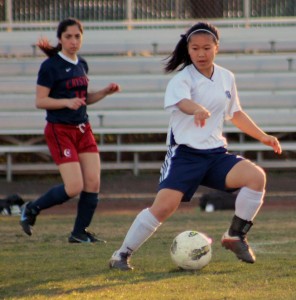
Me playing during a CCS playoff game.

This is me during a CCS playoff game senior year. We later ended up winning the championship for the first time in our school’s history.

Moreover, being on a soccer team taught me many important life lessons, such as learning to value others and work together. In high school, my soccer team was assigned a new coach who during one practice forced me to keep doing sprints even though I reached my limit and felt ready to faint. Seeing this, some of my teammates came up to me and started encouraging me. They made sure that I drank enough water and even willingly volunteered to do my portion of sprints, which totally blew me away. We had played together on the same team for six years, and they were willing to make a painful sacrifice for me without expecting anything back.

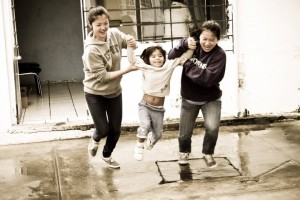
Vania and me playing with Stefanía!

Vania and me having a blast with Stefanía in Quito, Ecuador!

Through the care of my teammates, I learned the importance of caring for others, but soccer was not the only area in my life that opened my eyes to the valuing others and their situations. In high school, I attended service trips every year to different parts of the world in order to help communities in need and share the Gospel. Some of the places that I visited include Mexico, Nevada, and Ecuador. From building houses to visiting orphanages, each of those experiences transformed my understanding of the world outside of the Silicon Valley by exposing me to vastly different lifestyles, while challenging me to think about how I could make a difference in the world.

Me hanging out with Derrick and Chloe in Duckwater, Nevada.

Hanging out with Derrick and Chloe in Duckwater, Nevada

My favorite memory comes from 2012, during my time in Skid Row. One day, I was giving flowers to homeless people. At one point, I made eye contact with an elderly Hispanic man sitting alone in the cold. I smiled and offered him all that I had with me at the time—a pink flower. In response, he smiled and said, “¿La rosa para mí?” I simply replied, “Sí,” handed him the flower, and then said, “Dios le bendiga.” We conversed in Spanish for some time, and before I left, he said something that moved me beyond words. In Spanish, he told me, “I will always remember you,” and he said that with the warmest smile that I had ever seen in my life. I replied, “La misma,” and walked away in amazement of our simple yet profound interaction. Even though I did not give him something material, he expressed genuine gratefulness and taught me to appreciate everything that I have, even the littlest things. He showed me that making a difference does not necessarily consist of huge, obvious acts of generosity, but that simply recognizing his existence as an individual with a unique name counts as equally important and meaningful. In that moment, God impressed upon me what I am to live for: serving and caring for people in need, because they matter and deserve better. This experience affected me so profoundly that I often tell this story to explain one aspect of who I am.

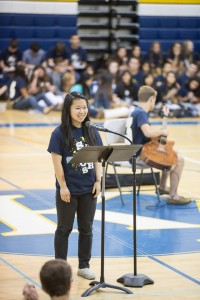
Speaking during Senior Chapel at my high school.

Giving a speech during Senior Chapel at my high school

I have always been one never to let fear stop me from doing what I really want to do. During my senior year, I ran for Senior Class President even though I never held a leadership position at school before. I was afraid of losing the race and putting myself out there. Even after receiving the winning vote, I still lacked confidence, but I didn’t want to let that stop me from pursuing the opportunity. I always strive to let my determination be greater than my fear.

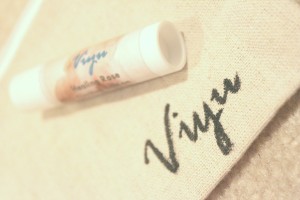
Similarly, I started a chapstick company during the summer after my senior year. I didn’t know what I was doing or how to run a business, but I simply jumped in and decided to learn as I go. Fear of failing as a business owner definitely scared me, but I wanted to do it because I felt passionate about my product and ideas.

My chapstick company Viyu

Viyu is the chapstick company that I started in July 2013.

I only slept a couple of hours each night that summer because I was so excited about making my website, product, packaging, and marketing as soon as possible. Every day, my head was constantly spinning with new ideas. Despite being afraid and making some mistakes along the way, being creative, adventurous, and hardworking in order to achieve my goals have always driven me to be an achiever, a doer.

Since graduating from high school, I have been interested in seeking ways to use my education and career path to make a sustained and positive impact on others. As a college student now majoring in communication with an emphasis on research and writing, I have taken these life lessons with me and continue to learn a great deal both inside and outside of the classroom that I believe will allow me to contribute meaningfully to society. As a Global Social Benefit Fellow, I am very excited to embark on a new journey that will allow me to combine my interests and strengths, and focus specifically on serving others through my skills.