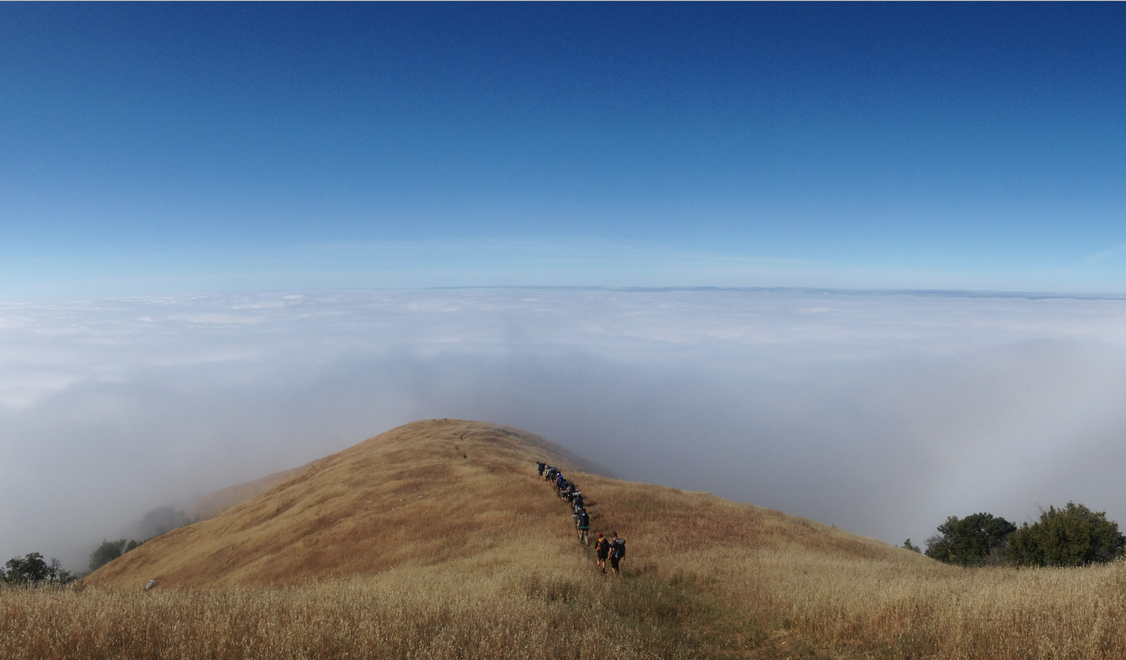
Life begins in the grey. The space between the black and white, where decisions are undefined and feeling lost is only relative to how you navigate this space. At its core, this undefined area forces you to stop and think, why? Why do I care? Why should I care? Why don’t I care? Do I care?
In the grey we can hide, run away or remain steadfast, but the grey will not go away. Only when we enter the grey with an open mind equipped with self-reflection and a love-led heart can we navigate and grow in the grey. Though the grey may seem ominous, this is where we find the reasons why we wake up in the morning, why we make sacrifices for one another, and why we act with compassion. The interconnectedness of humans and the universe thrives in the grey. And in a world that continues to shrink and shake, it beckons.
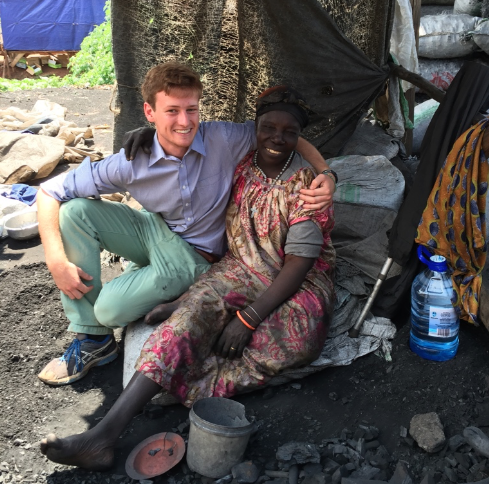
This summer, I expanded my experience with the grey, and the countless questions different people face. Often, for those living in developing nations, the grey is thicker and less tolerant in many respects. When I reflect on the time I was asked for money by a Ugandan friend who needed $7 USD to feed his family of 4 or when another Ugandan friend had a knife held to her throat because a thief wanted my laptop I remember that the grey has darker shades, but only we can choose our response. As humans of various cultural backgrounds intersect with historical contexts riddled with violence, prejudice, and conquest the grey also has many obstacles and privileges that pervade all nations.
In the United States we face many challenges with inequity, heavily perpetuated by our institutions, and only changing at the rate we choose to foster dialogue and reflect on how our experience compares to others. In Europe, many perceive their cultures to be under threat and fiercely shun the “other” while continuing to resist integration and equality. As these Europeans try to run from navigating the grey with love and self reflection, it only fuels violence in their disenfranchised and marginalized youth. We are all interconnected. As a human collective, we face a changing climate, an ocean that continues to fill with plastic and other non-organics, food systems which leave the poor without access to proper nutrition, and the reengineering of life to suite our needs, among other global environmental challenges. These are not human acts led by love, rather in ignorance or addiction (oil), and sadly, harm others disproportionately. Ultimately, how we interact with our shared world resides in the common grey that we as a collective species share.
 How does one navigate the grey? The grey is not physical, yet it’s omnipresent. In the grey, your life map has a route that is never stagnant. The route is constantly changing, influenced by your family, friends, peers, colleagues, values, spiritual beliefs, physical world, and ultimately, how you learn from your experiences. In the grey you will be faced with choices, for me, in my final year at Santa Clara my vocational path is most prominent. Gone is the blanket of another year of education ahead, what awaits will be a product of how I navigate the grey.
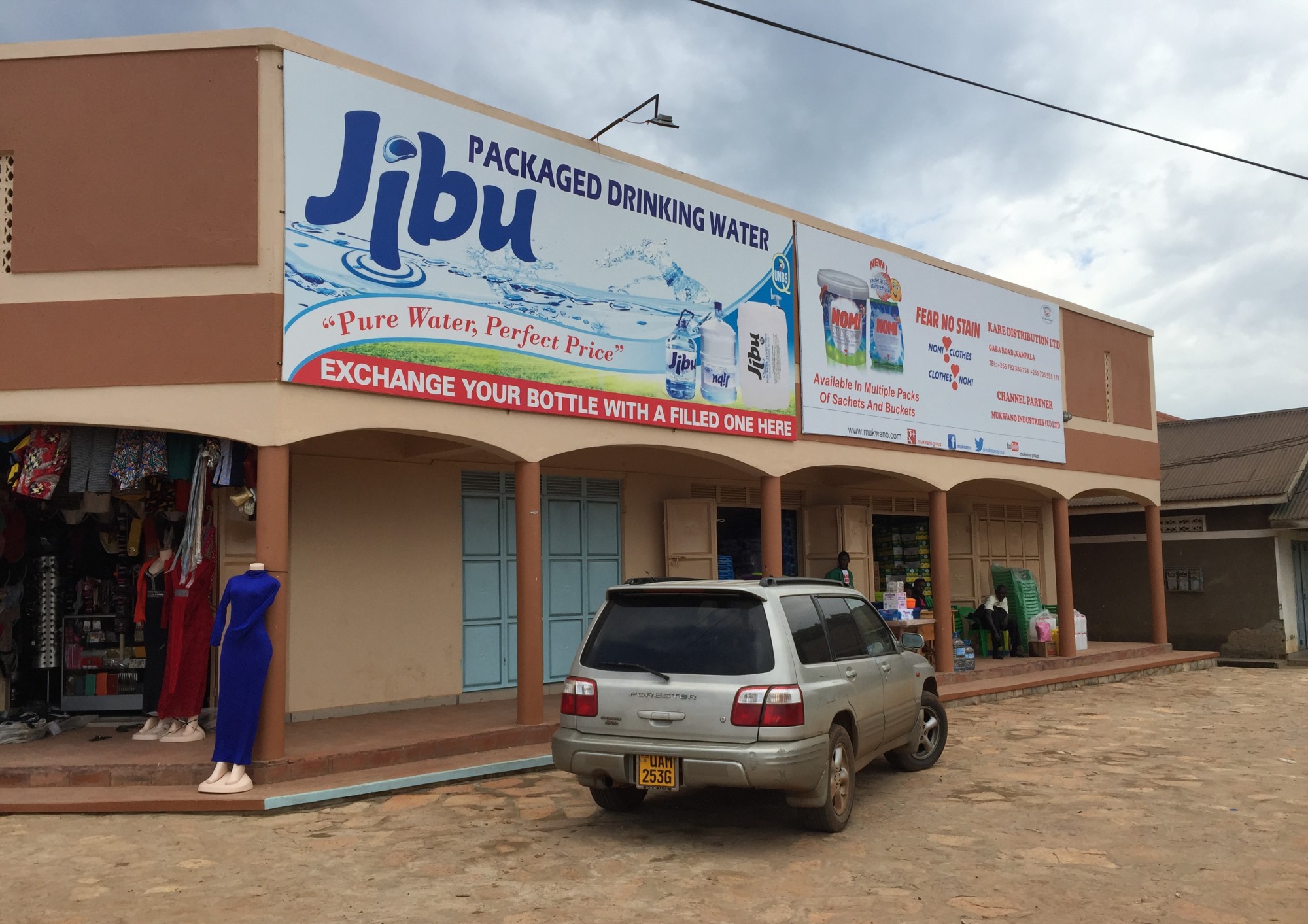
Though there are many tools that give us confidence and direction in the grey, my experiences through the Global Social Benefit Fellowship have given me insight into one navigational tool, ownership. This is not ownership in the sense of entitlement to control or being the top of the top, this in ownership in the emotional responsibility and commitment one cultivates when owning an idea, a business, or an experience through shared collaboration and passion. This is the ownership I glimpsed and felt in my own work and the work of Jibu franchisees.
Take a moment to examine your life, for many, the path and vision has been stable. Childhood, school, and on to a career, though there have been ups and downs, they haven’t had to live in fear going hungry, drinking polluted water or failing to provide an education for their child. In developed countries we take this vision for granted, the ability to see a future ahead of us and from this shaping our decisions toward a longer term goal. In this stability we do not discount the future like many of the poor do. Without a vision or emotional commitment to one’s future, gambling one’s weekly earnings among other irresponsible uses of money becomes commonplace, a practice pervasive throughout the developing world. With this lack of vision, many remain in poverty traps, squandering their earnings as they remain in disempowered positions. This can be combated with ownership.

If our passion and aspirations are the fuel that propels us along our vision, then ownership is both the train and the rails that will get you there. The train gives us something to love and channel our energy through and the rails give us the tangible path that shape our short and long term decisions. With a culture and an opportunity built around ownership, Jibu showed me the power of ownership through its franchisees who are given a chance to build a vision through their franchises. Ownership makes you accountable and invested, as it reflects you directly, it directly connects you to the grey as your decisions and actions become connected to your values and beliefs. For developing countries these are the type of solutions we need, one’s that engage local community members with an opportunity to engage in social entrepreneurship, allowing them to navigate the grey with a vision.
Reflecting on my college education I feel that I have learned the most from my close friends, my experiences studying and living abroad in Denmark, and my time in Uganda and Rwanda through GSBF. Ownership has made all the difference. In an educational environment riddled with tests, papers and letter grades, it is rare that we encounter an experiential learning opportunity where we are accountable for the preparation, research, and follow through. As I have walked through these different phases of the my action research I have felt my experience paralleling the transformative experience of the Jibu franchisees I met. Ownership of a project forces you to think critically and to be creative, to be thorough even when there is no clear direction, and ultimately leaves you accountable for the quality and care of the completion. Ownership through the fellowship has helped me take ownership of my life as I plan to hike the Pacific Crest Trail post-graduation and re-engage my impact in the developing world through research or working directly with a social enterprise. Ownership through my action research fellowship has helped me better own my future and is a betterment strategy that needs to be embedded into development solutions for the developing world.
The lessons of ownership are both personal and practical. Ownership in our personal experiences strengthens our learning and allows us to better navigate the grey areas of our future while also driving the passion and commitment needed for development around the world. Seek ownership in the grey.