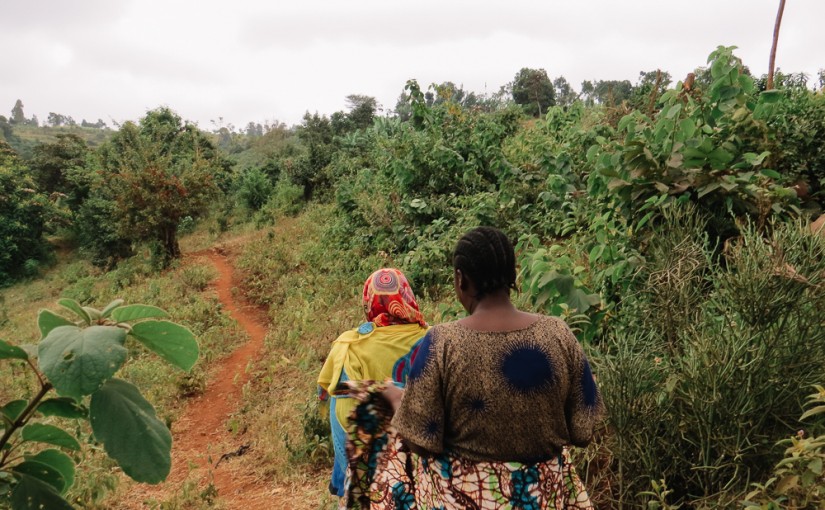
“Where are you from?” asked the village chairman in Swahili after Lindsey and I wrapped up our group interview for the day in Msemembo.
“Natoka Mericani,” I replied in one of the dozen Swahili phrases I had learned in the past few weeks.
“Oh, well how is it there?” he asked. “I have heard it is a very dangerous place, so many guns.”
I laughed and proceeded to sketch out a crude outline of my home country, placing a star on the West Coast and then circling the region with the greater prevalence of gun violence that he had been referring to. I explained that my town, my village, was quite safe.
Just weeks prior, some of my concerned family and friends posed a very similar question as I prepared to leave for Tanzania. Africa, isn’t it going to be dangerous? Aren’t you worried about getting Ebola? First of all, the Ebola outbreak was in West Africa, not East Africa. Second, well let’s be honest—many places have their fair share of danger, even here at home.
While these two sets of exchanges are ironic side by side, they also expose our human tendency to overgeneralize the unknown, too often for the worse. So to be able to understand the unknown, we must cast aside our preconceptions and do our best to open ourselves up to accept the truth.
I did not know exactly what to expect going into my field portion of the fellowship in Tanzania. I felt as well prepared as possible to not only expect the unexpected, but furthermore to embrace it. These two months would throw many opportunities in my path which would nudge me outside of my comfort zone. All I had to do was to accept the challenge.
From eagerly practicing our limited Swahili vocabulary any chance we had to riding boda bodas (motorcycle taxis) to the Solar Sister office and around town, Lindsey and I tried our best to push ourselves to experience more.
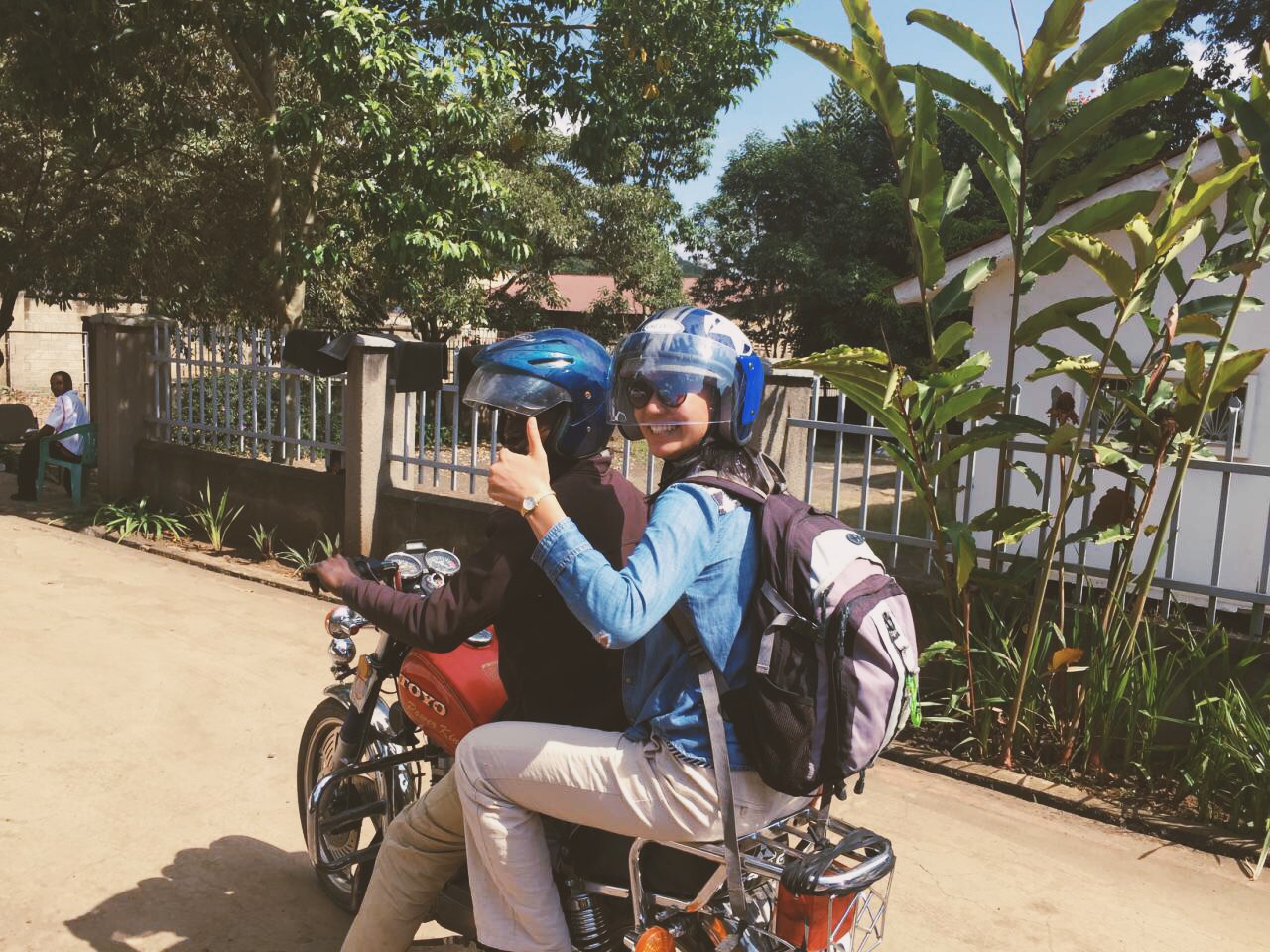
But it was not until our time in the field that our experiences would push us to learn more. Lindsey and I spent over half of our time in Tanzania living and working in the field, traveling village to village to interview and survey Solar Sister microentrepreneurs and customers. We met new people everyday, in new places, and these people spoke another language of which we only knew basic greeting phrases. Gone were the luxuries of Westernized tourist food and reliable showers in Arusha.
The biggest challenge for me was working on narrowing the gap between myself and the individuals we met and interviewed. Lindsey and I worked on social impact documentation. In other words, we asked microentrepreneurs and customers, How has Solar Sister affected your lives? It is hard as an outsider, a foreigner to their language, culture, and daily lives to try to accurately capture their answers to this question.
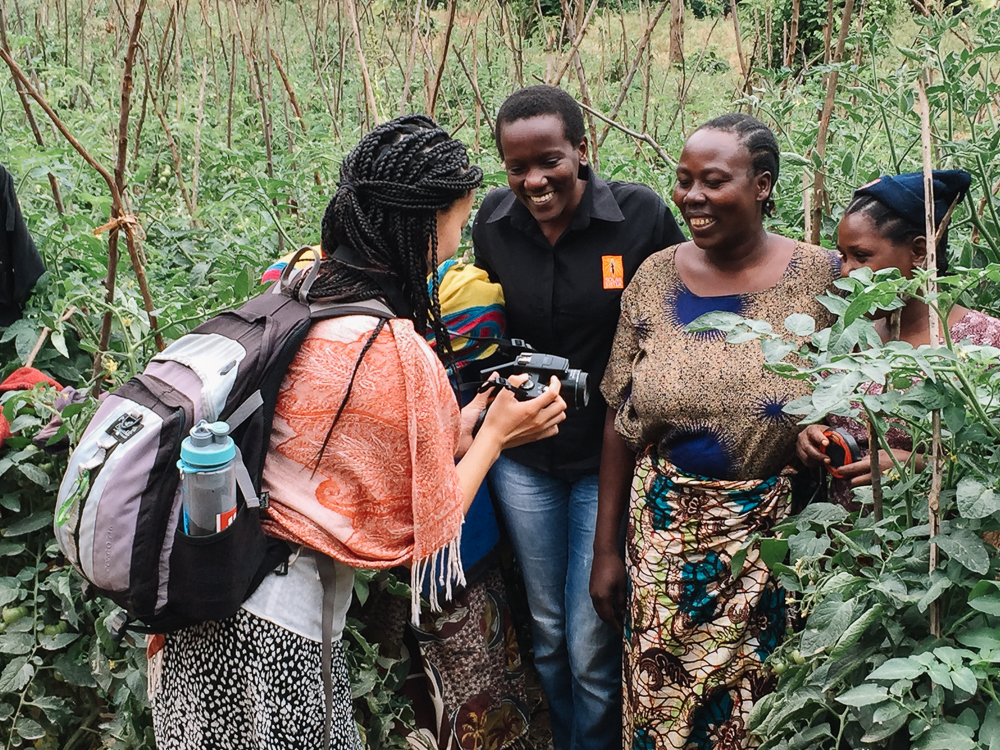
I discovered photography to be a medium that I used not only to document social impact but also to break the ice between myself and my subject. I would snap a photo of a group of women, flip the viewfinder to show them the image, and say “nzuri sana!” (very beautiful!). They would laugh and loosen up a bit, and this made our silly photoshoot a little less awkward for all of us.
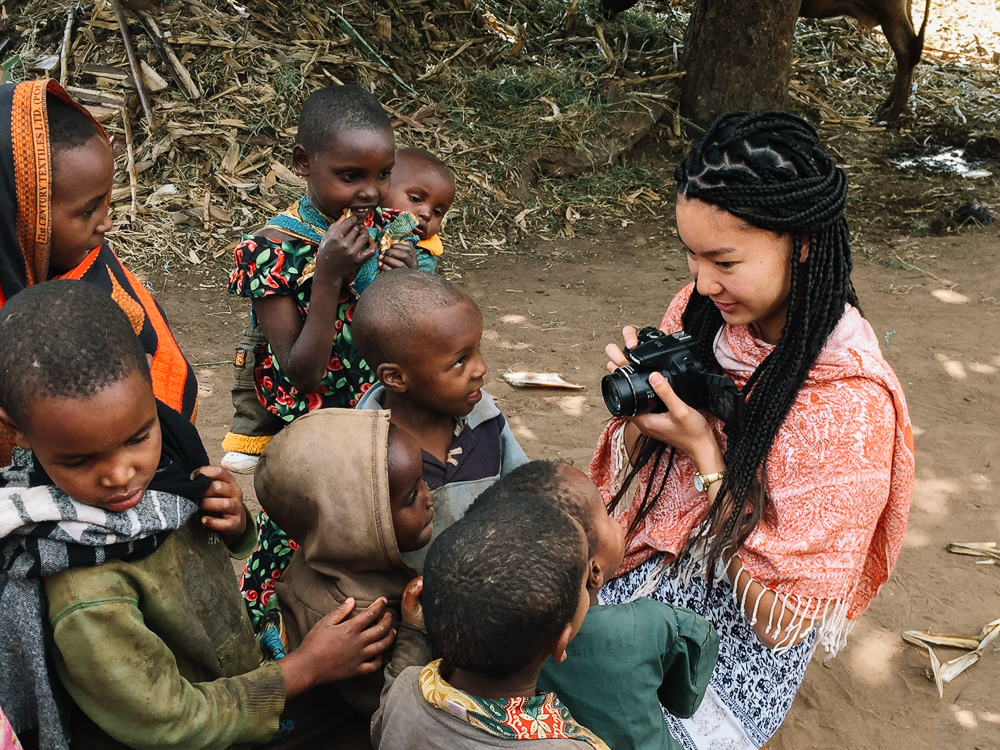
On a sidenote, I also learned how to preoccupy curious children while their mothers filled out our survey in peace.
Along the way, I found ways to incorporate women into the narrative creation process, because these are their stories. Who better to know how to tell her story than the individual herself? I am simply building the platform from which their voices may be heard around the world.
One day, after finishing our group interview Moshi showed us her clean cookstove she had purchased with her savings from her family’s farming income and from working as a Solar Sister entrepreneur. She invited us to stay for dinner so we could see how she uses the cookstove.
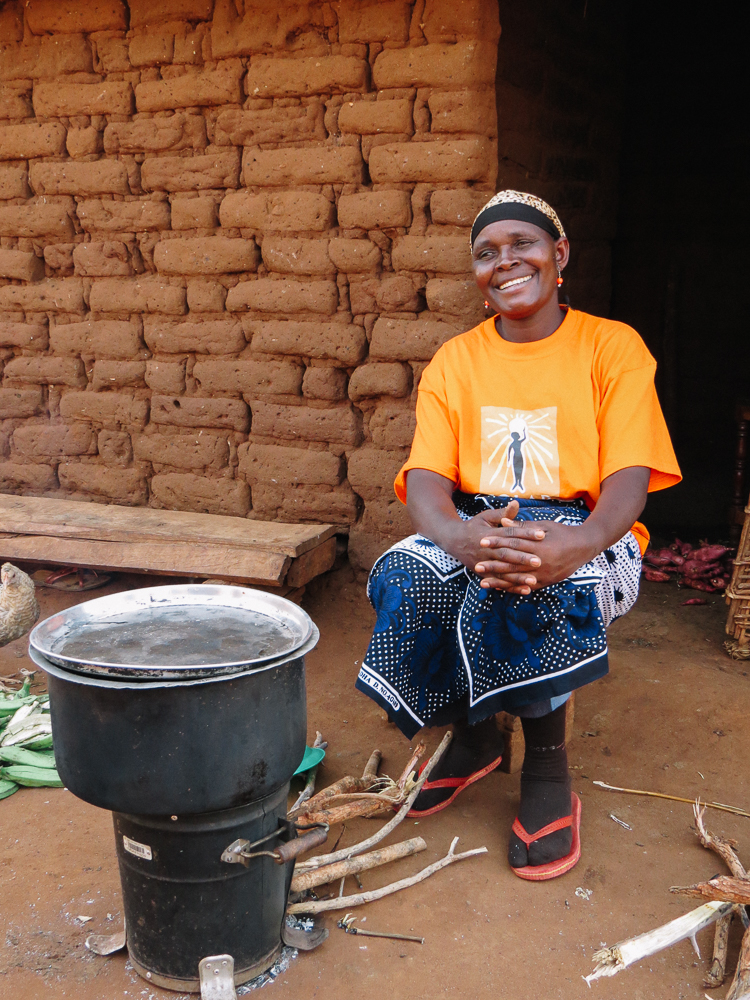
Despite being tired and ready for a nap at the hotel, I recognized this to be a once in a lifetime opportunity. Moshi welcomed us to join her family for half a day, watching the sun set behind the fields where her cattle had grazed earlier. We met her youngest daughter, Sada, one of Moshi’s seven children.
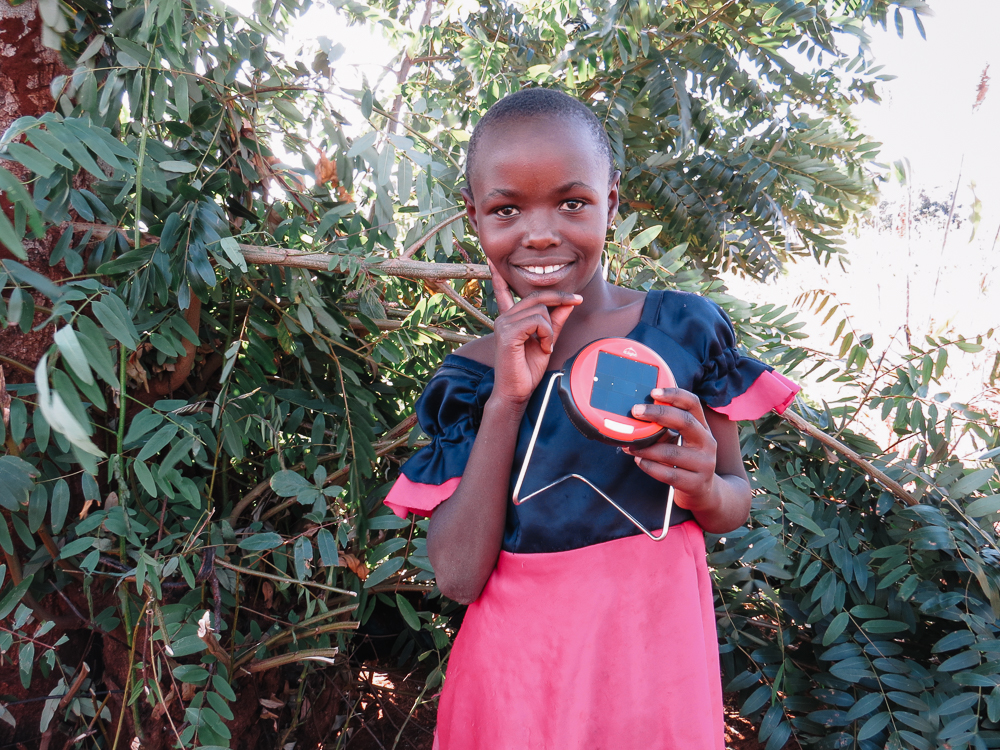
We sat in chairs around a low plastic table with the mashed plantains and sweet potatoes heaped on a metal plate in the center. With our hands, we pinched off handfuls from the communal plate. We sipped from mugs of sweet millet drink to accompany our food. After dinner, Moshi and some other women defeathered a chicken that someone was purchasing while Sada recited her Swahili reading for homework using her S2 solar lantern.
While I will never fully experience or understand the realities of their daily lives, I am grateful for this precious chance I had to get a glimpse of Moshi’s and Sada’s lives. That evening I spent with them allows me to build a more concrete narrative when it comes time for me to share their stories.
In embracing the unexpected, I gained a priceless experience from which I learned enormously. It is one of my most memorable moments from my time in Tanzania. In part, it is because I opened up myself to an opportunity where the outcome was somewhat unknown. I could not have foreseen the intimacy with which Moshi welcomed us to eat with her family. Yet, I dared to embrace this opportunity as well as I could, and in return I gained a rich experience from it.
As I approach my future beyond Santa Clara University, there will be many more instances where I will be faced with unknowns I can either choose to run away from or run toward. My life is a constant practice of striving to embrace the unexpected, to find opportunity in the unknown or uncomfortable. Life is much richer when we do.