Join the Community

So you want to change the world, make this a better place?

Don’t we all. Well, guess what—you can’t do it alone.

No matter what kind of sustainable, do-good, innovation-oriented person you are, you will need your team of like-minded, mission-driven homies to help you achieve your goals.
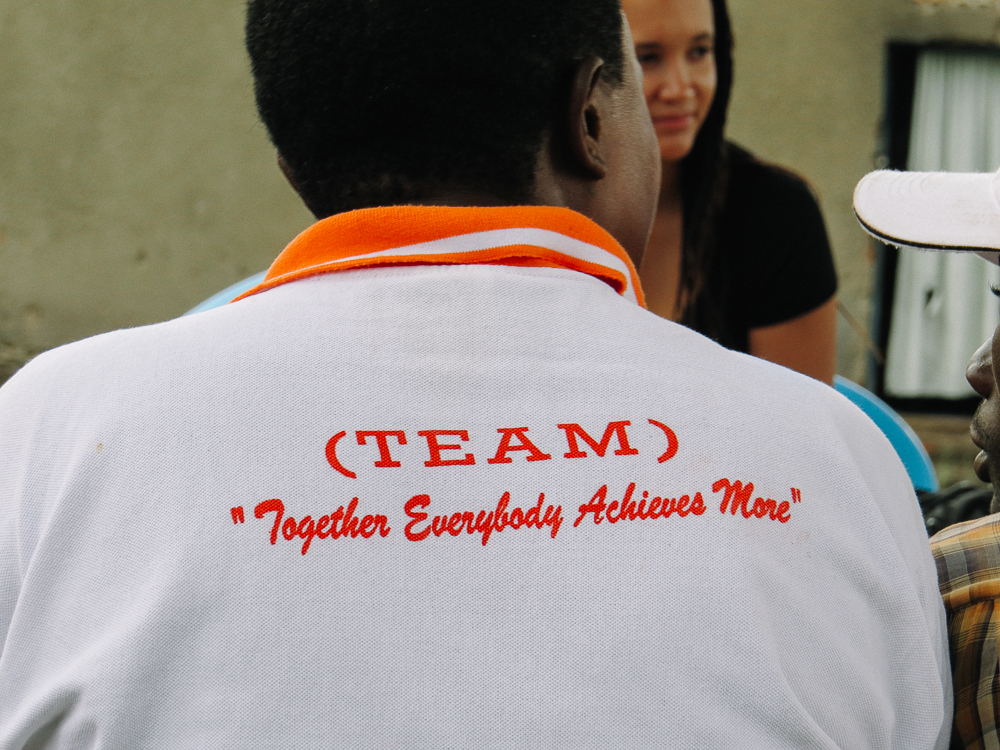
TEAM: "Together Everybody Achieves More"

The Global Social Benefit Fellowship introduced me to a community of “impatient optimists,” “unreasonable” innovators, social entrepreneurs—whatever you like to call them. These people dedicate their lives and careers to doggedly address some of the world’s greatest problems—poverty, health, water & sanitation, gender inequality, social inequality, environmental degradation, and more—and often work toward shifting the structures that propagate these global injustices.  Social entrepreneurs approach global issues through innovation and use the framework of business entrepreneurship to further their impact. Born and raised in the Silicon Valley, I am inspired by these start-ups and organizations not only trying to make it big, but first and foremost striving to make a big social impact on the world.

After meeting some social entrepreneurs, I was surprised by how humble many of them appeared to be. In my mind, these are superheroes who wrestle mostly-invisible villains such as energy poverty, maternal mortality, infectious diseases, etc. But often, the social entrepreneurs (at least those I have met) say things like this:

          Well there is so much more to be done.          …or…

          Sure, we are impacting 1 million right now, but we could reach 2 million people.     

…and often…

I’m not the superhero. You should meet our microentrepreneurs/community health workers/artisans/teachers/etc.
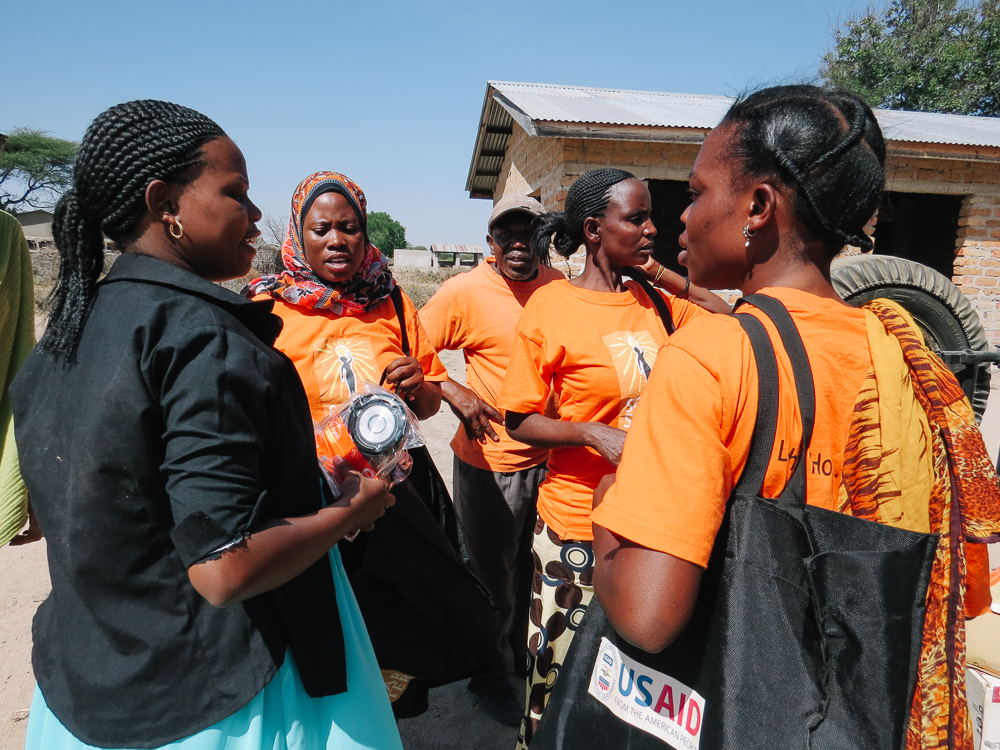
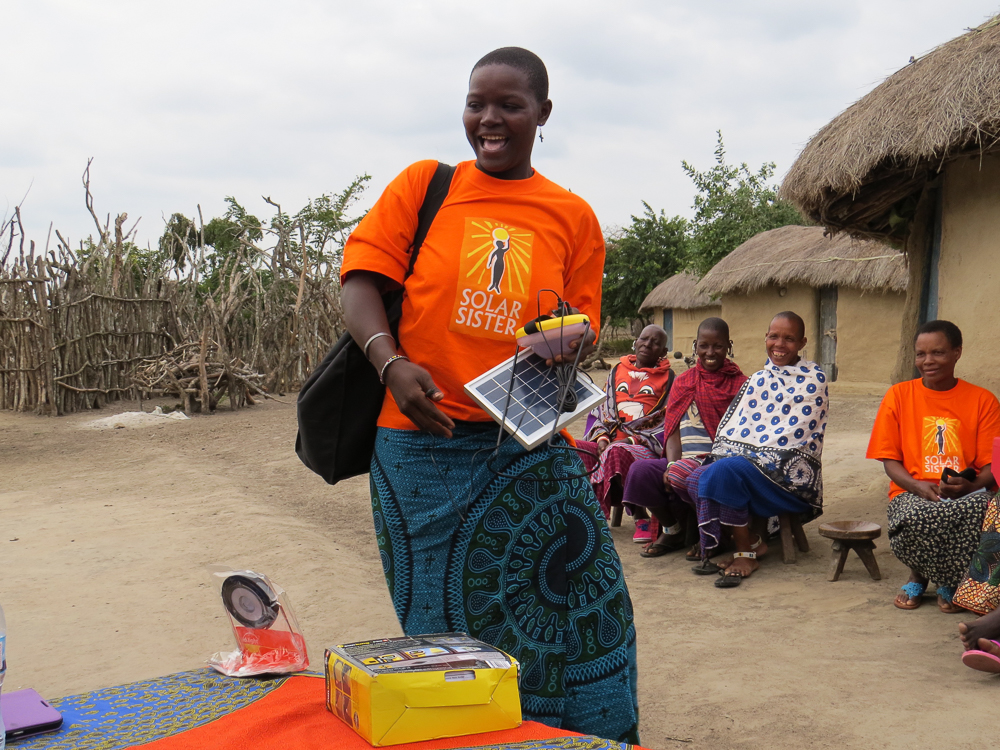
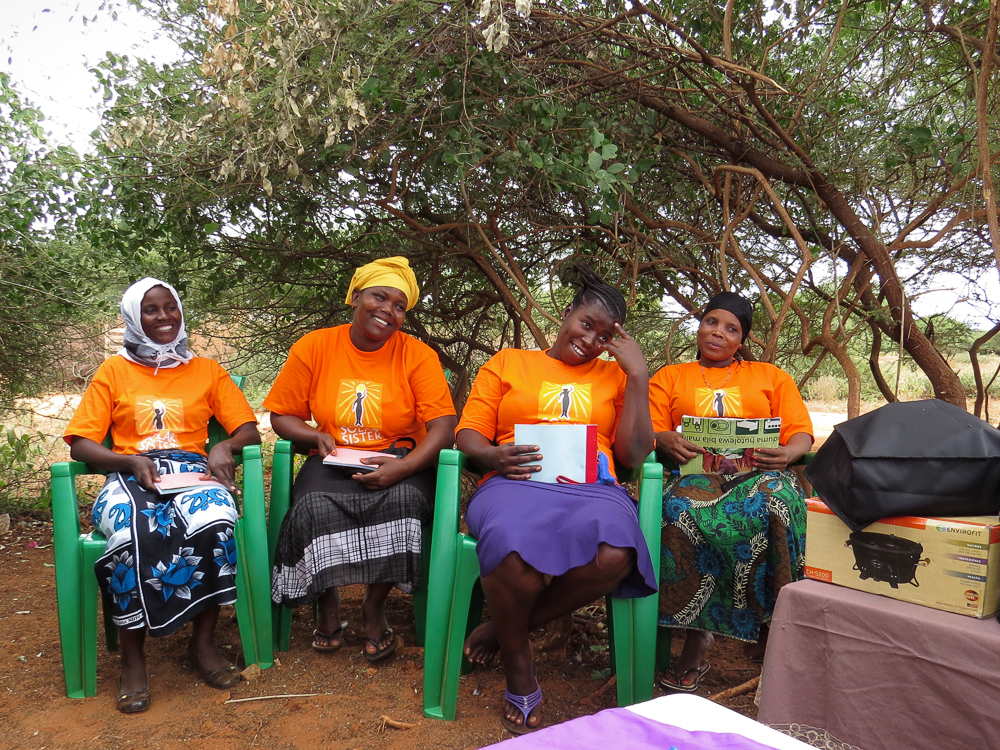
Solar Sister entrepreneurs purchase solar lanterns from sales associate, Regina, as they stock up their inventory for the coming week.

The power of community

Some of the change-makers who are most powerful and with the most direct impact on issues in society are the very people from within that community. They often best know the community, the problem, the culture, and have connections within the community and with other organizations, all of which an outsider will not have.

I study public health, and a common thread I have found between public health and social entrepreneurship is the bottom-up approach to change. While top-down approaches, such as policy, are crucial for social change as well, they must also be grounded in the context and needs of the people. Learning more about social entrepreneurship has confirmed my belief in the importance of community-based innovation and implementation in the process toward social change.
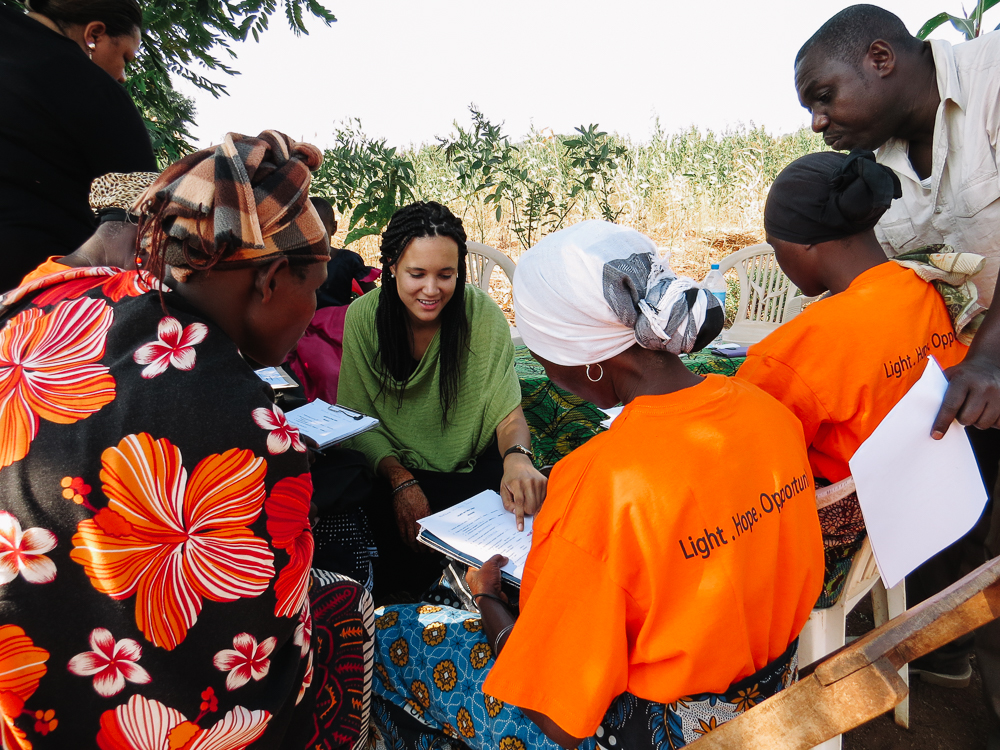
My research partner, Lindsey, assists Solar Sister entrepreneurs as they fill out our survey.

Action research applies the bottom-up approach to assessing and improving the social change process. Using Solar Sister  as an example, how would we know how to better eradicate energy poverty, if we do not first understand the motivations and barriers which influence people’s purchasing decision for solar lanterns and clean cookstoves? In our research, Lindsey and I interviewed over 50 Solar Sister entrepreneurs and 21 customers. Our report findings came from collecting common elements found in the stories of the women and men we spoke with. Many Solar Sister entrepreneurs beamed about finding new customers through the referral of previous customers, who pass along the phone number of the entrepreneur to fellow friends and family interested in purchasing a solar lantern. But at the same time many entrepreneurs lamented over a common barrier, their lack of transportation to their customers.

By incorporating the feedback from their entrepreneurs and customers, Solar Sister may better understand their own successes and challenges as a social enterprise and work to further increase their social impact. Whether a social enterprise or a public health intervention group, an organization will have its best chance at achieving its goals for social change if it recognizes the power of working intimately with local community members, whose lives they are trying to improve. These individuals will be their best liaisons with the community, their experts on the cultural context of the problem, and their eyes and ears in the field for further improvement.


Social entrepreneurship, public health, and a Jesuit education

As I near the end of my time at Santa Clara University, I notice some common themes involving three significant aspects of my time here.  Santa Clara University aims to shape every student with the vision of the three C’s: competence, conscience, and compassion. Competence so that we may be capable individuals and scholars in our world. Conscience so that we are aware of the perspective and realities of others, and so we can make ethical decisions. Compassion so that we may want to make this world a better place.

In both my public health classes as well as religion classes, we have discussed liberation theology, which seeks to provide a preferential option for the poor. This means seeing those most marginalized in society as those who most need us to stand with them in solidarity. Individuals subject to social inequities and exploitation are those who most need our compassion and collaboration to improve their lives. Unfortunately, this perspective seems contrary to the way many existing structures and corporations appear to act in our society. Those who are poorest have the least say and power, and they often carry the heaviest burdens in our society, including the exploitation of human labor, environmental degradation, and inequities in health care, to name a few.

Social entrepreneurship, public health, and the Jesuit education call for the world to not only recognize those marginalized in our society, but also to stand with them and work with them to tackle social issues in our world. As liberation theologians like to say: “see, judge, act.” See the social suffering and problems in the world. Judge according to the Bible (or other sets of moral values). Act in a way that “promotes the self-realization of the poor.” These values align well with Santa Clara University’s three C’s. Social entrepreneurship also echoes aspects of these values. The poor are not seen to be fated to their poverty or their problems. Social entrepreneurs recognize them—the base of the pyramid—as agents in social change. They are valued as consumers, partners, and leaders.
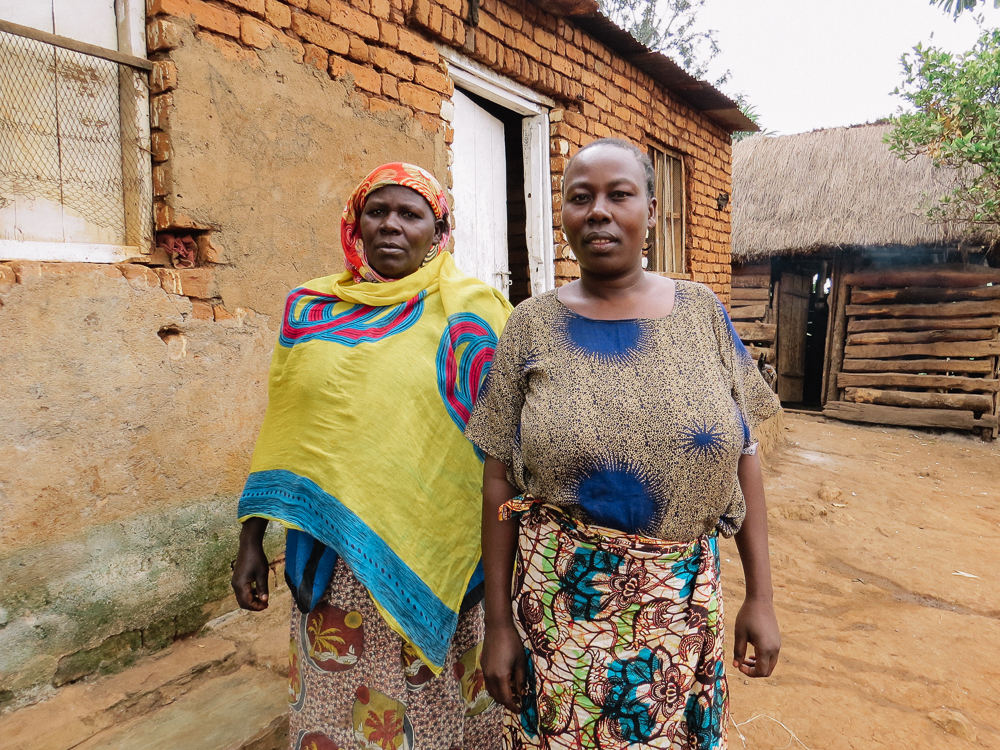
Rose and Maria, two of six Solar Sister entrepreneurs in Hala village, have together completely eradicated kerosene from their community.

We need to care about the people who are suffering in our world and the burdens they carry. Many of these burdens are in place because of existing structures in our society. In those living in poverty or marginalized in society, we must recognize their human dignity, the value these individuals can bring to our world, and their power as change-makers in society.

So, you say you want to change the world? Well join the community—none of us can do this on our own.
Embrace the Unexpected

“Where are you from?” asked the village chairman in Swahili after Lindsey and I wrapped up our group interview for the day in Msemembo.

“Natoka Mericani,” I replied in one of the dozen Swahili phrases I had learned in the past few weeks.

“Oh, well how is it there?” he asked. “I have heard it is a very dangerous place, so many guns.”

I laughed and proceeded to sketch out a crude outline of my home country, placing a star on the West Coast and then circling the region with the greater prevalence of gun violence that he had been referring to. I explained that my town, my village, was quite safe.

Just weeks prior, some of my concerned family and friends posed a very similar question as I prepared to leave for Tanzania. Africa, isn’t it going to be dangerous? Aren’t you worried about getting Ebola? First of all, the Ebola outbreak was in West Africa, not East Africa. Second, well let’s be honest—many places have their fair share of danger, even here at home.

While these two sets of exchanges are ironic side by side, they also expose our human tendency to overgeneralize the unknown, too often for the worse. So to be able to understand the unknown, we must cast aside our preconceptions and do our best to open ourselves up to accept the truth.

I did not know exactly what to expect going into my field portion of the fellowship in Tanzania. I felt as well prepared as possible to not only expect the unexpected, but furthermore to embrace it. These two months would throw many opportunities in my path which would nudge me outside of my comfort zone. All I had to do was to accept the challenge.

From eagerly practicing our limited Swahili vocabulary any chance we had to riding boda bodas (motorcycle taxis) to the Solar Sister office and around town, Lindsey and I tried our best to push ourselves to experience more.

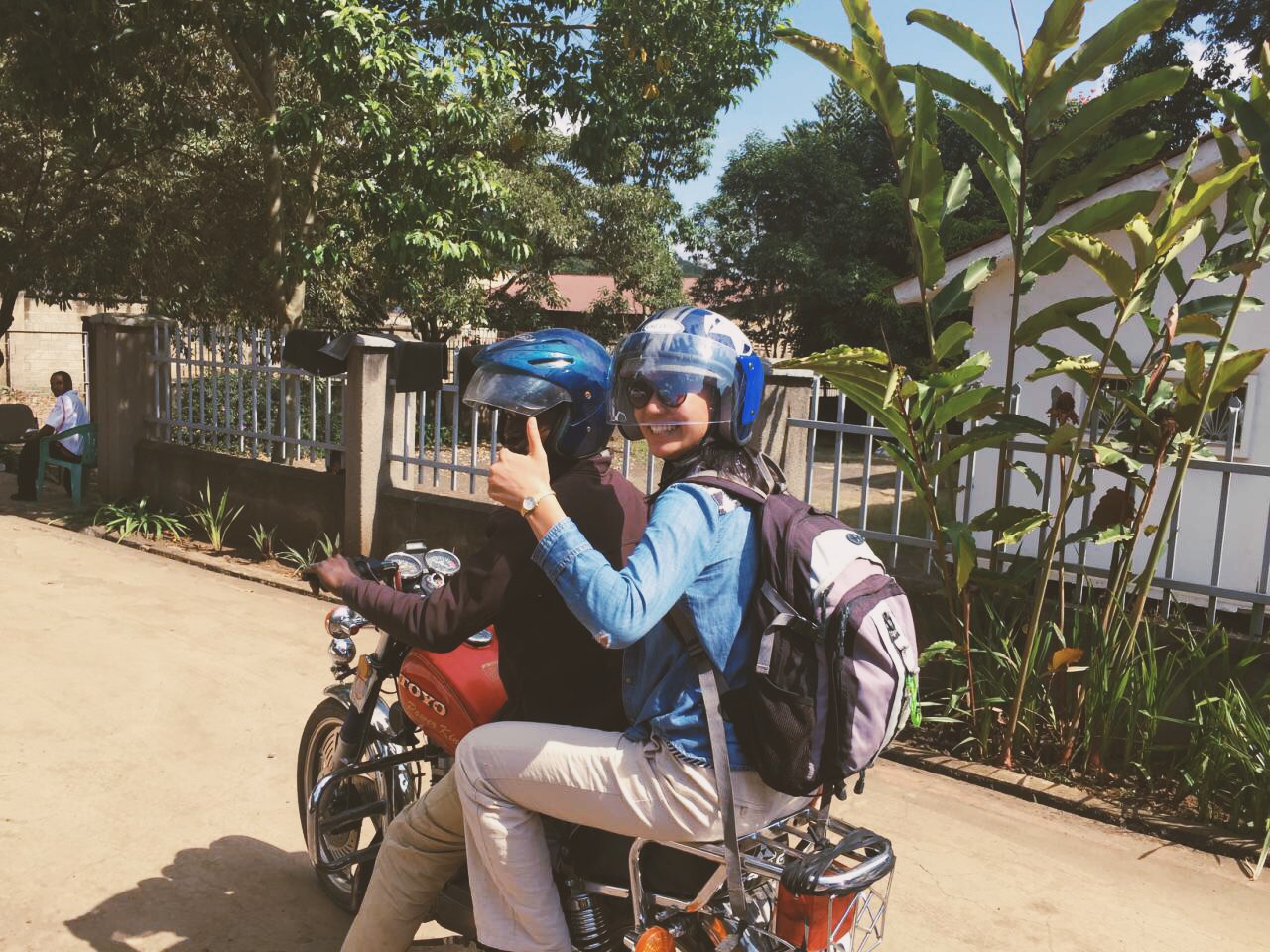
My first time riding on a boda boda. I held on for dear life that first time.
My first time riding on a boda boda! After this photo was taken, I held on for dear life the whole way home.

But it was not until our time in the field that our experiences would push us to learn more. Lindsey and I spent over half of our time in Tanzania living and working in the field, traveling village to village to interview and survey Solar Sister microentrepreneurs and customers. We met new people everyday, in new places, and these people spoke another language of which we only knew basic greeting phrases. Gone were the luxuries of Westernized tourist food and reliable showers in Arusha.

The biggest challenge for me was working on narrowing the gap between myself and the individuals we met and interviewed. Lindsey and I worked on social impact documentation. In other words, we asked microentrepreneurs and customers, How has Solar Sister affected your lives? It is hard as an outsider, a foreigner to their language, culture, and daily lives to try to accurately capture their answers to this question.

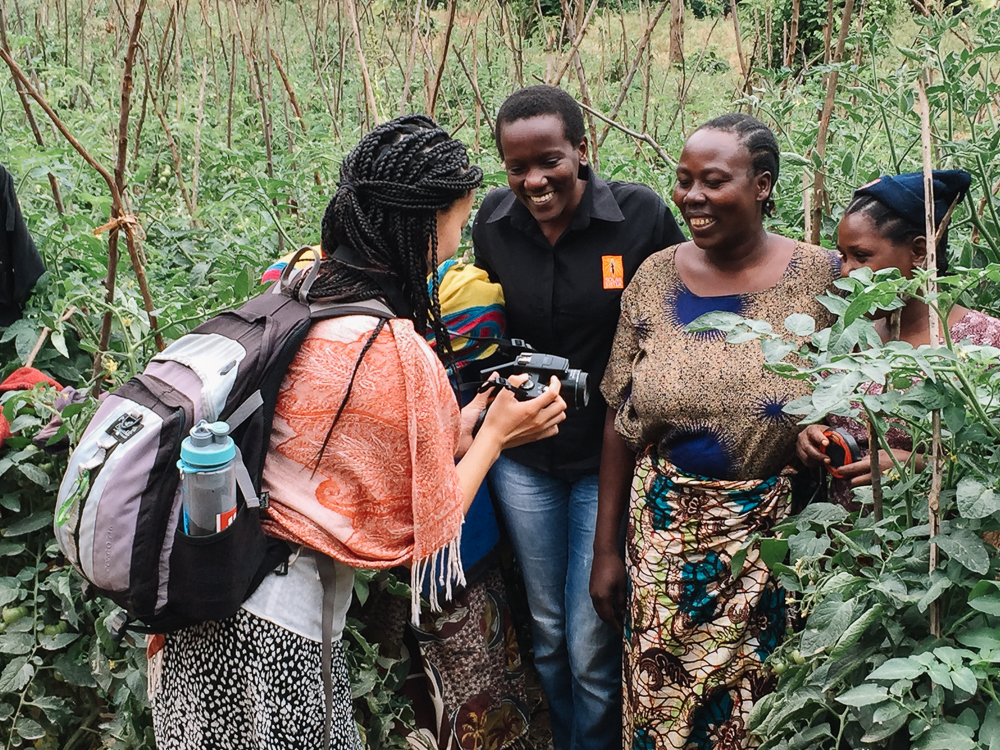
I discovered photography to be a medium that I used not only to document social impact but also to break the ice between myself and my subject. I would snap a photo of a group of women, flip the viewfinder to show them the image, and say “nzuri sana!” (very beautiful!). They would laugh and loosen up a bit, and this made our silly photoshoot a little less awkward for all of us.

I show Caroline (Sales Associate) and Maria (Solar Sister Entrepreneur) the photo I took of them standing with a customer who uses solar lanterns to plant her tomatoes at night. It now makes sense to all of us why I asked them to stand inside a field of tomatoes.
I show Caroline (Sales Associate, center) and Maria (Solar Sister Entrepreneur, right) the photo I took of them standing with Priscilla (far right), a customer who uses solar lanterns to plant her tomatoes at night. It now makes sense to all of us why I asked them to stand inside a field of tomatoes.

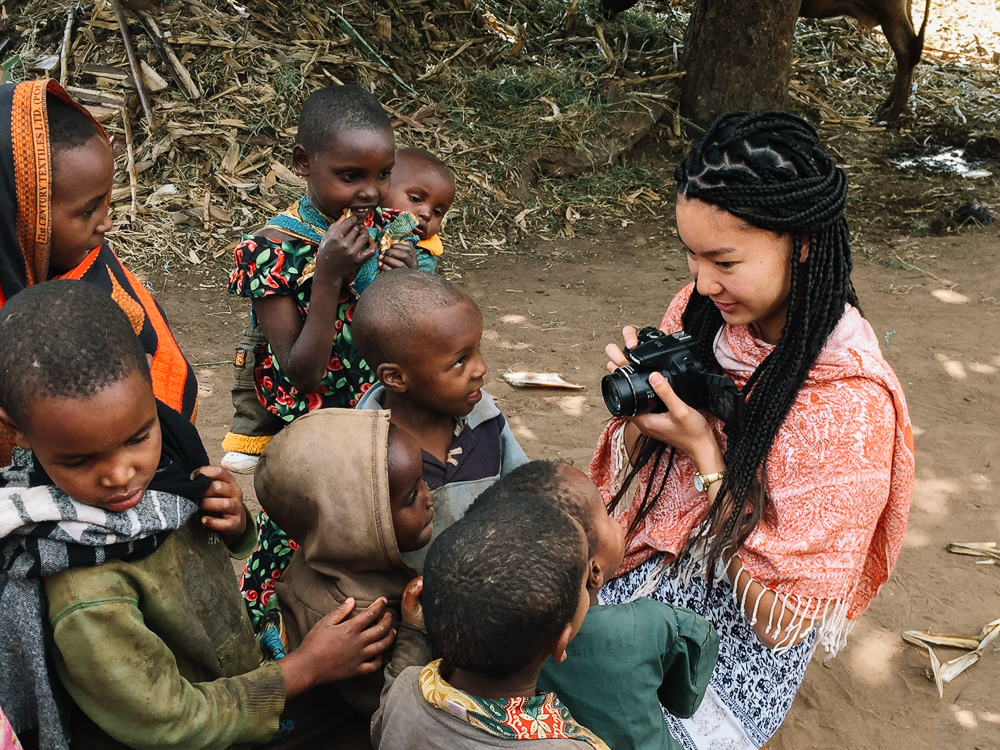
On a sidenote, I also learned how to preoccupy curious children while their mothers filled out our survey in peace.

My camera and I served as a momentary distraction.

Along the way, I found ways to incorporate women into the narrative creation process, because these are their stories. Who better to know how to tell her story than the individual herself? I am simply building the platform from which their voices may be heard around the world.

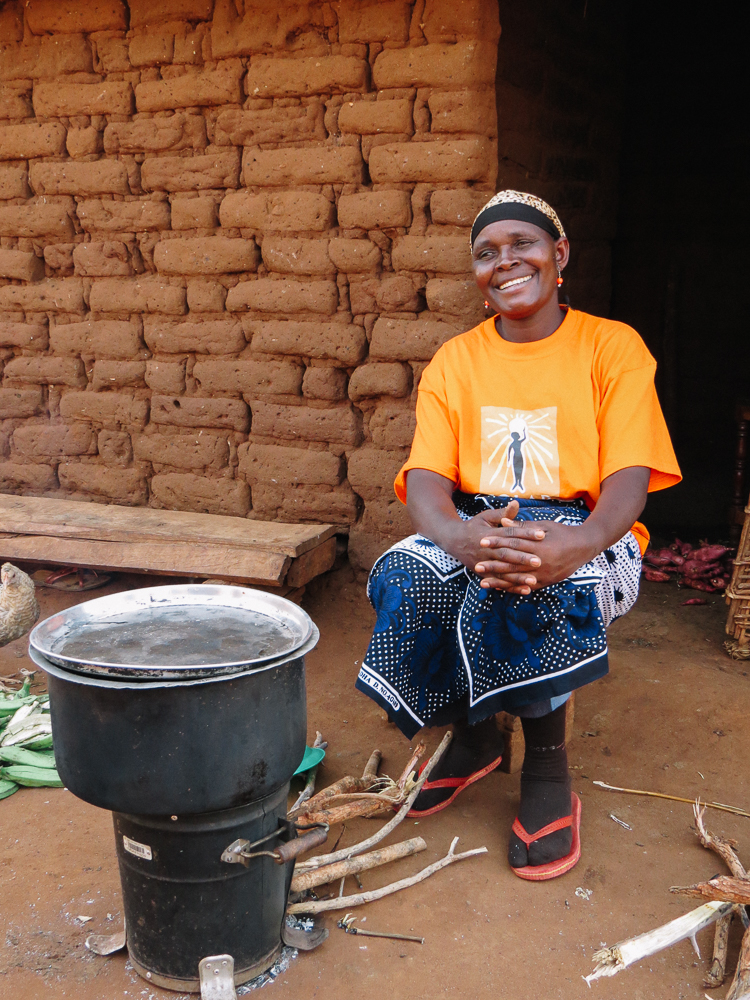
One day, after finishing our group interview Moshi showed us her clean cookstove she had purchased with her savings from her family’s farming income and from working as a Solar Sister entrepreneur. She invited us to stay for dinner so we could see how she uses the cookstove.

Moshi shows off her high-efficiency wood burning cookstove. She is cooking a pot full of sweet potatoes and plantains which we shared with her family for dinner.
Moshi shows off her high-efficiency wood burning cookstove. She is cooking a pot full of sweet potatoes and plantains which we later shared with her family for dinner.

Despite being tired and ready for a nap at the hotel, I recognized this to be a once in a lifetime opportunity. Moshi welcomed us to join her family for half a day, watching the sun set behind the fields where her cattle had grazed earlier. We met her youngest daughter, Sada, one of Moshi’s seven children.

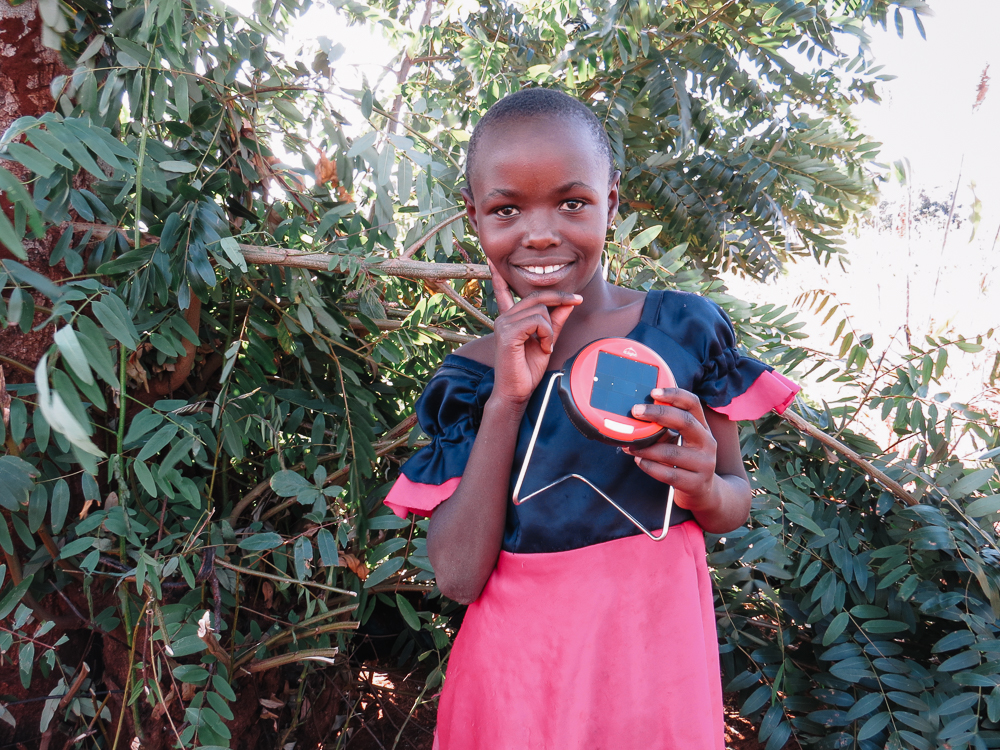
Sada, the daughter of a Solar Sister entrepreneur, poses in a photoshoot with her favorite solar lantern (S2). She tells me her favorite subjects in school are Swahili and English.
Sada poses in a photoshoot with her favorite solar lantern (d.light S2). She tells me her favorite subjects in school are Swahili and English.

We sat in chairs around a low plastic table with the mashed plantains and sweet potatoes heaped on a metal plate in the center. With our hands, we pinched off handfuls from the communal plate. We sipped from mugs of sweet millet drink to accompany our food. After dinner, Moshi and some other women defeathered a chicken that someone was purchasing while Sada recited her Swahili reading for homework using her S2 solar lantern.

While I will never fully experience or understand the realities of their daily lives, I am grateful for this precious chance I had to get a glimpse of Moshi’s and Sada’s lives. That evening I spent with them allows me to build a more concrete narrative when it comes time for me to share their stories.

In embracing the unexpected, I gained a priceless experience from which I learned enormously. It is one of my most memorable moments from my time in Tanzania. In part, it is because I opened up myself to an opportunity where the outcome was somewhat unknown. I could not have foreseen the intimacy with which Moshi welcomed us to eat with her family. Yet, I dared to embrace this opportunity as well as I could, and in return I gained a rich experience from it.

As I approach my future beyond Santa Clara University, there will be many more instances where I will be faced with unknowns I can either choose to run away from or run toward. My life is a constant practice of striving to embrace the unexpected, to find opportunity in the unknown or uncomfortable. Life is much richer when we do.

Alizeti

When we first arrived in Tanzania, we drove past endless fields of sunflowers stretching along the two-lane highway. Alizeti: the Swahili word for “sunflower.” Seas of flowers craned their necks to point their faces toward the sun. A week later, as we left Arusha for our first set of field visits, we saw the sunflowers again as we drove into more rural areas. It hit me then that we were truly leaving the city life as we had known it in Arusha. After all our preparation over the past three months, we were finally headed out to meet face-to-face with Solar Sister entrepreneurs and their customers.


Into the field

Our first field visit spanned four full days of travel and field research. We drove over six hours east from Arusha, stopping in districts in the Kilimanjaro and Tanga regions. We traveled from the dry, dusty farming village of Mforo (Mwanga district) to rainy, forested villages up in the Usambara Mountains (Lushoto district) to a secluded Maasai village (Handeni district) to meet with Solar Sister sales associates and their entrepreneurs.

The route we took for our first field visit to the districts of Mwanga, Lushoto, Muheza, and Handeni.
The route we took for our first field visit to the districts of Mwanga, Lushoto, Muheza, and Handeni, via Google Maps. (Click for larger, higher resolution image.)


Photo taken by Serena Chan; Santa Clara University, Global Social Benefit Fellowship.
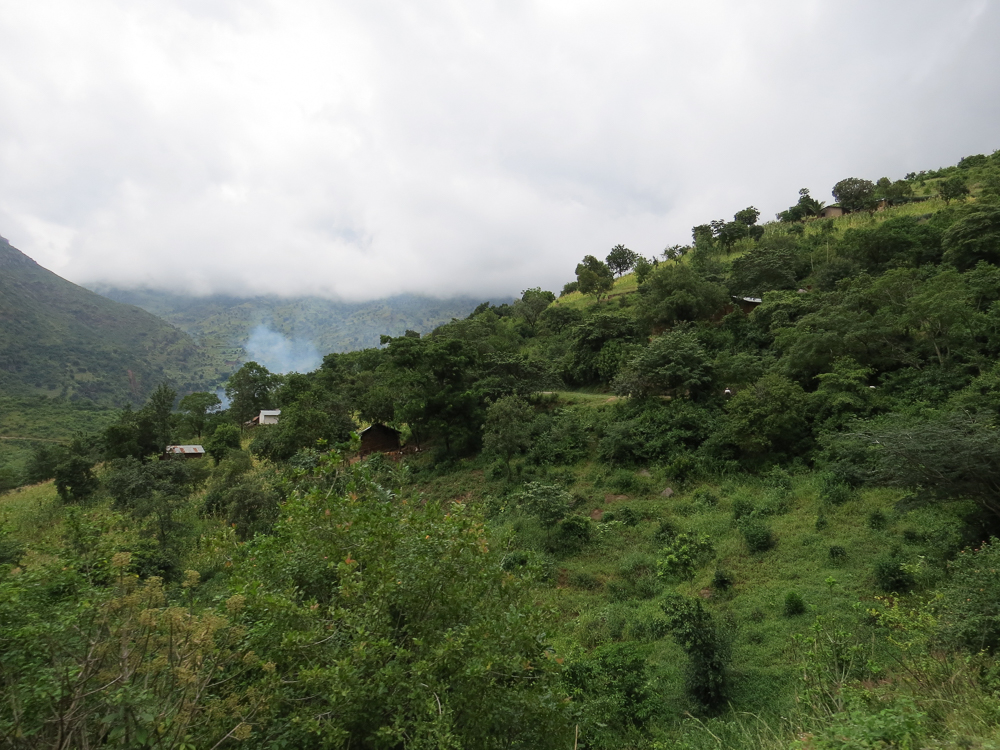
Talk about last mile distribution—we drove two hours up into the Usambara Mountains to reach Solar Sister entrepreneurs and their customers in Shashui Village in Lushoto.

In our meetings, Lindsey and I (with help in translation by Fatma Muzo, Tanzania’s Country Manager, and basically our Tanzanian mother) facilitated conversations in group interviews with Solar Sister entrepreneurs. They shared with us their successes, from the growth of their social networks to increased independence from their husbands. They also told us about their challenges, how they sometimes travel hours by foot without any guarantee of selling product.

In addition to holding group interviews, we have been surveying the Solar Sister entrepreneurs. The survey is designed to capture quantitative data that might not otherwise come through during the interview, where we tend to discover more qualitative anecdotes. Together, the interviews and surveys will provide us a multidimensional understanding of the social impact of Solar Sister on these individuals. Ultimately, what we want to understand is how has Solar Sister affected your life?

No matter where we went, we continued to listen in amazement as these women (and men) shared their stories. They revealed to us their resilience and innovative characteristics that make them the successful entrepreneurs that they are within their communities. Like alizeti, they turn their faces toward the sun, toward safe, clean solar energy, and they also work to spread solar and clean technologies throughout their communities.

Photo taken by Serena Chan; Santa Clara University, Global Social Benefit Fellowship.
Evaline demonstrates how she advertises Solar Sister lanterns at market day events, which are located an eight-hour walk away from her home in the Maasai village in Handeni (Tanga region).


Utilizing connections at the roots

Solar Sister is a social enterprise that strives to eradicate energy poverty through the sales and distribution of solar lanterns and clean cookstoves. The population in East Africa is 70-90% off the grid, and even those connect to electricity deal with regular power outages. People commonly burn kerosene or wood for light and cooking, both of which present a range of health and safety problems.

Photo taken by Serena Chan; Santa Clara University, Global Social Benefit Fellowship.
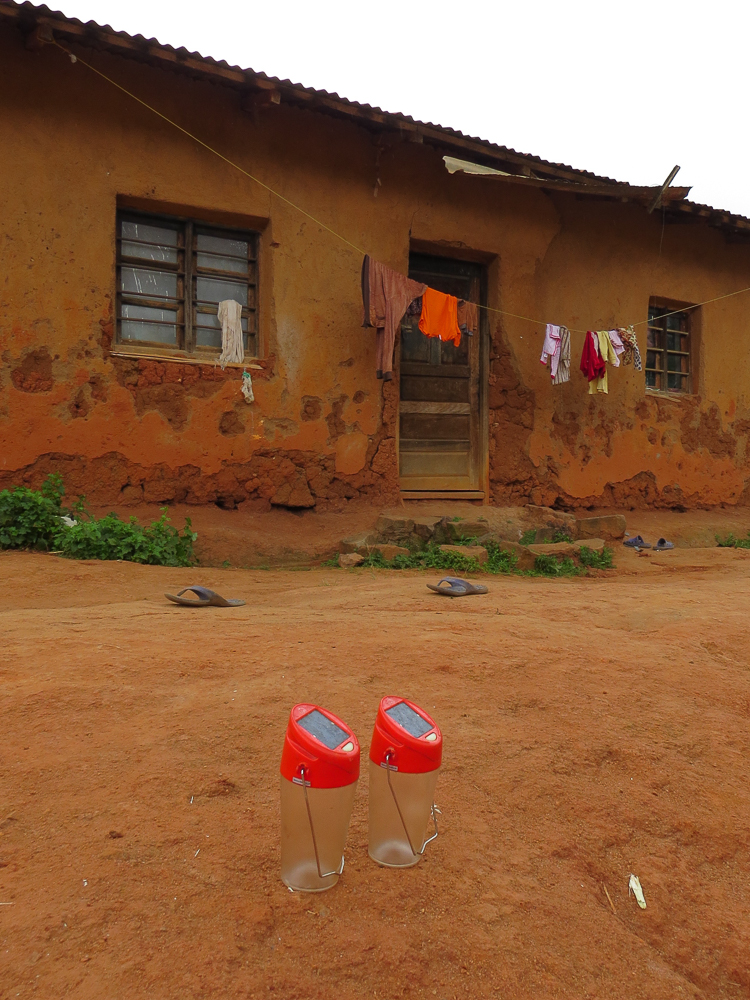
Two solar lanterns sold by Solar Sister entrepreneuts, the d.light S20 lantern, sit out in the sun to charge in the village of Shashui (Lushoto district, Tanga region).

The component that sets Solar Sister apart from other solar/clean energy distributors is their direct sales distribution model. Solar Sister partners closely with existing networks of women, such as the African Wildlife Foundation, World Vision, and Village Life Outreach, to name a few of their partners in Tanzania. Solar Sister trains and mentors the women in business and entrepreneurial skills, and these women become their sales force—Solar Sister entrepreneurs. The entrepreneurs make sales through their existing social networks with friends and family, and many establish themselves within their community and sell to people they may not know personally. Through this model, Solar Sister works toward last mile distribution and empowering women through economic opportunity.

Coincidentally, our first field visit was to a district in Kilimanjaro region called Mwanga, which means “light” in Swahili. Here in Mforo Village, we met with our first four Solar Sister entrepreneurs: Grace, Mwanaidi, Grece, and Fatuma. As women from farming households, they supplement their seasonal income from crop harvests with additional income from the sales of solar lanterns. They found that providing their phone numbers and contact information to customers fostered trust between them as well as in the product. Also, many customers grew to like the solar lanterns so much that they referred their own friends and family to the Solar Sister entrepreneur they had originally purchased the product from.

Photo taken by Serena Chan; Santa Clara University, Global Social Benefit Fellowship.
At Mforo Village (Mwanga district, Kilimanjaro region), we met with our first group of Solar Sister entrepreneurs.

From the visits to our first four locations, I have noticed that the entrepreneurs share stories with very similar themes. They have all spoken of clean, safe light providing their children opportunities for education. After the sun goes down, these women—mothers, wives, farmers, teachers, businesswomen—can now cook safely, complete house chores, and even further their own businesses. Their additional income allows them to make their own purchasing decisions, whether for children’s school supplies, groceries, or personal expenses, without relying on their husbands.

But each Solar Sister entrepreneur holds a unique story, and she has blossomed because of her own personal background, social networks, and skills. She is a teacher who sells to her students and their families. He is a Solar “Brother” who works with his wife to further their sales of solar lanterns. She is the first Solar Sister entrepreneur in her village, who inspires other women in her community to become Solar Sister entrepreneurs.


Chasing the sun

This is just the start of much more field research to come. In only four days, we have already visited drastically different communities and spoken with entrepreneurs and customers with such unique stories to share. Our goal is to keep chasing the light, the hope and passion that Solar Sister entrepreneurs spread to their communities.


To learn more about Solar Sister, visit their website here. And to read more about the Santa Clara University’s Global Social Benefit Fellowship, click here. Also, you can browse some of my photos from my time in the field.

105 degrees

It all started with one swollen lymph node in the back of my throat during finals week. The other lymph nodes soon followed suit, little bumps on the back of my neck, under my jaw, expanding in my throat. My first thought: oh no, not mono again—not now. It gets better. Then came the one night of explosive diarrhea. I should have thought at this point, maybe this is not mono. But I brushed it off, thinking it was just from something I had eaten.

And then the fever hit. The kind of fever roaring at 105F, debilitating to the point that living vertically was nearly impossible. I ended up being bedridden as my parents graciously helped moved me out and back home to Saratoga. At this point it was Sunday evening, I was scheduled to fly out the next day for Uganda, and I was just coming to terms with the fact that I was ill and not getting better as quickly as I had hoped. In my feverish, irrational state, I had tried rationalizing leaving as planned with the other East Africa fellows. But my body was beat, and I was about 15% packed (and negative 50% ready) for my eight-week fellowship in Tanzania.

I am so grateful for the support and love from my family, friends, and fellowship team which carried me through this madness. I was able to get my departure flight delayed until later in the week, so that I could get checked out by a physician and rest in the meantime. The doctor believes it was some kind of stomach flu virus that also infected my throat. Now a week later, I have pulled through fever-free and I can finally eat solid foods again.

I like to believe I am usually quite intuitive a person. But I’ve realized one weakness in my intuition is when it comes to applying it to myself. It had taken me four days to accept the fact that I was took sick to travel as planned, and that maybe seeing a doctor was a good idea. Sometimes we may get blinded by our pure passion and excitement. As much as the virus sucked (I wouldn’t wish it upon anyone), it was a wake-up call to remember what mattered the most right now: getting healthy before flying far away into a developing country where my condition could possibly worsen. As I go into my seven weeks in Uganda and Tanzania, my priorities will need to be in check (health & safety first!) and we all will need to stay in tune with our mental and physical wellbeing.

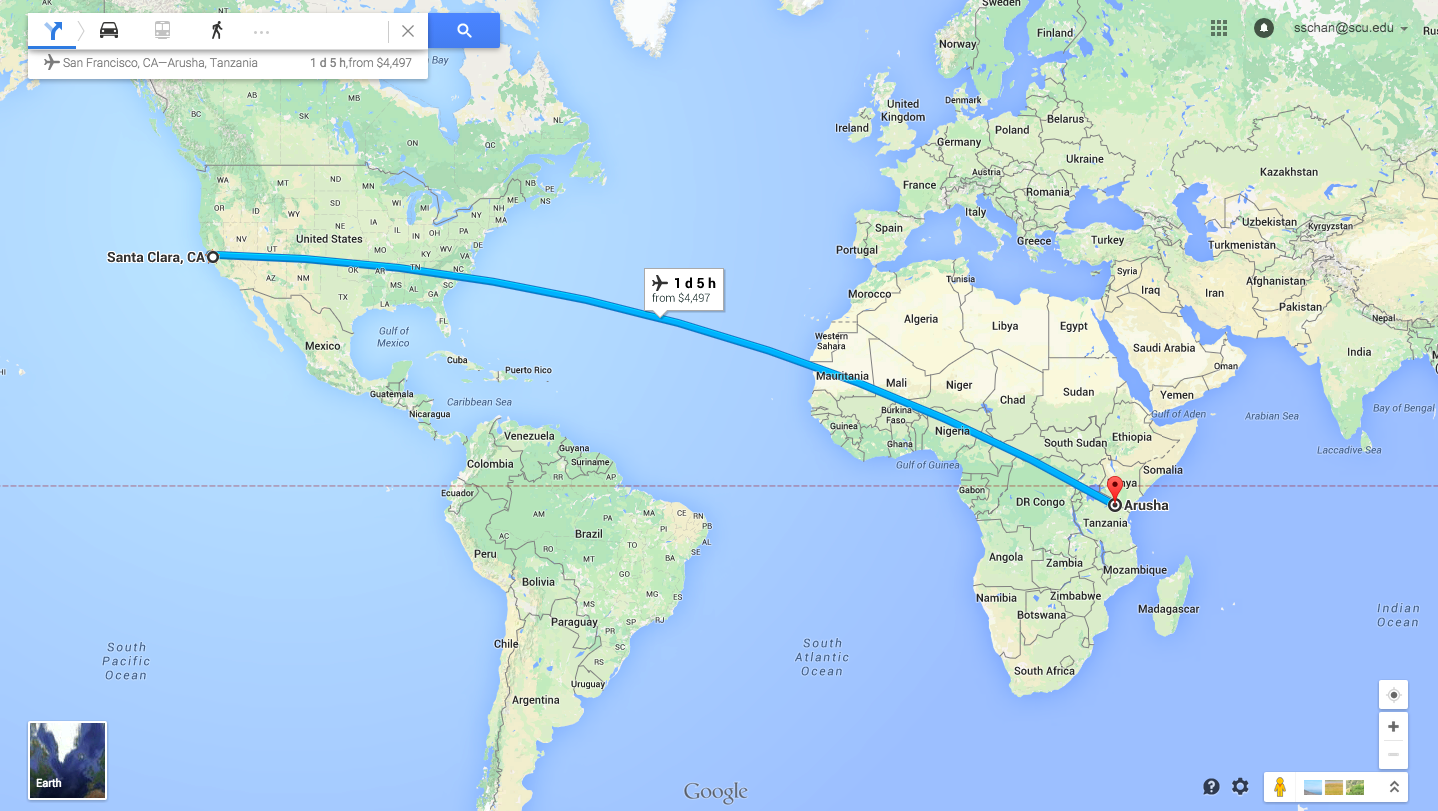
In two days, I fly out from SFO on Sunday for Entebbe, Uganda to meet up with my research partner, Lindsey. She has extended her time in Uganda, and we will fly to Tanzania and arrive on the ground together.

Soon I will be flying 105 degrees due southeast, across the Atlantic Sea bound for Tanzania. While the 105 degrees is merely a loose guesstimate at best (and I’m no expert in cartography), I know the struggles of this past week have only made me more ready for the challenges and adventures ahead. What matters is that we take care of ourselves right now and not worry about the rest, because that will come and we will figure it out. As they say in Tanzania, “pole-pole,” Swahili for “slowly, take it easy.”

And now, adventure awaits.

Flying 105 degrees (not really) southeast over the Atlantic Sea.
Flying 105 degrees (not really) southeast over the Atlantic Sea. (click for higher resolution)

Arts and Sciences

I grew up playing piano recitals and putting together science fair projects in fourth grade.  In high school, weekends went to choir competitions and summers to surgical internships.  Art and science lived in separate realms of my life, and I toggled back and forth, left brain right brain, art and science.

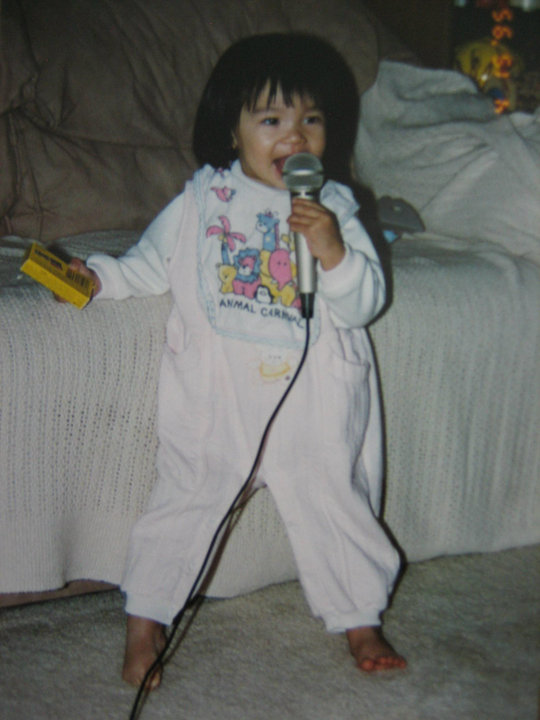
Me at 16 months old.

When it came time to apply for college, I automatically filled out the “prospective major” box with Biology.  For a few schools with the program, I applied for the Public Health Science major.  I was set on pursuing medical school at the time, so the these majors seemed to be the natural choice.  I also loved both my introductory and AP biology courses and found tremendous beauty in the intricate workings of life science.  I had never even toyed with the idea of the art side of me being a part of my future studies or career.  Art was not practical, and art would not bring me closer to job security.  It would remain an extracurricular and a side project.

So I began college as a Public Health Science major with a Biology minor.  To be honest, I did not really know what public health was until my first course during freshman year.  My professor had me at prevention, and something in my heart sparked when she described the importance of approaching health from all aspects of life, not just in the doctor’s office.  My eyes opened to the broad field of public health which had one foot in the “hard sciences” and the other in the “social sciences.”  It provided me what I had been thirsting for in my biology and chemistry courses—a clear connection and application back to society.

Meanwhile, I found ways to continue my creative pursuits through joining and eventually leading an a cappella group on campus, Audiosync.  I became involved with The Stable, a club that provides a creative space for students through open mics and other gatherings.  I often read my poetry there.

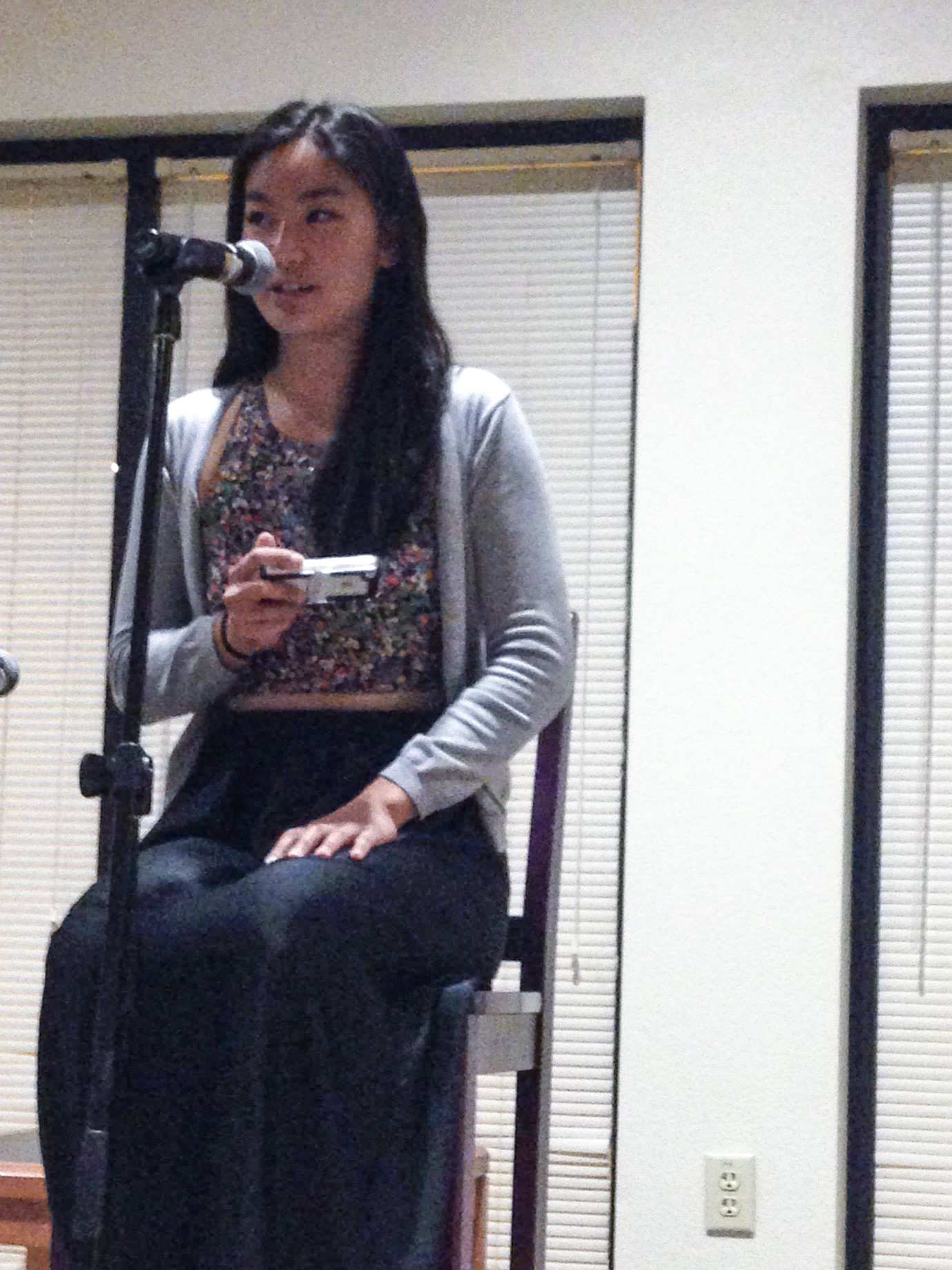
Me sharing my poetry at an open mic hosted by The Stable.


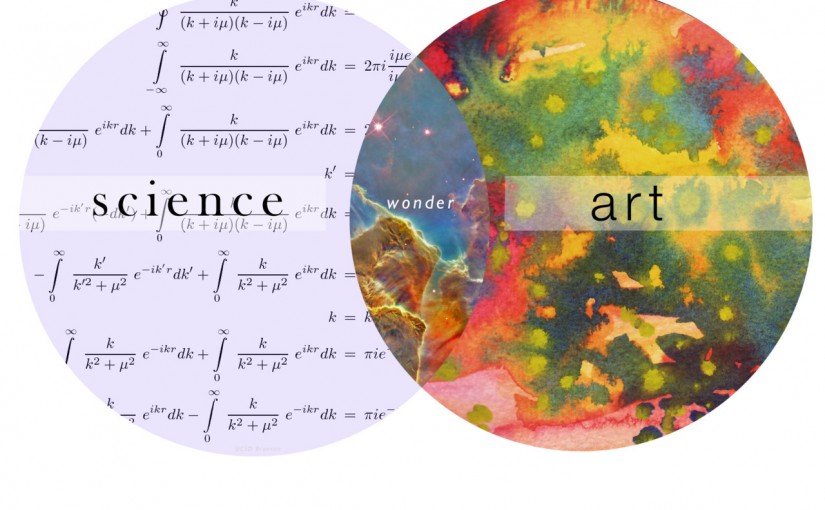
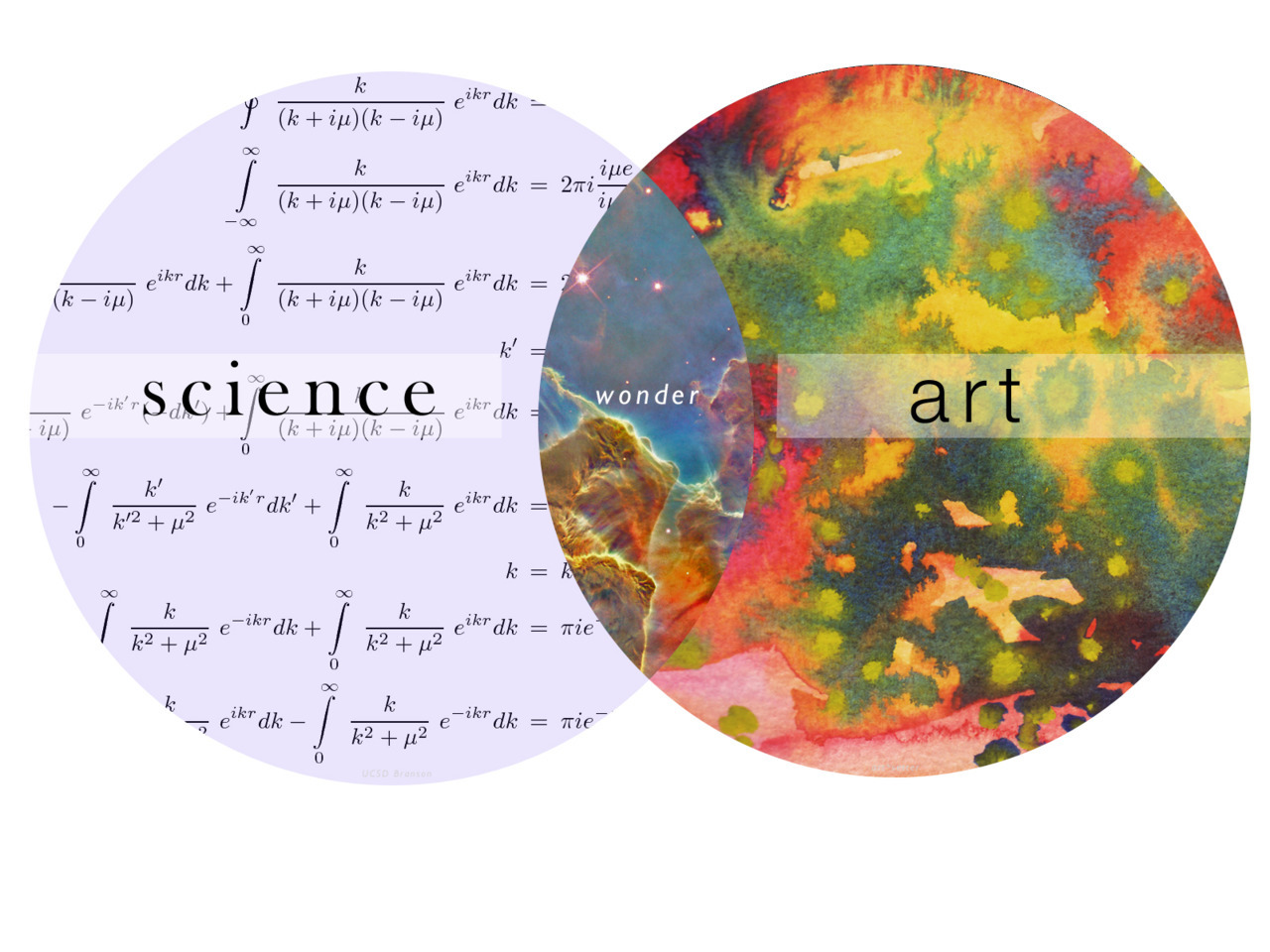
Open mic nights often ended with musicians and poets gathered around a group of rappers freestyling, diving into deep issues of race, privilege, college culture, and even environmental issues.  With these students, we were able to share our raw perspectives and question the status quo in ways that are rare in the average classroom.  I discovered in both my art and science circles a common passion and curiosity that drive those who I find most inspiring.  Below is a Venn diagram I stumbled upon online, which captures the fascination I have with the beauty and power of science and art, especially in the places where the two forces intersect.

Science Art Wonder                                                     Found online; artwork by Erin Meekhof

Through the arts, I have had the chance to form some of my deepest bonds with people, even if only for a moment.  The personal and visceral nature of art is something many people connect to easily.  It is harder to get people as excited about DNA expression or molecular interactions of chemicals.

For two weeks at the start of last summer, I trekked 225 miles from Ocean Beach, San Francisco to Yosemite with my sixteen fellow classmates in my Walk Across California course.  It was an immersive experience into the environmental, cultural, historical, and social issues of a cross section of California.  Organic farmers described their major setbacks from the drought, and we shared mass, dinner, and stories with migrant worker farmers in Stockton.  These communities welcomed us in and opened up to us about the challenges they face everyday and the hope which drives their work towards change.  As a student passing through their community, I felt helpless and disconnected from any means of realistically making any impact on the many structural inequalities these individuals dealt with.  But the Walk broadened my worldview and enabled me to further develop my capacity for compassion.

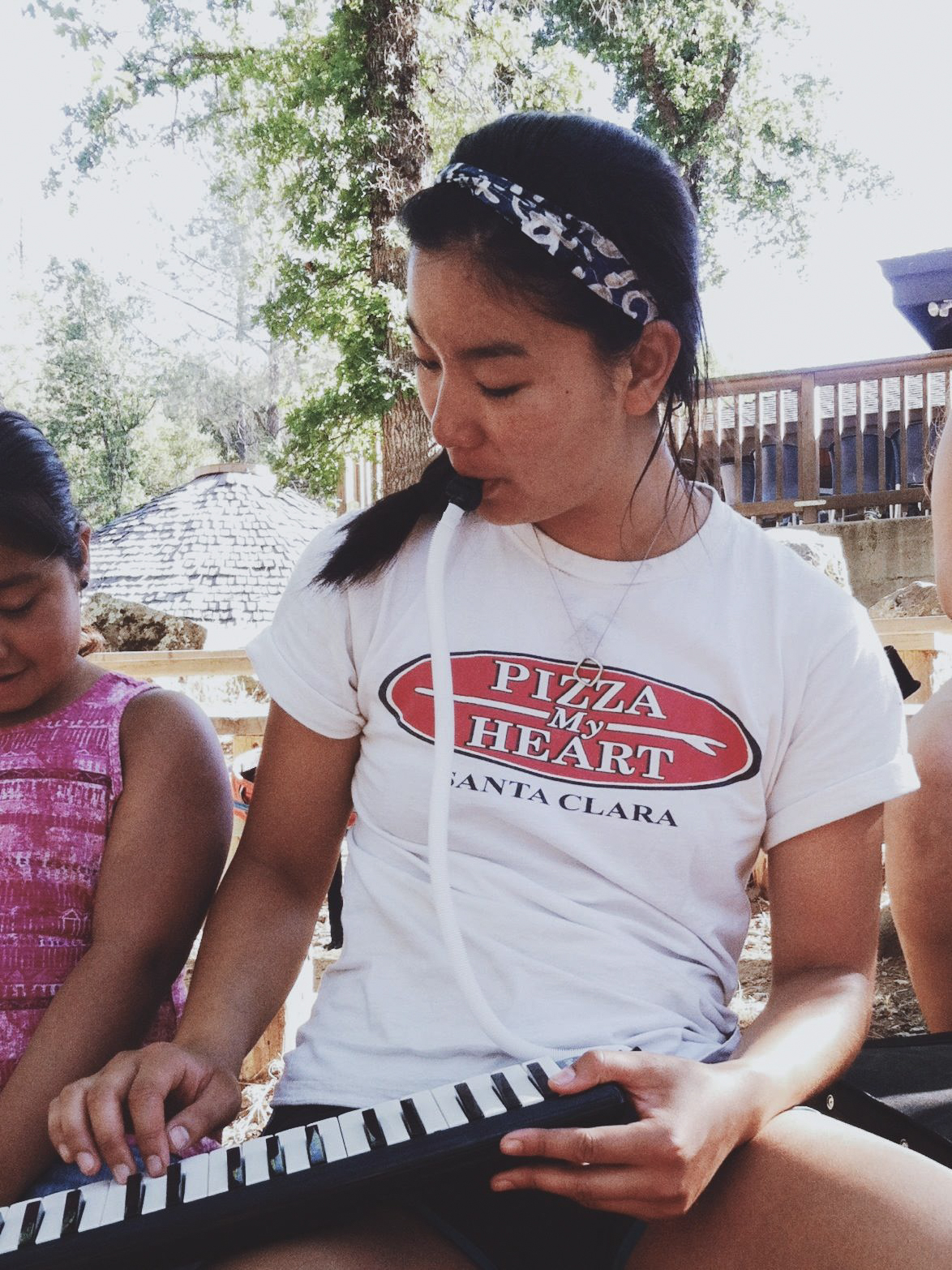
Halfway through our journey, we arrived at the Me-Wuk Indian Reservation in Tuolumne.  Carlos, our host and a leader in the cultural center, welcomed us.  Before we had a chance to settle in, his young daughters ran among us asking each of us our names.  I spent part of the afternoon showing Nora, Dora, and Diamond a couple instruments our group had with us, and they clamored for a turn to pluck the strings of the ukelele and to blow into the mouthpiece of the melodica.

Playing the melodica with Dora at the Me-Wuk reservation.

Through play and curiosity, I shared an afternoon with the girls in a space that did not mind our different cultural backgrounds, ages, or languages.  We were able to create something together out of mutual wonder.  While I had a memorable time with the girls, I again left feeling incapable of bringing joy into their lives outside of that one moment.  I would not be able to do anything to mitigate the prevalent diabetes and obesity within their community or make a lasting impact on the high rates of drug use among the Me-Wuk youth.

Screen Shot 2015-04-16 at 11.53.43 PM
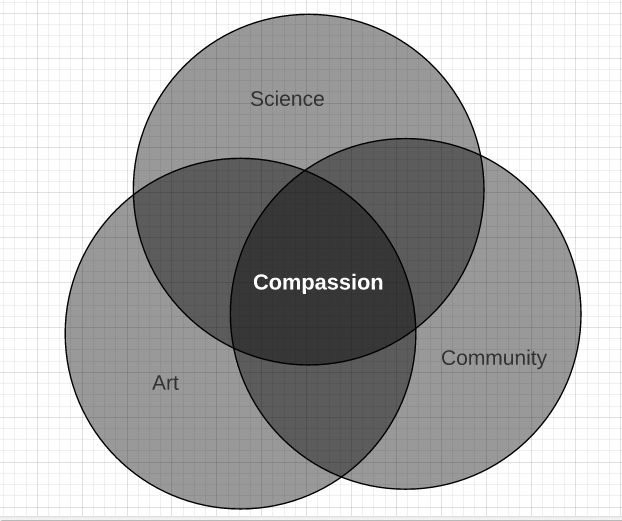
Science Art Community Compassion                           Created by Serena Chan

I realize now that my initial draw towards medicine originated from a desire to live a life of compassion.  At the time, I characterized that with the work of a physician.  A combination of my public health background and my first hand exposure to individuals living in disparity now fuel my dream to not only improve people’s lives on an individual level but also to hopefully make some changes in the structural forces working against them.  The Global Social Benefit Fellowship and our introduction to social entrepreneurship have revealed to me a field where people dedicate their lives to putting compassion into action.  Where innovators merge scientific methodology and technology with creativity and imagination for the betterment of communities.  I know I am only a few steps closer to being equipped with the tools and opportunities to work towards my dreams for social change, but I believe I am headed in the right direction.  And I have a lot to learn, as I am a work in progress.