Communities and Comfort Zones

A crowd of patients encloses around us on all sides, yelling in Tamil, pushing each other and shoving their charts towards us. Jana, our VCT translator and I frantically try to manage the growing group while checking patient numbers and interviewing the patients that are on the list from our previous round of interviews. This scene from our most recent Sunday review camp is very different from the events of Saturday’s camp, where patients waited quietly in line while we checked numbers and quickly surveyed post-op patients.
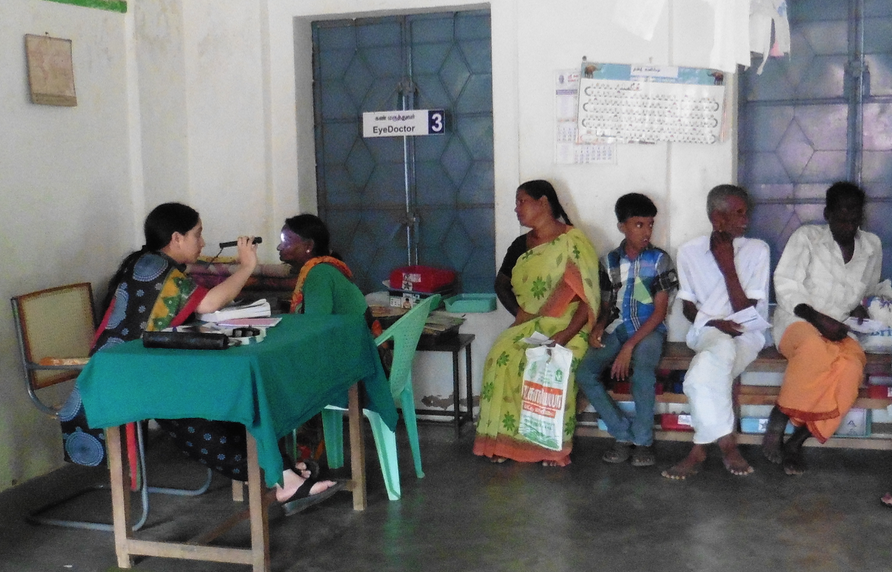
Patient screening at a local camp

My Tamil knowledge is limited to “welcome,” “thank you,” and “have you watched TV in the past month?” In other words, no phrases that are particularly helpful when trying to impose any sort of system or organization on a group. The language barrier has continued to be one of my biggest frustrations while working in India, but it has also forced me to look at things using a different perspective. For starters, I’m realizing how much I take for granted being able to easily express my thoughts and what I mean as well as understand what other people are saying. Secondly, since I can’t rely on what people are saying to gain a sense of their personalities and stories, I find I focus more on people’s body language and how they interact with each other. The thing that I have noticed over and over is the strong sense of community within the various groups here.
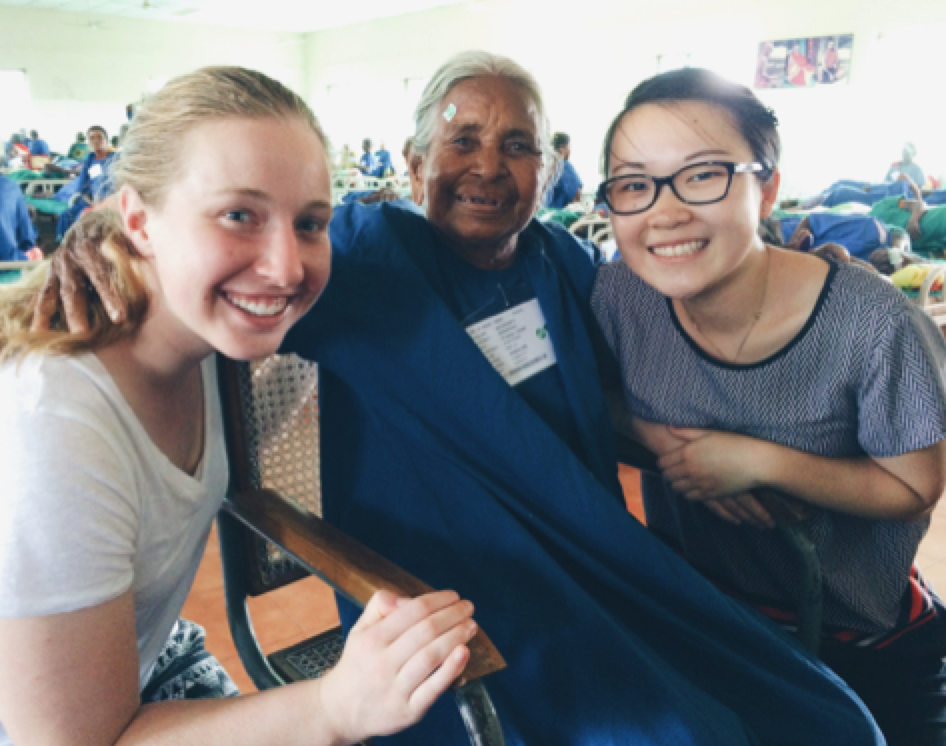
Interviewing patients at the Coimbatore base hospital

Though our survey experience on Sunday was perhaps not the best example of this community mentality, the strong ties between villagers can frequently be seen throughout the camps as well as at the hospital. Patients move in small groups through the different stations at the camps; they wait for their friends to finish and then all move on to the next phase of screening, adults come to help guide their aging parents through the camp and someone is always there to hold the hand of a patient afraid of the finger prick required for checking blood sugar. This continues when patients arrive at the hospitals. Patients stick with their friends while navigating the halls and sit on beds talking to each other in the wards. Attendants patiently sit on the beds or walk with patients who need additional assistance. They are eager to fold us into their group. They walk up to us to talk, grab our hands and pinch our cheeks or just simply nod and smile at us while walking by. Even though I have no idea what they are saying, it is clear that this is a culture driven by human connection.
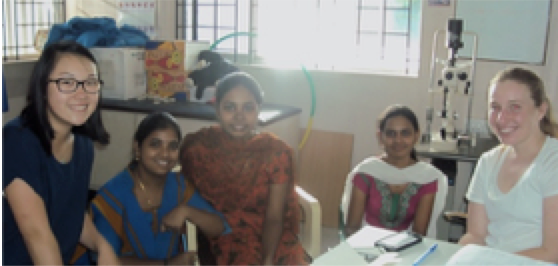
Talking to some VCTs

Another place where this group comradery is particularly evident is with the Vision Care Technicians. VCTs are recruited from villages all over India and train for three years at either the Sankara hospital in Coimbatore or the hospital in Bangalore. One of our projects is to document the impact of this program, so over the past few weeks we have been interviewing past VCT who now work at various Sankara hospitals as well as surveying the students just starting the program in Coimbatore. In addition, VCTs also act as our translators, so we are around them often. It seems like we never end up talking to just one. They travel in packs. Walking down the hallways holding hands or hanging on each other’s shoulders while standing at a desk. Personal space does not exist here. As soon as we start talking to one, at least five others rush over and push themselves into the conversation. While many things here are different than they are at home, this lack of boundaries and need to be close together is something that has taken the most getting used to.
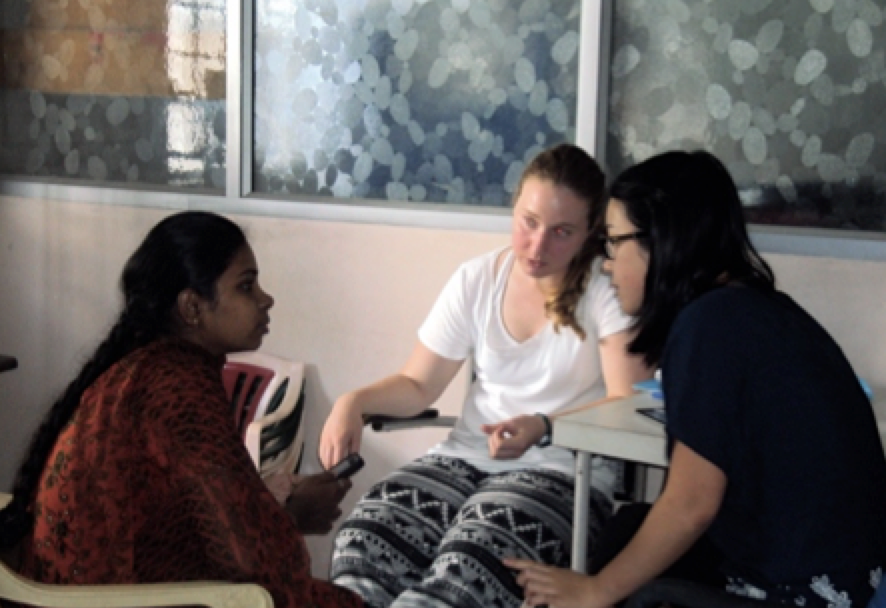
VCT Interviews
VCT Interviews

Since most of our data collection is complete, we will be spending our final week at Sankara beginning to pull together our findings and preparing for our presentation to the board. Our project looks very different than it did two months ago. Over the past seven weeks, we have conducted over two hundred surveys, researched archival systems and interviewed patients. I know that we have concrete data to analyze, but I have trouble seeing how we will present it in a way that truly captures what I have learned and experienced here. The surveys don’t show the patient who started crying when we asked her about her family or the man whose face lit up when asked if he would recommend Sankara. The VCT interviews don’t communicate the fact that there were fifteen other students huddled around, laughing, clinging to each other and helping translate questions when one was misunderstood. It’s frustrating to not know exactly how to package this information so it adequately represents the way Sankara fits into and impacts this broader Indian community. Like not knowing the language or having people consistently invade my personal space, this unknown is way outside of my comfort zone. As with the language barrier, I know the challenge of interpreting this data will make me step back and look at things in a way I’m not used to. For now, I’m trying to trust the process, embrace the fact that I don’t know exactly what is coming and look forward to piecing it all together.
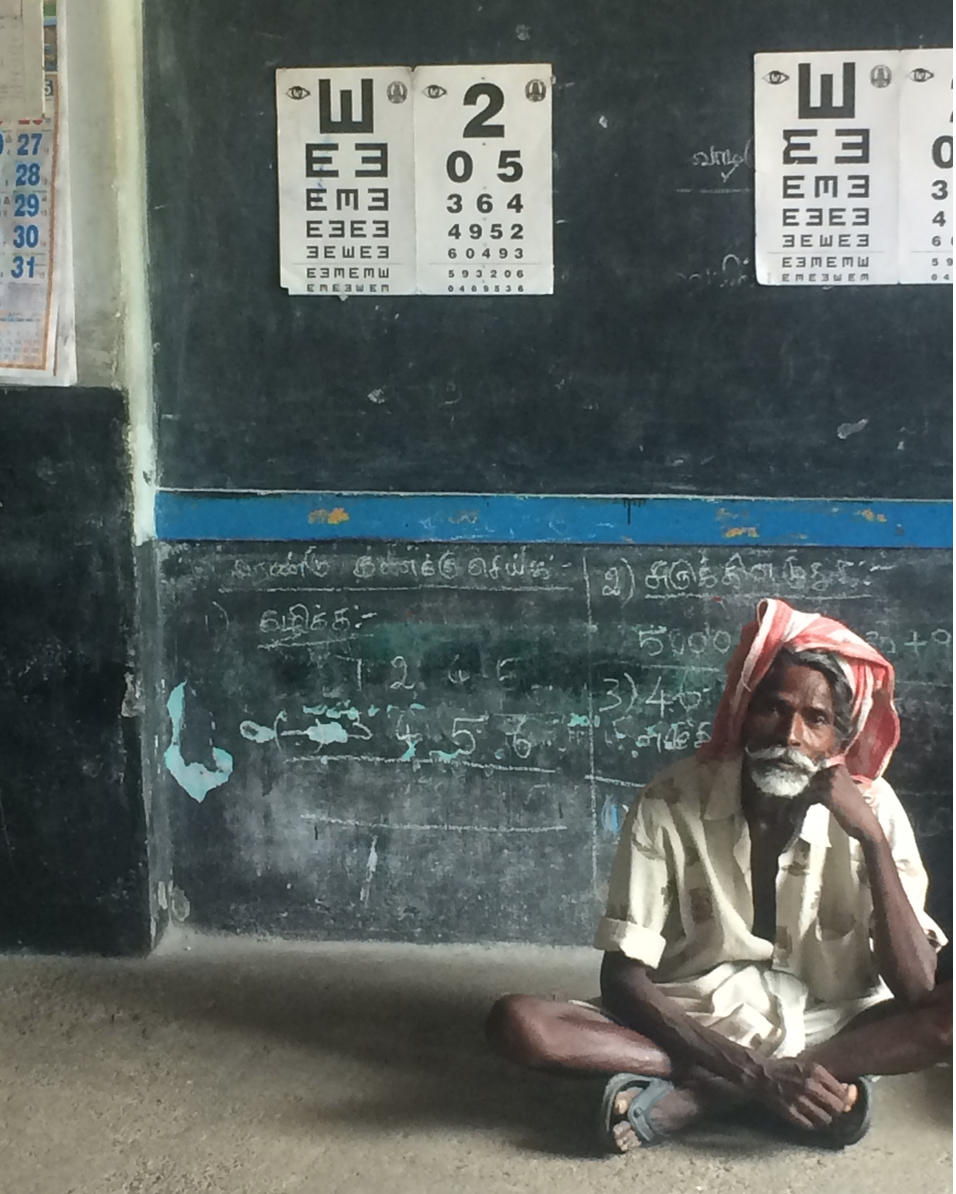
A patient waiting to be screened in the village of Mangalore

First Few Weeks at Sankara

The chaos of the Coimbatore streets stops as soon as you enter the Sankara campus. The organization and efficiency of the hospital are apparent in every detail. Ramps connect the four floors of the hospital to make it easier for the elderly, sight-impaired patients to navigate through the different stations. Blue sari clad nurses walk briskly up and down the halls leading groups of patients through the different stages of treatment. All patients are either referred to as “Patti,” grandmother, or “Ta Tha,” grandfather, while nurses and vision care technicians refer to each other as “sister.” Although the separation between the paying and free patients is clear, it isn’t extreme. The ground floor of the hospital is devoted to paying patients, the second floor houses areas for both customer segments and the top two floors are dedicated almost exclusively to the free patients. Even though I read the statistics on the numbers of patients that Sankara treats many times before coming here, seeing their system in action is very different. When I heard that patients moved through the surgery process in groups, I envisioned groups of ten, not over a hundred. We have been here for almost three weeks now and I still can’t believe the massive number of patients that easily move through surgery each day.

Screen Shot 2015-07-03 at 8.09.31 PM
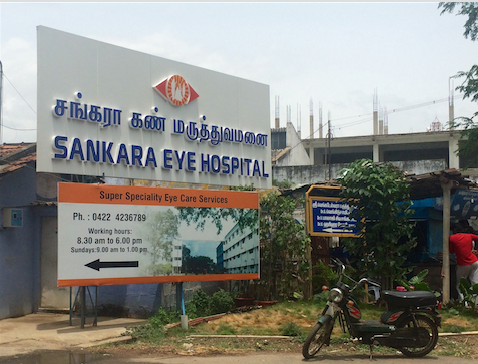
Sankara Entrence

We’ve done a lot in our few weeks here. Everyone has been extremely welcoming and is curious about what our project and how we ended up at Sankara all the way from California. On our first day, Pooja, our in Sankara research mentor, introduced us to as many as people as possible. This ended up ranging from meeting with the Sankara founder and the head of the outreach department to the lab technician and kitchen staff. At the end of our first week, we attended a local eye camp in Coimbatore. This camp was pretty quite and mostly just so we could get to know how the camps work.

While our second week at Sankara started off relatively quietly, it certainty did not end that way. The big news of the week was that our project had changed from just case studies to a more comprehensive social impact study. Jana and I figured this out about thirty-six hours before leaving for the weekend to go two eye camps where we were supposed to start surveying patients, so the pressure was on to write and test our survey.

The eye camps we traveled to for the weekend were held in South Tamil Nadu, about a six-hour drive away from the base hospital in Coimbatore. Driving to the camps was an adventure in and of its self. The town centers we passed were full of action. Endless storefronts and various vendors lined the narrow streets; carts pulled by oxen practically outnumbered cars, there were even a few camel and monkey sightings. When we arrived at the first camp the next morning, there were already lines of people waiting to be screened. Although this looked like a ton of patients to me, when I mentioned this to one of the nurses, she laughed and proceeded to tell me this was way fewer people than normal. Like the hospital, the camps operate in a way that allows a shocking number of patients to be screened, diagnosed and selected for surgery in a short amount of time. Within fifteen minutes of the first patient being registered all eight stations of the camp were in full swing. We sat down with our translators, two Vision Care Technicians, and got to work. When we got to the camp on Sunday, I immediately saw why the nurse was saying the previous camp had been small. Because this camp was also a review camp for patients who received surgery a month ago, there was an even larger group waiting when our Sankara van pulled up.

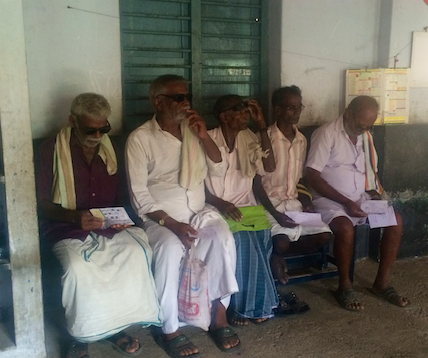
Patients waiting at Sunday eye camp

Now that we are back at the hospital, we are continuing our interviews with the patients from the recent camps. In addition, we are working on revising the post-op survey that we will give to patients at the review camp in one month. I am quickly learning that creating a survey that will produce meaningful data is pretty tricky. By far the most frustrating aspect of our data collection has been the fact that we have to rely on translators and we can’t speak directly to the patients. I think we are probably missing out on a lot of valuable information because of this. There has definitely been a learning curve in figuring out how write questions that we can explain to the VCT helping us that she can then explain to the patient being interviewed without losing too much meaning. I’m sure that our team’s struggle is not unique to anyone trying to collect data in a region where they do not speak the language, but it definitely takes some figuring out. I’m looking forward to taking what we have learned conducting this survey and applying it to our post-op and VCT program surveys. While this process has been slow and tedious at times I can’t wait to continue learning the ropes of social impact assessment over the next five weeks here.