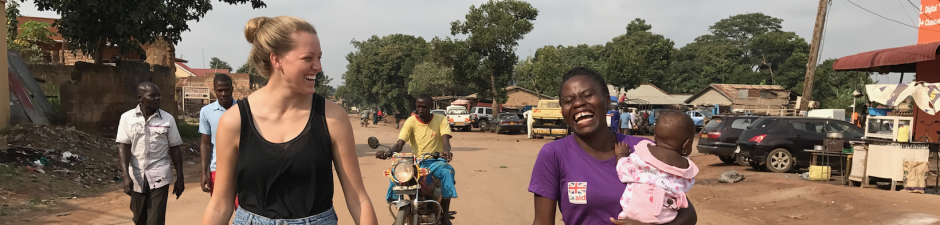
It would be easy to write about injustices we have learned about and witnessed, our role in helping alleviate them, and the inspirational joy despite the apparent poverty and suffering of the developing world. Instead, I will reflect on some of meaningful and challenging experiences as a Global Social Benefit Fellow. Our main objective is to conduct action research to understand the social impact of the birth house and its monitoring and evaluation system. However, this blog entry focuses more on the lessons learned outside of our social enterprise. Successful social entrepreneurs recognize the value in collaborating with the local community to disrupt an unjust social equilibrium; so understanding the complexities of the Nsassi community is imperative to our work in devising sustainable, appropriate, and effective solutions.

Christine and I left Santa Clara for Uganda six weeks ago, and now we are in our final week. After finishing finals in June, we traveled for 37 hours through Kenya and Rwanda before arriving at Entebbe International Airport. We quickly experienced Kampala’s chaotic traffic, complete with weaving boda bodas (motorcycles) and disregard for conventional traffic flow. Our driver even referred to an intersection stoplight as a “suggestion,” not a rule.
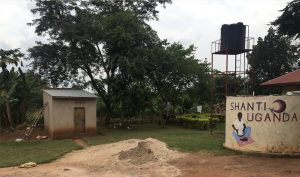
After a one-and-a-half-hour drive north of Kampala, we arrived at the rural village Nsassi outside of Kasana-Luweero where Shanti Uganda—the birth house for which we are conducting social impact research—resides. The prompt to this blog entry requested us not to be too self-critical, so I will take that to heart and even give ourselves a little pat on the back. A few weeks ago, Christine and I were buying vegetables in the market (rows of wooden shacks occupied by individual vendors) when an American woman and an Australian woman introduced themselves. They remarked, “I can’t believe your school just dropped you off here in the bush!” We were the first mizungus (white people) they had seen in an entire month; I didn’t even realize that we were in “the bush” until they pointed out just how rural we were.
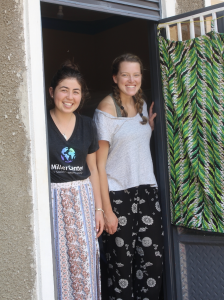
We live in a compound with eight other international volunteers and interns, as well as the head midwife and her six sons and one daughter. Although the Ugandan brothers originally told us that the birth house is a 30-minute walk from the compound, it only takes us 15 minutes. This inconsistency in our diligence and understanding of time was the first of many because “Africa time” is notoriously delayed. In the United States, we operate under monochronic culture; we work on one task at a time until it is complete and we take time commitments seriously. Meanwhile, African culture is polychromic; they work on multiple tasks at a time, completing them without urgency and willing to change plans often. This slow pace is frustrating and difficult to adjust to.
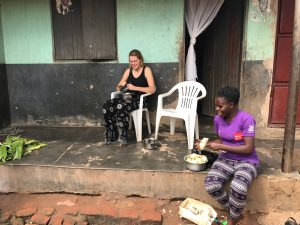
Africa time does, however, permit us to immerse in the local culture. Pieces of waste and debris clutter the dirt roads and walkways like unkempt fairgrounds littered with ticket stubs and peanut shells. We use latrine pits for toilets and take cold showers amidst cockroaches and poisonous caterpillars. And our bodies are always coated in red dirt. What feels like camping to us is an
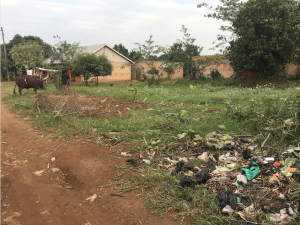
everyday reality for people here, though it feels unbefitting to compare the two. The affordability of starch crops make them central to the Ugandan diet; every meal consists of some combination of rice, matooke (cooked plantains), cassava (a root), or sweet potato. Diet diversity is poor, and children’s distended stomachs evidence the prevalence of malnutrition. We are fortunate to have electricity at our compound, but frequent power outages limit the utility of “electricity,” and erratic Wi-Fi makes it nearly impossible to accomplish anything without waiting 5 minutes for a webpage to load. But to be honest, life without the comfort and convenience of suburban life in America doesn’t warrant complaints. Sure, there are times when I miss seatbelts (speeding head-on toward opposing traffic at 120 kph in a matatu taxi to pass a slower vehicle), ice cream and steak, an actual mattress, or being free from the oily layer of bug spray mixed with sweat. But working in low-resource settings for a long period of time now seems more feasible and less daunting than I anticipated.
Through conversations with community members, we have also learned about the historical context in which Shanti Uganda operates. In response to President Yoweri’s oppression, Joseph Kony’s rebel group known as the Lord’s Resistance Army (LRA) terrorized northern and central
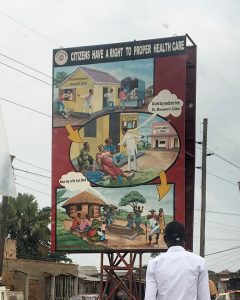
Uganda from 1986-2006. At the conflict’s worst, almost 2 million people fled their villages to government camps for internally displaced persons. A plethora of international organizations provided relief aid to help Ugandan villagers cope with violence, disease, lack of education and healthcare resources, and income-generating infrastructures. A variety of community members and leaders note the resulting dependency of rural Ugandans on foreign aid for food, school fees, and healthcare. And they lament the Ugandan culture of laziness cultivated by this influx of foreign aid. They claim parents lack the resources to generate income beyond subsistence agriculture, and students lack the drive to work hard, while mothers are expected to maintain the household. I am disheartened by the dependency unintentionally brought upon these people by unsustainable aid, especially considering its simultaneous existence with affluence in developed parts of the world. The severity and scope of the poverty prompts me to question whether we will ever witness significant improvement within our lifetime. This fleeting doubt is cast away, however, by small instances of hope.
On walks to and from the market, flocks of unattended children greet us with big smiles and squeal, “See you, mizungu!” Their giggles are contagious, and I am often re-energized by their resilient joy. When asked what most surprises me about Uganda, I am relentlessly amazed by the sheer abundance of people. No matter where we go, there are so many people—especially children—which can be attributed to Uganda’s inflated fertility rate at 5.8 births per woman.
Particularly high teen pregnancy, teen marriage, and prostitution rates within the Luweero district
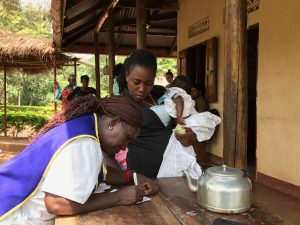
further heighten the fertility rate. Fortunately, the growth of healthcare facilities since the war has made at-home births rare, and women commonly seek delivery services with a trained attendant, nurse, or midwife. An administrator at another healthcare center commented on the “stern, serious, and arrogant” reputation of midwives. He attributed this generalization to the midwives being understaffed and under-resourced. Speaking with the birth house beneficiaries verified this observation: midwives in government hospitals and private clinics neglect to clean the facility and address patients in pain, and they blame the mothers for unwanted pregnancies. Some mothers even report that staff steal newborns from their mothers within hours of giving birth. Shanti directly tackles this injustice by employing midwives who ensure respectful births and conducting workshops that address factors that contribute to excessive fertility and unhealthy practices.
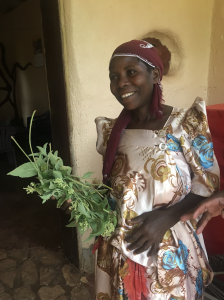
At first, we struggled to prompt beneficiaries discuss the value of the prenatal yoga, gardening, and nutrition workshops. Eventually, we learned how the workshops offer alternatives to harmful traditions existing around pregnancy and birth. For example, according to tradition, expecting mothers consume herbal medicine, dry newborns’ umbilical cords with dirt, animal dung, and ash, and tie bracelets on babies’ wrists, ankles, and waists to shape a desirable figure. Despite several interviews with mothers, we had yet to hear about any significant influence of the workshops.

Then, during a focus group discussion, 13 mothers raved about how yoga diminished their pain. It had made such a difference that they replaced herbal medicine with yoga. Our jaws dropped in disbelief, the women erupted in laughter, and we rejoiced to hear that Shanti’s comprehensive programs could trigger important cultural transformation. The transformation is small, yet indicative of the impact possible with enough perseverance and understanding of local context.
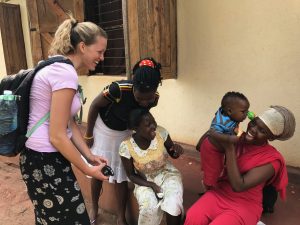

On a different occasion, I realized another aspect of Shanti’s unique impact. Shanti only charges 7,000 Ugandan shillings (UGX), while other hospitals charge 40,000-100,000 UGX. By coming to Shanti, mothers can leverage savings from the comparatively low cost for food, business capital, school fees, and other supplies; most commonly, mothers report spending the extra savings on clothing for their infant. When we inquired why it was important to clothe their infants, the mothers didn’t have much to say. They often remarked that the midwives “taught them to care for their baby.” The concept of caring for one’s child seems like an obvious concept, especially given our upbringing in which parents keep an eye on their children like hawks. So being instructed by a healthcare provider in America to give your child love and affection likely isn’t necessary.
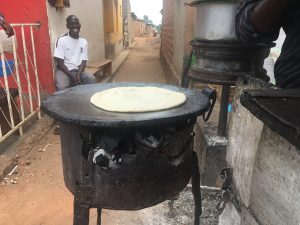
It wasn’t until we were enjoying a steaming hot Rolex in town that I recognized the indirect significance of Shanti’s affordability and counseling. Down the alleyway, toddlers without pants or diapers sat in dirt and trash. The lack of oversight by a parent or guardian shocked us, and the thought of infectious contamination left an unsettling feeling in our stomachs. Ever since, we have seen countless unclothed, unaccompanied children playing in filth. Ugandan parents don’t coddle their children, and babies are expected to feed themselves by the time they are two years old. Thus, a midwife’s counseling to give attention to one’s children as well as the capacity to purchase baby clothes holds more value in Uganda than I would ever have expected.
I began this fellowship with an open mind, and I like to think that my mind has been opened even further. I hope that my experience instills in aspiring social entrepreneurs and those invested in Shanti’s work an appreciation for truly understanding a beneficiary community. These are only a few small lessons I have learned; I am still learning, and I know I will continue to learn after our time here ends. But for now, I am exceptionally grateful for the opportunity to connect with the people of Uganda. I look forward to advocating on their behalf by sharing their stories.