Simple, Not Easy

When I, as a freshman, first read about three fellows who went to Banapads on the GSBF website, I thought “I want to do that.” I could see myself contributing to Bana’s intersection between science, technology, business, and women rising. I even pondered the possibility of becoming a social entrepreneur after graduation. My dad always encouraged me to think entrepreneurially, and he challenged me to imagine how I might apply lessons learned at a job under a manager to a company of my own one day.


When I took Keith’s class “Innovation for Social Justice” sophomore year, we learned how technology can address the world’s most pressing needs through social enterprises. Having absorbed some basics of starting small businesses through watching Shark Tank, I wondered how a social enterprise operates financially to become self-sufficient. When I asked, Keith chuckled and said, “That’s a far more complex topic for a later time.” Unsatisfied with that answer, I remained intrigued with social entrepreneurship and called to explore it further.


In identifying the social engagement or work environment that is best for me, I have identified two important aspects: the people and their attitude about the organization’s mission. I seek to work on teams of diverse, disciplined, ambitious, and conscientious people who share a common goal. These kinds of team complement my appreciation for openness to different perspectives, unifying/mediator leadership style, passion for human-centric design, and drive to have impact. I also recognize my desire to work with people who genuinely believe in the company’s mission and strive to make it a reality throughout their everyday roles and responsibilities. This characteristic is inherent in social enterprises (and healthcare) whose impact model and business model are intricately related; however, perceiving the legitimacy of a company culture passionate about its mission is more difficult.


At Shanti Uganda, the employee’s dedication to the mission was blatantly apparent. When we asked the head midwife Sister Josephine why she liked working at Shanti Uganda, she said, “[The founder’s] goal is also my goal; we are moving on the same page because we are working on saving mothers from dying and reducing maternal and infant mortality.” I think that investing the time and effort into researching this mindset through informational interviews—like the one with Sister Josephine—will be worthwhile in my job search.


Yet, my intrigue is not fully satisfied with the answers we discovered this summer, and I recognize that I need a fuller understanding of business operations. Before engaging in social entrepreneurship in a truly impactful way, I strive to develop skills and knowledge that equip me for a meaningful role. I know that I will not pursue social entrepreneurship right out of undergrad. However, I plan to return to the movement after gaining more healthcare experience and a deeper understanding of effective and efficient business operations.


As a bioengineer, I believe that technology can solve problems—that’s pretty much a given, I suppose. I can trace this belief back to seventh grade, when I responded to a prompt that asked me to write about a legacy I hoped to leave behind. I will never forget my aspirations to “be remembered for improving lives in developing countries through a technological medical solution” (or something unreasonably lofty like that). My teacher commented, “Good luck, it only gets harder from here!” How encouraging. This reality check was countered by my dad’s alma mater’s maxim “Believe deep down in your heart that you’re destined to do great things.” It still motivates me in times of doubt. This balance between a utopian and realistic vision is something that I wrestle with both personally and when it comes to technological solutions.


In a homily a while ago, I remember the deacon saying that “being Catholic is simple, but it’s not easy.” I think that this is a lot like using technology to solve the world’s problems. In theory, a product is a quick fix; but, in reality, the local context makes effective adoption of the product a lot more complex and maybe even impractical. In fact, much of our research as fellows investigated the motivations and barriers to obtaining a product or receiving a service.


Throughout my discernment, I tossed around this idea of engineering products and eventually finding my way into the business side of things, knowing that I’m more of a people person than a technical one. Recently I came to terms with the idea that I’m more of a people person because I’ve seen human interactions have a greater impact than any piece of technology ever has. People are the reason I was drawn to this fellowship. People are the reason I decided to apply. People are the reason I maintained perseverance and motivation in the field.


This realization led me to believe that, for me, solving some of the world’s greatest problems is as simple as providing healthcare. When Christine and I asked Sister Josephine what made her happy, she responded, “I just want to save lives. That’s all.” That’s all. Her statement reflects the simplicity that I have come to terms with. Sure, technology has a place in addressing problems, but I think that people are a lot more effective at change. Through human connections as a healthcare provider, I can contribute to Sister Josephine’s compelling vision: “If mothers are well-fed and looked after, we will have a bright future. If mothers are educated, we will have a changed nation. If we put health as the first priority, we can build the future of a bright nation.”


For now, I do not know what I will do after graduation and before applying to medical/PA school. And I am okay with that. Thanks to “Africa time,” I have a persistent patience and renewed trust that things will work out. Heck, we received the district data hours before leaving Shanti Uganda after (politely) pestering the biostatistician for two months. As a Myers-Briggs personality type ESFJ, I know that I am a data-oriented person who likes to collect as much data as possible before making a decision. So, hold on while I collect and organize all that data (thank you for the experience, Shanti Monitoring and Evaluation team). I will turn to my vocational “toolbox” to discern my next move and maintain self-efficacy.


A year ago, I would have told you that I just wanted to help people in my career, but I couldn’t explain why. A few weeks ago, I spoke with a student athlete at SCU who felt it was her calling to play soccer on behalf of the young Iranian girls who could not to play soccer and pursue their dreams. She said that although she was raised in Silicon Valley, she had found her “why” in playing on the Iranian national team. Through that discussion, I realized that the young children, babies, and mothers in Uganda were a part of my “why.” Though I do not share an ethnic background with them, I now have shared experiences and tangible relationships with people needing care indicative of their dignity.


I am a big fan of “head fakes” (coined by Randy Pausch in his “Last Lecture”)  in which apprentices unknowingly learn a lesson different than the apparent knowledge taught by a mentor. For example, I learned the value of teamwork under the direction of a demanding soccer coach instructing formation. While I am excited to continue unfolding the “head fakes” taught by this fellowship, one head fake that stands out is a spiritual one. In a letter to the Philippians, Paul says:


“Not that I say this because of need, for I have learned, in whatever situation I find myself, to be self-sufficient. I know indeed how to live in humble circumstances; I know also how to live with abundance. In every circumstance and in all things I have learned the secret of being well fed and of going hungry, of living in abundance and of being in need. I have the strength for everything through him who empowers me.” (Philippians 4:12-13)


Just as Paul lived in humble and abundant circumstances, so have we. We have an inherent resilience within us to overcome whatever challenges—whether literal or spiritual—we face. When I was struggling with reverse culture shock and reconciling life in Silicon Valley and in rural Uganda, I found consolation in this passage. God provides me with the “daily bread” I need to live out his will no matter the circumstances. At the same, this strength manifests in hard work. St. Ignatius of Loyola is credited with saying, “Pray as if everything depended on God and work as if everything depended on you” (Catechism of the Catholic Church, IV.2834). We encountered God ceaselessly throughout our time in Uganda, and working with Christine has deepened my relationship with God. Through Him, social entrepreneurship harnesses fundamental human relationships to bring out his vision for a better world and for me.
Muzungu Mentality

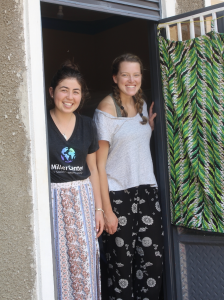
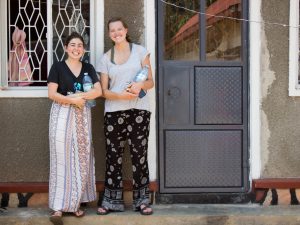
Christine and I outside our room at the compound.

It has been seven weeks since Christine and I returned from the Uganda, and I can’t say that I’ve completely re-immersed in American culture. By the time it came to return home, I developed a renewed appreciation for organized public spaces, recycling and trash disposal services, safe driving conventions, timeliness, the good ‘ole American entrepreneurial spirit and dedication to hard work reached a new level. Yet, I fondly recall the laid-back mindset and simplicity of life in Uganda. The avocados here aren’t nearly as large or delicious—not that the avocado shortage really helps. And I never thought I’d say this, but sometimes I turn down the hot water because I miss cold showers.

After spending time around the mothers at the birth house, I picked up on the indifferent and even uninterested attitude of mothers who were both expecting to deliver or had recently given birth. The lack of visible joy that we often associate with new mothers and families welcoming a new life into the world puzzled us. Through several conversations, we discovered that the situations both before and after birth in Uganda are significantly different from a highly-anticipated birth in the United States. Here, mothers plan for months (or even years) to become pregnant. They often have the financial means and familial support to purchase furniture, clothing, food, toys, diapers—you name it. After birth, the outlooks for survival of both the mother and infant aren’t just good, they’re great. However, the circumstances in Uganda drive high rates of maternal and infant mortality. And mothers don’t typically have children according to a thought-out plan. In one of our very first interviews, a teen girl reported that “money brought the pregnancy.” Pregnancy is often a result of prostitution, rape, or teen marriage without family planning; this is one way in which the Nsassi village community suffers from poverty and injustices. Understanding this context illuminates the reason for the difference in attitudes around pregnancy and birth. I find it disheartening that there is less outward joy surrounding births in Uganda, and I believe that women and families deserve to be able to celebrate bringing a new life into the world.


Jackie posing outside her home with her daughter Brenda.

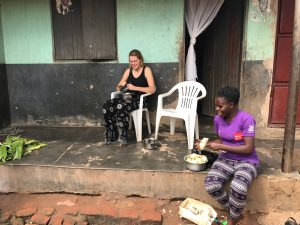
Amidst the nonchalance around having a family, a few women stood out—the most memorable of which is Jackie. Jackie is 22 years old and she has a 2-year old son and 6-month old daughter. During a visit to Jackie’s home, we learned about her personal initiative to begin a garden after attending a Gardening Workshop at the birth house. Jackie proudly toured us around her garden where she grew greens and potatoes. While teaching us to make sweet potatoes, she spoke of her vocation as a mother. She has made the decision not to have any more children and pursue fashion design school in the coming year. She recognized how “spacing” her children and limiting the size of her family enabled her to afford school fees and manage a household. I was also encouraged to see her husband come home during his lunch break (he is a teacher at a local primary school) to say hello to his family and give his children a big hug. This was one of the only instances when I witnessed a father or husband show affection and physical involvement in with his family members. This interaction sticks with me—especially in contrast with the prevalence of unattended children we passed everywhere we went at all times of the day. I believe that strong families are fundamental to the prosperity of humanity and the forming of wholesome and ethical individuals. Just as women need female role models and mentors, so do men. I think that men play just as important a role in reducing infant and maternal mortality as women. Jackie and her family serve as an exemplary family effectively impacted by Shanti Uganda.


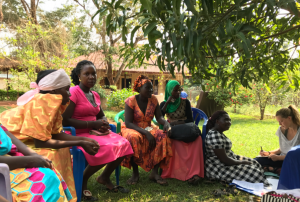
In our interviews, we explored what degree of agency the women had over their reproductive health. When we asked who made decisions surrounding family planning and contraception, the women often indicated that they themselves did. Their husband or boyfriend may have been included in the conversation, but ultimately the women made decisions regarding their body and use of family planning. The notion that these women are fully human drew me to this fellowship; hearing that decision-making power regarding family planning within a household isn’t a significant barrier is encouraging. Not only do these women have dignity, they have agency. Mothers are able to speak and act for themselves, and the midwives encourage them to do so. This trend is encouraging, especially in light of the Women Rising movement.

Listening to the mother’s talk about agency during a focus group.

At the same time, many people in rural Uganda do control the poverty, marginalization, and injustices from which they suffer. The prevalence of contraception and Christianity didn’t entirely make sense. In the following anecdote, I ask that you set aside your belief in the morality of contraception and consider the bigger picture.


Ugandans are devout in their faith and proclaim it in lively celebrations, but they adopt the use of contraception without much hesitation or debate. When asked how she reconciles using birth control and the pro-life teachings of the Catholic church, one woman remarked, “Birth control helps me today; the church doesn’t help me today.” Her response indicates the short-term mindset of people living in poverty. They are concerned with getting food on the table today so that they can live tomorrow. Because immediate needs are not always met, people sideline secondary considerations like family planning, financial savings, and preventative health care measures.


This interview also highlighted my privilege: I can think about long-term matters. Without wondering about my next meal, shower, or paycheck, I can meditate potential career trajectories, time management for school projects, financial planning, books I read for pleasure, and advanced concepts I learn in the classroom. When I pray, I regularly thank God for a hot shower, comfortable bed, fully stocked grocery stores, and my health. One of my friends taught me to say thank you for my brain. Now, however, I also thank God for the ability to use my brain to think critically about more than primitive concerns. I believe that every human is worthy of that capacity, and efforts (whether they are non-profit organizations, government aid, individuals, or social enterprises) to take care of basic necessities should be prioritized.


This consideration led me to consider the circumstances the enable my critical thinking. As previously mentioned, I began to miss organization, cleanliness, timeliness, regard for hard work, and trust in public safety authority while in the field. On the Fourth of July, Christine and I “celebrated” with sliced watermelon and country music. In reflecting on the core values that make us American, the first that came to mind was freedom (how stereotypical). Although the American freedom is historically associated with liberty from the British, freedom holds a deeper significance. I like how Pope John Paul II puts it when he says, “Freedom consists not in doing what we like, but in having the right to do what we ought.” Yes, my privileges enable me to do what I enjoy (spend time with friends, go skiing, study what interests me, eat yummy food), but my life in America allows me to do what is right. I obey my parents, assist my friends in times of need, attend my classes, complete assignments, and help others whenever the opportunity arises.


Ugandan Christians and Catholics feel they have no choice but to transgress the Church’s teachings in order for their family to survive. They lack the freedom to (theoretically) do what is “right” (per living in full accordance with their faith). Thus, my I must use my freedom to virtuously. I can use my education to empower others and make ethical decisions. In following God’s will for my skills, talents, and experiences, I can enable those who lack freedom to do what is right.


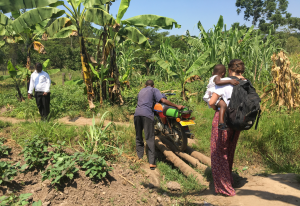
Although I am not entirely sure how I will ultimately do that, I am increasingly confident in my vocation as a healthcare provider. Small instances in which I had the opportunity to provide medical assistance still nag at my heart. Each day on our walk to the birth house, Christine and I passed the same family. One morning, we said our hellos and continued walking. Our translator Edward remained behind to speak with the mother. A few moments later, he called our names and told us that the mother requested our help. Her two-year old daughter Julie had a maize kernel lodged in her nose and she was in discomfort. As a certified EMT, I was tempted to remove the kernel myself. But I knew we risked pushing the kernel further back and potentially blocking her airway. Christine retrieved tweezers and disinfectant wipes from our compound and accompanied Julie and her father to the birth house where a midwife assisted Julie is blowing out the kernel. We celebrated the release of the kernel and embraced Julie with hugs and laughter each day we saw her after that. I began to carry around a first aid kit everywhere we went and even put some Band-Aids to use on small children’s cuts.

Carrying Julie to the birth house with her father and Edward.

I have experienced similar scenarios in the past, and each time I leave the situation longing to have done more. I am confident that my skills (medical knowledge and understanding) and talents (inherent compassion, patience, and ability to connect with other) would make me a good physician or physician assistant. I am reaffirmed in my calling toward one of those roles, and I know that I will be fulfilled by helping people in a hands-on way each day that I “work.” At the end of every day, I cherish the celebration of love among my family and friends, I am grateful for the entrepreneurial “American dream” and privilege to freedom, and I aspire to bring those values to others.

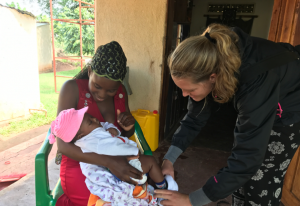
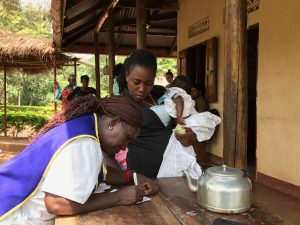
Helping a mother dress her baby after weighing on the scale.

Lessons from Luweero

It would be easy to write about injustices we have learned about and witnessed, our role in helping alleviate them, and the inspirational joy despite the apparent poverty and suffering of the developing world. Instead, I will reflect on some of meaningful and challenging experiences as a Global Social Benefit Fellow. Our main objective is to conduct action research to understand the social impact of the birth house and its monitoring and evaluation system. However, this blog entry focuses more on the lessons learned outside of our social enterprise. Successful social entrepreneurs recognize the value in collaborating with the local community to disrupt an unjust social equilibrium; so understanding the complexities of the Nsassi community is imperative to our work in devising sustainable, appropriate, and effective solutions.

 A rare sighting of open space in downtown Kampala.

Christine and I left Santa Clara for Uganda six weeks ago, and now we are in our final week. After finishing finals in June, we traveled for 37 hours through Kenya and Rwanda before arriving at Entebbe International Airport. We quickly experienced Kampala’s chaotic traffic, complete with weaving boda bodas (motorcycles) and disregard for conventional traffic flow. Our driver even referred to an intersection stoplight as a “suggestion,” not a rule.

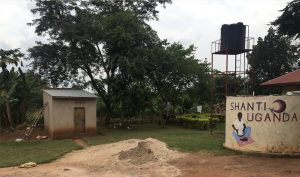
The birth house provides perinatal services to women in the village where there are no healthcare facilities. Note the water tank elevated in the top right to provide water pressure.

After a one-and-a-half-hour drive north of Kampala, we arrived at the rural village Nsassi outside of Kasana-Luweero where Shanti Uganda—the birth house for which we are conducting social impact research—resides. The prompt to this blog entry requested us not to be too self-critical, so I will take that to heart and even give ourselves a little pat on the back. A few weeks ago, Christine and I were buying vegetables in the market (rows of wooden shacks occupied by individual vendors) when an American woman and an Australian woman introduced themselves. They remarked, “I can’t believe your school just dropped you off here in the bush!” We were the first mizungus (white people) they had seen in an entire month; I didn’t even realize that we were in “the bush” until they pointed out just how rural we were.

Christine and I in our temporary home.

We live in a compound with eight other international volunteers and interns, as well as the head midwife and her six sons and one daughter. Although the Ugandan brothers originally told us that the birth house is a 30-minute walk from the compound, it only takes us 15 minutes. This inconsistency in our diligence and understanding of time was the first of many because “Africa time” is notoriously delayed. In the United States, we operate under monochronic culture; we work on one task at a time until it is complete and we take time commitments seriously. Meanwhile, African culture is polychromic; they work on multiple tasks at a time, completing them without urgency and willing to change plans often. This slow pace is frustrating and difficult to adjust to.

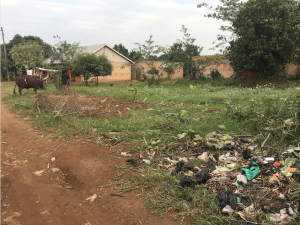
Africa time does, however, permit us to immerse in the local culture. Pieces of waste and debris clutter the dirt roads and walkways like unkempt fairgrounds littered with ticket stubs and peanut shells. We use latrine pits for toilets and take cold showers amidst cockroaches and poisonous caterpillars. And our bodies are always coated in red dirt. What feels like camping to us is an

Trash, livestock, and people coexist in the same spaces.

everyday reality for people here, though it feels unbefitting to compare the two. The affordability of starch crops make them central to the Ugandan diet; every meal consists of some combination of rice, matooke (cooked plantains), cassava (a root), or sweet potato. Diet diversity is poor, and children’s distended stomachs evidence the prevalence of malnutrition. We are fortunate to have electricity at our compound, but frequent power outages limit the utility of “electricity,” and erratic Wi-Fi makes it nearly impossible to accomplish anything without waiting 5 minutes for a webpage to load. But to be honest, life without the comfort and convenience of suburban life in America doesn’t warrant complaints. Sure, there are times when I miss seatbelts (speeding head-on toward opposing traffic at 120 kph in a matatu taxi to pass a slower vehicle), ice cream and steak, an actual mattress, or being free from the oily layer of bug spray mixed with sweat. But working in low-resource settings for a long period of time now seems more feasible and less daunting than I anticipated.

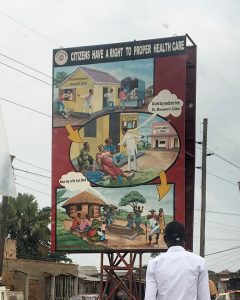
Through conversations with community members, we have also learned about the historical context in which Shanti Uganda operates. In response to President Yoweri’s oppression, Joseph Kony’s rebel group known as the Lord’s Resistance Army (LRA) terrorized northern and central

A billboard depicts preventable death that occurs without healthcare facilities in rural areas.

Uganda from 1986-2006. At the conflict’s worst, almost 2 million people fled their villages to government camps for internally displaced persons. A plethora of international organizations provided relief aid to help Ugandan villagers cope with violence, disease, lack of education and healthcare resources, and income-generating infrastructures. A variety of community members and leaders note the resulting dependency of rural Ugandans on foreign aid for food, school fees, and healthcare. And they lament the Ugandan culture of laziness cultivated by this influx of foreign aid. They claim parents lack the resources to generate income beyond subsistence agriculture, and students lack the drive to work hard, while mothers are expected to maintain the household. I am disheartened by the dependency unintentionally brought upon these people by unsustainable aid, especially considering its simultaneous existence with affluence in developed parts of the world. The severity and scope of the poverty prompts me to question whether we will ever witness significant improvement within our lifetime. This fleeting doubt is cast away, however, by small instances of hope.

On walks to and from the market, flocks of unattended children greet us with big smiles and squeal, “See you, mizungu!” Their giggles are contagious, and I am often re-energized by their resilient joy. When asked what most surprises me about Uganda, I am relentlessly amazed by the sheer abundance of people. No matter where we go, there are so many people—especially children—which can be attributed to Uganda’s inflated fertility rate at 5.8 births per woman.

Particularly high teen pregnancy, teen marriage, and prostitution rates within the Luweero district

A Shanti midwife, Flora, attends a mother and her child. The mothers consider Flora an “aunt” to whom they can go for advice and counseling.

further heighten the fertility rate. Fortunately, the growth of healthcare facilities since the war has made at-home births rare, and women commonly seek delivery services with a trained attendant, nurse, or midwife. An administrator at another healthcare center commented on the “stern, serious, and arrogant” reputation of midwives. He attributed this generalization to the midwives being understaffed and under-resourced. Speaking with the birth house beneficiaries verified this observation: midwives in government hospitals and private clinics neglect to clean the facility and address patients in pain, and they blame the mothers for unwanted pregnancies. Some mothers even report that staff steal newborns from their mothers within hours of giving birth. Shanti directly tackles this injustice by employing midwives who ensure respectful births and conducting workshops that address factors that contribute to excessive fertility and unhealthy practices.

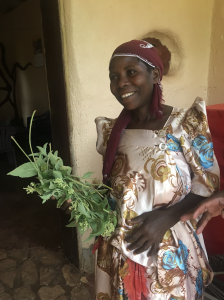
A new grandmother holds the herbal leaves that are mixed with ground clay and then consumed to reduce pain during pregnancy.

At first, we struggled to prompt beneficiaries discuss the value of the prenatal yoga, gardening, and nutrition workshops. Eventually, we learned how the workshops offer alternatives to harmful traditions existing around pregnancy and birth. For example, according to tradition, expecting mothers consume herbal medicine, dry newborns’ umbilical cords with dirt, animal dung, and ash, and tie bracelets on babies’ wrists, ankles, and waists to shape a desirable figure. Despite several interviews with mothers, we had yet to hear about any significant influence of the workshops.


A group of mothers pose to have their pictures taken after enjoying soda and cake during a focus group.

Then, during a focus group discussion, 13 mothers raved about how yoga diminished their pain. It had made such a difference that they replaced herbal medicine with yoga. Our jaws dropped in disbelief, the women erupted in laughter, and we rejoiced to hear that Shanti’s comprehensive programs could trigger important cultural transformation. The transformation is small, yet indicative of the impact possible with enough perseverance and understanding of local context.

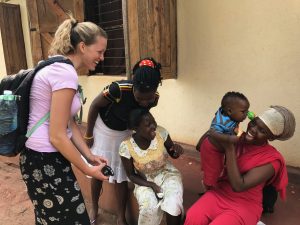
The mothers and children laugh after taking some photographs.
Young children greet Christine on our walk to work.

On a different occasion, I realized another aspect of Shanti’s unique impact. Shanti only charges 7,000 Ugandan shillings (UGX), while other hospitals charge 40,000-100,000 UGX. By coming to Shanti, mothers can leverage savings from the comparatively low cost for food, business capital, school fees, and other supplies; most commonly, mothers report spending the extra savings on clothing for their infant. When we inquired why it was important to clothe their infants, the mothers didn’t have much to say. They often remarked that the midwives “taught them to care for their baby.” The concept of caring for one’s child seems like an obvious concept, especially given our upbringing in which parents keep an eye on their children like hawks. So being instructed by a healthcare provider in America to give your child love and affection likely isn’t necessary.

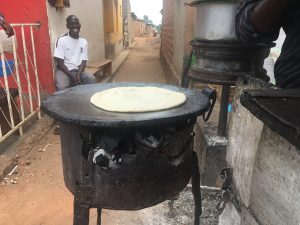
The alleyway where we eat Rolex (a vegetable egg omelet wrapped in unleavened flatbread, or “chapati”).

It wasn’t until we were enjoying a steaming hot Rolex in town that I recognized the indirect significance of Shanti’s affordability and counseling. Down the alleyway, toddlers without pants or diapers sat in dirt and trash. The lack of oversight by a parent or guardian shocked us, and the thought of infectious contamination left an unsettling feeling in our stomachs. Ever since, we have seen countless unclothed, unaccompanied children playing in filth. Ugandan parents don’t coddle their children, and babies are expected to feed themselves by the time they are two years old. Thus, a midwife’s counseling to give attention to one’s children as well as the capacity to purchase baby clothes holds more value in Uganda than I would ever have expected.

Our friend Jackie, a mother of two, laughs at me struggling to cut eggplant without a cutting board. She taught us to cook sweet potatoes over coal using banana leaves.

I began this fellowship with an open mind, and I like to think that my mind has been opened even further. I hope that my experience instills in aspiring social entrepreneurs and those invested in Shanti’s work an appreciation for truly understanding a beneficiary community. These are only a few small lessons I have learned; I am still learning, and I know I will continue to learn after our time here ends. But for now, I am exceptionally grateful for the opportunity to connect with the people of Uganda. I look forward to advocating on their behalf by sharing their stories.

Who I Am and My Calling to the Fellowship

Who am I and why am I called to be a Global Social Benefit Fellow? When I reflect on this question, I cannot pinpoint one reason. Rather, several experiences and memories drive me to explore social entrepreneurship as a means of improving the health of those in poverty.

Laying the Groundwork

First grade saint report

My earliest memories include my parents reading books to me each night. I fondly
remember thanking God “for my legs, walking and running,” as my mom tucked me into bed. I was raised Catholic and attended St. Joseph’s Elementary, where prayer was a part of our routine throughout every day. At a young age, I developed a foundation of faith, which provides a moral compass for me today.


Evidence of my early fascination with mothers and children


I also clearly remember my mom being pregnant with my little sister. I attended a big-sister class at the hospital to learn about caring for infants. I was fascinated by the “baby in mommy’s tummy,” and I wanted to do everything that my mom did to prepare for having a child. And so began my enthusiasm infant and maternal health.


What Makes Me Happy

On the surface, my interest in bioengineering stems from my inclination toward math and science and my admiration of my parents’ careers as an engineer and a nurse practitioner. Looking back, however, I realize my interest stems from my lifelong desire to help others. At day care, I played with Sarah, a little girl who was missing the lower portion of one arm. I discovered Sarah’s frustration completing simple tasks after she struggled to grip Legos. I picked up the pieces she dropped and came to appreciate the joy I found in helping others, as well as the health I had been blessed with.

I later spent time in hospitals—on one occasion for appendicitis and again after breaking my leg a few years later. These experiences exposed me to first-rate medical technology and high-quality healthcare, and they reinforced my appreciation for my health. My cumulative interest in medicine and health motivated me to pursue lifeguarding during the summers in high school and an EMT certification last summer.

Recovering in the hospital

I found that these kinds of experiences make me happy. Sometimes, an injured patron interrupts a typically mundane shift, and my instinct and training kick in. I am left beaming with satisfaction for the remainder of the day knowing that I helped someone in distress. Even something as ordinary as putting Band-Aids on a cut is rewarding because I have used skills and compassion to improve another person’s well-being. This logic led me to Santa Clara University, whose mission embodies the values that fuel my goals as a bioengineering major. I even remember reading about the Global Social Benefit Fellowship during the college application process and writing about it in my application to SCU. I aspired to help those who do not have the quality health and medical care with which I was blessed.


What Drives Me

If I was asked at the beginning of my freshman year if I had a passion for social justice, I would have said no. I viewed social justice issues as sensitive topics reserved for political debate. Yet, I sought an education applicable to shaping a better world, which inherently involves tackling social injustices.

After reflection, I realized that my childhood fostered a deep-rooted empathy for unjust poverty. For the first 10 years of my life, I lived in Long Beach, California—home to one of the starkest income inequalities in the nation. 5% of children live in poverty in East Long Beach, while the adjacent Central Long Beach and Signal Hill neighborhoods suffer from a 45% child poverty rate. Between private, Catholic school, summer camps at subsidized public schools, and programs at local recreation centers, I had the unique opportunity of to make friends with children from diverse backgrounds. Upon moving to Evergreen, Colorado, I was frustrated by the lack of socioeconomic and racial diversity in such a rural, secluded community.

High School Graduation, May 2010

But my connection with people from less fortunate socioeconomic backgrounds stuck with me. I was aware of my privilege as a white teenage girl whose parents had dedicated all of their love and resources to ensure that I could take advantage of every opportunity possible. Yet, I was empathetic towards those from different backgrounds. In my speech at high school graduation, I asked my peers to be grateful for their opportunities and to consider what my parents taught me: “From those to whom much has been given, much will be required” (Luke 12:48). But what is “much?”  I have learned that “much” isn’t about the biggest impact or accomplishment; it is about how you give yourself to others.

Learning from my grandad on his ship, the U.S.S. Kidd

The adults in my life taught me that lesson through their vocations. My mom followed in the steps of her father who served in the Army when she served as a nurse in the Air Force. And my dad views his role in construction engineering management as a service to society because he helps ensure health, safety, and sustainability. Through stories and nagging reminders, my dad instilled in me a standard of hard work set forth by his dad. Amidst the Great Depression, my grandfather was the only child in his family to graduate from high school and earn a degree. I learned about his perseverance and sacrifice on a trip to New Orleans, where the U.S.S. Kidd Navy destroyer resides. As a Commander on this ship in the Korean War, my grandad overcame social, financial, and health barriers to serve his country and provide for his family. While my grandparents’ and parents’ accomplishments do not boast notable accolades, they embody the selfless emptying of their time, energy, and hard work to be of service to others. These role models instilled in me the ambition to directly serve others through my career.


Finding What I Am Good At

This ambition has driven me to explore a variety of interests and career avenues. In high school, I juggled an array of activities ranging from student government to sports to nannying. Recently, however, I have narrowed my involvement to activities in which I directly interact with people. As an Orientation Leader, I listened to and spoke with incoming freshmen. I loved learning skills directly applicable to the job and spending time with a group of people so that I could come to understand their situation.

Combining my natural inclination to connect with people with an underlying desire to serve those in most need, I sought out work with Resilient Families Program (RFP). RFP is a community-based intervention aimed at improving family resilience, children’s school success, and parenting skills for immigrant families in San Jose, California. After two quarters delivering curriculum to Latino immigrant mothers in small discussion groups, I witnessed the promotoras (lay community member who receive training to provide basic health education) implement the program entirely on their own. Through this service, I learned to interact sensitively with the immigrant mothers, many of whom were undocumented. As a 21-year old student native to the United States, I do not know what it is like to be a mother—let alone a Spanish-speaking immigrant. I learned to consider that “our” way may not always be the right or best or only way. Seeing the mothers that I had once worked alongside take the reigns and passionately promote and deliver RFP was fulfilling. It also encouraged me to pursue Global Social Benefit Fellowship.


Discernment

While studying abroad in Madrid, Spain, I considered pursuing a technical internship in Silicon Valley. I was drawn to the stability, challenge, and prestige of working for a corporate medical device company. But at the same time, it didn’t sit completely right with me. On a weekend excursion to Morocco, I first witnessed the poverty of the developing world. I also traveled to Poland this past summer for World Youth Day, where the Pope spoke about having mercy for the world’s poorest and most vulnerable. In the past, I had been intimidated by the overwhelming extent of poverty, and I struggled to envision how I may help alleviate it. But through my coursework at Santa Clara, I came to understand that takes many, smaller efforts that chip away at poverty a little at a time. I couldn’t reconcile working for a company that serves people who already have access to quality healthcare without first exploring how I might leverage my skills to help those in most need.

Given that I have been blessed with my Catholic Faith, mass is an important part of my week. I debated whether or not to apply to the fellowship when I was reminded of my original eagerness to serve others. The reading in mass humbled me to consider “the lowly and despised of the world, those who count for nothing, reduce to nothing those who are something” (1 Corinthians 1:26-31). The homily encouraged me to serve the most vulnerable rather than my self-worth.

Now I am excited to work with Christine and Shanti Uganda to do so. The fellowship is uniquely beneficial to the fellows and the beneficiaries. It offers lessons from the developing world that can be applied to poverty in the United States. And, though I do not know how I will ultimately use skills to make positive change in the world, the fellowship is a remarkable opportunity to clarify how my vocation and passion for bettering the health of women and children in poverty intersect.