Looking Forward

“A fragile world, entrusted by God to human care, challenges us to devise intelligent ways of directing, developing and limiting our power.” – Pope Francis, Laudato Si (passage 78, chapter 2).
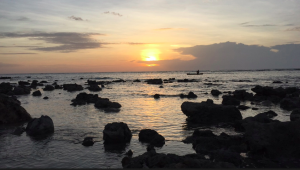
            This fellowship has been both incredibly rigorous and incredibly rewarding. It has opened my eyes to ways in which business can be used for global good; ways in which business can in fact drive global good. In the face of discouraging times and realities, I feel all the more driven to take what I have learned as a GSB Fellow to combat today’s most challenging social and environmental issues. Coming back to the U.S. after South Africa and after Indonesia, I experienced periods of grief as I realized that oftentimes our society is unaware of the comforts that many of us are privileged to experience, while much of the world continues to struggle with various barriers to access. I know, however, that I want to take this grief and let it pull me towards making a change. Through experience, personal interest, reflection, and many conversations, I have been able to discern where studying business, and marketing in particular, can be used to make a positive difference in this world. As I have mentioned before, prior to the fellowship I felt slightly limited and unaware of what my options were in pursuing a business degree with a passion for social justice, but I knew that I had to be patient and trust that my study choices and internal inkling would unfold with time. Thankfully, simply having faith and being patient worked out as my path led to studying in South Africa and then joining the Global Social Benefit Fellowship.

When applying, I remember being amazed at how perfectly my studies and interests seemed to match up with the fellowship’s description. My minors are in international business and entrepreneurship and I also felt stirred towards challenging myself to discover more about how I can combat social injustice after experiencing the protests in South Africa. The fellowship described itself as indeed a challenge, but one that was seeking entrepreneurial ways of combatting our globe’s most challenging needs. Through these experiences within my junior year and into my senior year, my eyes had begun to be open to an internal calling towards committing to social good and towards a realization that perhaps this could be done through innovative business endeavors. My heart had always been inclined towards social good, but I had not been fully able to combine it with my business studies. The combination of these ideas is what excites me so much about the fellowship and social entrepreneurship as a whole, as I continue to imagine new ways to sustainably generate much-needed change for a hurting world.
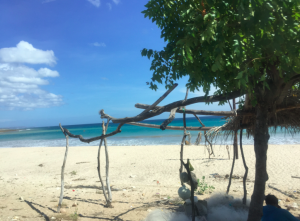
screen-shot-2016-11-19-at-4-22-54-pm

Oftentimes business is criticized for fostering a consumer-obsessed culture. However, there are also companies that are seeking a social mission alongside making a profit. I find myself making new connections constantly about what I am able to do vocationally that will doubly generate good for others. Whether this means working for a small social enterprise, or in a larger corporation that is ethical at its core, I know that I want to carefully select where I choose to apply my skills and hard work. I am deeply intrigued by the idea that we can generate new, entrepreneurial ideas about how to combat today’s global social and environmental challenges, so I truly hope that this passion will remain alive in me over the years as I explore my career path.

At this point in time, and largely thanks to the fellowship class, I have reflected on my values, skills, gifts and interests. The fellowship has offered me the space and intentionality behind putting a name to each and piecing them together.
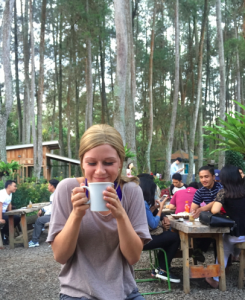
screen-shot-2016-11-19-at-4-27-32-pm

Coffee and the outdoors.

My values include love, joy and justice. My skills are those I have learned through business interests and studies, specifically in marketing, events planning, international business and entrepreneurship. My gifts include a love for bringing people together, being attuned to others’ stories and having adventure at heart. My interests include the coffee industry, the outdoors and events that offer meaningful experiences. Prior to reflection, these all felt abstract to me, and I had never directly associated them with how I would discern my vocation. Now, I see how even something as specific as coffee can play a role in my discernment, as I realize that I would love to work for a company in the coffee industry to help it ethically source, or for a social enterprise that is mission-driven in the coffee sector.

I continue to have faith and try to remain patient with discovering exactly what my path will look like down the line. For now, I am content in knowing that I can explore innovative thinking in the world of driving social justice. Perhaps in these first couple years post-graduation I will need to hone in on my business skills and knowledge at a large company and then eventually apply these skills to a social enterprise. Maybe I will start off in the coffee industry, or bringing people together in an events-oriented enterprise, or in promoting improvement of our environment through an outdoors-based organization. Nonetheless, I’m excited to see what lies ahead and am thankful for the journey I have had so far.
screen-shot-2016-11-19-at-4-26-03-pm

Looking forward.


Posted in Uncategorized | Leave a comment

Reflections

Integral Ecology: // the responsibility of each individual to see beyond himself or herself; to preserve the beauty of the interconnectedness among ourselves and this world’s diverse societies and environment.

In our Fall Quarter fellowship class we were asked to read “Laudato Si” and reflect upon the Pope’s call to justice in this broken world. And indeed, we live in a very broken world. In all its cultural fragmentations, however, we are called to be interconnected – to involve ourselves in giving a voice to the voiceless, in feeding the hungry, in healing the sick, even in cleaning the very air that we breathe.

screen-shot-2016-09-30-at-11-08-46-pm

Following a reseller from home to home for interviews.

Traveling to Indonesia I mentally prepared myself for a forthcoming discomfort and direct confrontation with poverty. I prepared to be flexible with the different diet, the heat, and less luxurious living conditions. Even still, one can only imagine a foreign culture to a certain extent prior to actually living in it, so the best preparation I could do was remind myself of the need to be flexible. As mentioned in my in-field blog, our social impact assessment and confrontation with poverty mostly began on Sabu Island. Here, we were humbled by the sweaty and dirty living conditions of the local people, especially when contrasted with their overwhelmingly welcoming and upbeat attitudes. Those that met with Meghan and I treated us like celebrities because of our nationality and from the color of our skin/hair. The people were excited by the idea that foreigners were visiting Sabu Island, their island. Meghan and I discussed not letting this special treatment make us feel in any way “above” the people there. Of course, in preparation for working with those in poverty I assured myself that I would not think of myself as at all higher or more powerful than those inflicted with poverty, but I had never imagined that the people would treat me in such high regard.

screen-shot-2016-09-30-at-10-35-29-pm

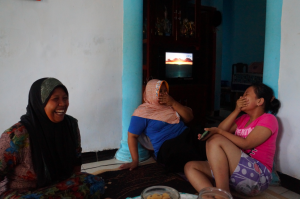
One of the families we interviewed. The women laughed and smiled throughout the entire meeting, and displayed a clear closeness among themselves while also sincerely welcoming us into their home.

Upon this encounter I reflected on how this perception came to be. I thought about the global image that the U.S. has set up for itself as a dominant figure in the world. Particularly the U.S. dominates media worldwide, and idolizes figures like those seen on reality TV. Especially coming from California, Meghan and I were often asked if we knew celebrities and I’m sure were assumed to be in close quarters with social figures of the sort. Many times I was even called “Barbie,” due to my white skin and blonde hair. Though I consider myself to be very different from reality TV celebrities like the Kardashians, after returning to the U.S. and our daily comforts, my life in America suddenly seems disturbingly more similar than I had realized. In the U.S. we are constantly encouraged to pursue personal dreams and to have everything at our fingertips, and always distracted by the “need” to improve our external image in every way imaginable. It is difficult to wrestle with the comfort of living in American society, after having experienced the drastic contrast of the living conditions in the villages we visited in Indonesia. Where is the justice in this contrast? Why should I be able to come home to a cozy bed and drink water from the tap without

screen-shot-2016-12-18-at-3-54-38-pm

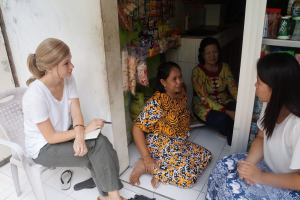
Many times we were encouraged, despite our polite protests, to sit in the more comfortable seats at the homes/local stores that we interviewed in. Here is an example where we offered to sit on the floor, but where our hosts insisted that they sit on the floor while we as guests sat on the chairs.

thinking twice about it? I certainly didn’t do anything differently to deserve such special treatment, and yet there were people like Ibu Tri, who dedicates her entire life to bettering the health and well-being of those around her, knowing that they deserve more.

Returning to school at Santa Clara I find myself wrestling with the idea of pursuing the common Silicon Valley search for a 9:00-5:00 job at a solely for-profit business. I find myself questioning where our society’s exciting new companies and products will get us in the end, as many continue to foster extensive consumerism and individualistic mindsets. This all sounds hopelessly cynical and critical towards those who pursue everyday business, but rather I think it is simply a personal realization of my call to social justice.

screen-shot-2016-09-30-at-10-28-34-pm

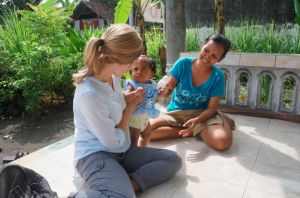
At every home it was common custom and courtesy to take off one’s shoes and sit sideways on the floor together. At each home we were welcomed by the families we met with, and deeply impacted by their stories and realities.

I am increasingly thankful for the opportunity I have had to learn about social entrepreneurship and to work with a social enterprise like Nazava. There is hope for improving the poverty gap and for holistically patching up the brokenness of this world. Though I still feel very new to the whole idea of social entrepreneurship and am still discerning my place in this call to justice, I have faith that I am being guided in the right direction. With each day I see the local injustices around me, and reflect upon the injustices I encountered in Indonesia. I also experienced in Indonesia the community and welcoming attitude that contrasts American individualism. My hope is that I can discover more about what changes might be made and about how they can be made, to help further integrate humanity. I uncovered unknown privileges about my lifestyle while in Indonesia, but I hope that I continue to discover these while at home and while discerning where I will be post-graduation.

screen-shot-2016-09-30-at-10-23-12-pm

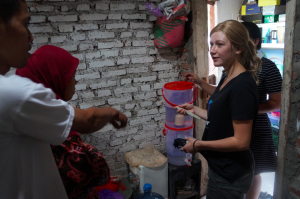
Me sweaty from heat and exhaustion, interviewing in a home at one of the villages where we conducted interviews. Behind me is the home’s Nazava water filter, from which I am measuring the total dissolved solids of the water.

Every day I pray that God will lead me down the path I believe He has designed for me. I pray that I will discover more about the passions that I am called towards. Through my encounters and experiences in Indonesia I am certain of my deep social awareness and compassion. I am not always skilled at understanding my own emotions, but I am deeply attuned to those of others. What this will mean for my future, I am still figuring out, but through long, hot and exhausting days of interviewing, I felt something stir inside. There I was, walking through the motions of living in various Indonesian societies, taking off my shoes at front doors, squatting over holes in the ground for bathrooms, eating lunch for $1, sitting on hard cement floors, walking in the muggy heat, eating the snacks offered in each home (sometimes covered in ants), and taking the time to listen to those impacted by Nazava’s water filters. I was exhausted by the end of each long interview day, guilty at how ready I was to come home to a clean, air-conditioned hotel room. I still have yet to fully discern where this will lead me in terms of meeting others’ needs, but I know that I am open to discovering this calling.

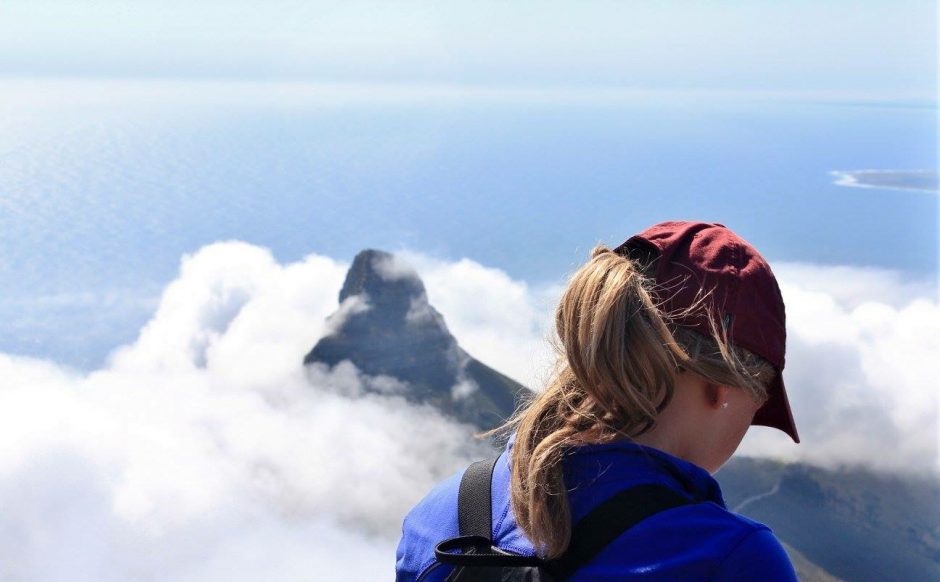
As I look over my past year, I feel blessed with the experiences that I have been fortunate enough to have. At this time last year I was studying abroad in Cape Town, South Africa, where I encountered the most visible contrast of social inequality that I have seen so far. At the same time I also experienced a love for nature that I had never known before, later to discover how closely it would echo the thoughts of the Pope in “Laudato Si” as he calls humanity responsible for taking care of our earth. By the end of the year I was in Indonesia, experiencing a love for the people whose stories left me feeling called to support their rights to an improved well-being. All in all, my past year’s experiences have begun to provide me with a holistic view of a calling for an integral ecology – that each and every human being is deserving of a life where he or she feels empowered, and that we

screen-shot-2016-09-30-at-10-39-46-pm

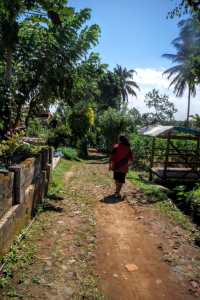
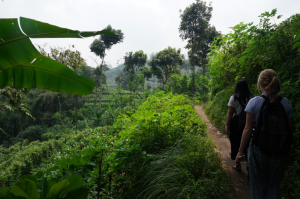
Surrounded by the striking nature that we are called to preserve.

are responsible for empowering our earth simultaneously. As explained, I am still discovering how this will look in my own life, but I am hopeful that I will continue to learn and that I will end up where I’m meant to be, offering aid to the integral ecology that I am a part of.


Posted in Uncategorized | Leave a comment

Initial travels in Indonesia

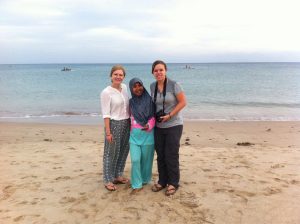
For a foreigner Indonesia might first appear welcoming because of its tropical weather and white sandy beaches, but almost immediately one discovers that the inviting atmosphere truly exists because of its people. I have never met friendlier, more welcoming people than those of Indonesia, and I am continually in awe of their genuine excitement towards us as foreigners. Meghan and I have already been lavished with beautifully handmade gifts and invited to two traditional weddings. We want to thank the local people in whatever ways we can, with their request being that we simply pay it forward.

IMG_0998

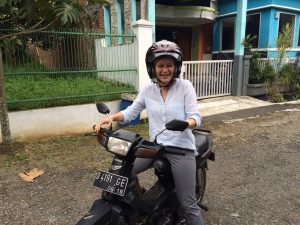
Learning how to drive sepeda motors.

So far we have ventured through Jakarta, Bandung, Yogyakarta, Kupang, and most recently Sabu Island. I have probably consumed more rice during my four weeks here than in the rest of my life up to this point – cultural note: Indonesians eat rice two to three times a day. Half the time we have no idea what we’re eating, but usually we love the food we cannot put a name to. I had never lived in a muggy climate prior to living in Indonesia, and I’ve noticed that when in the shade I don’t always realize how hot I am until I notice the sweat seeping through my clothes, just from sitting there.


IMG_1499

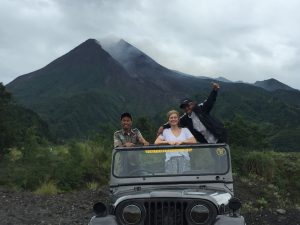
A jeep tour of Mount Merapi (a volcano) in Yogyakarta.

Living in Indonesia is different from the life I know in the U.S., and I hope to approach the differences with an open mind. So far we’ve seen oyster shells the size of our bodies, cockroaches, spiders nearly as big as my hand, beautiful temples, gorgeous beaches at sunrise and sunset, an active volcano, a traditional performance by village leaders, walked across unimaginably busy streets, and learned how to drive “sepeda motors” (motorbikes). There have been difficult language barriers despite our six days of language class, and learning the language was definitely helpful navigationally but only gets us so far conversationally. For this reason we are very lucky to have Wenty, our local translator, with us for translation and for navigation.

Our work began in Bandung, where we met Nazava founders Lisa and Guido. We worked in the Nazava office while in Bandung and discussed our itinerary and work plans that would take place in the next seven weeks. Guido introduced Sabu Island to us; a small remote island where Nazava has recently began selling filters. Our task was to meet with different points of contact and organizations on the island to help Lisa and Guido understand the communications and distribution model that exists there. In doing so we would hopefully help Nazava be able to replicate the working model across other islands to further its impact. After a few days in Bandung we took a scenic trainride to Yogyakarta, where we spent a week learning the language. Language school was challenging at 6 hours a day, but we appreciated being able to discuss directions, transactions, numbers and restaurant/market terminology. Truthfully I was not very motivated to learn the language at such an intense pace, so I somehow always managed to get my teachers to talk with me about food and recommendations for places to eat. Still applicable though, right? Through the school we also met people from the U.K., France, Australia and the U.S., many of whom were doing research of their own. After Yogyakarta we went to Kupang and then Sabu.

Sabu Island; traveling to and from the island was an experience all on its own. Going in we knew we needed to find a ferry from Kupang to Sabu, and that there was both a 15 hour ferry and supposedly an “express” 3 hour ferry. Suddenly our reliance upon the internet as a source for all answers became blaringly apparent since there was not only extremely limited information about the island itself, but a ferry terminal was seemingly nonexistent. Nonetheless, we figured out a way to trick the system thanks to Google Maps. I looked up Kupang on the map and zoomed in to where I could see what appeared to be boat navigation lines leaving Kupang. One of them led to Sabu Island (which on maps was actually referred to as Savu, since the Island apparently could be called Sabu, Savu or Sawu – only to add to our confusion). We figured the meeting point of these lines on Kupang must be a ferry terminal of some sort, so we wrote down the address and prayed that it would include the “express” ferry – if any at all. We woke up early on June 26th and got to the mysterious ferry terminal well in advance. Miraculously we had found the right place! Wenty helped us buy the right tickets and after a few hours of waiting we made it on the ferry that just hours before we had prayed existed. Going in I half expected the boat to be a small fishing canoe that we often see along the beach shores, but the boat was more like a paraclete and thankfully air conditioned. Sometimes the waves were pretty rough and most of our cabin got seasick on the ride back, leaving me to pray that the 15 hour ferry our friend Tethy was on wasn’t as rough (later to discover it was like that for 13 hours).

More importantly, though, we had an incredible and humbling experience on the remote island called Sabu. We met a wealth of inspiring people involved with water sanitation for the community, each deeply committed to bettering the standard of living for the local people. First there was the main reseller on the island, Ibu Tri. This strong little lady could not have been an inch over four foot ten, but her determination to improve water sanitation exposed her strength and tenacity better than any extra inches could offer. Ibu Tri took it upon herself to connect Sabu with Nazava’s water filters, and she is the main point of contact for getting the filters to the island and then to the people.

IMG_2399

Ibu Tri took Meghan and I to a beach for sunrise on our last morning on Sabu.

Ibut Tri is then connected to a plethora of organizations, both governmental and nongovernmental, that help with distributing the filters on Sabu. We met with each of these organizations and gradually came to understand the complex but successful system of communications and distribution that exists on the little island. Immediately we noticed the excitement in the people’s responses to Nazava, naming it the answer to the government’s call for improved water sanitation and water related health. After many interviews and surveys we confirmed with the people that the filters are able to eradicate all waterborne illnesses for users. I feel immensely blessed to be working with a company that is so evidently making a difference in people’s lives, and I tried as much as possible to step back and learn from the people that truly know the way it all works on Sabu. We left the island full of gifts that Ibu Tri and her family and friends had made for us, but mostly feeling an even deeper determination to help Nazava further its impact on the island. Our initial task from Nazava was to understand the communications and distribution model there so that the enterprise can replicate the model across other islands, and we will still offer this information to the entrepreneurs, but we also hope to emphasize the importance of capitalizing upon the company’s existing relationship with Sabu so that the impact there can further improve. Everyone we met with was so genuinely excited about Meghan and I doing research on the island, so I will do all that is in my ability to communicate their needs to Nazava and others that might offer a way of supporting Sabu. Likewise, I hope to continue the rest of our journey in Indonesia with hard work and dedication towards being in the present – both learning from people and offering all that I can.

IMG_2246

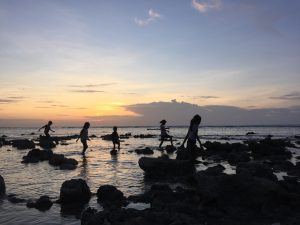
Local kids on Sabu, passing by as we watched the sunset.


Posted in Uncategorized | Leave a comment

Some of My Story

This gallery contains 3 photos.

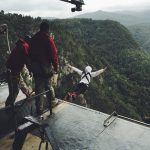
I stood at the edge of a 700-foot drop, lifted my arms, and jumped – bungee jumped, that is. I have always grown up with an inclination towards thrill and adventure. Whether that’s finding the cutest coffee shop to study … Continue reading

More Galleries | Leave a comment