I have had the privilege to travel to Africa three times; and, I‘ve never been on a safari. The reason I say this is because, this question commonly arises upon each of my returns back to the states. This misconception parallels with the other questions that are asked during my interactions with family and friends. Africa is a massive continent. A land mass full of 54 countries, home to over 1500 different languages (nationsonline.org). An amazing place that most people do not understand.
One misconception that I commonly encounter is that no matter where in Africa, everyone is suffering beyond comprehension. I have come to realize that despite some of these communities surviving on around $2 a day per person, they continue to better themselves. One specific example of this occurred when I traveled to the Sango Bay community in Rakai with the Solar Sister team. After the two day drive into rural Uganda, we arrived at the Sango Bay community met by around 30 members of the Sango Bay Farmers Association.
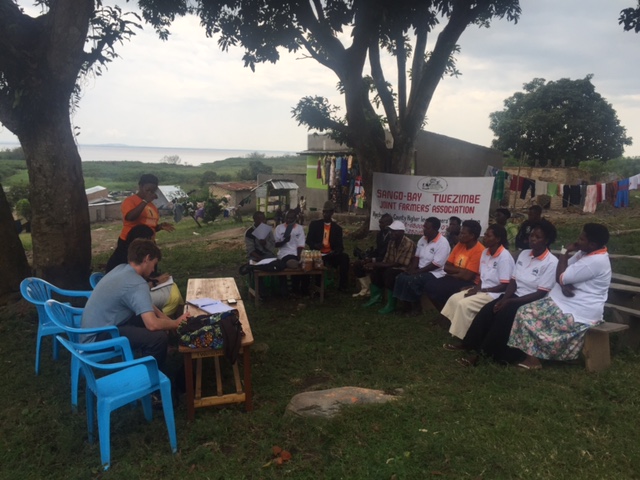
Many members of this association come from small villages along the coast of Lake Victoria. Their common occupation is subsistence farming or fishing, which is sometimes supplemented by selling lanterns. This association acts as not only a point of distribution for solar lanterns, but also as a micro lending organization. In addition to this, the Sango Bay Farmer association acts as a crowd funding platform for community projects such as the fish pens. These were constructed as a result of collaborative saving. Many people would perceive this community as the epitome of poverty in Africa. The reality is that, although these farmers and fisherman do not have the access to the resources and opportunities that we do, they find innovative ways to make do with what they have. So yes, these people do live in conditions of extreme poverty. But no, they are far from helpless, instead they remain intelligent, determined, and entrepreneurial.
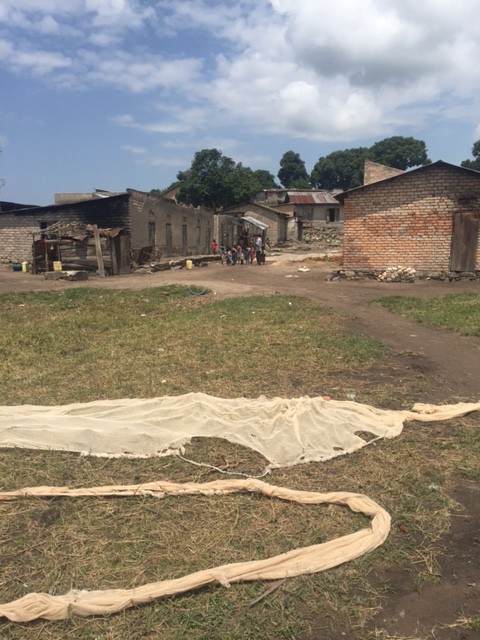
In my first blog post I expressed how my previous experience in Cape Town had at times stifled impact. I wanted to come away from my time in Uganda knowing that what our work could ultimately scale Jibu to impact as many people as possible. I can firmly say that I was able to achieve that. When compared to my last experience, they could not be any more different, and for that I am forever grateful.
During my last summer in South Africa, I applied through a volunteer program online. This process allowed me to pick where I wanted to go, and in what type of occupation I wanted to work in. No skills were required for the position; just the capital for the program costs, and a plane ticket. I had arguably the most amazing month of my life. I would spend the day reading them stories or playing soccer; laughing and smiling all day long.
This summer couldn’t have been anymore different. I applied to a program with a limited number of options. My placement was left up to my tangible skills and previous experience. Our days were filled interviewing employees, drafting up training documents, and aiding in water sales. At times I really struggled with being so far away from my family and friends. Trying to convey my work to them was even more difficult as many assumed I was in some rural part of Uganda without the basic necessities of life. Instead I was in the city of Kampala working in an office primarily.
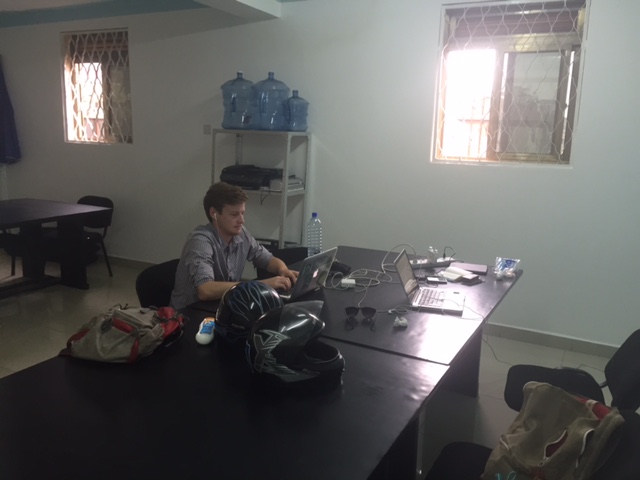
Through these challenging times and long hours, I learned significantly more about myself than I could have ever imagined. I went into to this fellowship believing I would want to begin working in the social enterprise space immediately after graduation. I now understand that I would like to live in close proximity to my family. Growing up around my entire family is something I value deeply. I absolutely love the idea of the GSBI mentor program; and I hope that once I gain more experience and knowledge about scaling a venture, I will be able to participate. Lastly, I know that there is a lot more that I need to do in order to understand the different countries throughout Africa better.
Works Cited
“Official and Spoken Languages of African Countries.”Nationsonline.org. N.p., n.d. Web. 25 Sept. 2015.