Wow, I can truly not believe what a ride it has been. Big thanks to all of you have followed me thus far on this journey.
As I reflect and look back on this entire 9-month experience, I can’t believe how much I learned about myself; and how unprepared I was for said learning. this experience taught me more about the work environment that I prefer. Upon gaining acceptance into this fellowship, I envisioned myself working in the developing world after graduation, but through my experience, I gained the knowledge that this is something I will no longer pursue in the immediate future. In addition to this, I also realized how much I still have to learn therefore I plan to enter the workforce here in the Silicon Valley to gain essential hard skills to further develop my business acumen.
In lieu of my learning, I have decided to try explore career opportunities I previously perceived as improbable or impossible. For during the ideation and building of the deliverables, I realized what capacity I have on a professional level. The ownership, responsibility, and control that Tom and I were given when executing our project was one of the best professional and academic experiences I have had thus far. As many may not know, Tom and I established that our workflow was very different early on, yet we figured out a way to utilize both our strengths and weaknesses to our advantages. This early acknowledgement was critical to our success. Having a team project experience with this much depth and rigor really provided me with a blueprint of how to recreate success when future opportunities present themselves in my professional career.
I believe that the developing world is on the rise, the situation is not as dire as many interpret it to be. I say this because there are very many capable intelligent people collaborating to solve some of the biggest, most critical problems facing their communities. From solar lamps to decentralized water distribution, innovation is filling the gap between traditional and fruitless approaches to problem solving. That being said, there is still a vast amount of work that needs to be done, especially in regard to the political structures and leadership dominating most of these developing countries. Some regimes threaten the thriving social enterprises attempting to disrupt the national economies, through high taxes, corrupt supply chains, and hostile combat situations. I do not know a solution in order to expedite this process, but I know that Social Enterprises across the world are succeeding in just that.
I have had the privilege to travel to Africa three times; and, I‘ve never been on a safari. The reason I say this is because, this question commonly arises upon each of my returns back to the states. This misconception parallels with the other questions that are asked during my interactions with family and friends. Africa is a massive continent. A land mass full of 54 countries, home to over 1500 different languages (nationsonline.org). An amazing place that most people do not understand.
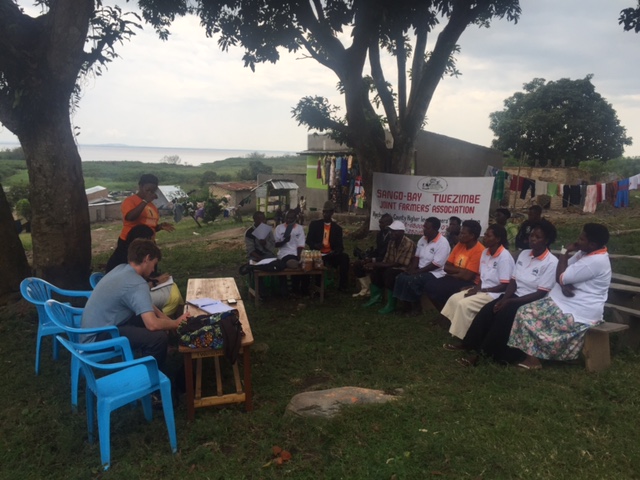
One misconception that I commonly encounter is that no matter where in Africa, everyone is suffering beyond comprehension. I have come to realize that despite some of these communities surviving on around $2 a day per person, they continue to better themselves. One specific example of this occurred when I traveled to the Sango Bay community in Rakai with the Solar Sister team. After the two day drive into rural Uganda, we arrived at the Sango Bay community met by around 30 members of the Sango Bay Farmers Association.
Conducting interviews with Solar Sisters who are part of the Sango Bay Farmers Association
Many members of this association come from small villages along the coast of Lake Victoria. Their common occupation is subsistence farming or fishing, which is sometimes supplemented by selling lanterns. This association acts as not only a point of distribution for solar lanterns, but also as a micro lending organization. In addition to this, the Sango Bay Farmer association acts as a crowd funding platform for community projects such as the fish pens. These were constructed as a result of collaborative saving. Many people would perceive this community as the epitome of poverty in Africa. The reality is that, although these farmers and fisherman do not have the access to the resources and opportunities that we do, they find innovative ways to make do with what they have. So yes, these people do live in conditions of extreme poverty. But no, they are far from helpless, instead they remain intelligent, determined, and entrepreneurial.
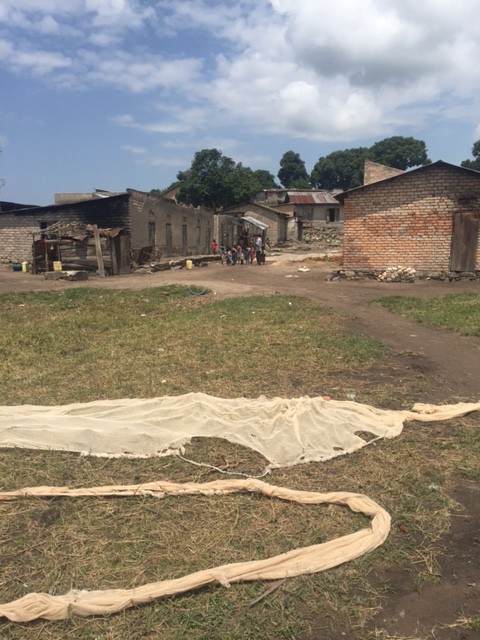
The children of Sango Bay follow Tom walking through the village.
In my first blog post I expressed how my previous experience in Cape Town had at times stifled impact.I wanted to come away from my time in Uganda knowing that what our work could ultimately scale Jibu to impact as many people as possible. I can firmly say that I was able to achieve that. When compared to my last experience, they could not be any more different, and for that I am forever grateful.
During my last summer in South Africa, I applied through a volunteer program online. This process allowed me to pick where I wanted to go, and in what type of occupation I wanted to work in. No skills were required for the position; just the capital for the program costs, and a plane ticket. I had arguably the most amazing month of my life. I would spend the day reading them stories or playing soccer; laughing and smiling all day long.
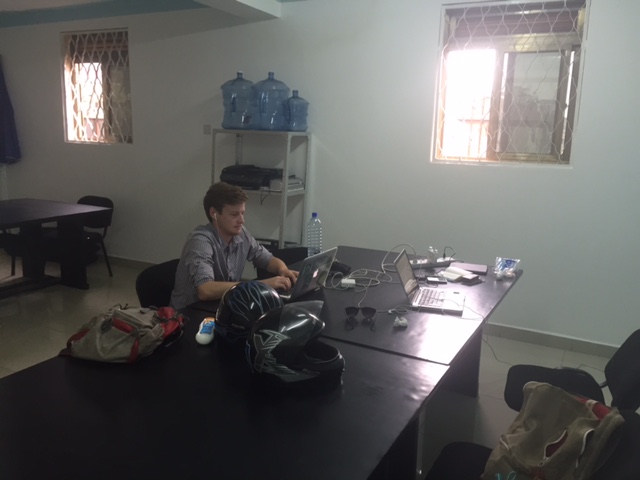
This summer couldn’t have been anymore different. I applied to a program with a limited number of options. My placement was left up to my tangible skills and previous experience. Our days were filled interviewing employees, drafting up training documents, and aiding in water sales. At times I really struggled with being so far away from my family and friends. Trying to convey my work to them was even more difficult as many assumed I was in some rural part of Uganda without the basic necessities of life. Instead I was in the city of Kampala working in an office primarily.
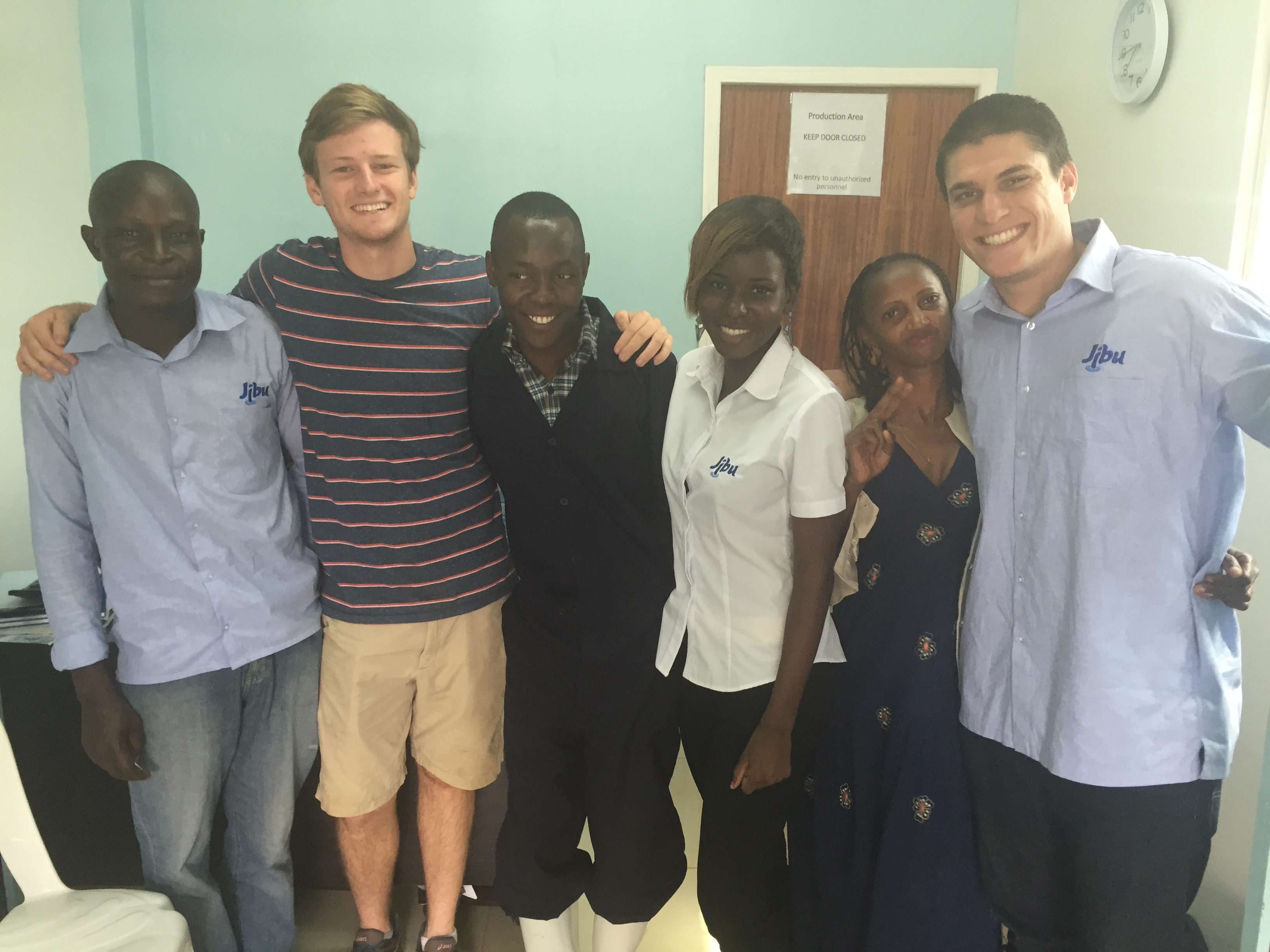
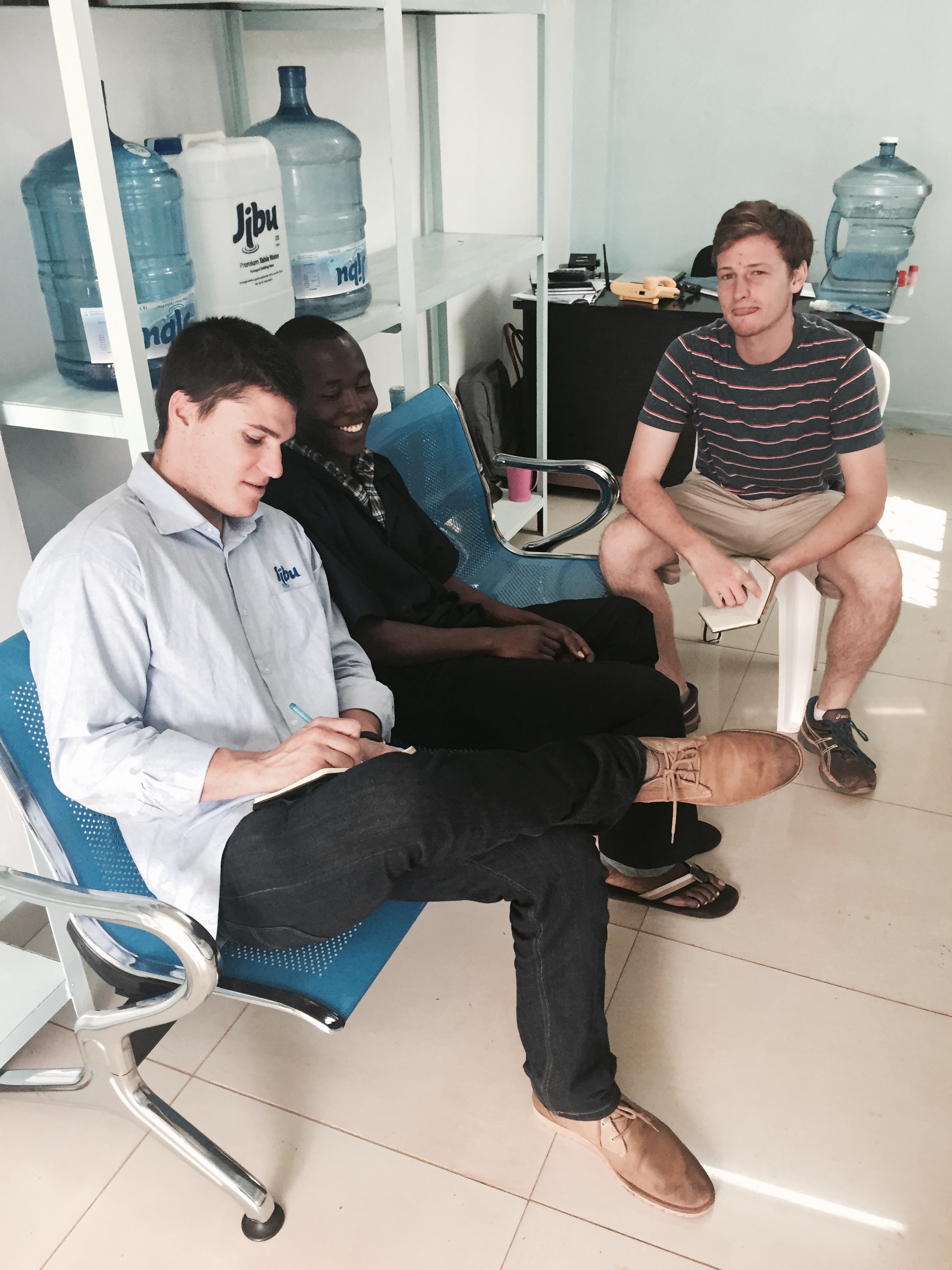
The Jibu corporate office in Kawokya Market where Tom and I spent the majority of our time.
Through these challenging times and long hours, I learned significantly more about myself than I could have ever imagined. I went into to this fellowship believing I would want to begin working in the social enterprise space immediately after graduation. I now understand that I would like to live in close proximity to my family. Growing up around my entire family is something I value deeply. I absolutely love the idea of the GSBI mentor program; and I hope that once I gain more experience and knowledge about scaling a venture, I will be able to participate. Lastly, I know that there is a lot more that I need to do in order to understand the different countries throughout Africa better.
Works Cited
“Official and Spoken Languages of African Countries.”Nationsonline.org. N.p., n.d. Web. 25 Sept. 2015.
Walking through the streets of Kampala as a Caucasian male it is challenging to not hear that word hollered at you, followed by a sincere “How are you?”. Although this initial description sounds as if it would be insulting, throughout my experience here both in Rwanda and Uganda I have never felt as if that was the case. I have heard multiple interpretations of the word from locals and foreigners alike, but without a doubt my favorite is “He with a pale face who wonders around aimlessly”. To be honest, that could not be more spot on. Everyday spent here I am enamored which outwardly appears as aimless wandering;, whether it be the immense traffic jams, exhilarating boda-boda rides, or the sheer kindness of the people in which I am able to interact with on a daily basis. That is why I have chosen the subject of this post to profile those in which I have interacted with that have left the biggest impression. Although my experiences here have been great, the work that these people have done and continue to do have been far superior.
Charles Gatete-Scientist turned Businessman
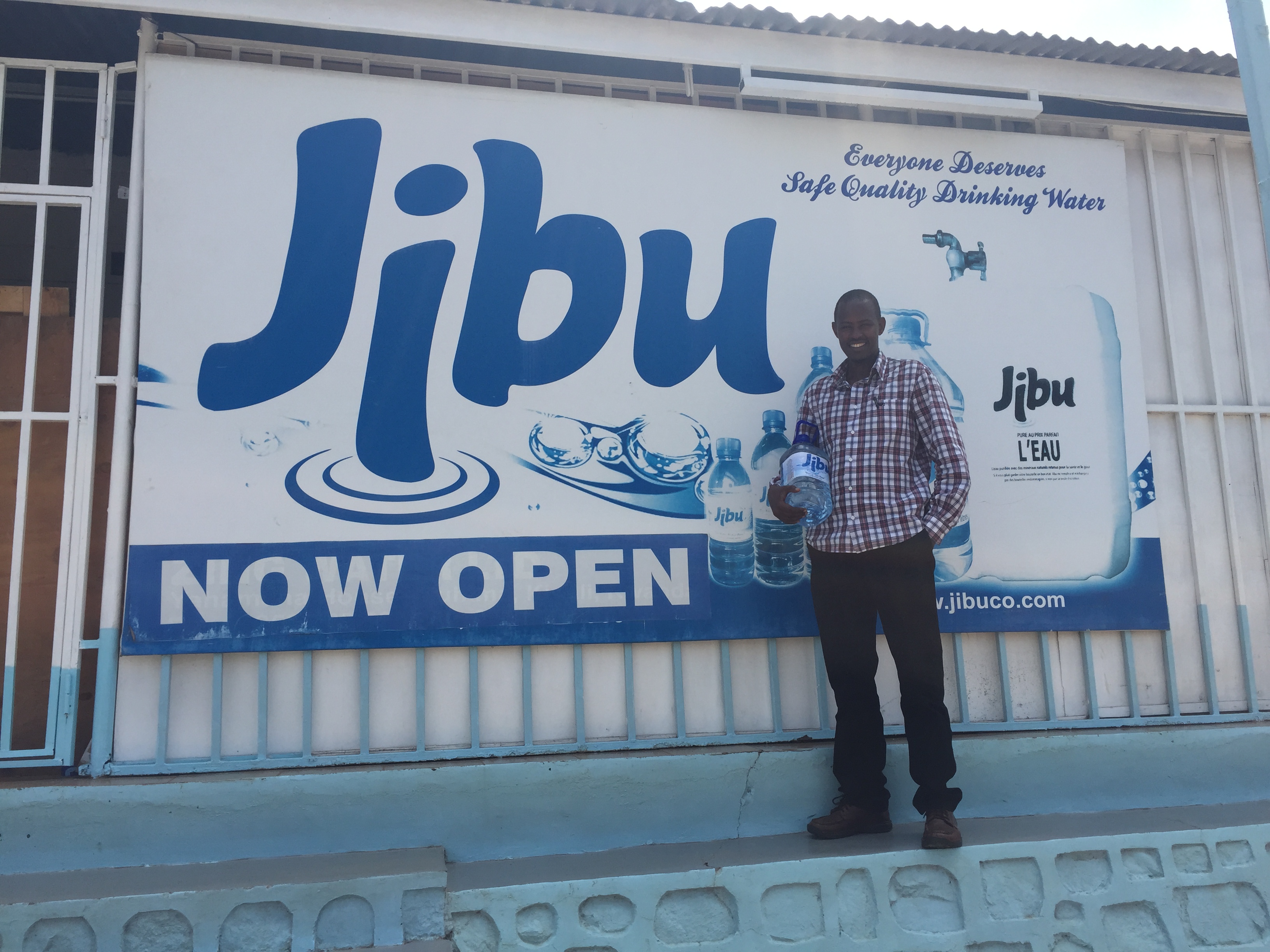
Charles in front of his franchise in Kimironko, Rwanda.
The first plane flight of his life was complete as he landed in Boston, Massachusetts direct from Kigali International airport. Little did he know that his trip would be much shorter than he had planned. His final destination would be Worcester, Massachusetts at the campus of Clark University, the very place where Sigmund Freud had given his five famous lectures regarding psychoanalysis. Charles was not here to study in the field of psychology, he was in pursuit of his PhD in physics. Growing up in Uganda, as a refugee of the Rwandan Genocide, Charles always felt a connection to his homeland of Rwanda, and it was this connection that would determine his early withdrawal from his program in order to pursue something greater.
We had the amazing opportunity to have many interactions with Charles, my favorite in which he explained quantum mechanics in depth along with the possibilities of Super conductivity and String Theory. I have never been one for physics, but the way in which he explained the concepts with so much excitement made it seem far more interesting than I had previously thought. In his own words, he thinks that math involved with these ideas is “really fun”.
After hearing of his time in Worcester interacting with the subject he loved so much, one would wonder why he would ever want to forgo the opportunity to become a master in the field. He explained that although he did in fact love the work he was doing, he often felt as if the pursuit of his dreams was a selfish endeavor. He couldn’t help but think about the constant issues that continued to plague his homeland, and as a result of this internal battle, he left the program without completing his PhD, back home to Rwanda in order to work to achieve the social improvement his country desperately needed. He had never had any experience in business so he began his career as an investment analyst for Crystal Ventures, one of the top companies in all of Rwanda. After gaining the skills and experience necessary to make an impact, he found the very venture that could provide him with that opportunity, Jibu.
As of recently, Charles is a Jibu franchise owner at the Kimironko location. It is safe to say that he encompasses all that Jibu is. He believes that education is necessary in order to serve the public, and that Jibu is solving one of the many problems that lured him back home, safe drinking water. The energy in which he brings to any situation is amazing, yet his desire to forgo his dream in order to help his country is truly remarkable.
Galen Welsch-THE Social Entrepreneur
Galen Welsch
One thing that is very specific to our (Tom & I) experience in contrast to the other fellows is that Jibu is the first GSBI Online candidate, and the smallest in regards to size to host fellows. If I recall correctly, I remember being told that we were “guinea pigs” in a sense, seeing if other GSBI online candidates could follow suit in the coming years. All I know is that the early stage of Jibu has given us amazing access to the man behind the mission, Galen Welsch. Hearing of Galen’s path to where he is now, one would automatically assume he’s a pretty remarkable guy, but since interacting with him on a near daily basis I have realized that he is far more.
Although I have only met a handful of social entrepreneurs, and even though there is no direct science to doing what he does, I believe he should be a role model for all those who are working towards and aspire to achieve the difficult task of intertwining profit and impact.
The first trait I have observed that is essential to success and keeping your sanity while leading a social enterprise is patience. It seems as if Galen has more patience then someone who watches the shifting of tectonic plates. This patience does not inhibit his ability to accomplish amazing things, for he has a work ethic that I have never before witnessed. I say this patience is integral because all too often do things go wrong whether it be business operations, supply chain, or employee management. No matter what happens he somehow take everything in stride partnered with a sincere chuckle.
This chuckle that he does even after the craziest of experiences brings up another trait necessary for all social entrepreneurs, attitude. Like mentioned above, he somehow always finds to continue working toward his goal: Providing affordable, safe, bottled water to all those who were never able to purchase such a thing. From problems with imports to corrupt public officials, I can see how easy it would be to want to simply give up, move home, and start working in a place where there is not so much uncertainty. Not only does he continue to persevere despite all the setbacks, he does so smiling with an attitude that continues to amaze me.
Overall, my experience here has been amazing. The awesome part of being able to work with a social enterprise is that even though developing countries are enshrouded in a veil of uncertainty, I know for a fact that there are people on the ground here that will continue to progress and expand the great work that is done here.
My parents and my experiences in a tight-knit Roman Catholic family taught me the necessary value of teamwork. Our family was a unit. And like community lending groups that micro-finance institutions utilize in their practices, if one member was to slack off or default, the entire team would suffer. Whether it was picking up siblings from practice during the week, or attending Church on the weekends, you were expected to be there, not simply present, but participating. “Pulling your own weight” was the common term tossed around, which more recently translated into “acting as an asset, not a liability”. As an overly-emotional adolescent I did not like this policy for it tended to invade on my non-existent plans, but during my freshman year in high school I realized how valuable our teamwork would be.
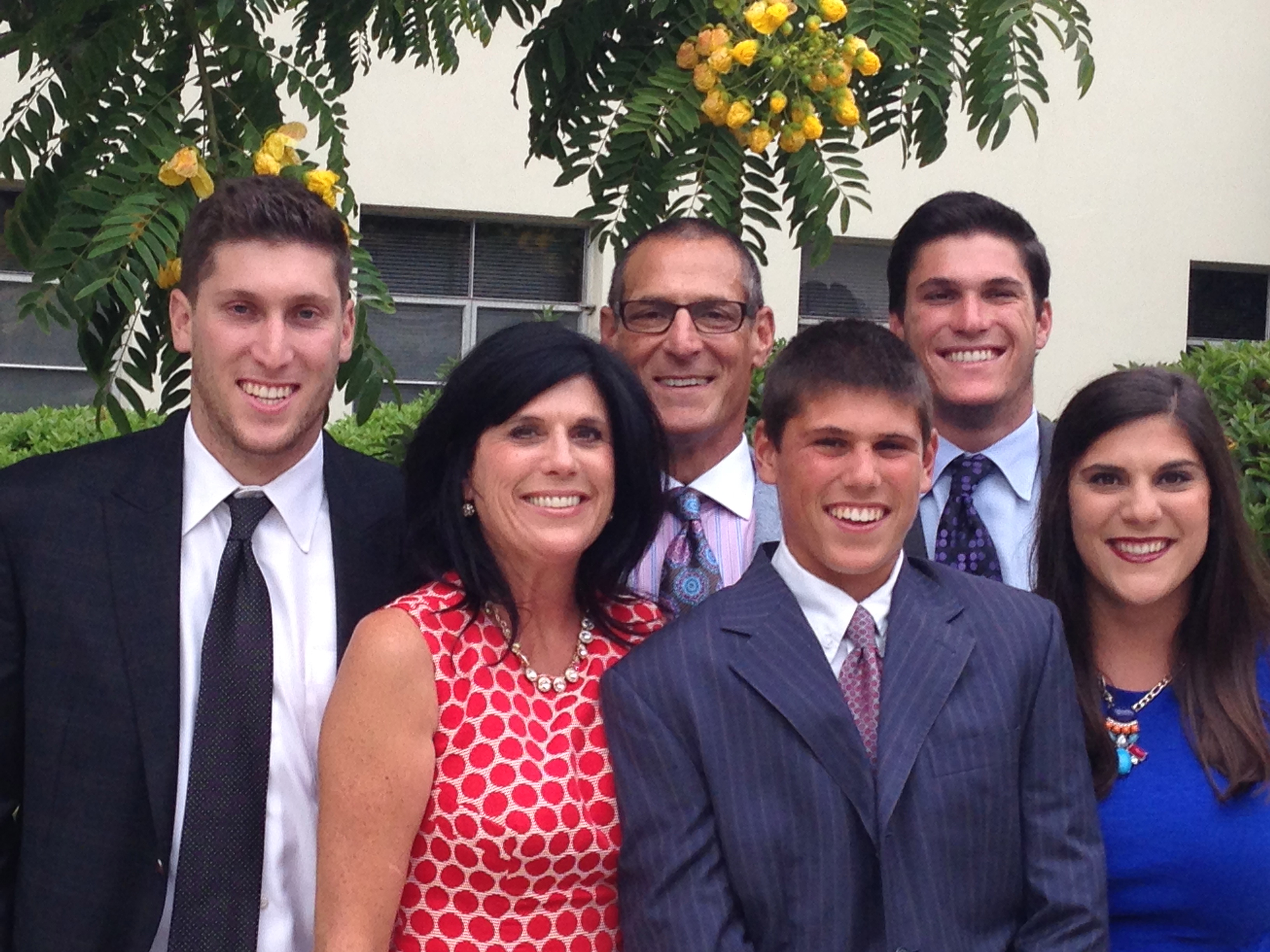
The whole “team”.
At the beginning of my freshman year, I saw the true power of the teamwork they had always expressed. Within the same month, my sister was hospitalized with a ruptured appendix, and my father was diagnosed with bladder cancer. Had it not been for the teamwork that my parents drilled us in, dealing with this would have been far more challenging. From my older brother, to friends we hadn’t seen for months, the amount of support and sacrifice that people made to help us was remarkable and breathtaking. It was this example that first showed me how the idea of teamwork transcended anything taught on a sports field, but rather has the power to transform and help those in need.
Throughout my high school career I was primarily focused on sports, for I believed that my future would be directly related to my newly discovered talent. I loved the camaraderie and unity of the teams I would play on, something only achieved through sacrifice and collaboration with one another, teamwork. As I began to visit colleges and meet with coaches, exploring where I would be playing rugby in college for the next four years, it seemed as if I had it all figured out. That dream I had in my head ceased to exist after sustaining my 6th concussion during the summer going into senior year, as I was forced to revaluate what it was I truly wanted to do with my life.
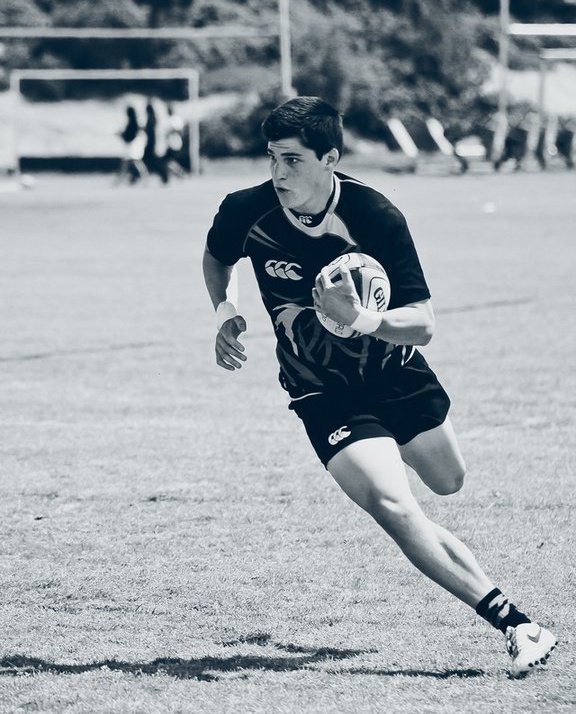
The glory days.
I began to realize that regardless of my focus on sports, throughout high school I had an innate desire for service. I was actively involved in Campus Ministry, leading retreats and also acting as president for the Sturdy Wings support group at school, a club my older brother, and some friends founded for students with terminally ill family members. Impacting others through Campus Ministry and Sturdy Wings taught me how rewarding that type of work could be.
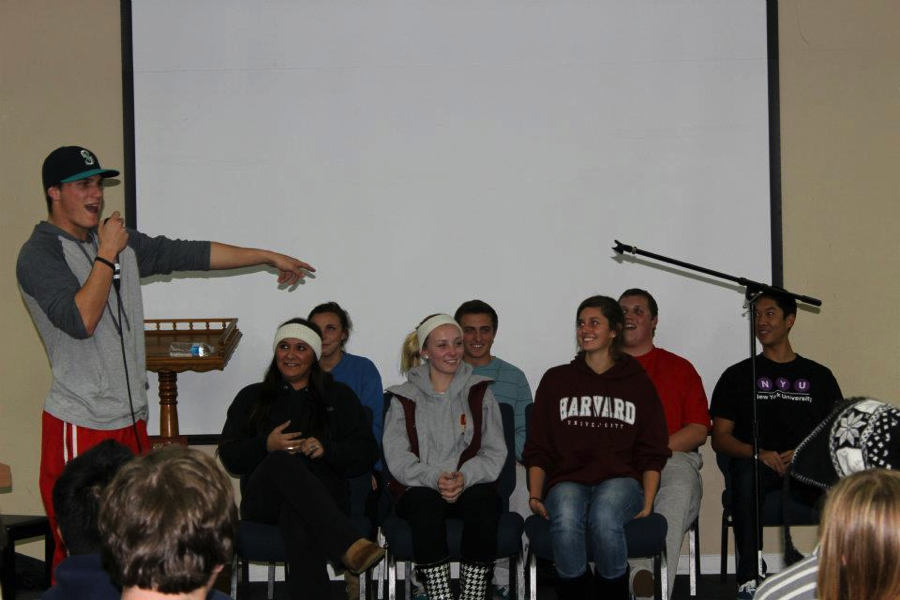
Rehearsing a skit while leading Senior Retreat.
When it came time to chose a college I followed in the footsteps of my older brother here, to Santa Clara. At this point I was introduced in Environmental Studies while living on the Sustainable Living Undergraduate Research Project (SLURP) floor my freshman year. After learning more about the future consequences that our world will face together due to our past actions, I found that I could not ignore the facts in which I had read. With my new knowledge I made the decision to double major in Economics and Environmental Studies, for in doing so I would hopefully be able to work in the field of “Green Business”. I began my first true work experience while interning at CB Richard Ellis where I had the unique opportunity to operate in a corporate business setting . While I liked what I was doing, I realized that if I was going to work for the majority of my life I wanted it to be doing something that not only allowed me to support my future family, but also help others to do the same for themselves.
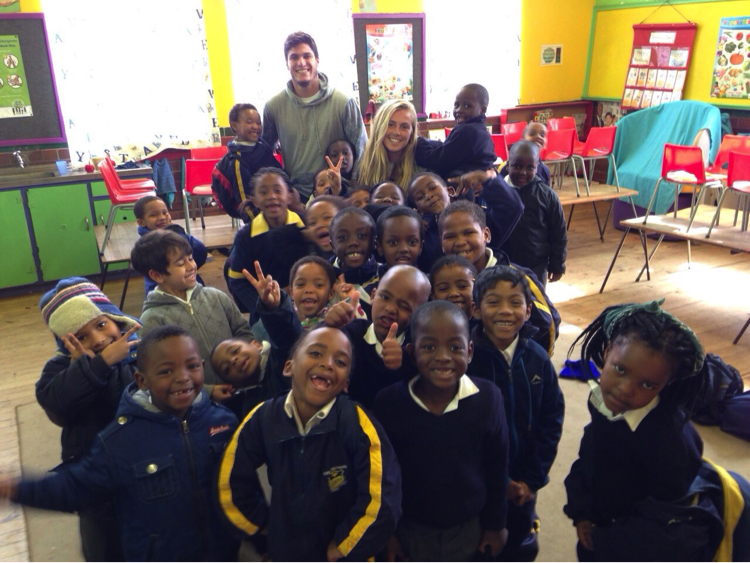
This past summer I had an the amazing opportunity to travel to Cape Town, South Africa to volunteer at Chapel Street Primary School. The experience that I had in Cape Town opened my eyes to the trivial things that continually worry us while we conduct our daily lives in developed countries. Getting angry over whether there was ample cell service, or no traffic on the way to work doesn’t even compare when some of the kids in which I taught were sent to school everyday without a lunch. While I had seen poverty at home, through volunteering at Father Joe’s Village, I had never seen it on this scale. The most remarkable part of the entire journey was that despite these odds, the children never stopped smiling, striving to make the most out of what they had. Even though the experience was life-changing, I found myself wondering how I could apply my skills more efficiently to make a social impact. I felt as if at times I had been hurting more than helping while at the school, and that I truly wanted to make a concrete difference on the people that I worked with.
Miss Moolman’s Grade R Classroom in Capetown.
Fast-forward to now, as I am currently working as a Sales Operations Intern at Zuora, going to school, and preparing for an action research project in Uganda and Rwanda. Through my experience working at Zuora, I have been able to see how technology continues to progress, and the endless amount of applications for social impact. In addition to the technology aspect, I was truly shown the spirit of entrepreneurship, something I thought I understood going to school in the Silicon Valley for the past couple of years. After witnessing how a successful high-growth enterprise is operated, paired with the constant innovation occurring in the Silicon Valley I was further convinced that the fast paced startup environment is where I would like to work in the future.
When my friend, Garrett Eggen, who participated in the fellowship last year, mentioned that I should apply given my past experience, I had to seize the opportunity. It is almost as if this fellowship was designed exactly for people who had had experiences like myself, yet were searching for how they could do more. My desire for making a larger/concrete impact has been subsided, for the concept of social entrepreneurship will allow me to translate and apply my tangible skills, garnered through internships and school, to aid sustainable businesses that offer solutions which traditional charity has been unable to provide for decades. Poverty is all around us, whether we tend to ignore it or not. That is why it is my belief that through the ability of teamwork paired with innovative technologies we will be able to lift the less fortunate out of their current situations, eliminating the concept of a poverty trap all together.