
Nicaragua is nothing like I expected it to be – just as I expected. The day after arriving in the muggy city of Managua, my team was picked up by Raul from ASDENIC, who quickly assured us that the climate would be more pleasant in Estelí, our home base. Thankfully he was correct. As soon as we left the city, the air became fresher and the landscape transformed into a green, jungly wonderland. Raul informed us that these were natural reserve spaces and that there were many of them. The fact that there could be poverty among this rich natural environment seemed almost impossible. However, the possibility of it all has become much clearer as we’ve explored the historical and economic reasons behind this irony.
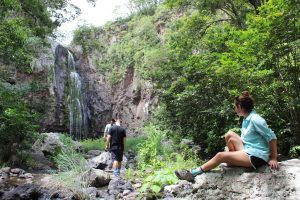
Taking in the natural beauty at Cascada Estanzuela
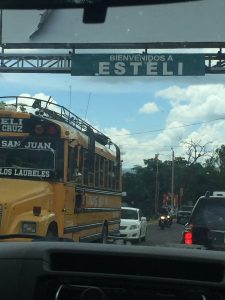
Welcome to Esteli
After a few days settling into the new city, Aidan, David and I were plunged into the 6th annual Intercambio held by ASDENIC. We spent a week with students from California, Mexico, and Nicaragua traveling to different communities and participating in group discussions on the theme of agricultural security and sustainability. We toured coffee farms, cooked together, and participated in all-day cross-cultural communication (and miscommunication). It was the perfect combination of educational, social, and cultural activities to begin our journey in a new country. While we were presented with tons of useful information, the most helpful lesson I learned was regarding the concept of “Nicaraguan time.” For instance, when a local says to meet at 8, he or she really means 8:30, give or take 10 minutes. On a more sentimental note, the friendships we created during the Intercambio proved to me that laughter transcends all language barriers and that achieving fluency in any language takes a whole lot of trial and error. Luckily we have plenty of time for that.
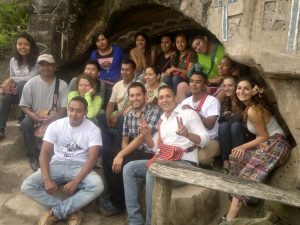
Most of the group
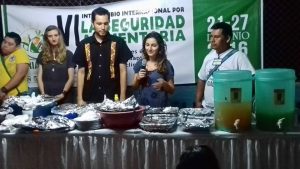
Presenting the “traditional dish” we made; an asian-style veggie stir fry
The week following the Intercambio consisted of the usual cultural shock and adjustment period. For us this included, getting used to being stared at every time we walk down the street, trying to look less like tourists, failing at it, experiencing unpleasant stomach issues, and wondering why everyone honks their vehicle horns so often. Dealing with these (sometimes literal) bumps in the road has been enriching thanks to my travel partners and their positive attitudes. In our time together, we continue to discuss the things that make us uncomfortable and get to the bottom of what we can’t understand. It’s become very apparent that it’s not just language that prevents us from grasping the culture. It’s also the way in which people talk, their priorities, their expectations, and their experiences. Though frustrating to accept, aspects of the culture will undoubtedly always remain a mystery to us. Even if we lose the goofy sun hats and Tevas, we’re still tourists and we cannot expect to fit in. All we can do is observe, listen, learn, and appreciate.
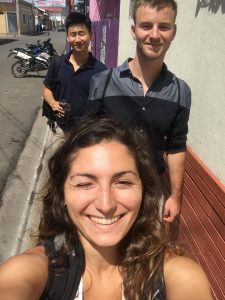
Smiling because none of us were sick yet
The rest of our fragile expectations were shattered one by one as we started work in the office with ASDENIC. They are a well-organized, knowledgeable, progressive team with close ties to rural communities and access to extensive, recent data on almost everything we had planned on researching. Additionally, we began to discover other established organizations working in Nicaragua on exactly the same themes of potable water and social enterprise. At first this was demoralizing. We were spending our time essentially gathering the existing information to prevent re-gathering it. But we have to know what we know in order to know what we don’t know. Filling in the gaps by refining our surveys and updating our interview questions has been both exhausting and rewarding. While it’s been a privilege to learn from the members of ASDENIC as they (patiently) fill us in on their admirable work, this leaves me feeling ineffective at times. How can I expect to help resolve a foreign issue in a foreign context? Figuring out what unique skills I have to offer in this situation has been my biggest challenge so far.
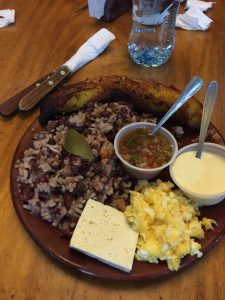
Typical Nica Meal from my favorite restaurant, Tipiscayan
Today was spent in a small community called Daraili, where we spoke with leaders of two water committees. With the help of Professor Chris Bacon, we were introduced and participated in guided focus groups. I was inspired and impressed by how aware the people are about environmental issues. Unfortunately, the reason is because they are confronting climate change headfirst and nothing short of their livelihoods are at stake. Although it took most of my brain power (and extra coffee) to be able to follow along as well as translate for the other Santa Clara students, the responses were enlightening and gave me hope for the next few weeks. Even though a lot of relevant data has already been collected, there is immense value in communicating directly with people. I’m convinced that the solution will come from them. My role is to help bridge the gaps through my environmental science background, network of resources, and creativity. ¡Adelante!
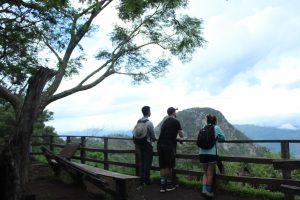
Credit to Raul for his awesome photography!