Follow Your (Com)Passions

It’s 2016 and I’m studying Environmental Science. Every day I learn about rising sea levels, melting glaciers, corruption, poverty, hunger…… Sometimes I hear about things that are getting better but the world is changing rapidly and I’m watching from the sidelines. Not only am I watching from the sidelines but also from the box seats. I’m a 21 year old woman yet I probably have more power than most individuals alive in the world today. I want to do something drastically impactful right now but I have to focus on school. I want to travel to where people are suffering but there are problems right here in my own backyard. I want to use my strengths but I’m only just beginning to learn what they even are. So many contradictions, so many distractions, and so many doubts plague my anxious mind. The Global Social Benefit Fellowship process has helped me map these uncertainties and passions and also equipped me with a compass.
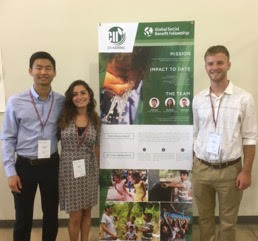
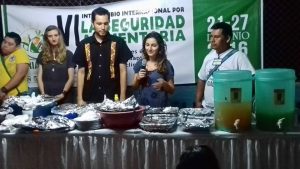
At open house hesitantly explaining what we think we're going to be doing in a few months

At open house hesitantly explaining what we think we’re going to be doing in a few months
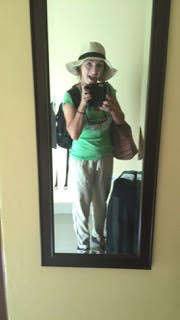
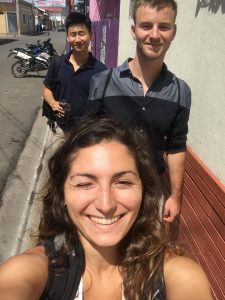
First morning in Nica. Making no efforts to blend in

First morning in Nica. Making no efforts to blend in


I applied to the GSBF with a vague idea of what I was signing myself up for. I never imagined that I would be taking a course with the word “entrepreneurship” in the title but the application to poverty and sustainable development intrigued me. I am attracted to movements that promise a large, visible impact over those that are more incremental. In studying Environmental Science it is often easy to get overwhelmed and discouraged by, well, everything. The most frustrating part is learning about what needs to be done but lacking the practical knowledge of what to actually do. I was already coming to the realization that I have to expand my horizons in order to figure out what my role will be in combatting the issues we face. Thus, the GSBF opportunity fell into my lap at the opportune moment. It represented a turning point in my academic, professional, and personal path.
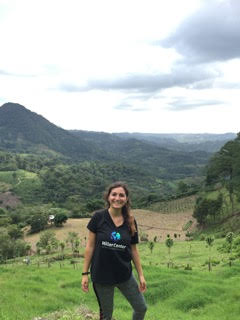
Representing the Miller Center

Representing in a (very sweaty) Miller Center t-shirt

Through my previous travels I had learned a lot about my strengths and tested my limits. In Cambodia I was first exposed to the harsh realities of life in a developing nation and I came back completely torn up from what I had witnessed. The next year my trip to Guatemala helped me to develop my independence and, since I was able to communicate in Spanish, my ability to connect with people from a different world than my own on a meaningful level. Both trips involved service and I am proud of what my team accomplished, however, I knew that I had gained far more than I had given. Sure, I had donated my time and work which had some kind of effect but the moments where I felt that I had created the most impact where when I was able to make someone smile or laugh. That may seem simple or obvious but those moments of pure human connection felt the most powerful. More specifically, by “human connection” I mean a dissolving of barriers that separate and cause apathy. With fewer barriers it’s possible to see others as having the same wants and needs, not just as charity cases. The moment of sharing a human experience with someone, especially a child, who I seemingly had nothing in common is nothing short of real magic. That is my gift, desire, and goal in life; to make magic moments that break down seemingly impermeable walls and lead to significant positive change.
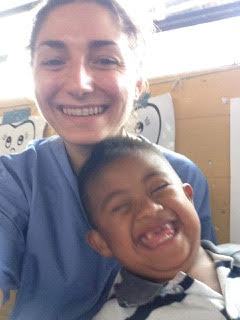
Contagious smile on a child with down syndrome in Guatemala

Contagious smile on a child with down syndrome in rural Guatemala
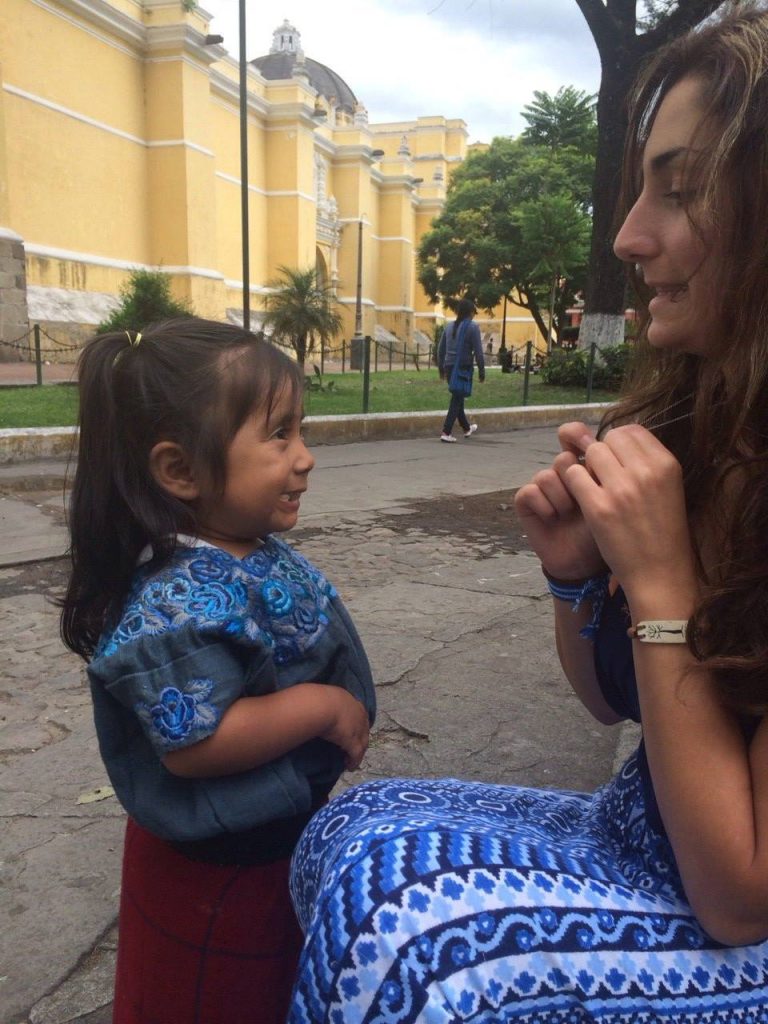
Practicing Spanish with a little local

Practicing Spanish with a little local in Antigua


Working in Nicaragua was the next step in turning that connection into meaning. I couldn’t let myself forget that real concrete actions need to be taken on my part and they need to be purposeful. That’s a lot of pressure and it can be overwhelming to have these lofty expectations while trying to develop a plan. Although the fellowship and other preparatory classes exacerbated this feeling of pressure at times, they have also been orienting forces. The work we did during the first half of the process pushed us to our limits but taught us that we were capable of much more than we knew. The second half provided us with much needed support, encouragement, and connections to resources. Every admirable connection that I’ve spoken with has followed an unpredictable path towards where they are now. Fundamental to this process is following one’s passions.
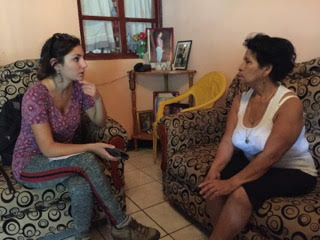
Interview in semi-urban Condega, Nicaragua

Interview in semi-urban Condega, Nicaragua

If I could condense the vocational teachings of the Fellowship into one concise package it would be; Prepare yourself by confidently communicating your skills but ultimately, trust in your experiences and the valued connections that you have worked to establish. As a result of participating in research abroad and getting to interact with real social entrepreneurs I have a clearer picture in my head of what I can be. I decided that I want to gain work experience rather than immediately applying to graduate school after college. I am also fairly certain that in the future I will pursue further education. What’s different than a year ago is that my considerations now include law school or business, two options which I had previously not thought about seriously. I can see how these paths could lead me towards a more impactful career.

Through the fellowship I’ve also been able to get a unique glimpse into the immense community of powerful, intelligent people out there who are genuinely working to make things better. I’ve seen the growth of this network through the sharing of ideas, support, and most importantly, compassion. It has become increasingly evident to me that the power of compassion is totally underestimated. It’s impossible to see what our future will look like especially after the national tragedy known as the 2016 election. That uncertainty can breed fear and hatred. The only antidote is love which leads to the most important vocational lesson I have gained from the fellowship; Whatever I end up doing in my personal and professional life, I must do it with unbending compassion. 
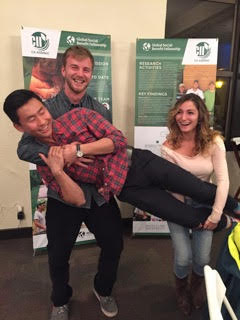
(Compassionately) forcing the introvert to be the center of attention for once
(Compassionately) forcing the introvert to be the center of attention for once

nica10

Magic moments

Posted in Uncategorized | Leave a comment

Integral Ecology

I only recently realized that my trip to Nicaragua represented my first visit to a country unaccompanied by someone who had already been there. Despite having been to other Latin American countries, I felt as though I was starting from scratch in Nicaragua. Every question that popped into my head about my surroundings was not immediately answered. The time it took to put the pieces together required patience, which is not exactly my forte. Naturally, patience ultimately became the underlying theme of my trip.

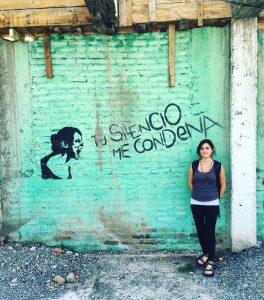
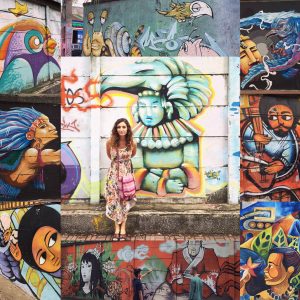
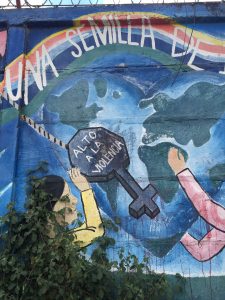
Some of my most pressing questions about the culture, politics, and history of Nicaragua could be quickly answered using Google (thanks Google). But other insights had to be observed and felt. For instance, I found art to be useful universal language. Estelí is covered in murals and graffiti, which proved to be a great source of information for me. For example, the status of women in society could be observed in social situations in addition to the countless pieces of street art supporting women’s rights and calling for an end to violence. Their bright colors and strong words exposed a society in transition, where women publicly push for equality and respect and yet still face many dire challenges.

mural2

“Your silence condemns me”

mural3

Murals in Esteli

mural1

“Stop the violence”

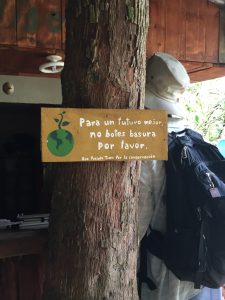
The writing on the walls helped me in the countryside as well. In many homes, schools, farms, and little cafes in the rural areas, I noticed signs that promoted a sophisticated kind of environmental consciousness. Not simple messages like “No littering!”, but rather “For a better future, please do not litter.” These signs foreshadowed the many conversations I would have with rural people in which they demonstrated a deep understanding of ecology and need for nature preservation.

sign

“For a better future, please don’t litter”

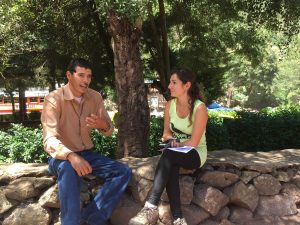
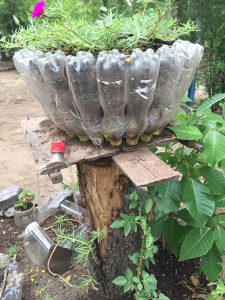
One particular interview stood out to me with a man in the village of Daraili. Over the course of nearly an hour, he echoed ideas and concepts I’ve learned in everything from environmental studies classes to the Pope’s encyclical Laudato si. He understood the interconnection of environmental health, human health, and economics in addition to a spiritual component, which I had not previously been exposed to. I found it to be equally inspiring as it was heartbreaking. He knows that he has very little power to make sure that the world will be better for his children and grandchildren. Yet he responds by doing whatever he can every day. He talks to his neighbors about saving water, picks up garbage from the road, and even recycles plastic into planters or art pieces. Everywhere I went I saw recycled material being used in ingenious ways. In the U.S., I’d expect us to be much more earth conscious. However, the most recycled water bottle planters I see at home are on Pinterest.

img_0721-1

Interview with a farmer in Daraili

bottles

Recycled water bottle planter in someones yard


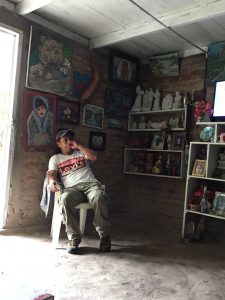
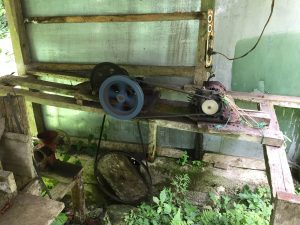
Speaking of ingenious, we visited the home of another farmer who had constructed two water-powered generators. These seemingly simple contraptions blended into the jungle surrounding his home and were able to power the new TV in their modest living room featuring a dirt floor. While this man had no formal education, he had to be one of the wisest, most resourceful people I’ve ever met. His daughter is studying at the university in the city to become an engineer.

raul

Raul lounging in the living room at the coffee farmers’ house

generator

Hydropower generator


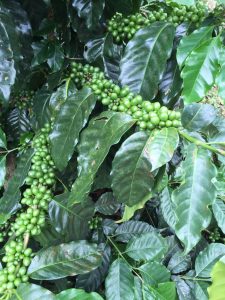
I struggled to keep up with the over-60-year-old farmer as he also showed us around the rest of his property. As I looked over the rows and rows of coffee crops heavy with beans, I couldn’t help think about how removed this experience was from standing in line at a Starbucks. It reminded me of what Raul had told us from the beginning; the great irony is that while coffee is one of the most lucrative crops, there is typically poverty wherever it is grown. This imbalance in economic power mirrors, or rather, follows the imbalance that we have created in nature.

davidview

David contemplating nature

beans

Coffee beans

It’s nearly impossible to come back from 8 weeks in a foreign country with a tidy little list of what I learned as it relates to my life and vocation… but here it is anyways:

  1. Never assume that I know more than anyone else. Yet at the same time don’t undervalue my own abilities and contributions.
  2. Art needs to be much more than just a hobby in my life. It can serve as a priceless form of communication, movement, and power. I should consider my creativity to be one of my marketable skills.
  3. Google can’t answer everything. Some questions need to be solved completely on my own.
  4. Trust my senses, trust my gut, and trust those who have put trust in me.
  5. I don’t want to chop at the branches of systematic issues like lack of access to clean water or poverty in general. I want to get as close to the root as I can. To do that I have to know exactly what the root consists of and what tools are needed to remove it.

And lastly…

  1. Whatever I end up doing it must involve direct communication with people and a healthy mental and physical relationship with the Earth.
goat1

My future plans also include owning a goat farm

Posted in Uncategorized | Leave a comment

Nica Time

Nicaragua is nothing like I expected it to be – just as I expected. The day after arriving  in the muggy city of Managua, my team was picked up by Raul from ASDENIC, who quickly assured us that the climate would be more pleasant in Estelí, our home base. Thankfully he was correct. As soon as we left the city, the air became fresher and the landscape transformed into a green, jungly wonderland. Raul informed us that these were natural reserve spaces and that there were many of them. The fact that there could be poverty among this rich natural environment seemed almost impossible. However, the possibility of it all has become much clearer as we’ve explored the historical and economic reasons behind this irony.

IMG_1137

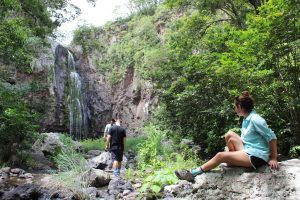
Taking in the natural beauty at Cascada Estanzuela

IMG_4721

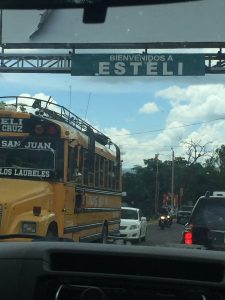
Welcome to Esteli


After a few days settling into the new city, Aidan, David and I were plunged into the 6th annual Intercambio held by ASDENIC. We spent a week with students from California, Mexico, and Nicaragua traveling to different communities and participating in group discussions on the theme of agricultural security and sustainability. We toured coffee farms, cooked together, and participated in all-day cross-cultural communication (and miscommunication). It was the perfect combination of educational, social, and cultural activities to begin our journey in a new country. While we were presented with tons of useful information, the most helpful lesson I learned was regarding the concept of “Nicaraguan time.” For instance, when a local says to meet at 8, he or she really means 8:30, give or take 10 minutes. On a more sentimental note, the friendships we created during the Intercambio proved to me that laughter transcends all language barriers and that achieving fluency in any language takes a whole lot of trial and error. Luckily we have plenty of time for that.

13558616_1740874466152056_7446087263802521070_o

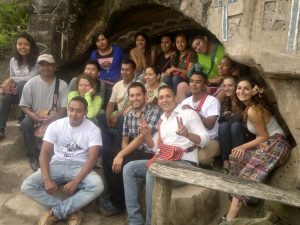
Most of the group


13439154_1428985767118938_1435180778681624453_n

Presenting the “traditional dish” we made; an asian-style veggie stir fry


The week following the Intercambio consisted of the usual cultural shock and adjustment period. For us this included, getting used to being stared at every time we walk down the street, trying to look less like tourists, failing at it, experiencing unpleasant stomach issues, and wondering why everyone honks their vehicle horns so often. Dealing with these (sometimes literal) bumps in the road has been enriching thanks to my travel partners and their positive attitudes. In our time together, we continue to discuss the things that make us uncomfortable and get to the bottom of what we can’t understand. It’s become very apparent that it’s not just language that prevents us from grasping the culture. It’s also the way in which people talk, their priorities, their expectations, and their experiences. Though frustrating to accept, aspects of the culture will undoubtedly always remain a mystery to us. Even if we lose the goofy sun hats and Tevas, we’re still tourists and we cannot expect to fit in. All we can do is observe, listen, learn, and appreciate.

IMG_4971

Smiling because none of us were sick yet

The rest of our fragile expectations were shattered one by one as we started work in the office with ASDENIC. They are a well-organized, knowledgeable, progressive team with close ties to rural communities and access to extensive, recent data on almost everything we had planned on researching. Additionally, we began to discover other established organizations working in Nicaragua on exactly the same themes of potable water and social enterprise. At first this was demoralizing. We were spending our time essentially gathering the existing information to prevent re-gathering it. But we have to know what we know in order to know what we don’t know. Filling in the gaps by refining our surveys and updating our interview questions has been both exhausting and rewarding. While it’s been a privilege to learn from the members of ASDENIC as they (patiently) fill us in on their admirable work, this leaves me feeling ineffective at times. How can I expect to help resolve a foreign issue in a foreign context? Figuring out what unique skills I have to offer in this situation has been my biggest challenge so far.

IMG_5345

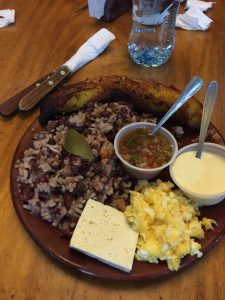
Typical Nica Meal from my favorite restaurant, Tipiscayan

Today was spent in a small community called Daraili, where we spoke with leaders of two water committees. With the help of Professor Chris Bacon, we were introduced and participated in guided focus groups. I was inspired and impressed by how aware the people are about environmental issues. Unfortunately, the reason is because they are confronting climate change headfirst and nothing short of their livelihoods are at stake. Although it took most of my brain power (and extra coffee) to be able to follow along as well as translate for the other Santa Clara students, the responses were enlightening and gave me hope for the next few weeks. Even though a lot of relevant data has already been collected, there is immense value in communicating directly with people. I’m convinced that the solution will come from them. My role is to help bridge the gaps through my environmental science background, network of resources, and creativity. ¡Adelante!

IMG_1192

Credit to Raul for his awesome photography!

Posted in Uncategorized | Leave a comment

From Anxious to Adventurous

I was born into a fortunate world. Not just in terms of affluence and opportunity but I was lucky to be surrounded by a wealth of cultures and diverse backgrounds in the form of my extended family and friends. My maternal grandparents immigrated to the U.S. from small villages in Mexico and my father immigrated from Iran during the Islamic revolution. My parents met in San Francisco during college and got married, bringing together two families from vastly different backgrounds. Many of my aunts and uncles similarly married spouses who were immigrants from the Philippines, Russia, and Argentina to name a few. In case that doesn’t make my family unusual enough, they all lived within an hour radius of me while I was growing up. Consequently, at birthday parties we sang “Happy Birthday” in at least three different languages before getting to blow out the candles. Besides making me think it was normal to taste melted candle wax along with frosting, my family taught me the values of openness and generosity. They provided unconditional love, a close support system, and instilled in me an appreciation and compassion for different cultures and the people that comprise them. Of all the fortunate elements of my life, my eclectic, warmhearted family is the one for which I am the most grateful.

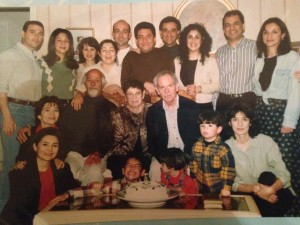
My second birthday. Most of my cousins hadn't been born yet so we could all still fit comfortably into the photo frame.

My second birthday. Most of my cousins hadn’t been born yet so we could all still fit comfortably into the photo frame.

As with most upper-middle class upbringings and despite my being exposed to many cultures, I was a fairly  sheltered child. The only traveling I had done before the age of seventeen was in the form of family vacations to Mexico every summer. We always stayed at nice hotels on the beach and only ventured beyond the touristy sites for an occasional day trip. While it was always tempting to stay and lounge by the pool all day, I found that my most enjoyable moments were those spent on an outside adventure. Over the years, we zip lined over rivers, rode donkeys in the mountains, and paddle boarded in the ocean. These activities required us to stray from the comfort of the resort and even then we were still catered to by some sort of tourist organization. However, it was during these outings that I noticed the stark difference between the Americanized resort world, and the realities of a developing country. Just beyond the walls of the resort, the majority of people were living in poverty. As I grew older and my understanding of this contrast grew as well and I found that lounging by the pool in Mexico became less and less satisfying.

During February of my senior year in high school I embarked on a completely different kind of adventure. For two weeks, I traveled in Cambodia with a non profit organization to help bring dental care to impoverished children. Looking back, I can’t believe that I willingly signed up to face about a hundred of my irrational fears in a country that I couldn’t even locate on a map. Something in my gut told me that I couldn’t pass up this experience because it was going to be far too important. I was right. The anxiousness and doubt that had accumulated since the moment I booked my flight was worth the outcome. During the drive out to a site on the first day of work, my stomach was still in knots at the general fear of the unknown. However, as I worked late into the afternoon administering fluoride treatment and playing with the children waiting for treatment, I felt my fears evaporate into the humid air. My purpose was to help, to be of service, and to be present because that was what I had to offer and these children deserved the best. Their curious eyes, sweet smiles, and pure hearts made everything else vanish into the background. These kids who lacked shoes, toothbrushes, and even families were the happiest, most precious beings I had ever encountered. The youngest of them had already experienced more hardship than I probably ever will in my life and yet they smiled, sang, and ran around chasing each other with such innocence and joy. I couldn’t help but feel at true peace for once. My thoughts calmed and I focused on my job to make life easier for them, even just temporarily. My perspective and passions had changed forever.

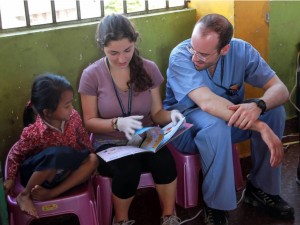
Reading to a little girl in a school located on an active landfill in Cambodia

Reading to a little girl at a school located on an active landfill in Cambodia

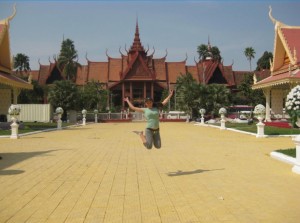
Jumping for joy in front of some incredible architecture in Phnom Penh

Jumping for joy in front of a museum in Phnom Penh

The weeks following my return from Cambodia were challenging, but in an altogether different way. I felt as though my eyes had been opened but that I just wanted to shut them again. I couldn’t reconcile the fact that my world and the one I had just returned from were the same. What had I done to deserve everything that I took for granted every day? Despite being surrounded by all these luxuries, I found my most inner peace in a place that I originally had been so afraid of visiting. Above all, I was intensely frustrated by the fact that I was expected to ponder quotes from The Great Gatsby while a child I had bonded with just a week before was pondering whether they’d have enough to eat that day. It also occurred to me how easy it would be to forget everything I had seen. Not because it wasn’t memorable, but because my life was so disconnected. There is so much corruption, poverty, and sadness in the world but most remain passive either out of ignorance or because these problems seem too overwhelming or distant. One night, as I began to cry out of sheer frustration, my dad said to me, “It’s okay to feel sad but you cannot let the knowledge that there is so much wrong with the world stop you from trying to do something about it. Sensitivity isn’t a weakness, it is your strength. Use it.”

Surrounded by love. Teaching kids how to brush their teeth in Guatemala

Teaching some giggly kids how to brush their teeth in Guatemala

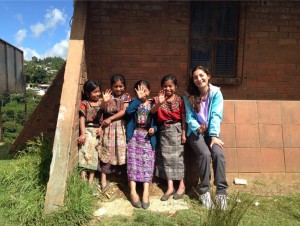
Some lovely young ladies (and me) in Guatemala

Some lovely young ladies (and me) in Guatemala

The next year I travelled with the same service group to Guatemala where I once again ventured to the edge of my comfort zone and yet found purpose. In addition to discovering more about myself, my understanding of all the unique issues that face developing countries grew. It started to sink in that these issues cannot be solved with just donations and foreign volunteers. Major change has to take a more powerful and sustainable form. One cannot enter a community without any context about the culture or lifestyle of individuals and expect to make a huge difference. There has to be understanding of the root causes, connections with the local community and a comprehensive plan for changing a specific aspect of injustice. When I read about the Global Social Benefit Fellowship, I had butterflies in my stomach and a fire in my eyes. The goals of the fellowship reverberated with my frustrations because of their aim towards the root of poverty issues rather than just the branches, or symptoms. The opportunity to work with ASDENIC in developing a sustainable solution to supply safe and affordable water in rural Nicaragua is the perfect project for me to pour my passion into. I’m ready and excited to hit the ground running.

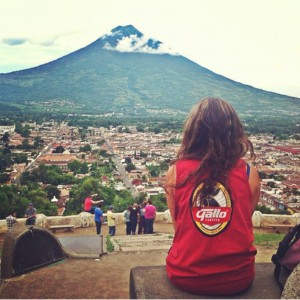
Sitting on Cerro de la Cruz, looking out over Antigua and el Volcan de Agua

At Cerro de la Cruz, looking out over Antigua and el Volcan de Agua (an active and very noisy volcano)

Posted in Uncategorized | Leave a comment