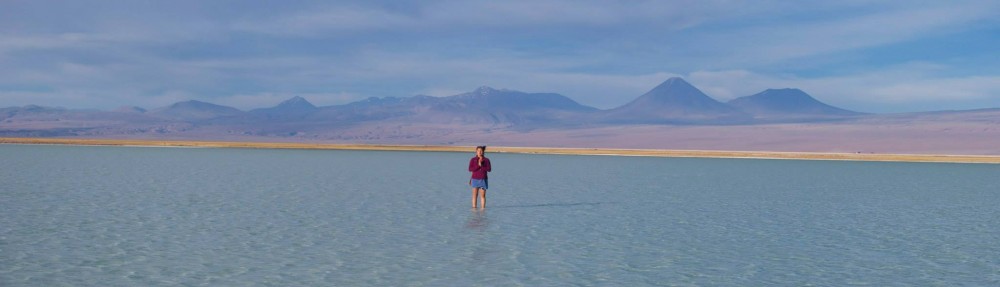
Awaiting the Adventure

I’m sitting in the wooden-slatted house of an Iluméxico customer in Campeche. It took the Iluméxico team two and a half hours this morning to drive to the rural village, which consists of about 75 people. We are surrounded by jungle and tall palm trees, dripping sweat from the humidity, and sipping from a glass of lemon-flavored water that is less than cold. The family of five has been gracious enough to invite us inside (probably because they’ve noticed our sunburned cheeks and dragging feet). The mother of the family, who also manages the family storefront, tells me of her travels to Baja California, Texas, Arizona, and even California, to visit her family. She continues to tell me how much she loves her home in Campeche: how she cherishes the peace and quiet of the community, the hard work necessary to keep up the house and care for her children, and the slow and steady rhythm of the day. She is perfectly happy with living one of the simplest lives I have ever had the privilege of witnessing.
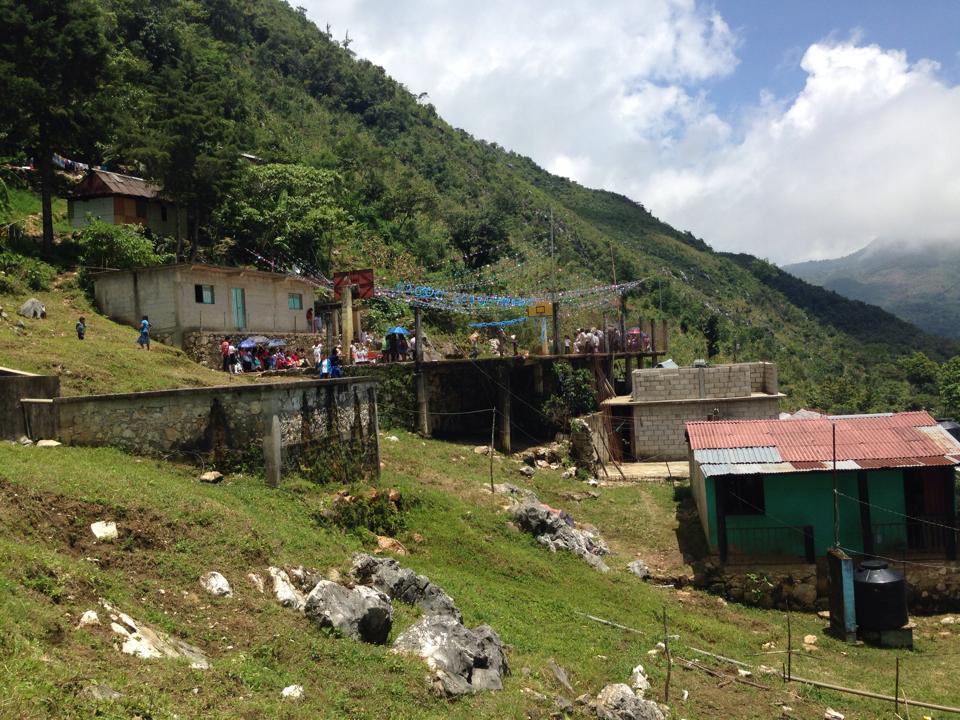
 

A Celebration at the community center

The more houses I visit, the more I begin to appreciate the idea of simple living. Not just because less materialism means less of a negative impact on the environment (which I am all for), but also because this lifestyle seems to better appreciate many of the immaterial ideals which I feel we have lost in the “developed” world today. The regions that we label “developing” have maintained a kind of emotional, social, and cultural health which carries with it ideals such as responsibility for the environment, importance of family, and yearning for a deeper spiritual connection with the outside world. While daily life in the city consists of deadlines, computer screens, and stress, the typical scene in Campeche includes hard work in the field, conversations with family, and time for rest and reflection. The machines of modern society seem to have convinced us into believing that fame, wealth, and power will bring us happiness and health, when in reality, these seem to be the causes of ill-will and misery. In the social enterprise documentary titled Who Cares, one woman perfectly describes the physical, emotional, and spiritual balance which I think we all seek: “Health is happiness for the body, and happiness is health for the soul.”
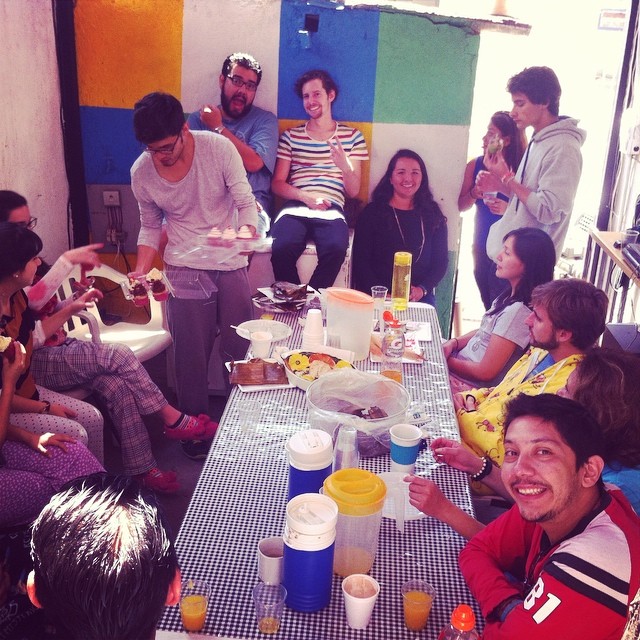
Lunch at the office: always together.

The fellowship also helped me realize that the world is a much smaller place than I could have ever imagined. After meeting a woman in Campeche who had visited her sister an hour away from my hometown, and running into a trolley driver in Oaxaca who had worked on a landscaping project at Santa Clara University, I became convinced that all peoples of the world are connected. So if we are all intertwined in some way, my actions affect the lives of others on the other side of the globe. With this in mind, I wonder why corporations and international businesses do not act in a more socially-conscious manner. I await the day where “corporate social responsibility” is no longer a term used only by forward-thinking and innovative companies. Instead, socially- and environmentally-aware practices will be so commonplace, if not necessary for success, they will simply be referred to as “business,” and the term CSR will become extinct.
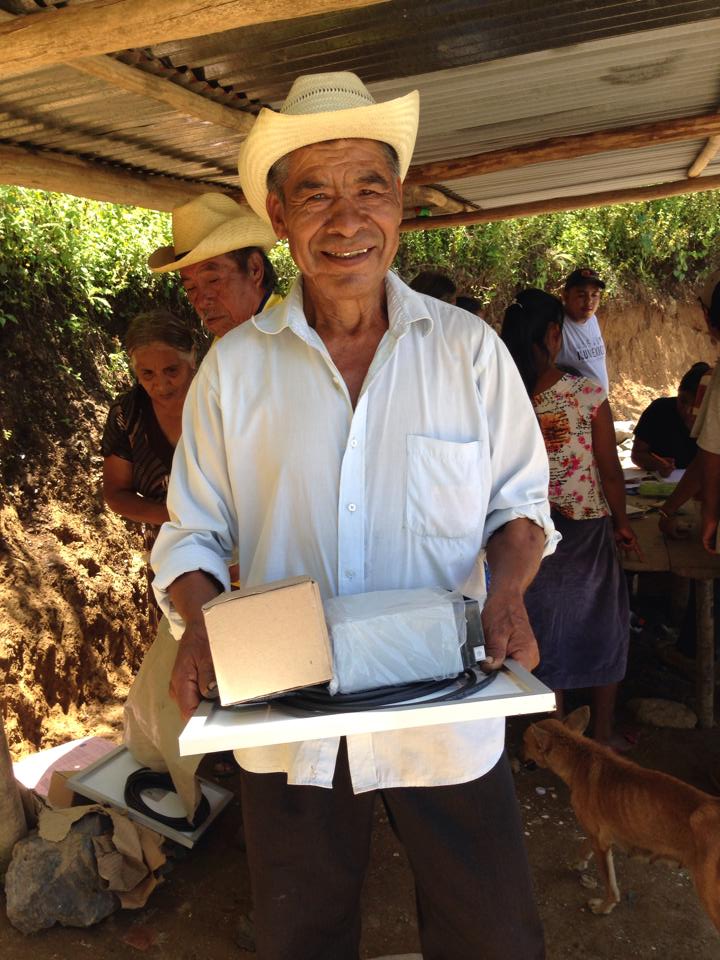
An Ilumexico customer with his first panel

As I look toward my future, I become more certain each day that the main goals of the company I work for will include environmental/social impact. While entrepreneurship calls my attention, I also believe that intraprenerurship is an important facet of business development. Many companies would like to implement a more socially-conscious business model, or boost their focus on current global issues, and simply need the right kind of team members and leadership to steer them in a direction where they can make the greatest positive impact.

The nature of our fellowship project required a high level of team collaboration and personal determination. Through these group and individual tasks, I had the opportunity to evaluate and reflect on my strengths and weaknesses in the workplace. While I have always enjoyed positions where I have the opportunity to directly interact with people, I began to discover some of the reasons why. I found that meeting people of various backgrounds brings me joy; I seek the diversity of experiences, the confrontation of new ideas, and the consideration of differing opinions. I also enjoy the impulsive and resourceful nature of field work, even if it means unplanned or unfortunate occurrences. From the treacherous mountains of Oaxaca, the late nights of analyzing data, and the bouts of sickness from suspicious street foods, I found that I have an innate drive to push past my comfort zone. I will walk as far as needed, stay up as late as necessary, and work for as long as I can until the job is done or the destination is reached. It’s not so much a drill sergeant mentality as it is the idea that there are too many things in this world to explore, see, learn, and do rather than sleeping, worrying, or stressing.
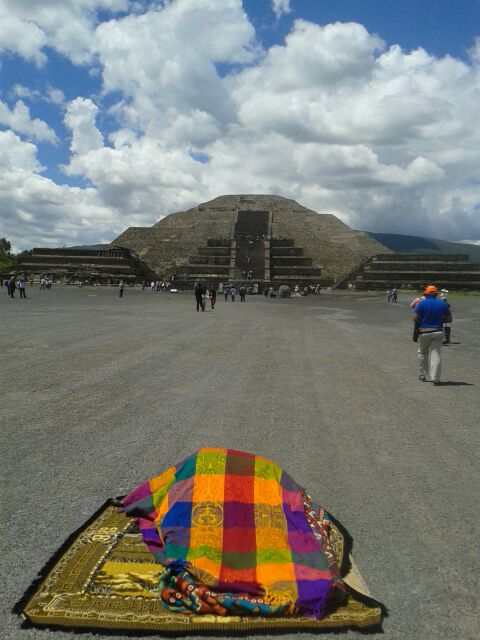
The Pyramid of the Moon, Teotihuacan

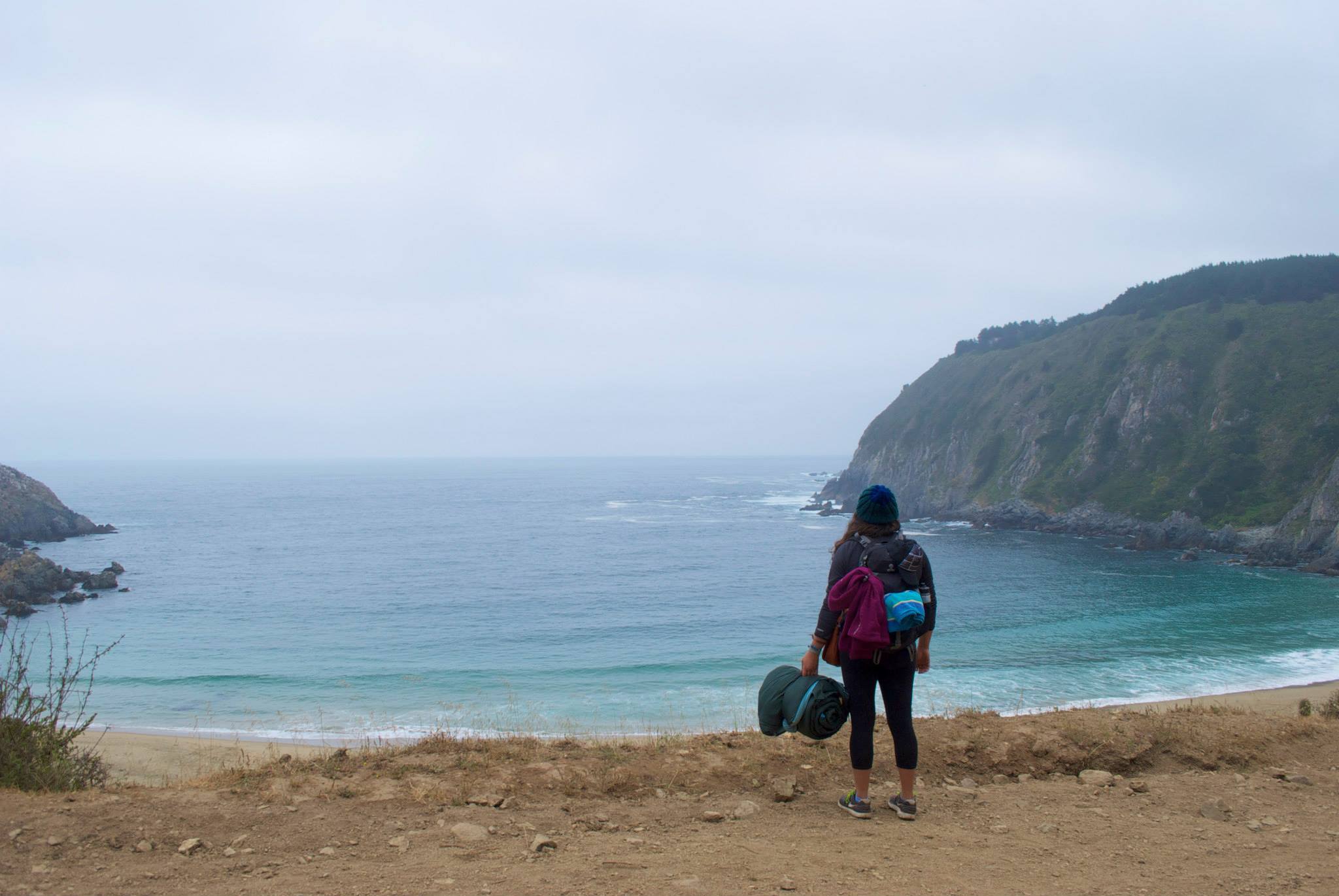
Although I have begun to steer myself down a clearer path, I still have much farther to go. I feel as though I am currently floating in the middle of the ocean in a safety boat called SCU. Three land masses are located at an equal distance from me in different directions, and I have no idea which is safest or will provide the most resources. Once I start paddling towards one, I may not have the chance to return to the others for a long time. Which do I choose?

Do I slowly drift toward Silicon Valley paradise, where I can become a young business professional or a start-up team member? I will earn a decent living which will be enough to support myself, save a little for the future, and feed the somewhat lavish lifestyle which is common in the area. I’ll spend weekends in The City with co-workers, grab lunch on the Google campus with a friend, attend fundraisers at local breweries, and live the life that many college graduates desire. Yet, after four years in the Bay Area bubble, I wonder if I want to continue to remain in my comfort zone. Will I become a complacent 23-year-old who works night and day just to earn the next promotion? Am I underestimating the impact of my past experiences? Through the Fellowship, I discovered the wealth of connections that exist in the Silicon Valley, but would this be the best option for me at this moment in life?



I can row back towards shore, to my hometown of Ventura, CA. After four years of being away from home and watching my family celebrate, struggle, and grow from afar, I realize how much I’ve missed out on, and how much I miss them. Family is one of the most important aspects of my life, and by prioritizing other things, will I be happy with my decision? While I busy myself with my studies at SCU, my grandma grows older, my nephew enters high school, my uncle passes away, my niece is born. College has provided me with numerous opportunities and invaluable skills that I will use for the rest of my life, but has it also distanced me from what matters most?  What is most important in life? Spending time with family, who is one of the reasons I am here today, or helping those less fortunate, whether they’re in my town or on the other side of the world?
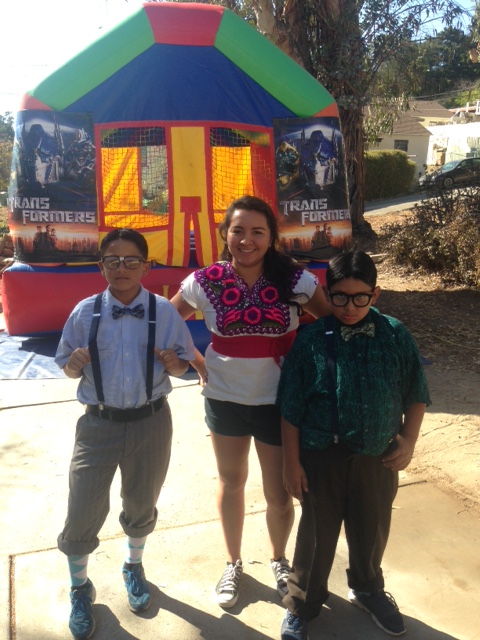
Nerdy nephews at the family Halloween party
Nerdy nephews at the family Halloween party

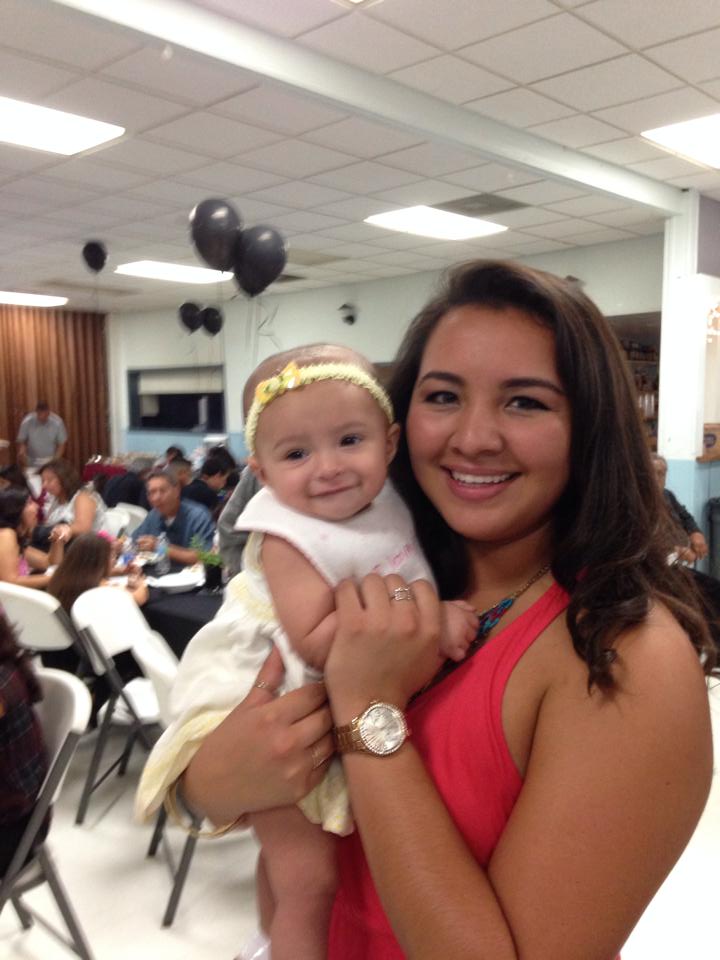
The newest member of the family

The newest member of the family


Lastly, I could paddle. Paddle as fast and as hard as possible, against the rogue waves and sea storms to a land unknown. My desire to live abroad and my passion for helping others would come together in places like Latin America or Indonesia, where I would live for a year or more to fully immerse myself in the culture and get to know its people. I understand that it would be difficult. I may be pushed to my limits, left on my own, or be completely unfamiliar with my surroundings. Yet the rush of independence, the challenge of the steep learning curve,and the ability to step away from the stress of the U.S. will allow me to appreciate the little things in life. Is this what I was made to do?

I learned many things from the fellowship, but most of all, I learned that I have more options available to me than I thought possible. While this scares me slightly, it also feels like a healthy kind of nervousness. It’s as if I’m going bungee-jumping: my toes are at the edge, I’m leaning over my feet, and all I have to do, is leap.
Las Docas6


The Aftermath

It’s been two months since I’ve stepped on Mexico soil. I’m not talking about the concrete jungle that is Mexico City, with bustling businessmen, traffic, and smog levels comparable to Los Angeles, but the Mexico where nature and family have formed intrinsic parts of society. Where wives rise at 4am to begin making tortillas for their husband’s lunches; where school children learn the traditional dances of their ancestors instead of our typical American P.E. classes; where it is completely normal for baby chicks, puppies, and piglets to run around the house at all hours of the day.

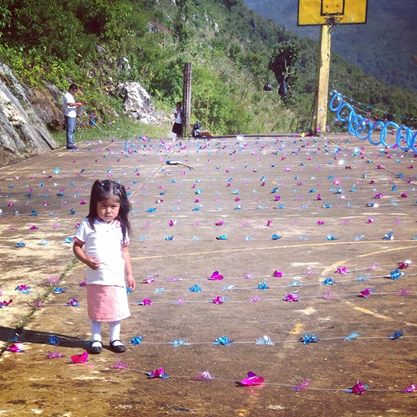
Kindergarten graduation

Kindergarten graduation in Oaxaca

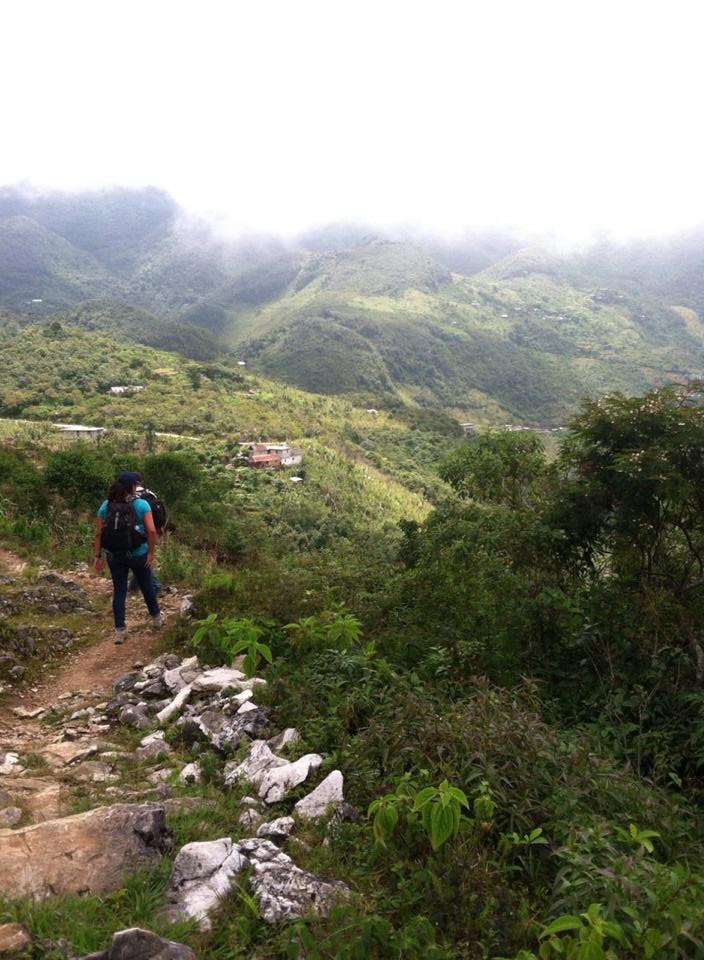
Although each community had similar characteristics (rural, low-income, houses made of wooden planks with woven palm-leaf or tin planks roofs), each place was unique. Some communities were fairly spread out, with houses sprinkled throughout an open field. Some were buried in the hills, so that it took a 25-minute walk just to get to the front porch. People had talking parrots, motor scooters, hammocks, stereos, a random combination of everything. As I walked through each village, I tried to picture what my life would have been like if I had grown up in those areas. It was difficult. I had never been in that environment before, nor did I know many people who had.

The lifestyles of those reading this blog cannot compare to those of the rural residents of Campeche or Oaxaca. Imagine your grandmother trekking up a rocky mountain for an hour, with bags full of groceries, only to arrive home and begin cooking dinner for a family of six. Imagine chopping reeds with a machete in the backyard for 5 hours in 100 degree weather and humidity so that your family can keep warm when the temperature drops at night. Imagine life without the convenience of running water, electricity, large-scale grocery stores, food diversity, a cold beer on a hot day, ice cubes.

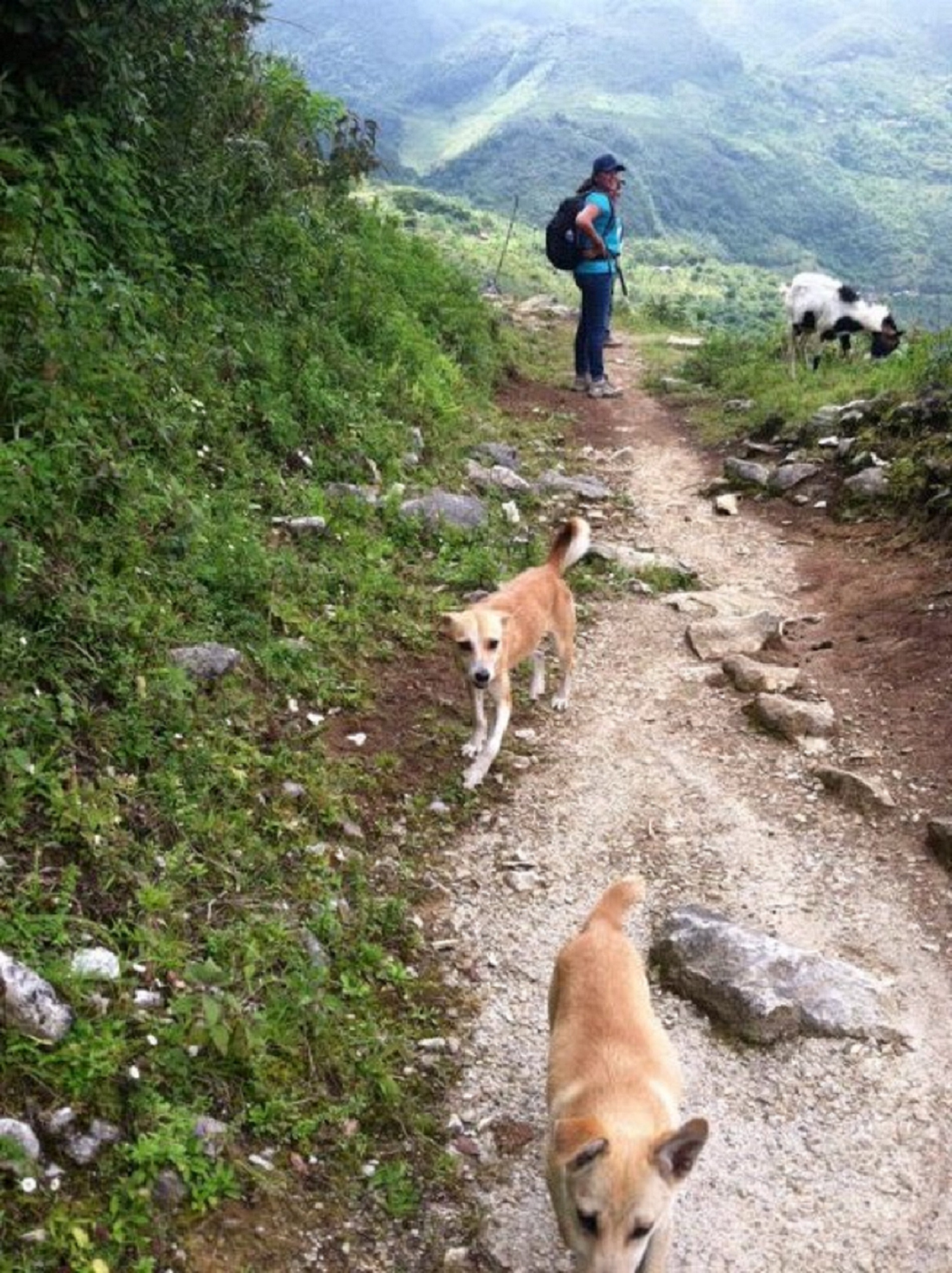
Hike to a community

Hike to a community

Even with all of these differences, we are one in the same. When interviewing a mother of three children, she described to us how thankful she was that her children could now do their homework after the sun goes down. Now, they have the ability to learn more, have access to better jobs, and create a more comfortable life for themselves compared to previous generations. The success she wishes for her children is the same kind of hope that parents in the Bay Area have for their future toddler CEOs and entrepreneurs.

I saw these connections in each community. In Balancax, Campeche, we approached a blue house with a tin roof and tarps on the windows to keep in the “cool” air. We were welcomed by 5 people, one of who reluctantly looked us over. Before we could explain ourselves, he knew us. He knew we were there to question, to “investigate.” He was the equivalent of the mayor of the community, and asked us at least 10 minutes worth of questions before we gained his trust, were given permission to survey his community, and later received a parting gift of frozen milk and coconut, the coldest food available in the village. Don’t we all wish public officials showed so much care for communities? That they would serve as protectors, then resources, and finally friends?

Local community members receiving their solar systems

Local community members receiving their solar systems

Now that time has distanced me from my experience, it is easier for me to look back and say, “Is there really a difference?” Aren’t stubborn grandparents in Oaxaca, Mexico the same as my stubborn grandma in California? Don’t the school children in Campeche still play, laugh, cause trouble, and have the same possibility to succeed as the students in Sacramento? The aspects that separate us most are resources and opportunities. The resources needed to be a healthy human being, communicate, trade: clean water, energy, food, infrastructure; and the opportunities to become something greater than previous generations: prime location, healthy economy, sound finances. These are not minor things, but they are commodities and ideas that can be constructed, and with help, built into society. I do not wish to modernize these areas, and turn them into places that lack connection with culture, tradition, and their relationship with nature. I simply seek to find the natural balance between economic efficiency and happiness. Difficult? By all means, yes. Impossible? Never.

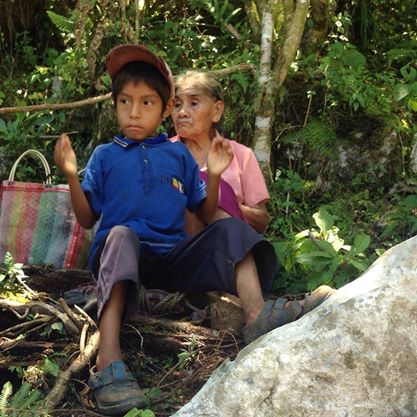
Grandmother and grandson, waiting in the shade for their solar systme

Grandmother and grandson, waiting in the shade for their solar system

At Santa Clara University, the values of the Jesuit philosophy, such as social justice, sustainability, and global awareness, are built into every aspect of the curriculum. We have great immersion trips, community service programs, and  study abroad opportunities that allow students to get a taste of what the world outside of the “SCU bubble” is like. Upon graduation, we source many students to our top-three employers: Google, Apple, and Cisco, where they can build valuable skill sets to earn, not just a modest living, but a living that will allow them and their families to live a comfortable lifestyle in the Silicon Valley. These companies focus on personal development, skill-building, technological innovation, and building their brand. All of these are important, but where is the social aspect? How do we know that these successful corporations are positively contributing to society, or even positively contributing to individual happiness?

Say I get a job at Apple. I’ll make good money, I’ll learn a lot in the process, and my parents will be proud. Behind the brand name, past the gold iPhone 6+ and the newest Macbook, are laborers overseas who create Apple’s products. As they scrape by with low wages, working overtime to support their families back home, I am on the design team for a new iPhone 8. The product is a hit, and enters the market at $700 each. We all celebrate by going out to dinner and getting a raise. Do the laborers overseas recieve a raise? Where is the justness of it all? Yes, these corporations are changing the world, but is it for the better?

I find myself floating here, in a foggy mist of opportunity, surrounded by dreams of luxuriant technology-based companies that will allow me to have a life any 20-something year old would want. And then, just when I convince myself that a job in financial consulting or investment banking is a solid foundation for my future, I remember how fortunate I already am. How many more resources I have available to me compared to other 20-year-olds around the world. And I think, why wait? Why not start helping now?

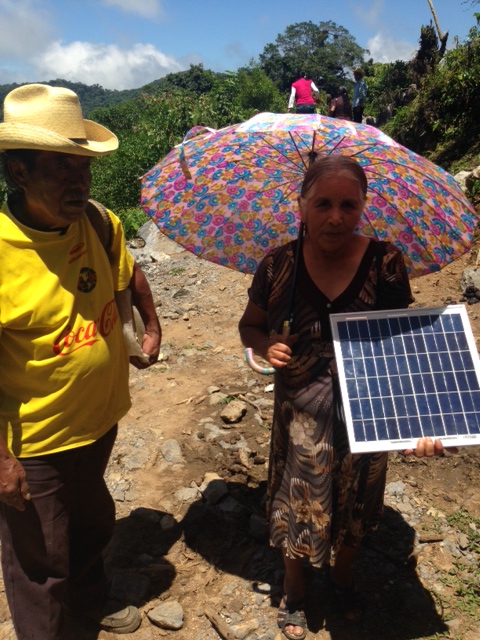
Couple with their first solar system

Couple with their first solar system

A typical day at "the office"

A typical day at “the office”

The Anticipation

While many consider their lives to be a timeline, my journey seems to form a set of cycles; cycles that constantly intertwine, overlap, and bring me back to a past memory that links to my current situation.

I grew up in a small farming community in Southern California, surrounded by miles of citrus and avocado orchards and just 15 miles from the beach. I was proud of my hometown, knowing that my great-grandparents had been some of its first residents: my great-grandpa picking lemons in the fields, and my grandma working in the packing houses. The sight and smell of the orchards reminded me of comfort, stability, and home. My adolescence was filled with sports, ballet, play dates, Girl scouts, and my love for school. Though my parents divorced when I was at a young age, I had a very loving and crazy Latino family, which continued to grow when my dad re-married and my mixture of six half- and step-siblings began to have kids of their own. Being the baby of the family, I reveled in the idea that I was perfectly in the middle of my older siblings, my handfuls of cousins, and the ten nieces and nephews that soon followed.

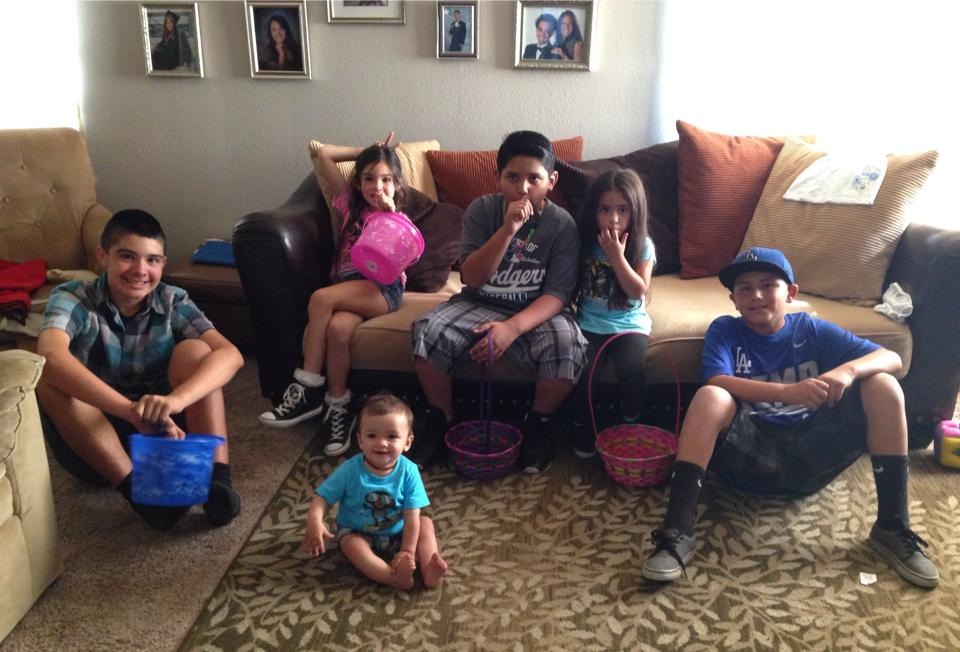
The Nieces and Nephews

My nieces and nephews. From the left: L.J., Karisma, Jaxson, Robert, Raquel, and Damien. The oldest is 13,                         the youngest is not quite one!

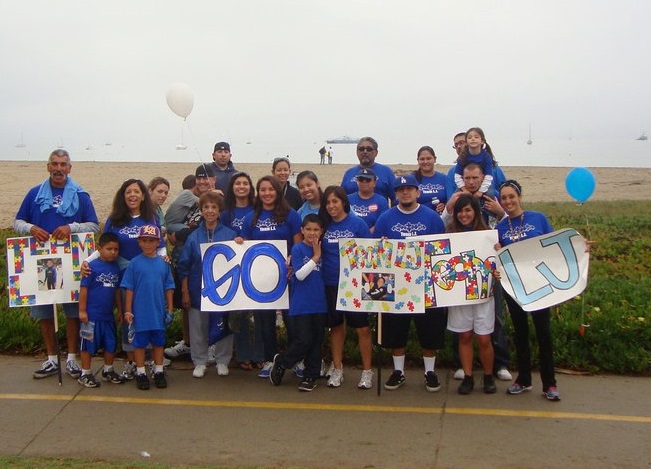
L.J., one of my oldest nephews, came into the world when I was seven years old. Now that he is thirteen, his high-throttle energy, infectious smile, and athletic ability almost mask his autistic tendencies, which at times, bring about uncontrollable mood swings and reveal the unexplainable divide which exists between his comprehension and our understanding of him. Since his diagnosis at two years old, my entire family has fundraised for and participated in the annual Walk Now for Autism Speaks. The first year of our participation, we had such a big support group that our team photo made the newspaper headlines. To this day, the cause plays such a large role in my family that it has become my first and lovingly positive memory of the effect which one family can have in the community. I witnessed at a young age that entire social movements can sprout from the smallest seed, and that positivity and passion can carry causes much further than money and power could ever dream to.

Walk Now for Autism Speaks

Team LJ showing their support at the Walk

Tana came into my life as a baby-sitter when I was three years old, but soon transformed into my mentor and companion until I was seven. The funny thing about our relationship was that Tana was 30 years my senior, and did not speak English. Although I did not speak Spanish, we got along seamlessly, exchanging words until we both understoond what the other was saying. It was not until I was older did I understand that my family had employed Tana in a time of need, as she had just entered the U.S. from Mexico as an undocumented resident with her two young boys. Upon understanding the gravity of her situation, my love for Tana grew into pure admiration. That someone would risk so much to create a better life for her family.

It was not until I entered college that I met other people in the same situation. But these people were students, many of them becoming my close friends. I realized how indescribably difficult it is to live in a place where resources and benefits are within reach, but to not have access to them. To see others succeed and grow around you, but to be limited by financial, political, and social bounds. While they lived with this injustice on a daily basis, I was barely able to face the thought of it. The drive that they, like Tana, demonstrated in order to achieve their goals provides me with the motivation do the same.

In fourth grade, my parents moved me to a private school in the neighboring city. One day, during our lesson on agricultural development in California, my teacher had us walk around the classroom in a large circle for 5 minutes, bent over as if we were picking fruit. She then asked us to sit down and write about how we had felt during the exercise. We all agreed that we were tired, as she then went on to explain that people did this every day for a living, sometimes for more than eight hours a day. They were the people we drove by on our way to school; the people who allowed us to have strawberries in our lunches; they were people like my great-grandpa.

In college, I signed up for an Environmental/Religion class which focused on California’s Central Valley, also known as “the nation’s salad bowl.” Not because I was interested in the topic at the time, but because it would cover two of my graduation requirements. We dove into the gruesome topics of low labor wages, long working hours, exposure to toxic pesticides and high amounts of air and groundwater contamination, low education rates, and the fact that those with the least amount of control over their circumstances are also those who are most negatively impacted by harmful environmental activities. They made their livelihoods just a couple of hours away, but seemed to live in a completely different world than my own. I was so close to them geographically, yet felt so removed from their daily struggle and the ability to improve their circumstances. My desire to help was fueled not only because I felt it was the just thing to do, but because I empathized with them; because in some distant way, my family was their family.

My interest in sustainable efforts grew from my first job as a California beach lifeguard, where I discovered the true beauty of nature: the majestic and commanding waves; the animals and ecosystems that resided in the dunes, the tide pools, and the deep sea; and how each cycle worked together to maintain the beautiful Ventura coastline. My respect for the environment grew, and I began to take part in all-things-environmental that I could get my hands on: day hikes, beach clean-ups, surf sessions, farmers markets, bike riding along the coast, and even forcing my family to recycle.

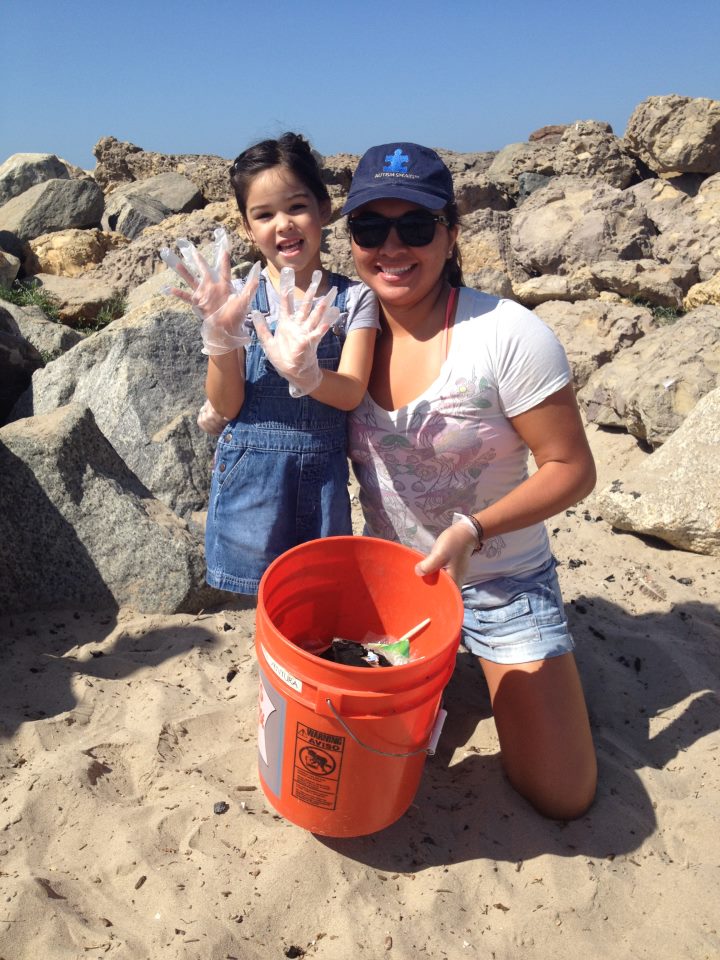
Beach Clean-up

Family beach clean-up

The time came for me to leave the place I knew and loved, and travel to the unknown world of Santa Clara University, where I could walk down the street and see one person searching for recyclables in a trash can, and the next person chugging liquid out of a red cup and throwing it on the ground. To center myself in this new and wild atmosphere, I joined the OCEANS Club, one of the familiarities from home that I knew would never change. I was suddenly and excitedly roped into beach clean-ups, Ban the Bottle campaigns, Save Japan Dolphins, Save the Waves Coalition, and many more environmental activities. My interest in environmental grassroots efforts grew until I finally decided to minor in Environmental Studies, where I hoped to apply my acquired knowledge to sustainable energy and social justice efforts.

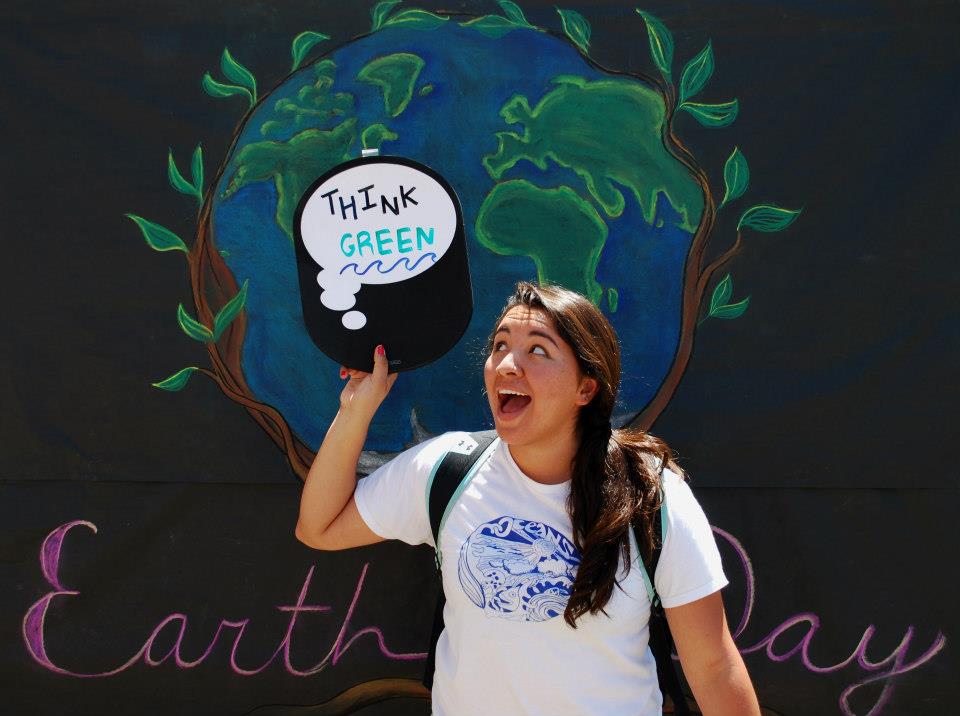
Earth Day

SCU Earth Day 2013

And now, with a few environmental classes under my belt, along with involvement in GREEN club and a research internship under an environmental professor, I realize that my knowledge base only contains a tiny drop of the large ocean which encompasses sustainability, the environment, and social justice. Furthermore, my deep passion to help others does not seem to easily transform into ground-breaking and successful business models that will save the world population. So, I find myself here, in the middle of another one of life’s cycles, waiting to explore new opportunities, face new challenges, and make a positive impact in the life of a farm worker, a nephew, a babysitter, or an entire community. While my future and vocation continue to elude my grasp, I know that the current has brought me to exactly where I am supposed to be.