The travel bug
At the ripe young ages of 30 and 35, before us three kids were in the picture, my parents decided to quit their jobs as lawyers in Seattle and travel around the world for two years. They had no real plan; only that they would continue to travel until they ran out of money. I grew up hearing stories of their adventures—including the time they were stuck in the back of a truck somewhere in Africa with an angry duck and some soldiers with AK-47s—and seeing pictures of the incredible places they got to explore.
Traveling was a huge part of my childhood; my parents made family vacations a priority and my dad had a job that took him all over the country, so my siblings and I were often brought along for the ride. Our vacations included laying on beaches, visiting historical sites, and meeting up with family members, but mostly, they involved hiking. I can’t even begin to count the number of hikes I was taken on growing up, willingly or not.
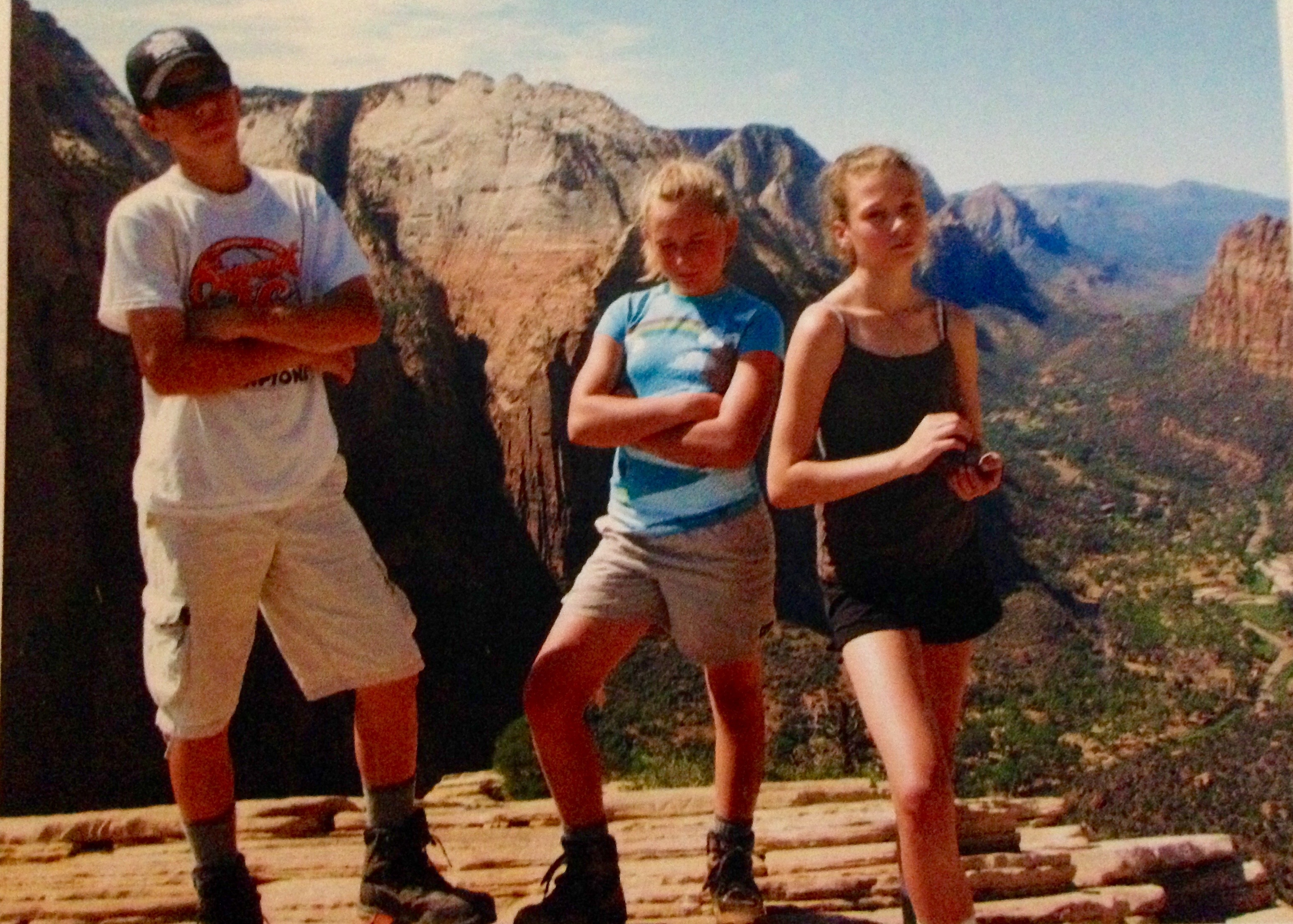
Me, my brother and our friend Hannah on top of Angel’s Landing in 2007
Some of the highlights include hiking down to the bottom of the Grand Canyon at 11 years old in 111 degree heat, spending the night, and hiking back up the next day, and on that same trip doing the Angel’s Landing hike in Zion National Park (on which six people have died in the past ten years, but apparently that wasn’t reason enough for my parents to stop us from doing it as children), which you can see in this picture of me, my brother and our friend Hannah being typical pre-teens at the top of one of the most amazing hikes in America.
My parents raised my siblings and me with a lot of trust and freedom. So much freedom, in fact, that when my 10th grade math teacher asked what my parents did behind the scenes to make my brother and me so successful in school, and I told her they didn’t even check our grades, she was completely shocked. We always knew growing up that it was our responsibility to work for what we wanted, and being the middle child between two high-achieving siblings certainly made me work harder than I would have otherwise. My brother, Dominick, is one year older than me, so keeping up with him pushed me to do my best in school. It was a constant competition in my mind— although I’m sure he couldn’t have cared less about it—and it led me have the kind of drive I have today.
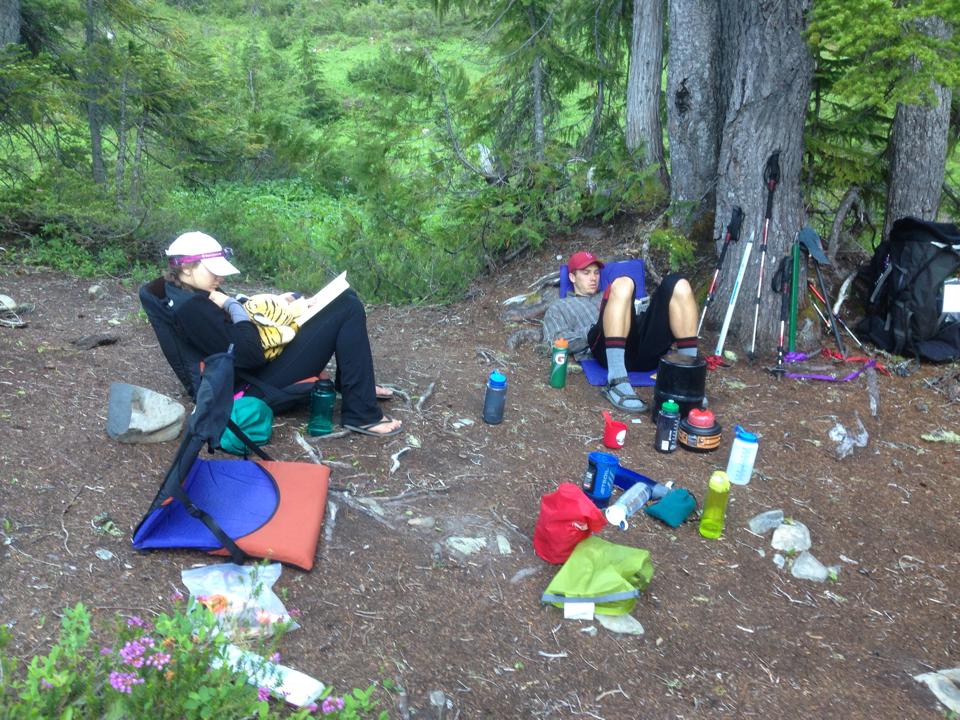
Reading at the campsite with my brother on a family backpacking trip
Interestingly, without any conscious effort on the part of my parents to steer us toward environmental careers, my siblings and I have all opted to study fields relating to the environment and see climate change mitigation as a top priority. I’m not sure if our exposure to the beauty of the earth and the environment through hiking and other outdoor activities growing up had any influence in this arena, but I am sure the values instilled by our parents have led us all to care about the future of our planet and its people.
Identity

Playing “Belle” in my high school’s production of Beauty and the Beast
In high school, I knew exactly who I was. I was a ballerina who regretted quitting basketball, I was “book smart” but not “street smart” according to my friends, I was a singer and an actress, and I was, of course, “Dom’s little sister.” I was very comfortable with this identity, but I never realized how shallow my sense of self was until I stepped out of this carefully crafted identity and had to form a new one based on things other than hobbies.
In college, everyone has to choose which activities from high school they are going to continue, and which ones will be left in the past. For me, this meant essentially letting go of parts of my identity. I quit ballet senior year, I did not intend on pursuing a future in musical theater, and I could no longer benefit from the fact that people associated me with my high-achieving and personable brother. At first, all I had to cling on to from who I thought I was, was being “smart.” It wasn’t as dramatic a time as I’m making it sound, because I didn’t even realize I was going through this kind of identity transition until looking back on it later on, but subconsciously I was clearly looking for new ways to define myself.
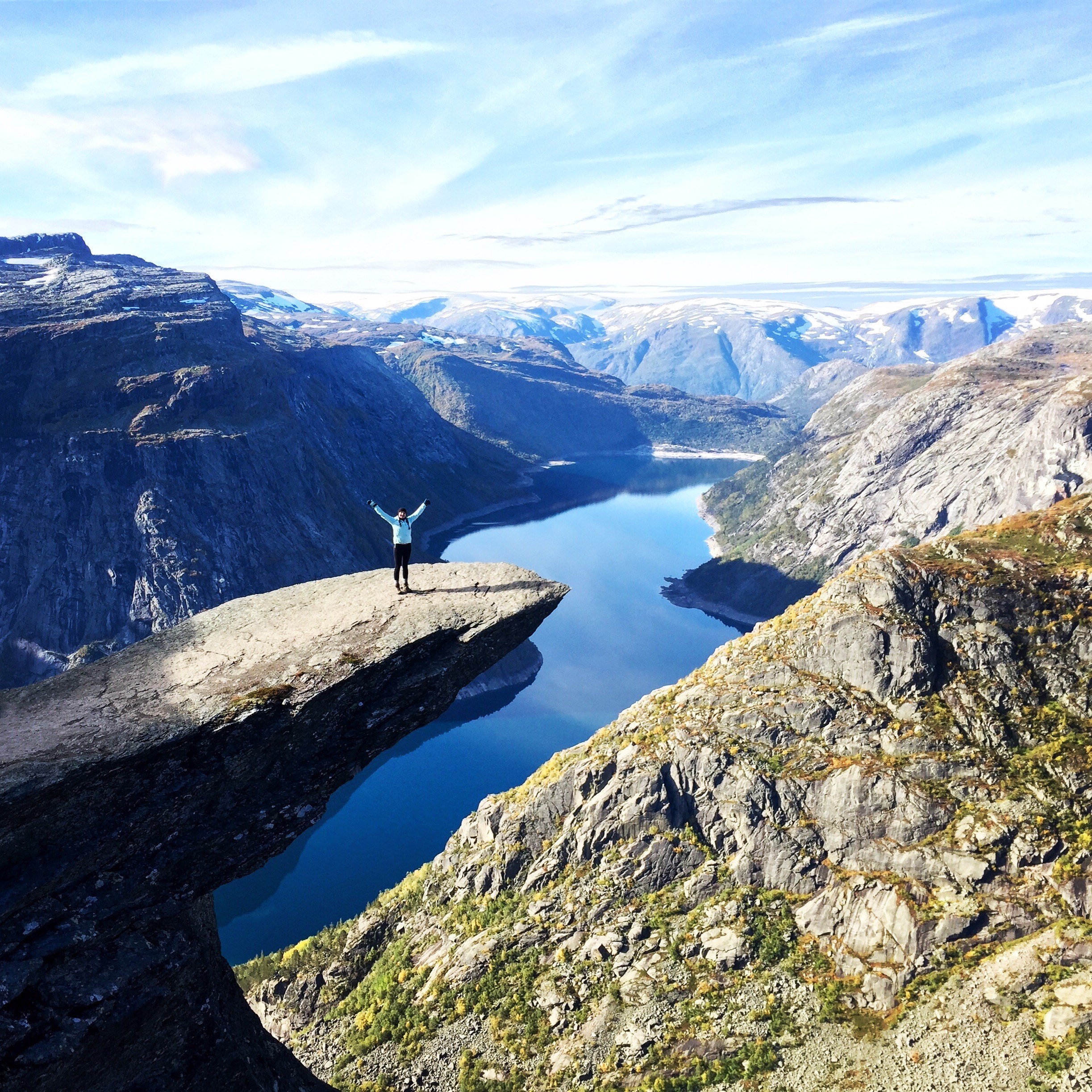
Exploring Norway while abroad
My first year in college was spent exploring new areas of study in an attempt to nail down a major. Luckily, I stumbled into an environmental studies class and realized then and there that I wanted to focus my attention on this field. Sophomore year was spent searching for opportunities to travel; something that Santa Clara certainly doesn’t lack. I applied to study abroad in Copenhagen, Denmark on a sustainability program, and at the same time applied for the Global Fellows program which led me to spend six weeks in Kolkata, India working for the Association for Social and Environmental Development (ASED) during the summer after my sophomore year. Suddenly, I had discovered a more meaningful sense of self. I now saw myself as someone passionate about the ways in which social and environmental problems can be solved in tandem.
India
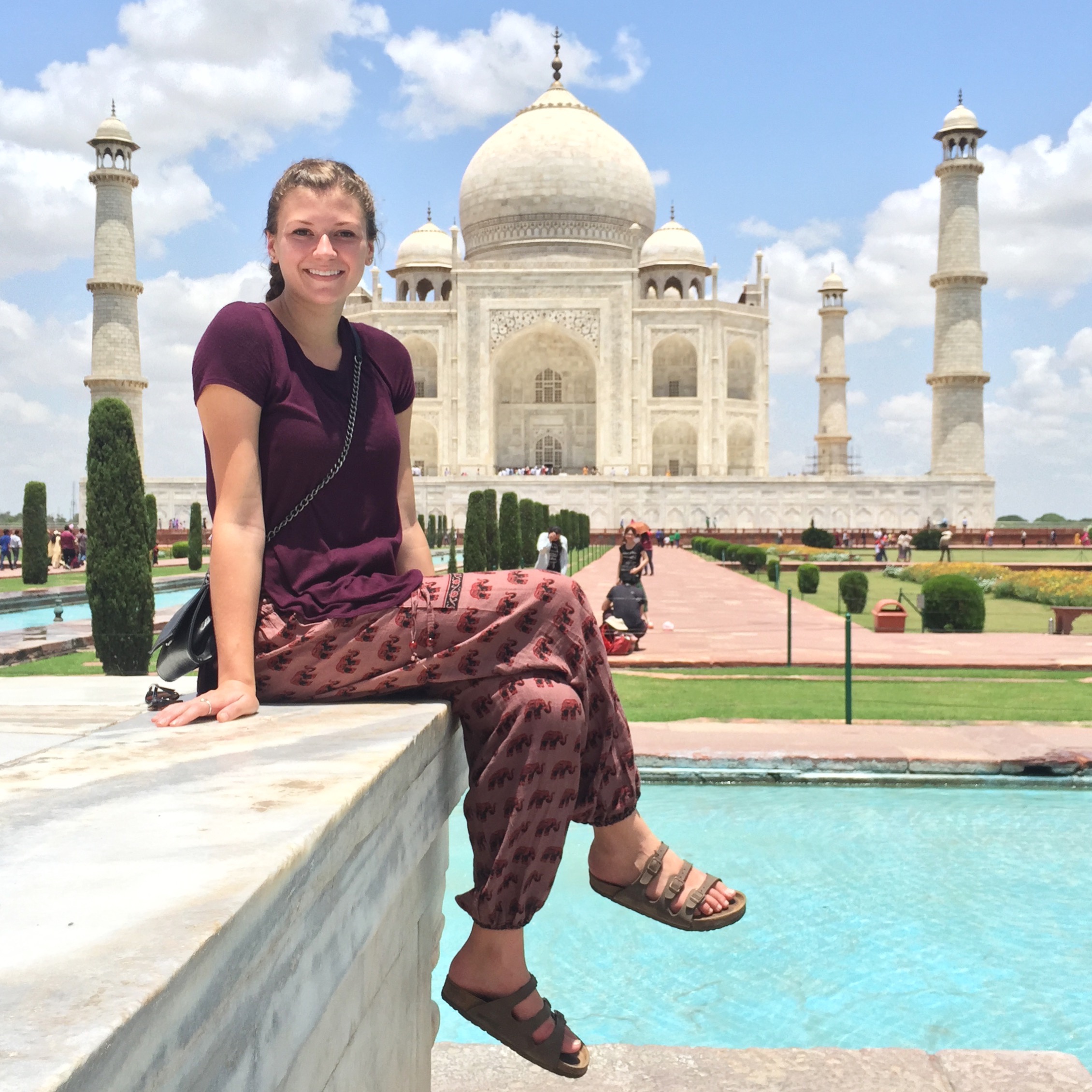
Visiting the Taj Mahal
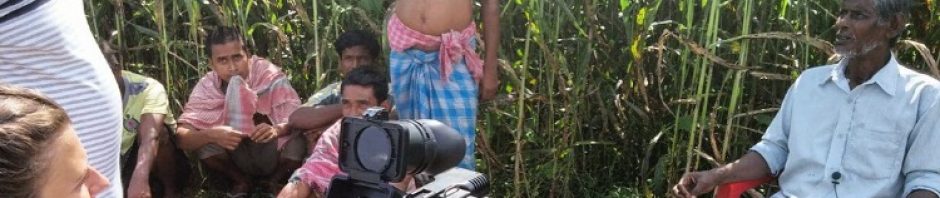
As Global Fellows working with the nonprofit ASED last summer, my partner and I were tasked with creating a promotional video for the organization with the aim of generating more funding for their Green Rhinos program. The program is designed to educate students in rural and urban schools about biodiversity and the environment, and then guide them to develop and carry out a conservation project of their own over the span of six months. When we were there last summer, the Green Rhinos in five schools in the Sundarbans, a rural area on the coast of West Bengal, were well on their way to planting and maintaining 20,000 trees.
We spent the majority of our time in Kolkata, but we visited the Sundarbans for four days, and I can easily say it was my favorite part of the entire experience. We stayed in a school in a small village that has no access to the electricity grid, but many schools and houses have solar panels on the roofs to provide energy for light and, in some cases, televisions. We began asking our coworker a lot of questions about the desires and needs of the people living in the village, as we couldn’t quite wrap our minds around why a family would choose to invest in a TV over essential items like pots and pans. Our coworker seemed a little stumped himself, but said it just depends on what they value the most.
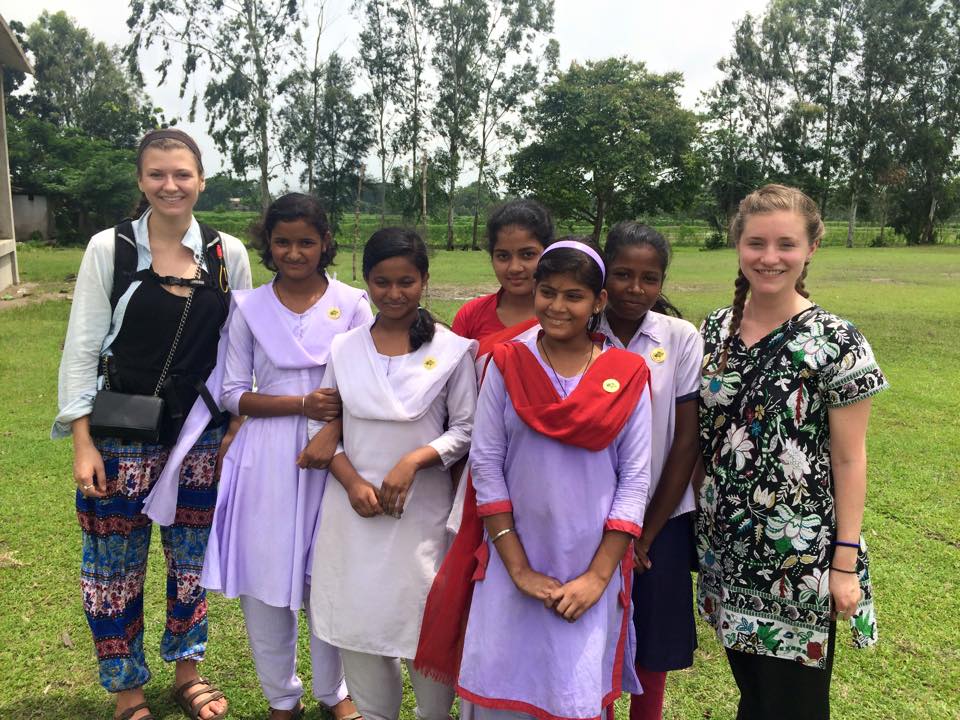
Visiting the Green Rhinos in the Sundarbans
Visiting the schools and speaking with teachers and parents led us to another discovery about what was actually valuable in this village. We found that despite the teachers caring that the children get educated about the environment, a more immediate concern was the fact that without light in the schools they could not teach on a cloudy day because the students couldn’t see the blackboard. Our boss had told us earlier that the Green Rhinos program used to give solar lamps to children to study, but they had to stop because people were asking for more and more and they could not provide that many without losing money. I found out later that the supplier of these solar lamps was ONergy, the company I will be working with this summer as a Global Social Benefit Fellow.
After these four days in the Sundarbans, I became very interested in the impact energy access has on the lives of rural populations; something I hadn’t honestly given much thought to before, despite a lot of my education being focused on renewable energy systems. Before, I mostly thought on the large scale of whole countries transitioning to renewable energy systems through policies and mandates, but I realized that I honestly care a lot more about working with communities who currently lack access to energy and learning about how technology can best be implemented to improve lives.
The GSBF was something I’d had in mind since before applying for Global Fellows, and after my experience in India I knew that I wanted to work with a social enterprise focused on providing clean energy to populations lacking access to the current energy system. Despite telling my parents I would look for an internship in the Seattle/Olympia area next summer, since I had been away from home so much over the past year after going abroad in the fall, I couldn’t let the opportunity to apply for the GSBF slip past me. My parents understood and supported me wholeheartedly; especially after I reminded them that it’s their fault I have such a desire to travel. I am extremely grateful for their support and for instilling in me a sense of adventure and a willingness to learn. Ultimately, my love for adventure and passion for environmental justice led me to ONergy, and I am thrilled to be spending yet another summer in India.
Hi, this is a comment.
To delete a comment, just log in and view the post's comments. There you will have the option to edit or delete them.