Week 9 Blog

Although Anne Lamott creates valid reasons for writing an inadequate first draft in Shitty First Drafts, when I reflect on my personality, I find it difficult to follow Lamott’s message. Lamott explains how it’s perfectly acceptable to have a terrible first draft, as the purpose of writing one is to simply get out all of the ideas out of our heads. She substantiates her claim by explaining that “all  good  writers write  them. This  is  how  they  end  up  with  good second drafts and terrific third drafts” (Lamott 1). Through this statement, Lamott sparks an extent of comfort within the readers, as even the best of writers start with poor first drafts. 

I learned to be at ease if my first drafts are subpar, but I’m the type of person who has to make my work look decent. This is not to say that I am a perfectionist, but I find myself making my first draft look as good as possible because I want to avoid trying to make something terrible into something good; rather, I prefer making something good into a formation of its own excellence. I believe that part of this is constituted by having only one rough draft required. With only one official chance for having our essays reviewed by our professors and peers, I feel compelled to turn in work that I pour a lot of effort into, in order to make that great writing into an even better one.Coffee And Working Eli GIF - CoffeeAndWorking Eli Mendoza GIFs

Evidently, this would be a different story if we were required to turn in multiple drafts, as we have several opportunities to revise our work. However, this is not very realistic, as our quarter system prevents us from spending too much time on one assignment or topic due to the many other areas that must be covered within ten weeks.Work GIF - Work GIFs

 

IRS Catholic Charities USA Blog Post

In today’s society, the United States receives a steady flow of immigrants from all over the globe. Consequently, we have developed diverse societies within our own nation and healthy diplomatic relations with other countries. Unfortunately, President Trump refuses to see all of the positive outcomes of giving immigrants and refugees a chance for a better life, and thus, has eliminated the prospects of DACA as a whole and is planning to remove the visa lottery program. In doing so, Trump is disregarding the existence of the American Dream, an ideological necessity which the United States is built upon.

To help prevent further eradication of acts that help the underprivileged, our group decided to focus on raising awareness for the Immigration and Refugee Services of the Catholic Charities of the United States of America. We initially created posters and flyers to hang around our residence halls to notify our community of the importance of supporting the IRS of the Catholic Charities USA. People have approached me after reading the contents of the flyer to ask further questions about how they could volunteer for the organization to raise awareness. Others messaged me, asking what other organizations were out there, and I directed them to Charity Navigator to show what other groups need support. Another way we chose to inform more students on a grander scale was through our YouTube video. We chose to create a short video because cinematic products tend to attract a great number of people, as they are far more engaging and informative than a simple flyer. I posted a link of the video on my Facebook, which is how my friends, who do not attend Santa Clara University, were able to learn about our motive.

Here at Santa Clara University, many students have respectable moral standards, and as a result, those who approached me for more information about the IRS of the Catholic Charities USA were all very supportive. These students were eager to find methods of helping those underprivileged, as they only saw it fair to lend a hand as individuals who were born with existing rights. Through my interactions with my hall mates and community around my residence, I was able to establish new connections and friendships through mutual feelings towards helping the needy. Instead of watching someone (the immigrants and refugees) get bullied (deprived of benefits) as bystanders, I was surprised by the number of students that were passionate to volunteer for the IRS of the Catholic Charities USA.

The individuals who were interested shared a vision similar to my own: taking advantage of our privileges to help the immigrants and refugees, rather than taking advantage of the underprivileged to set them further back in their ambitions. Before helping, it is important to recognize that they too, despite being born in a less fortunate circumstance, are humans. Humans should not deprive others due to variance in gender, race, or socioeconomic status, as we are not wholly characterized by such aspects. Rather, we are distinguished by our ethical stance and personalities, which is why it is imperative to help the immigrants and refugees escape the abyss of hopelessness.Image result for human equality


poster: https://drive.google.com/a/scu.edu/file/d/0B01OpP79cmfhQkQ2aU9YRmRSUXc/view?usp=sharing

video: https://www.youtube.com/watch?v=6MoY2ez77O4&feature=youtu.be

Week 8 Post

After reading the final chapters of The Devil’s Highway by Luis Alberto Urrea, there were parts which I assumed would happen and some that would not. Because this book is about the many troubles which immigrants face when chasing their dreams, I assumed that many tragedies would be encompassed in the book. However, because stories tend to have really positive, happy stories in the latter half, I was a little surprised by the number of casualties suffered by the immigrants.

Throughout the book, Urrea depicts the fact about how many immigrants are dehumanized. Mendez only cares about showing what “he was made of” (Urrea 195). Rather than trying to genuinely support any individual, he focuses on his self image, as he does not consider the immigrants to be like  himself: a human being. As a result of his condescending nature, many lives suffered immensely, the majority of them essentially thrown into the abyss of hopelessness or death.

Although we may express contempt towards individuals such as Mendez, who seem inherently evil, often times, we obliviously mistreat others. This stems from our preconceived notions towards people whom we choose to judge at a first glance. Although prejudgement is not the same as dehumanizing someone, but they are related by the fact that those individuals are denied of a chance to express who they truly are. Unfortunately, the only times we understand how much we hurt someone is after a tragic event occurs, and by that time, it is often too late to fix the mess we have created.Image result for too late

Week 7 Blog

After reading the first four chapters of The Devil’s Highway by Luis Alberto Urrea, I gained more insight about the severe conditions which many immigrants attempt to overcome when trying to recreate a better life. Urrea uses vivid imagery to convey his thoughts. For example, he  says “Dust devils, dead creosote rattling like diamondbacks, the taunting icy chip of sunlight reflected off a high-flying plane” (Urrea 14). His diction delivers clear meaning to help readers genuinely grasp what he is describing. Unlike a movie, the visual aspect in a book is seen through one’s mind, not the eyes. As a result, Urrea speaks so graphically, almost to the point of overly exaggerating, to help the readers picture what he experiences

.

It was interesting to read about the harsh reality which immigrants endure in order to come to the United States, as I personally know undocumented child immigrants. Although my roommate isn’t an immigrant, his grandparents were illegal immigrants who experienced similar hardships as those described by Urrea.


Even within the first four chapters, Urrea sheds light upon how many immigrants are treated extremely poorly. Rather than being deprived of assistance, the author implies that the immigrants are humans, just like every American-born citizen. The fact that these immigrants are deprived of necessary help is demoralizing, as they have already been through so much more than what an average American can even imagine. Growing up here in the Bay Area, many students are sheltered from the harsh realities which many people live through, which is why it’s difficult for us to understand how privileged we are to be here. As a result, I’m looking forward to see more of what Urrea depicts in order to see the lives of some other people.

Week 6 Blog Post

Last week, a video of Eminem rapping about Donald Trump was released. Throughout this video, Eminem expresses his concerns towards Trump by referring to issues stirred by Trump’s actions and statements. The significance of this video revolves around the fact that Eminem’s verses incorporate not only his opinion, but implied facts as well. 

For those who knew Eminem in years prior to this video, they may be skeptical to believe all of his claims, as he was infamous for being very politically incorrect. Nevertheless, as a very liberal, left-wing state, California is a place where the majority of the population despises Trump. Eminem’s bold statements against Trump is thus presumably supported by Californians throughout the state.


Out of all of the verses spoken by Eminem, the lines that impacted me the most were: “And any fan of mine who’s a supporter of his/ I’m drawing in the sand a line: you’re either for or against/ And if you can’t decide who you like more and you’re split/ On who you should stand beside, I’ll do it for you with this:/ F**k you!” (Eminem). The implications of Eminem’s demand to choose between him or Trump conveys his true apathy towards what most celebrities view as most important: fans. This surprised me, as Eminem genuinely loathes Trump to such an extent to lose fans. Ultimately, I have a newfound perspective of Eminem, as he ventures and risks his fan base, which is correlated with the amount of money he makes. Through this video, Eminem teaches the listeners to not be afraid to stand up for what one believes, as it is more important to voice one’s true opinions that to support an idea we do not completely accept.

 money swag cash make it rain buy GIF

Week 4 Blog Post

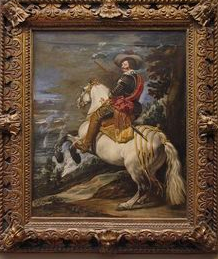
After reading a portion of Defining Edges, particularly the Picture Frames excerpt by Bailey, I learned more about the significance of the borders and frames. One of the frames that I carefully examined was the frame around Don Gaspar de Guzman, Count-Duke of Olivares, c.1635. In this picture, the Count-Duke of Olivares is depicted as a brave individual, which is evident through his position in the picture. He is seated on a valiant, white horse, right in the center of the picture. Despite the main spotlight being shone upon the hero, Bailey expresses the importance of the border that surrounds the nobleman.

The border around the picture contains three dimensional carvings of wood and gold. The most vivid aspect of the frame are the eight satyrs with gaping mouths, being present “as if to protect the nobleman in the portrait” and to “support the image of the duke on his horse” (Bailey 12). I agree with Bailey’s insight about the roles of the satyr faces, as there are similar phenomenons. For example, during the seventeenth century, gargoyle statues were placed on cathedrals as a means of protection from intruding evils. Much like the satyr faces, the gargoyles were three dimensional to enhance the effect of keeping any evildoers at a distance.

 world forum cryptozoology mysteries gargoyles GIF

In essence, Bailey conveys the various influences that frames have on its pictures. Prior to reading Picture Frames, I only focused on the picture itself when examining pieces of art, but because Bailey brings light to the parts outside of the frame, I learned to appreciate the surrounding efforts that enhance the meaning of the picture.

Week 3 Blog

Mending Wall is a poem written by Robert Frost, an American poet of the twentieth century. After reading the poem, I struggled to grasp several details throughout the stanzas, as the overall flow and story were both puzzling. Of the various implications of the poem, the only prominent information that I retained was “good fences make good neighbors”. Apart from the aforesaid proverb, I was unable to visualize what Robert Frost was attempting to convey.

 season 3 episode 11 upset homer puzzle GIF

One of the main factors that makes Robert Frost’s work so complex is attributed to the contradicting statement that he makes in line one and line twenty seven. By stating, “Something there is that doesn’t love a wall/ That sends the frozen-ground-swell under it/ And spills the upper boulders in the sun/ And makes gaps even two can pass abreast”, Frost indicates that barriers should not be present because such hindrances distract the fostering of a relationship (Frost 1-4).  However, Frost creates a paradox by writing, He only says, ‘Good fences make good neighbors’”, Frost indicates that barriers between two people exist to serve a moral purpose (27). Frost does an excellent job in terms of forcing the reader to interpret his writing rather than giving a clear message to convey.

Image result for good fences

Overall, I saw that Robert Frost believes that fences are detrimental when building relationships, which I disagree with. Even in our own homes, most of us who have good relationships between our family members are not negatively affected by the doors. These doors are essentially barriers that separates one person from another as a means of providing privacy, and are thus a necessity. Because this reality serves to evidence how people are capable of fostering healthy relationships even with such barriers, for the sake of privacy, good fences could make good neighbors.

Image result for privacy

Week 2 Blog

The music mashup created by DJ Earworm combines pieces of the most renown American pop songs of 2016. While watching the music video, a flood of flashbacks hit me as I began to connect various songs to some of the memories that I had throughout my junior year of high school. The lighting and party visuals of the video further attributed to solidifying what I experienced in the past, which included going to the beach, participating in school dances, and spending time with friends.

 dancing fun party disco minions GIF

Amongst the myriad of songs in the video, Justin Timberlake’s Can’t Stop the Feeling was one of the few songs that was oddly congruous with the overall club-like imagery. In the original music video of Can’t Stop the Feeling, the ambiance of the song depicted lots of radiant and untroubled individuals of diverse backgrounds in the cultural, ethnic, and occupational aspects. Despite all of the aforementioned differences between the townspeople, the video conveys that such variances can be negligible in the light of the happiness that surfaces when we cease making superficial judgements. Throughout the video, Justin Timberlake reiterates “everybody sing… I wanna see you move your body…room on lock the way we rock in, so don’t stop…” in order to emphasize the happiness that emerges as we learn to look past another’s physical appearance (Justin Timberlake 2016).

Image result for harmony of races

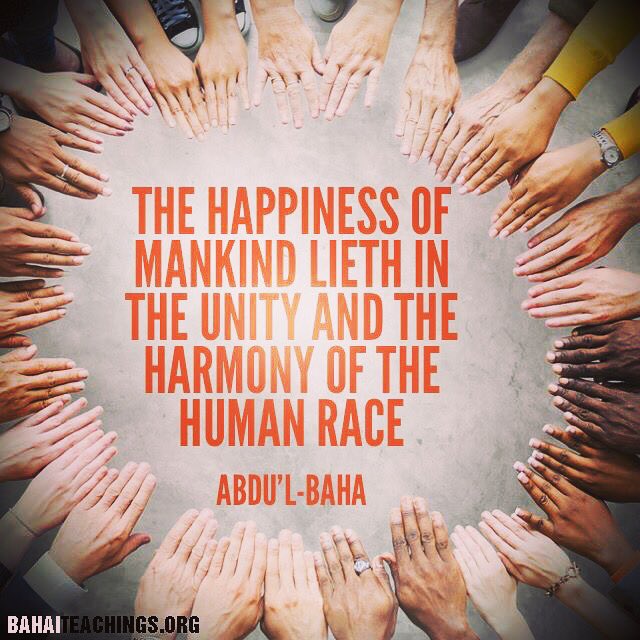
Can’t Stop the Feeling plays an essential role in the culmination of the 2016 pop songs, as it carries the same message of creating goodness out of diversity in the mashup video. I noticed that the variation of songs in DJ Earworm’s video substantially resemble the diverse townspeople in Justin Timberlake’s video. Through their musical recordings, both Justin Timberlake and DJ Earworm manifest the idea of how the harmonization of diverging backgrounds sparks a flourishing, euphoric sensation.

Image result for the happiness of mankind lieth in the unity and harmony


Week 1 Blog

Through They Say/I Say, Cathy Birkenstein and Gerald Graff convey how conventional methods of writing allow for students to understand the idea of “supporting thesis with evidence, to entertain counterarguments, and to identify a textual contradiction” (Birkenstein xviii). Despite the prevalent comprehension of such concepts, evidently, students are incapable of implementing the aforementioned writing essentials into their own writing. Consequently, Birkenstein and Graff attempt to denounce the fear of using “I”, utilizing organized templates, and being observant of the ideas of others.

Image result for writing

Although many students strive to avoid the usage of templates due to a possibility of plagiarizing another source, the templates presented by Birkenstein and Graff deviate from regular ones that label one’s writing as robotic. Rather, because the templates are advanced yet colloquial in all aspects, following the suggested guidelines of Birkenstein and Graff will not make one sound repetitive or unoriginal.

 robot someone typing flashing colors GIFImage result for no i

In the preface of They Say/I Say, Birkenstein and Graff claim that the prevention of using first-person pronouns such as “I” or “we” “hamper students’ ability not only to take strong positions but to differentiate their own positions from those of others” (xxiv). To an extent, the authors’ observations may be true, but are still arguable. Firstly, by stating “I” or “we” in formal papers, that piece of writing is seen as informal due to the way the paper stands. When one uses “I” in writing, one tends to expand the sentence as “I think that…” or “I believe that…”, which simply does not substantiate an argument as much as factual evidence would. Additionally, encouraging the incorporation of first-person pronouns seems to contradict the notion of listening to the voice of others, as writing any form of “I imagine that…” prevents one from fully integrating the ideas and thoughts of those that surround us.