After reading a portion of Defining Edges, particularly the Picture Frames excerpt by Bailey, I learned more about the significance of the borders and frames. One of the frames that I carefully examined was the frame around Don Gaspar de Guzman, Count-Duke of Olivares, c.1635. In this picture, the Count-Duke of Olivares is depicted as a brave individual, which is evident through his position in the picture. He is seated on a valiant, white horse, right in the center of the picture. Despite the main spotlight being shone upon the hero, Bailey expresses the importance of the border that surrounds the nobleman.
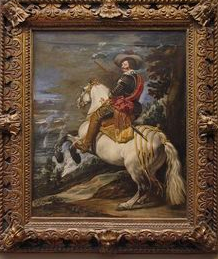
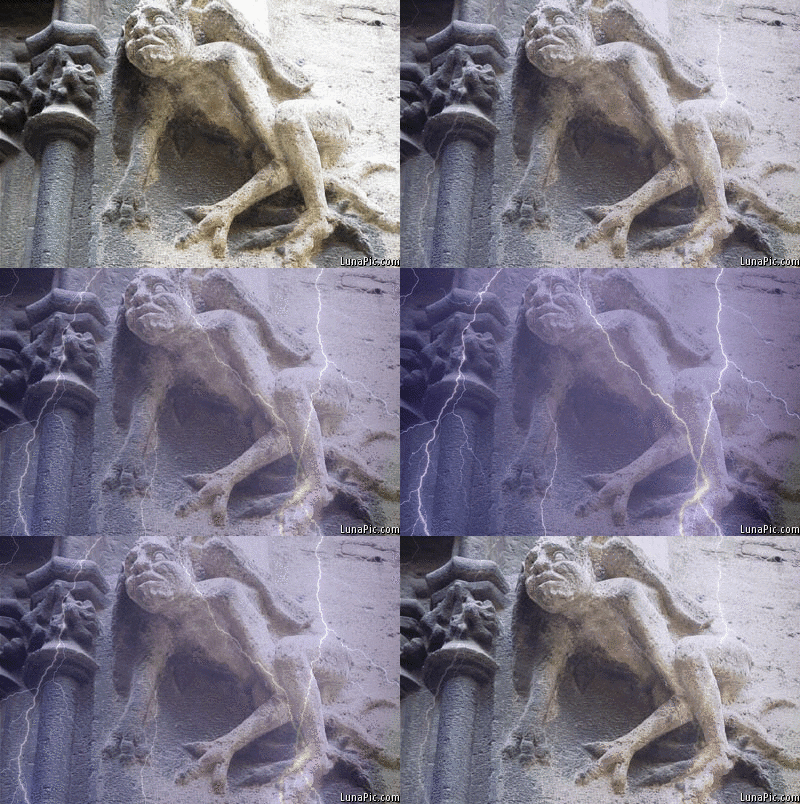
The border around the picture contains three dimensional carvings of wood and gold. The most vivid aspect of the frame are the eight satyrs with gaping mouths, being present “as if to protect the nobleman in the portrait” and to “support the image of the duke on his horse” (Bailey 12). I agree with Bailey’s insight about the roles of the satyr faces, as there are similar phenomenons. For example, during the seventeenth century, gargoyle statues were placed on cathedrals as a means of protection from intruding evils. Much like the satyr faces, the gargoyles were three dimensional to enhance the effect of keeping any evildoers at a distance.
In essence, Bailey conveys the various influences that frames have on its pictures. Prior to reading Picture Frames, I only focused on the picture itself when examining pieces of art, but because Bailey brings light to the parts outside of the frame, I learned to appreciate the surrounding efforts that enhance the meaning of the picture.
