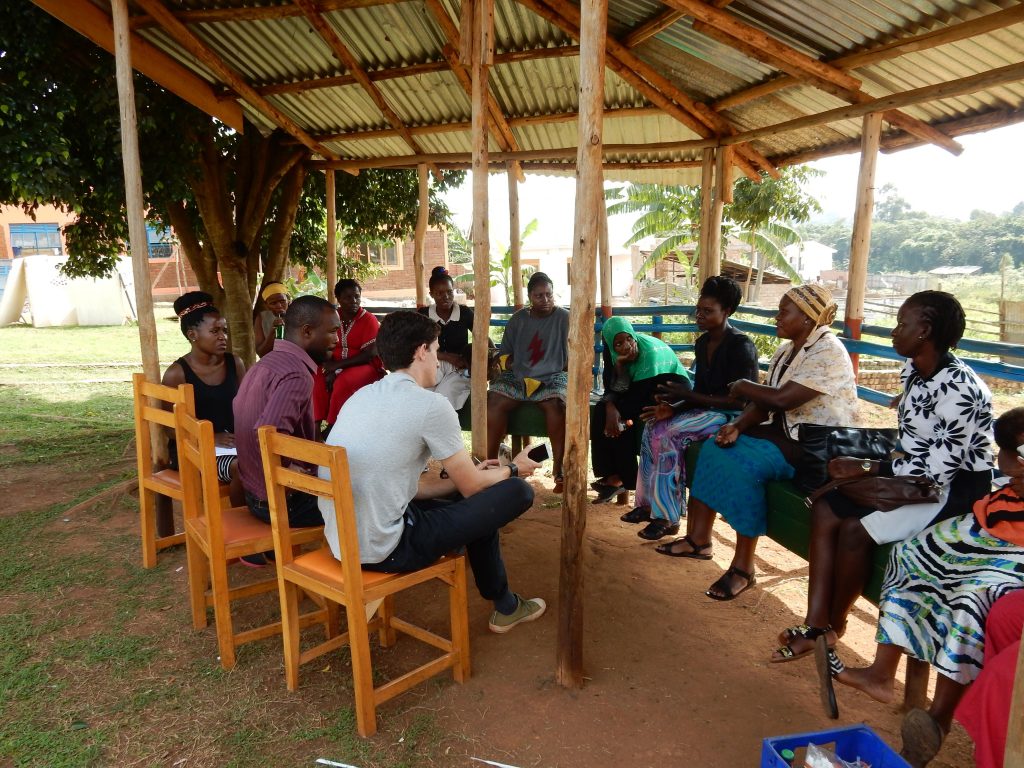
Among the seven Christian virtues, I could use some work on my patience. Sometimes I just want to get things done! I feel like I don’t have time to wait on other people, or I’m thinking about the next thing I have to do. Needless to say, the African concept of time clashed with that. Ugandans admit that they are “on Africa Time” and rarely do things with a sense of urgency. The quintessential example of Africa Time during my seven weeks in Uganda was the first day that we held focus groups. The first one was scheduled for 9 a.m., and twelve women were supposed to be there. We called them the day before, and all twelve confirmed. We called them at 8 a.m. the day of, and all twelve confirmed that they would be there at 9. So, I went to fetch Robert, one of the Nurture Africa staff members who was helping to conduct the focus groups, at 8:45. He said, “OK, I’ll be there at 9:30.” I thought he was confused, so I reminded him that the first focus group was scheduled for 9 and that all twelve participants had confirmed that they would be there. He responded that none of them would be there before 9:30. Only eight women showed up, with most of them arriving around 10:15. The whole time that I was waiting I was pacing around, my blood pressure creeping higher and higher, while Robert watched and silently laughed. Our 3 p.m. focus group on the same day didn’t start until 4:30.

My first reaction to the late arrival of the focus group participants was annoyance. It felt like a slight to Grace and I, like our time wasn’t important. I soon learned to drop my Western bias: Ugandans don’t think about time the same way that we do in the United States. I think that the way the staff interacted with one another – and with Grace and me – during the workday really demonstrated the dichotomy between our concept of time and theirs. Folks at Nurture Africa took the time to stop and ask how their coworkers were doing whenever they passed by one another. There wasn’t a single morning that at least three people didn’t stop by Grace’s and my office to ask how our night was, and how our work was going. These weren’t the cursory exchanges that are so commonplace in American society; people really cared about what we were doing and wanted to have a real conversation. This was a powerful motivating force for me; I felt like I wanted to make a positive impact on Nurture Africa not just for their beneficiaries, but for those who worked there as well. The practice of stopping for a real conversation also caused me to look inward. I realized that too often, I see people I know and try to move the conversation along as quickly as possible so that I can go about my day. In reality, there’s virtually no way that shaving two minutes off a conversation will negatively impact what I’m trying to get done.
Bena, a Ugandan graduate student who worked as a research assistant for Grace and me, explained the idea of “Africa Time” to me. She acted as a translator, a teacher of Ugandan culture, and most importantly, a friend to me. Initially, we had a somewhat rocky relationship. She wasn’t doing things the way that Grace and I wanted her to do them: not taking notes on the right things during our focus groups, questioning some of our research methods and praising herself whenever she did something well. I remember it really bothering me that she wasn’t sticking to our agenda the way I wanted her to, and giving herself lots of credit for what she did. However, my perspective shifted when we started visiting the homes of families in the area. Bena’s knowledge of Nansana and the surrounding areas was astounding. After making phone calls to a dozen former patients, she was able to map out where we would go each day for the home visits, and how much each of the taxis would cost to get us from place to place. I’m not sure why this caused my cognitive shift, but I began thinking of her more as a resource that we could learn a lot from rather than simply a local who knew how to speak Luganda and could help us gather data. Forming a deeper relationship with Bena proved invaluable for gaining insights into the Ugandan culture that we couldn’t have gotten from our fleeting interactions with patients and many of Nurture Africa’s staff members. Traveling around Nansana to interview different people, Bena and I developed a strong rapport built around our mutual curiosity about one another’s countries. She was shocked to learn that poverty and homelessness exist in the United States, just as I was appalled to hear of some of the rites of passage that many Ugandan women must undergo. Ultimately, I gained a lot from recognizing the value in forming a friendship with Bena rather than trying to be her boss.
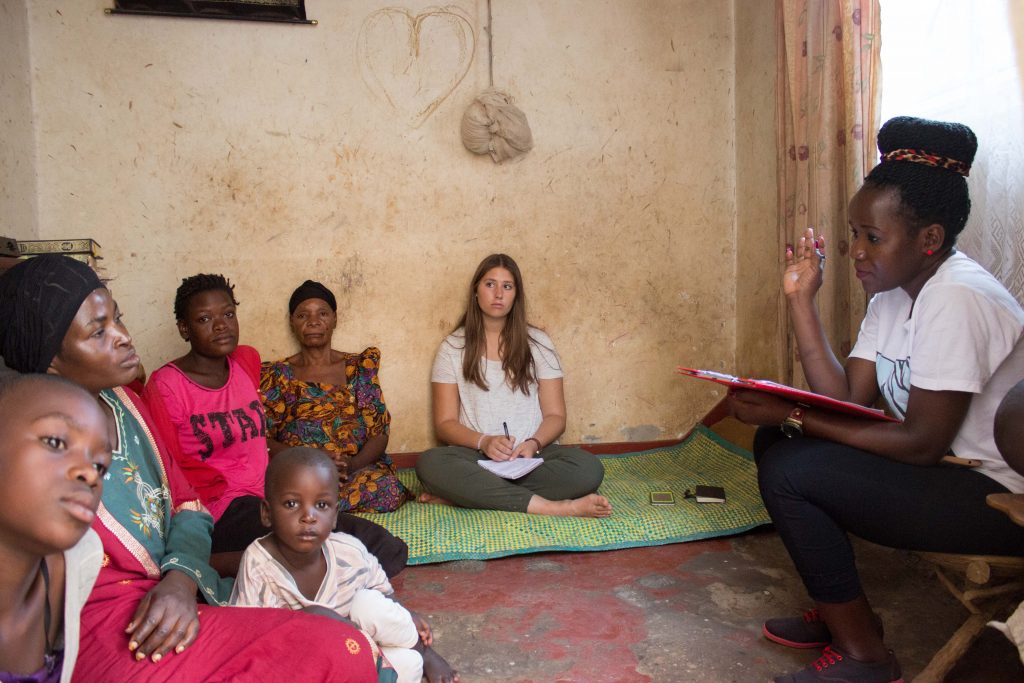
There were many striking examples of poverty in Nansana, yet none affected me as much as the plight of a family that Grace, Bena and I visited during the last week of July. The family was one of many that could no longer afford to go to Nurture Africa for primary healthcare services. Their son had been diagnosed with pneumonia a few months earlier and was given some pills, yet he was still sick when we visited their home. The air inside was dank; it was a poor environment for a child with pneumonia, and he coughed periodically throughout our interview. They didn’t know what to do, because there was no steady source of income to pay for another consultation or another prescription. While they told the story, I could see the concern on the faces of the boy’s mother and grandmother, yet I didn’t get the sense that their situation was uncommon. When I asked her about it on the way home, Bena didn’t seem surprised either. Days later I saw news updates on my phone about the “skinny repeal” to the Affordable Care Act. It was almost comical how trivial American healthcare policy seemed to me after seeing firsthand what it really means to not have access to basic healthcare services. Coming back to Santa Clara, it seems unjust that I can walk five minutes to the Cowell Center to see a clinician when I have a sore throat, with no worries about the cost.
I don’t mean to trivialize the plight of the millions of Americans who would lose healthcare coverage with the repeal of the Affordable Care Act, but I did gain an important sense of perspective from meeting families who had to choose between putting food on the table or paying for a prescription for one family member. With my background in bioengineering, I started to feel a sense of personal responsibility for these people. Shouldn’t someone who has been privileged enough to go to Santa Clara University to pursue a degree in bioengineering do something for those who cannot afford a single prescription? I hope to start a career in which I can enable people in poor communities to live healthy lives. I have been fortunate to have had opportunities to learn from Ugandans the many challenge they face to living healthy lives, and I hope to use what I learned to help them achieve healthier lives for themselves and their families.