Travel Trepidation
Whenever I disembark on a new journey, whether I’m about to check in for a transatlantic flight or merge onto I-70 in my Subaru to go skiing, a wave of anxiety washes over me. People who know me well can attest that I am prone to forgetfulness: I’ve left my backpack with all of my school supplies on the couch at home before flying back to school from Christmas Break; I’ve driven to concerts at Red Rocks without my tickets; I constantly forgot the right color of soccer socks when I was driving to games as a kid. So, when I was packing my things to go to Uganda, I was pretty anal about making sure I had absolutely everything I needed. I was confident that everything was organized perfectly in my backpack, my camera bag, and my suitcase for the next two months. I laid out my outfit for traveling, even pre-filling the pockets of my pants with wallet, passport, Ugandan visa and phone. Still, on the way to the airport I had that uncomfortable, unshakeable feeling: what did I forget?
After wracking my brains as I sat in SFO for three hours, I boarded a 747 bound for Amsterdam. I thought, if I forgot something, it’s too late now!

Thirty hours later, we landed at Entebbe International Airport in Uganda. We walked across the tarmac, and everyone else pulled out their passports, visas and yellow fever cards for the customs agents. I pulled out my passport, visa and… shit. That was it. Didn’t bring the yellow fever card. A wave of panic started to wash over me. Did I come all this way to not be let into the country? Wow. How could I be so stupid! Grace is going to be so mad at me if I can’t get into the country and she has to do the research alone. I walked up to the customs agent, frantically pulling up a photo of it on my iPhone and thinking of a bogus sob story to tell him. As I walked up, the customs agent simply waved me through after glancing at the printout of my visa for half a second. I made it! I’m through! As my pulse slowed down, I thought the most stressful part of the journey was over. Wait. Why the hell was I so stressed?
Mzungu Misconceptions
I knew that as a white person in Uganda, I would stick out like a sore thumb. I experienced this firsthand when I was in Johannesburg, South Africa last summer. I remember walking through downtown and not seeing a single white person. It was such a foreign feeling for me, being the minority. I was uncomfortable. Then I thought about how my nonwhite friends at Santa Clara must feel most of the time.
I thought that my experience in South Africa would prepare me for traveling around Uganda. However, Uganda could not have been different. In Johannesburg and Cape Town, people seemed uninterested by a white boy walking by. During our first week in Uganda, people stopped what they were doing to watch our van full of seven white people drive by. As Grace and I walked to and from work, the children we passed all called, “bye Mzungu!” People here seemed genuinely excited to see us pass through their neighborhoods.
Bye Mzungu!
A couple weeks in, I realized that I had been a bit premature in generalizing my assessment of Ugandan’s sentiments towards Mzungus. I went on a run with a few of the female Irish volunteers who we were living with, and they got verbally harassed by a group of men we passed by. Rosemary, one of the older volunteers, remarked, “I’m just glad I can’t understand what they’re saying about us.” A similar scene played itself out the following week when Grace and I were in the field with our translator. Unfortunately, she translated the things that men were saying about Grace. They weren’t polite, to say the least. Whereas I have been treated with nothing but respect by Ugandan men, women receive inferior treatment regardless of their race. This reflects the patriarchal nature of Ugandan society; the male-dominant attitude permeates nearly every part of everyday life here.
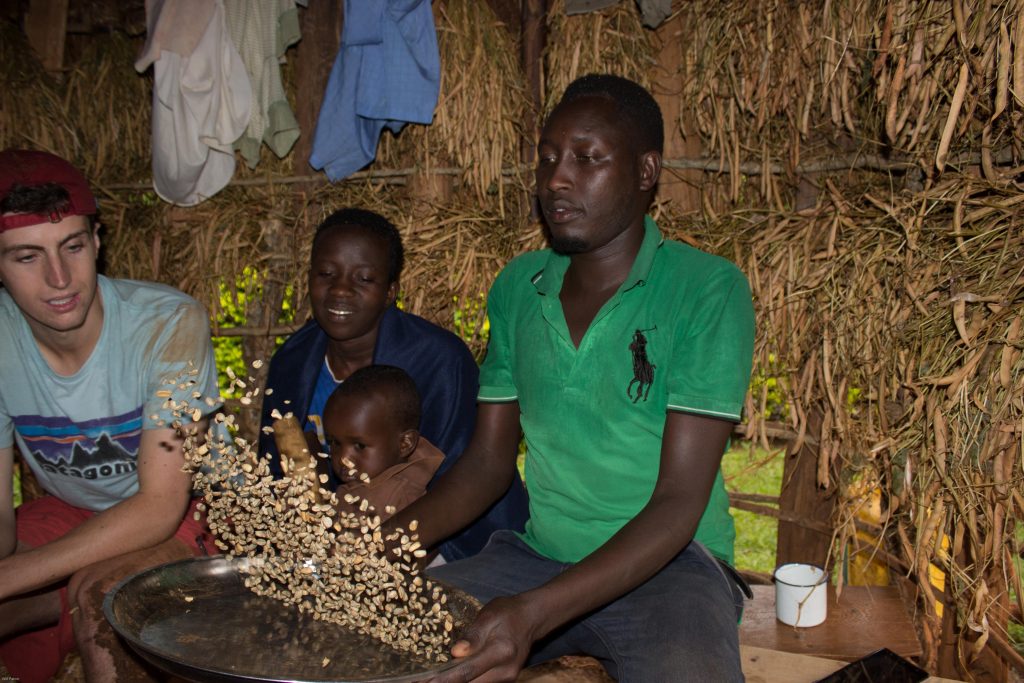
There was, however, cause for celebration when Grace and I traveled to Sipi Falls with Lauren and Indy. We met an incredible young guy named Steve Martin who started an organization called the Sipi Widows Group. This organization of 33 widows produces some of the most highly coveted Arabica coffee beans in the world. Steve, who is the secretary of the Sipi Falls Guide Association, arranges tours for Mzungus like us to learn about the coffee culture of the Sipi Falls region. When he was talking about the organization, all four of us Fellows had a lightbulb moment: working with this guy would be the best Global Social Benefit Fellowship ever! Indy and I both gave him our business cards, so maybe someone reading this blog will be lucky enough to work with him in the future!
Research Realities
My first impression of Nurture Africa back in April was that of a social enterprise that was trying to do too many things at once. In our first meeting with Thane, he relayed Jeff Miller’s advice to Brian Iredale, the Nurture Africa CEO: “Do one thing, and do it well.”
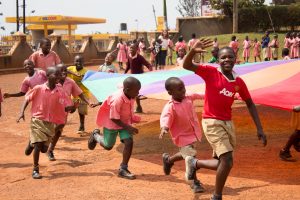
Grace and I assumed that the organization was centered around the health clinic, which was supplemented by a handful of smaller programs. I thought that part of our recommendations to Brian might involve whittling down these side projects and focusing on primary healthcare services. It wasn’t until I finally set foot on Nurture Africa’s property on June 23rd that I realized there weren’t really any “side projects”: everything seemed to be full-force. In the first week Grace and I learned that that the most-funded program was actually the education sponsorship, which assist about 3,000 children. The primary health care program is actually fairly small in terms of funding and staffing. As we arrived, most of the upper management’s brainpower was being spent setting up Nurture Africa’s new education program for South Sudanese refugees in the north of Uganda, monitoring construction of a new building for the physiotherapy clinic, and remodeling the basement of the health center to become a new maternity ward.
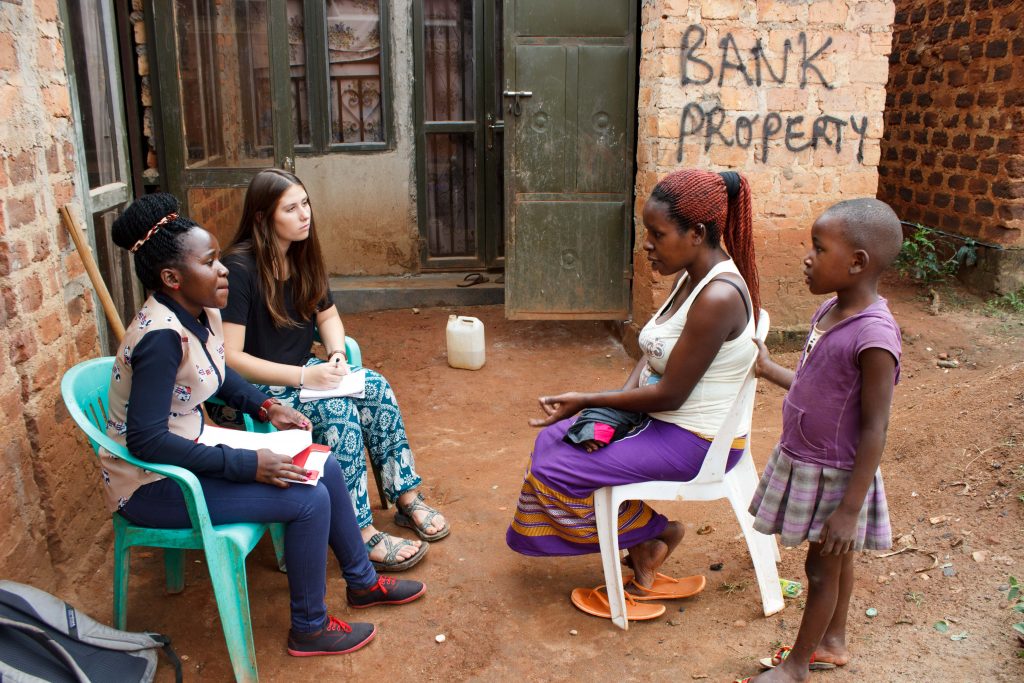
It would be impossible for Nurture Africa to just “do one thing, and do it well” at this point. They are so deeply ingrained in so many aspects of the Nansana community that cutting any of the programs would be a huge blow to some of the most vulnerable families in the area. In fact, the project that we had been assigned to – “payworthy services” – had already caused a large number of Nansana residents to lose access to free primary healthcare services. Payworthy services was launched as a pilot program in December to begin Nurture Africa’s transition from an NGO to a social enterprise business model. At this point, few of the patients coming to Nurture Africa for primary healthcare services come from families identified as vulnerable by the organization’s community health workers. I thought to myself, how is this program helping Nurture Africa work towards its mission of empowering vulnerable families in Nansana?
I asked nearly every Nurture Africa employee, “What is the mission of Nurture Africa?” It was a trick question. Grace and I unearthed almost a dozen different versions of the mission statement, so how could anyone know what it was supposed to be? Thane’s words from class echoed through my head: “It should be ten words or less. Everyone in the organization should know what it is.” What’s going on? I thought. How do they not know the mission? I thought they had figured this stuff out in GSBI!
This was my first real experience with organizational dysfunction outside of my fraternity (where that kind of thing is expected). It really caught me off guard. During the first two weeks, all kinds of different scenarios swirled through my head. More than once I mentioned to Grace that we should just bag the whole client satisfaction project and focus on solving the deep-seated issues in the organization. We know what patients want, right? Fast, friendly service at an affordable price. Easy. I’m sure I drove her crazy, but she saved us from going off-course. She’s a much stronger “J” than I am and made sure that we stuck to the plan. We learned a lot from patients and staff members, and I’m excited to continue our work with Nurture Africa from the other side of the pond. I’m going to miss the incredible staff at Nurture Africa, especially our research assistant Bena. But as cute as the children are here, I can’t say I’m going to miss hearing, “Bye Mzungu“ fifty times a day!