Interview Subjects – Male Perspective
Although I mentioned in my previous blog that I would be interested in interviewing Janet Walsh, a leader for women’s rights and former attorney for the UN, I could not find documented interviews online. However, I did find two NPR interviews on paid parental leave in the USA that expanded my research. The first was a case study on one parent’s experience at JPMorgan Chase, while the other interviewed a professional scholar on the subject. Both interviewers were men. (As a side note, most of the fact-based and “call-to-action” articles I’ve found on parental leave are from the lens of men – if you don’t see this as an issue please stay tuned for a later blog post to expand your perspective). Derek Rotondo was first interviewed for his lawsuit against JPMorgan Chase for unequal paid leave between women and men. As a working-man who values being a father to his newborn, he was upset about the company’s absence of paid paternity leave. (Another side note: I think it would be interesting to see if there’s any difference in outcome when working mothers push for paid parental leave or maternity rights versus when working fathers push for these same rights). While Rotonto is largely advocating for father’s rights in the workforce, he acknowledges the harmful implications of companies viewing parental leave as primarily a woman’s duty by admitting that through advocacy for paternity rights “we could get rid of some of these stereotypes where it’s the woman’s job to have babies and cook and the man gets back to work and pays the bills”.
The second interviewer I researched was Scott Coltrane, president of the University of Oregon and distinguished researcher in fathers and families. He brings up the perspective that more and more men actually want time off with their children post-birth. He also emphasizes how paternity leave is considered a luxury, and the US is the only developed country that doesn’t require paid maternity leave for both fathers and mothers. Coltrane explains that the despite men’s wants to stay at home with their newborns, the “main reason men don’t take [paternity leave] is because they don’t have the wage replacement – so they can’t afford it”. I realize that men’s higher concern over lack of pay than women’s is most likely because of the social expectation for men to be the breadwinner, so when men go unpaid for parental leave it is more of an “issue” than when women go unpaid for their child labor. I would expand further on his statement by asking Coltrane about why men care more about lack of pay than women, and prod at the social expectations placed on mothers versus fathers. Also, I’d want to see if he has any resources on how gay couples balance these differing expectations. In addition, he also brings up the benefits of offering paid paternity leave, as “fathers who take leave end up doing more of the routine work later”. In other words, fathers who take parental leave are more likely to continue to take up parental roles in the future as an “early buy-in”, alleviating some of the pressure mother’s face to stay at home with her child. The result is that both partners become better parents.
Again, these two interviewers come from the background and perspective of working men and fathers, and thus are largely activating for policies that benefit men (with the repercussions of benefiting women as well). To round-out my research, I’d want to interview working women with personal experiences on the subject as well as insights into the political dimensions of paternity leave in the USA. Because there are a lack of published interviews on working mothers, I think it would be more effective for me to create the interviews myself at SCU. I have three accomplished professors in mind: one who is expecting, one who is taking leave now, and one who has been a working mother for seven years. I may also interview a male professor who’s been on leave as well.
You May Also Like
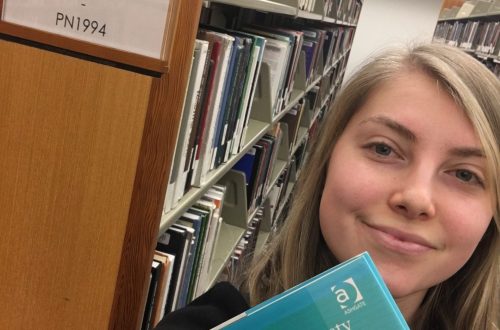
Selfie Project: Book Relating to Research Interest