-
Bibliography
Thompson, O. O. (2016). Maternity leave, what about paternity leave?: Child care and social inclusion question in nigeria. Gender & Behaviour, 14(1), 6966-6974. Retrieved from https://login.libproxy.scu.edu/login?qurl=https%3A%2F%2Fsearch.proquest.com%2Fdocview%2F1819911860%3Faccountid%3D13679 Sellnow-Richmond, S. (2015). Communication and identity: The paternity leave decision (Order No. 3723826). Available from GenderWatch. (1730273593). Retrieved from https://login.libproxy.scu.edu/login?qurl=https%3A%2F%2Fsearch.proquest.com%2Fdocview%2F1730273593%3Faccountid%3D13679 Vogel, L. (1990). Debating difference: Feminism, pregnancy, and the workplace. Feminist Studies, 16(1), 9. doi:http://dx.doi.org.libproxy.scu.edu/10.2307/3177954 Leinwand, T. R. (2016). STRANGE BEDFELLOWS: THE DESTIGMATIZATION OF ANTI-ABORTION REFORM. Columbia Journal of Gender and the Law, 30(2), 529-548. Retrieved from https://login.libproxy.scu.edu/login?qurl=https%3A%2F%2Fsearch.proquest.com%2Fdocview%2F1779236190%3Faccountid%3D13679 Rankin, L. A. (2014). Shame and blame campaign: The use of shame in teen pregnancy prevention campaigns (Order No. 1568252). Available from GenderWatch. (1617960039). Retrieved from https://login.libproxy.scu.edu/login?qurl=https%3A%2F%2Fsearch.proquest.com%2Fdocview%2F1617960039%3Faccountid%3D13679 Weber, J. B.…
-
Research Progress: Maternity Bias
I began drafting my first bibliography on the topic of modesty and how it is viewed as feminist or anti-feminist today. However, as I skimmed through relevant articles on Women’s Studies International and GenderWatch databases, I quickly realized that this topic is very limited in discussion and research according to these sites. I think part of the issue is that I had a narrow argument in mind for the cause of many issues today (that cause being differing opinions on the value or expectation for women to be modest), not an issue in mind that comes with it a plethora of causes for discussion. As such, I drastically shifted my…
-
Selfie Project: Book Relating to Research Interest
For my course research, I have decided to focus on the concept of female modesty from a feminist perspective, and analyze the differing conceptions of empowerment that comes with or is lost with modesty. I managed to find the book “Figuring Modesty in Feminist Discourse Across the Americas, 1633-1700” by Tamara Harvey in the basement book-shelves. Although I will most likely refrain from pulling the bulk of my research from this book, I believe it will be a good place to start in getting a historical backing on the differing opinions towards modesty from a feminist lens.
You May Also Like

Selfie Project: Article from 1998
-
Selfie Project: Article from 1998
To form a better understanding of the resources available to us from SCU libraries (and databases), our first task was to find an physical copy of an article from the year we were born (1998 in my case). Firstly, please excuse my horrid attempt to smile in this picture (as I was extremely ill during that class period). Secondly, please note that the magazine Wired actually came in a book-bound form with multiple issues attached. A resource like this would be useful in my research for the remainder of the quarter, as I could physically flip through multiple issues in a single bound item.
You May Also Like

Selfie Project: Book Relating to Research Interest
-
Intro: Sex Work, Feminist or Far From It?
CLAIM: The polarized feminist perspectives on female sex workers contributes to systemic sexual violence against that industry, but can be amended by developing a more diverse culture of feminism. Opinions towards sex work vary drastically among women and men. I am considering sex work here as a feminist issue, largely because of its polarizing effect on the feminist movement. Some self-identified feminists consider sex workers as oppressed women who are manipulated into an industry that exploits their bodies for the sexual pleasure of men. Others see sex work as the reclamation of women’s sensuality, sexual desires, and bodies. Regardless of these polarized opinions, the lack of consistent support from the…
-
Intro: Pregnancy Discrimination
CLAIM: Discrimination due to the possibility of pregnancy has been and still is largely a woman’s issue, and must be combated in ways beyond legislation. The Pregnancy Discrimination Act, a federal law in the USA prohibiting discrimination against pregnant women in the workforce, has been enacted since 1948 (EEOC). However, women to this day still receive unequal opportunities on the basis that they could become pregnant in the future. The issue of maternity rights is such a pressing issue today because it affects all aging women at some point in time, even those who don’t want kids. Before diving deeper into why I find the topic of maternity rights so…
-
Intro: Feminism and Islam in the West
CLAIM: We could decrease the violence faced by Muslim women by including the religious culture of Islam – a religion that at its core is empowering to women – into our feminist movement instead of condemning it. Fun fact for the day: Americans are more likely to die from their clothes catching on fire than an immigrant-related terrorist attack, according to a risk analysis reported by the CATO Institute. Despite this fact, terrorism is ranked second as America’s biggest perceived threat (Survey of American Fears, 2016), and Muslim people, especially Muslim women who wear the Hijab, are largely the target for this stereotype. While I am interested in the discrimination…
-
Spelman Annotation – Feminist Theory
It seems as though there exists a paradox embedded in the North American Feminist Theory. All women experience similar expectations that come with womanhood – a “universal sameness” if you will. Yet at the same time each woman’s degree of experiences are influenced by their demographics. Thus, the conflict prevails: should feminists unify all women under a shared “womanhood” while concealing differences among women? Or should they instead focus on these intersections of class, race/ethnicity, ability, etc. in the identity and experiences of being a woman, risking inter-gender conflict and hierarchy? This is the very conflict Elizabeth Spelman addresses in her book, Inessential Woman. She calls for Feminist Theory to…
-
This Millennia’s Biggest Fear: the Term “Feminism”
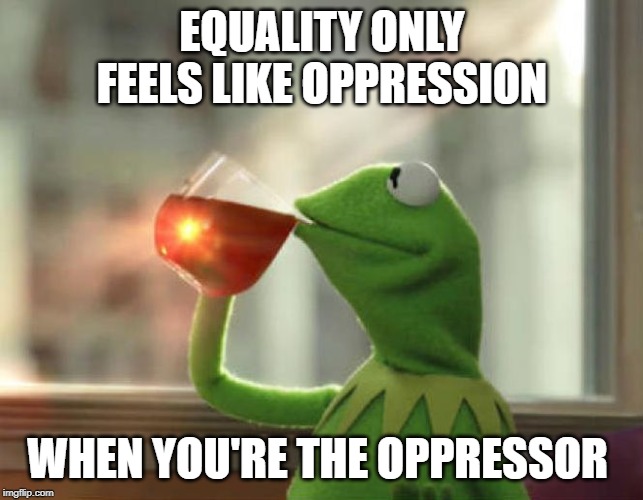
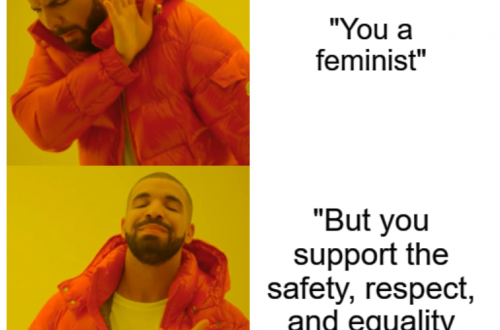
This headline exemplifies our society’s current conception of the term “feminism”, and our fear of labeling ourselves as a feminist (even when we are its very definition: a person who supports the political, economic, and social equality of the sexes). Our hypocritical distaste of this word also highlights systemic misogyny – as most things labeled as feminine are given a negative or weak connotation.
-
Some Tea for Thought…
You May Also Like
Ah, the F-Word…