
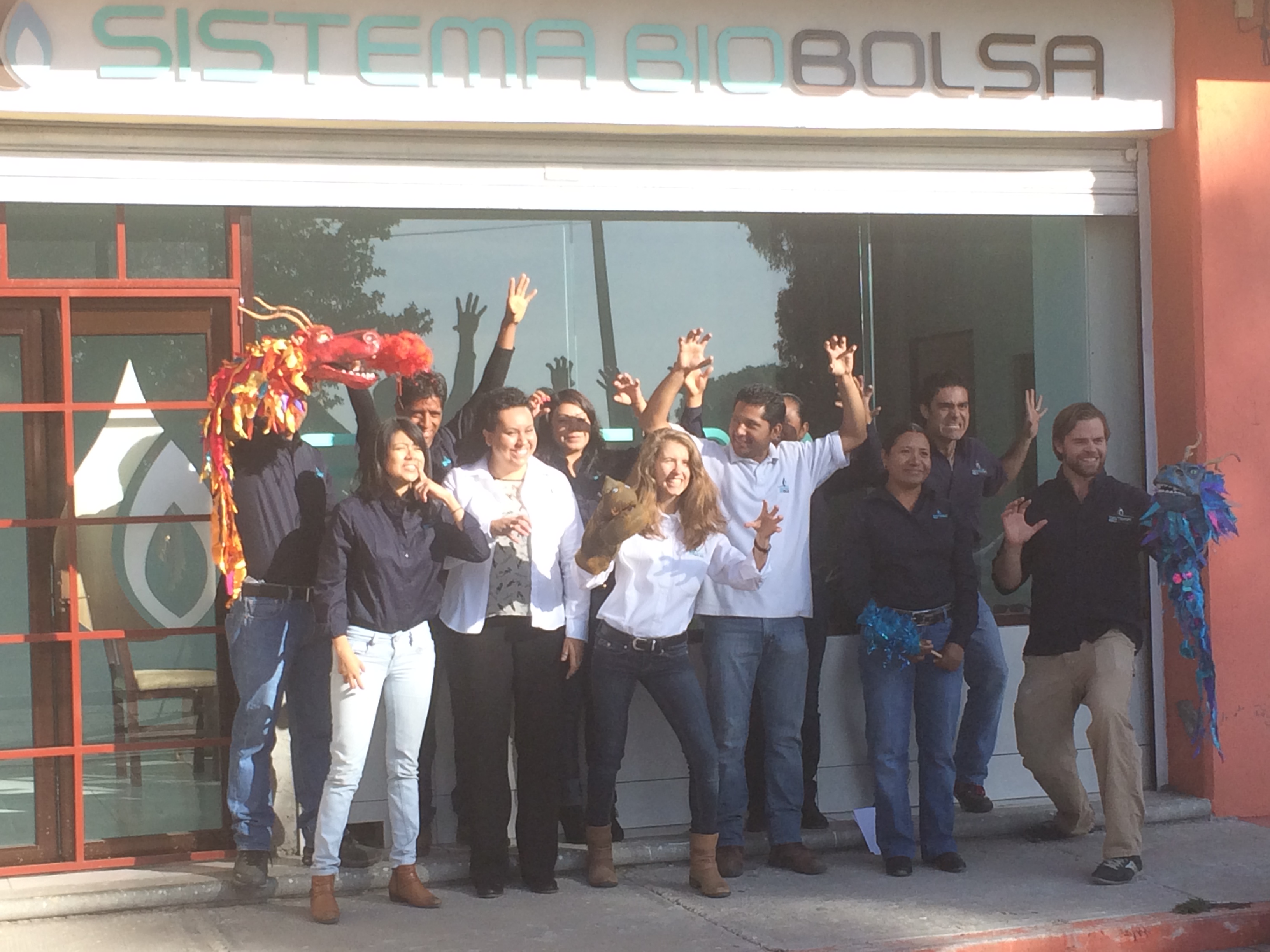
During the final days of our time in Mexico, the entire Sistema Biobolsa team gathered in the Puebla field office. While there were very pragmatic reasons for everyone coming together, such as meeting with lawyers and investors, it became a great opportunity to appreciate why we were all there in the first place. Alex (Sistema’s cofounder) brought with him several sheets of white paper and a pack of markers, and in the context of a professional office it seemed strange to me. He then instructed everyone to take a sheet of paper and spend the next few minutes drawing and writing what Sistema Biobolsa meant to them. As the office began drawing, Elizabeth and I talked about the assignment. I was thoroughly convinced that everyone would come back with a paper representing the economic, environmental, or health impacts of biodigestors. Sistema was an agricultural technology company, right? I couldn’t have been more wrong. Instead there were words like “comida”, “amor”, “familia”, or “communidad”. Everything I had been witnessing over the last two months was finally coming together.
While in Mexico, I began reading a book called “Start with Why” by Simon Sinek. In the book, Sinek talks about what makes some companies and organizations great, while others who seem to have the same product and organizational structure continue to fail. His point can be summed up in his saying that “people don’t buy what you do, they buy why you do it”. As Sistema Biobolsa employees took turns sharing what the company meant to them, I understood why this was true.
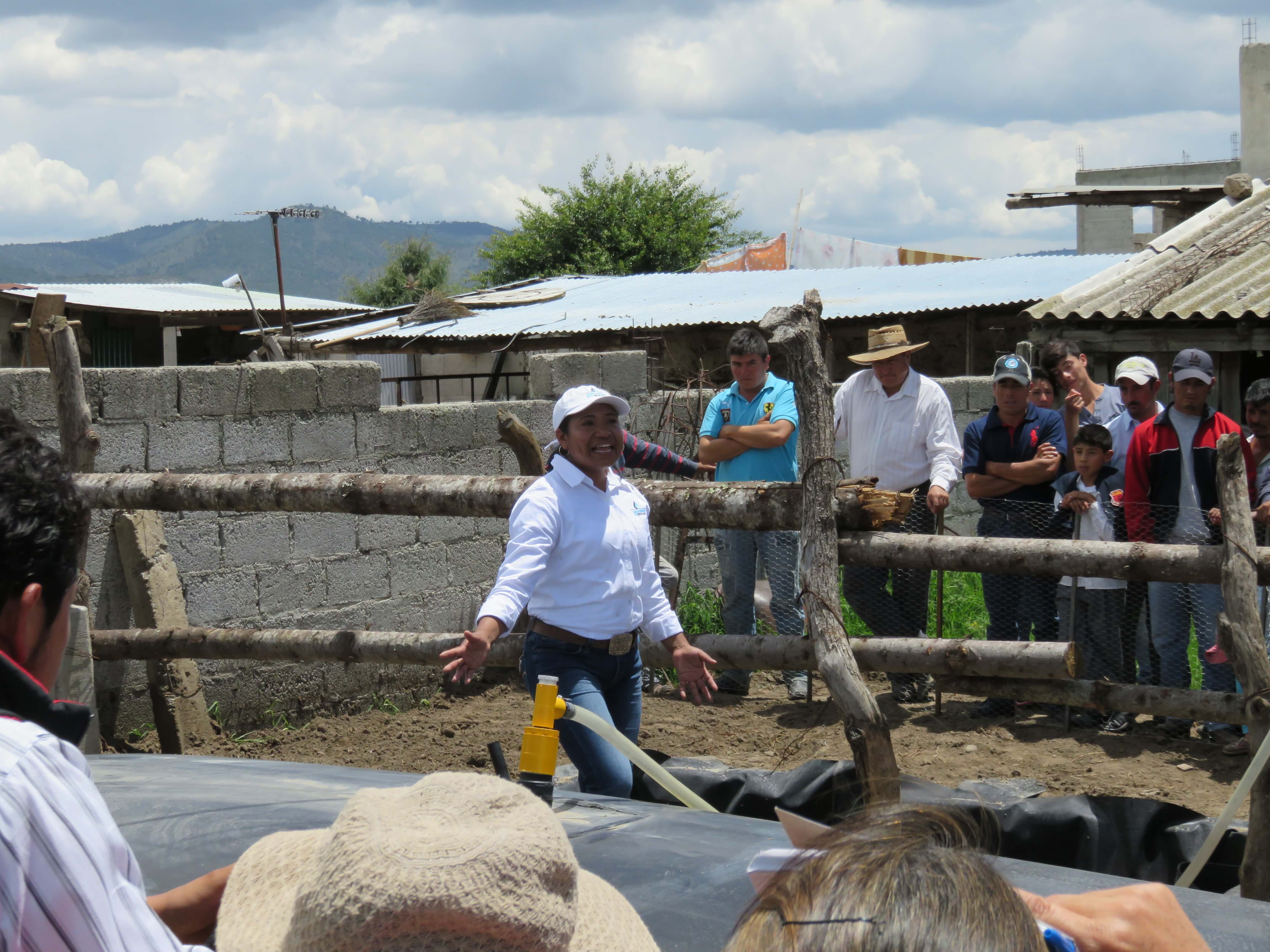
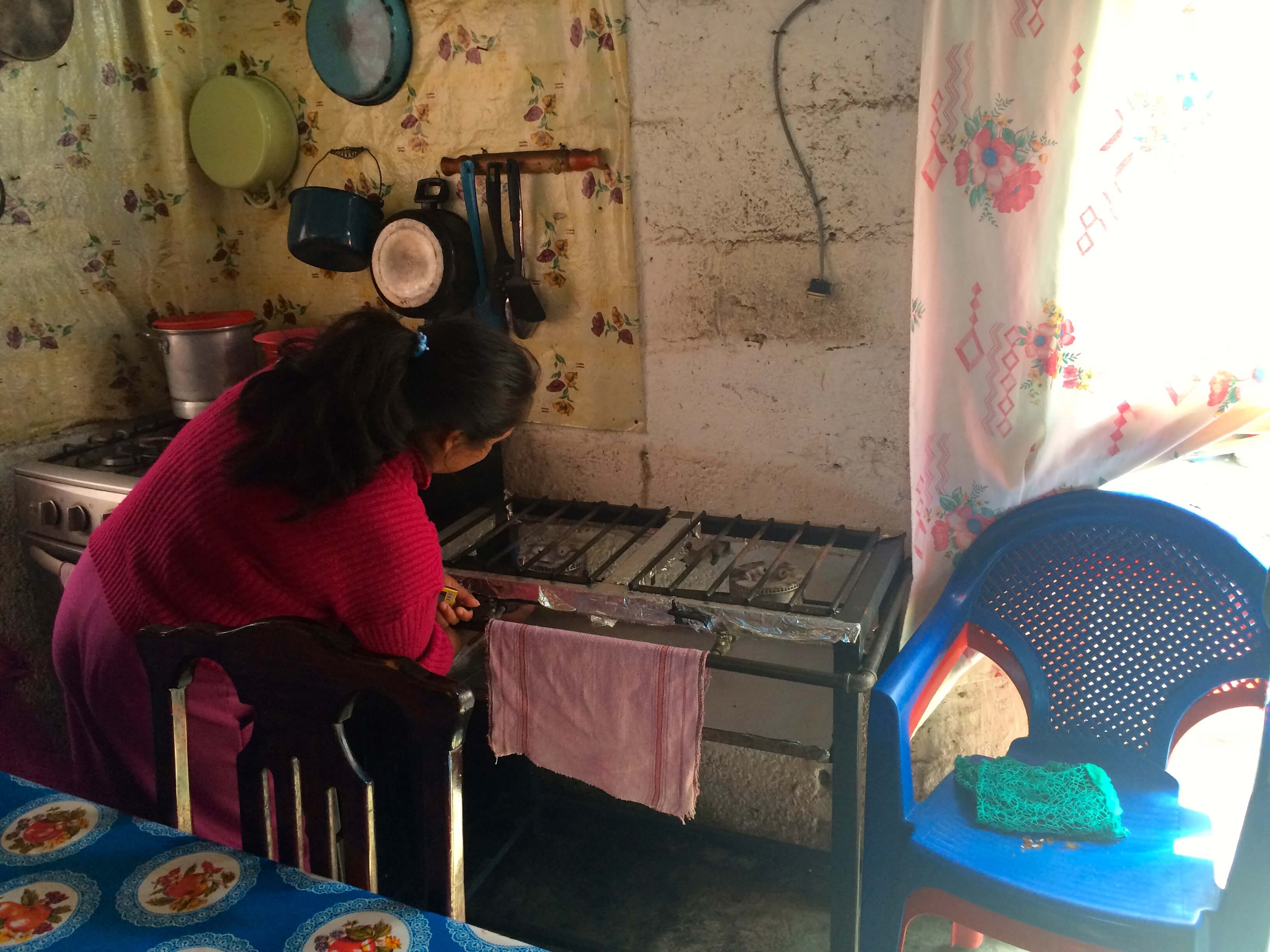
I went to Mexico fascinated with what Sistema Biobolsa was doing. Moreover, I went to Mexico as an Economics student, fascinated with quantitative aspects of the business. However, it wasn’t long before I realized that no one in the country saw it that way. We talked to proud mothers who eagerly showed us the blue flame their biogas stoves produced, and told us how they could now cook all day long and not run out of gas. Community is vital to life in rural Mexico and their communities are built around big meals. Few things seemed to bring families more joy than serving food to the entire neighborhood. We would also talk to farmers who were proud of how little their farms smelled, and how they no longer needed to use chemical fertilizer. To an economist, the switch from chemical to organic fertilizer represents a strategic business decision and a shift in preferences, but it was far more profound than that. One man sat us down and explained how he knew chemical fertilizer was polluting the food he would then feed to his family and his neighbors. He explained that it was a parents responsibility to create a better life for their children, and to him this meant feeding them healthy, organic food. As an economist, I also entered the country assuming that price would be the leading factor when it came to fertilizer choice, and once again I was wrong. The farmers we met valued quality over cost savings as they prided themselves on having tall, vital corn stalks, and healthy livestock. They had little interest in my overly simplistic cost-benefit analysis.
The sheer emotion in the room as Sistema employees explained what the organization meant to them was the final nail in the coffin for my ill-informed and preconceived notions of what Sistema Biobolsa was all about. That day was the culmination of a profound lesson that had been overtly apparent over the last seven weeks: people don’t buy what you do, they buy why you do it. For this reason, there will never be a successful social entreprise that does not have, at it’s core, someone who believes in and cares about the organization’s mission absolutely. Sistema Biobolsa does not just sell bio digesters; they sell the opportunity to have a more happy, humane and healthy life for rural farmers. This realization led me to two take-aways: one about my vocation, and the other about social businesses as a whole.
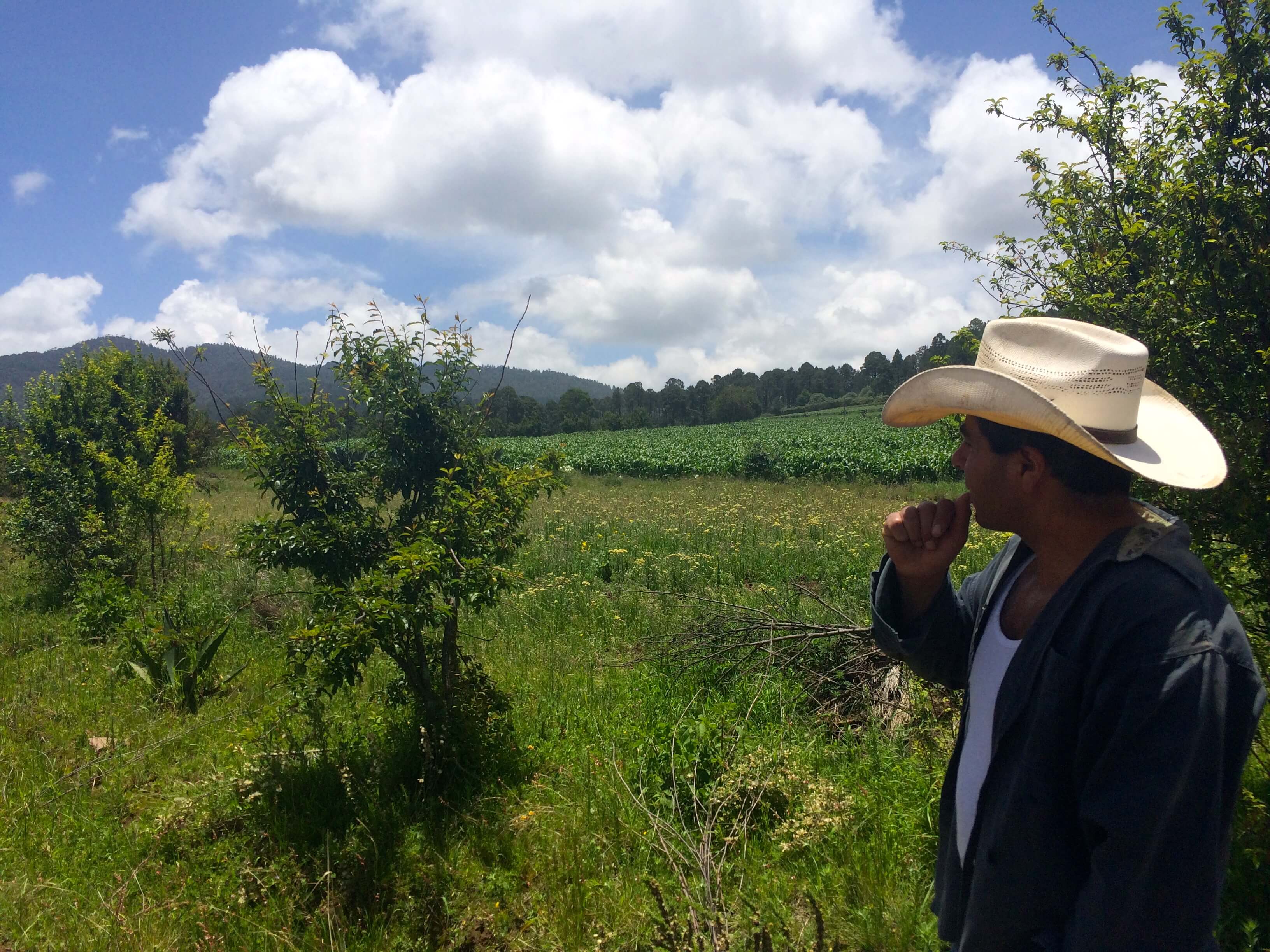
Firstly, I realized that parachute interventions don’t work, no matter how clever the people who design them are. It took Alex and Camillo years of living and working along side rural farmers to fully understand how to build a product that would have an order of magnitude impact on their lives. Some call this approach nativism and it’s importance can be seen all over the technology sector. There are plenty of companies employing brilliant people to develop ingenious technological advancements, but unless they designed with a deep attention to the needs of their intended users, it is not likely to have any sort of impact at all. No organization can truly impact BoP markets without being in tune with their needs and how their particular intervention can benefit their users in ways that transcend economics.
Secondly, I realized something important about my own vocation. I learned that I can never truly do my best work at an organization, unless I firmly believe in their mission. This is not to say I realized I have to work for social businesses for the rest of my life, but rather that I am committed to working for organizations that don’t just know what they do or how they do it, but why they do it. Here in Silicon Valley it has become such a viral trend that even TV shows have started mocking the fact that it seems as though every company is claiming to be making the world a better place (HBO’s Silicon Valley encapsulating this perfectly with the line “I don’t want to live in a world where someone else makes the world a better place better than we do”). These shallow corporate mission statements are not what I’m talking about. The organizations I want to work for are those who don’t need to write down their mission statement because it resonates from everything that they do. I have experienced this at Sistema and at the Miller Center and I hope to fortunate enough to continue to find it throughout my career.