The Ever Present Question for College Seniors

This is where I had the epiphany that changed my college course.

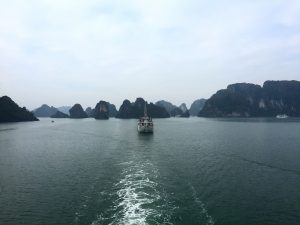
As we floated along the water in Ha Long Bay, Vietnam during December of 2015, I could hear the waves slightly crashing into the sides of our small cruise ship and the faint voices on my family and the other passengers below me. Laying alone on the floor of the deck, I realized that I didn’t want to go into medicine. Immediately, a wave of relief overcame me, but quickly, panic flooded my body. What does this mean? What am I going to do with my life? Am I capable of doing anything? Such questions attacked my brain, and I didn’t have a response to any of them. I had one of my first panic attacks, only because I had no idea what life looked like.
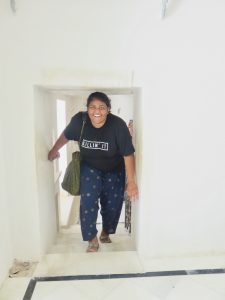
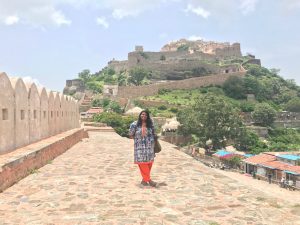
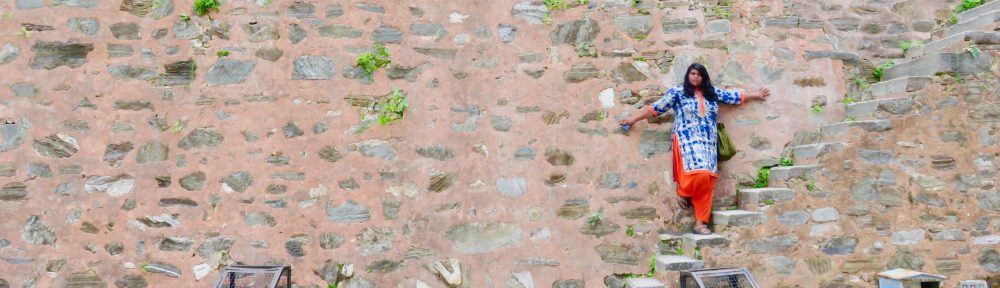
Even the palaces in India aren’t big enough for my ego

I am a fairly confident person. I joke about it with everyone, but I am really confident in myself and my abilities. Except that night. I had my life plan mapped out in my head, and I was not ready to abandon it. Upon my return to school, I tried to internalize my thoughts and feelings. That didn’t work out as I would have panic attacks every time I was reminded of my future. Eventually, I turned to my friends. Opening up to them made me realize that I wasn’t the only one who felt this way. My friends, and even strangers at times, became my source of comfort during this internal turmoil. I don’t know how or what changed in me, but I gained this mindset to view this predicament in my life as an opportunity to choose a path for myself that I want, one that will make me happy and satisfied with the outcome.
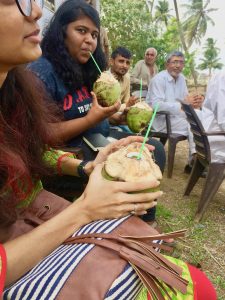
Coconuts can not be a part of my path or I will not be happy

I honestly knew nothing about the Miller Center for Social Entrepreneurship or the Global Social Benefit Fellowship (GSBF) till I took a class my winter quarter of junior year where I was introduced to the social entrepreneurship movement with Professor Michelle Stecker. To me, it sounded a bit too good to be true, the idea of a for-profit corporation with a social mission. I grew up in the Silicon Valley. I have seen the rise of Facebook, Lyft, and other huge companies from my backyard. I have seen how the rise of Silicon Valley pushed people out of their homes and led to dangerously high levels of homelessness and housing insecurity. Joining that corporate lifestyle was never for me as I could not live with the idea that my work can harm others, especially those at the lower ends of society. But, I did understand the potential of money for breaking the cycle of poverty around the world. Intrigued, I applied for GSBF and was awarded this fellowship, without quite understanding the impact it would have on me.
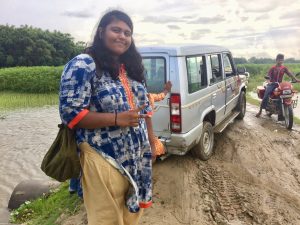
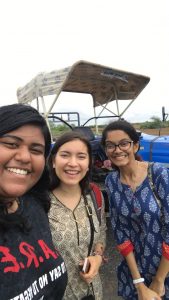
Here I am, posing in front of our car that almost slid into a lake.

I’ll admit it, I loved every part of this 9 month experience. All the triumphs, challenges, blows to my ego, and moments spent hugging baby goats. This fellowship allowed me to do real adult things, such as work as a consultant for a business, while still having the support of Miller Center behind me in case I accidentally mess up, such as an expensive hotel bill due to a new nationwide tax implemented a week after we got to India. I have met Silicon Valley executives who know me by my name. I lied to get Maya and I a dinner reservation at a palace in the middle of the lake. There are so many new takeaways and questions every time I think about this experience. I don’t necessarily think I will ever be able to fully process how this experience has shaped me, but as a college senior, one thing I have spent a lot of time thinking about is my vocation.

Even before this fellowship, I questioned everything about my vocation, and after these 9 months, I still have so many questions, but different questions. Just by talking to others and stalking people on LinkedIn, I became aware of so many different career paths for me that it is honestly overwhelming. I can see myself doing things that I never thought were possible for me, whether that be work for the United Nations or write about my world travels for a magazine. I have a diverse skill set that became more apparent to me throughout this whole experience. Even though the sky seems to be limitless regarding what I can do with my life, I am certain that I don’t want to work in America right after I graduate.
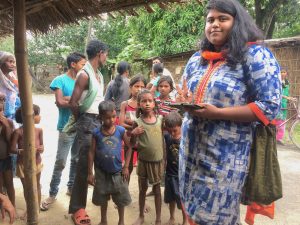
One of my unique skills is convincing a group of villagers that I am 8 feet tall

I don’t think I am mature enough to move to an entirely foreign country by myself and start working, which made me look into opportunities similar to GSBF. I applied for the Fulbright Fellowship, and if without GSBF, I would have never thought that I could compete with applicants from more prestigious schools. Right after we came back from field, I would constantly be explaining my project to multiple people, who were in awe. It was never a big deal till my brother just looked at me and said, that is really impressive. Then it dawned upon me, it is really impressive. I have done things that I would have never been able to do. I wrote business case studies, designed reports using Adobe, and bought business casual clothing. Whether or not I get the Fulbright grant, that application process helped me discern more about my vocation.
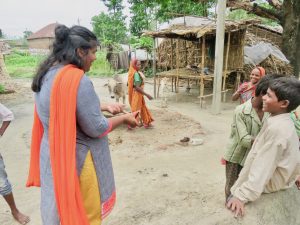
These children followed me around and then ran away from me when I acknowledged them.

I don’t want to work in an office, but instead, directly with communities in the field.I want to work towards the empowerment of women, and from my experiences and conversations with others, I truly believe that women are the key to solving many social injustices around the world. During our field visit to JJSS, we met many female community leaders and witnessed the impact of their voices regarding communal issues. Personally, I felt a sense of awe around these empowered women. I know women voices need to be stronger & louder in society, and I want to be a part of that movement.
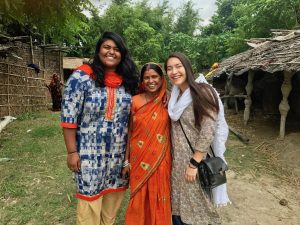
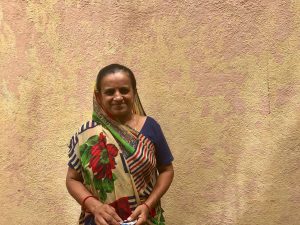
What a woman. Asha Devi is one of the main community leaders who is very active within JJSS. Both Maya and I left our interview with so much respect for Asha Devi.

“So Nithya, what are you going to do after college?”

Beginning of junior year, I would have nervously laughed and deflected this question because I had no idea. Now, I still have no idea, but I am okay with that answer. I know I am going to make the world a better place with my skills even though I can’t pinpoint exactly what my next steps look like. Even though the world seems like a big scary place, it seems a little less smaller and ready for me. And I know I’m ready for it too.
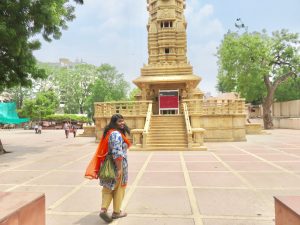
Heading off to my next adventure!
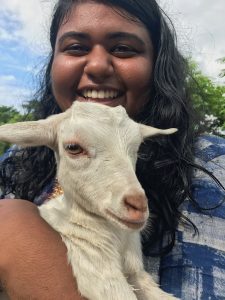
Reflecting Upon My Time in India

Whenever anyone asks me about my time in India, I always chuckle and explain how I can never describe it to give it the full I use words as amazing and great, but my experience was not all just fun and happy moments. However, without getting too personal,  I realized that I learned five key lessons about myself and my future.

  1. My love for goats. Anyone who follows my Instagram (you should if you don’t already) knows how much I love goats, especially baby goats. Because of GSBF, one of my life goals is to own a baby goat.

    A passion for goats spread through my body quickly.

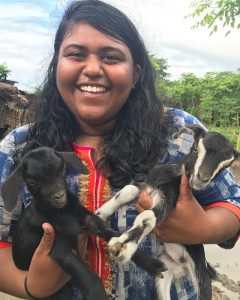
    Grab some popcorn because I am about to tell you how my passion for goats entertained a whole village. On our first day of our field visit to JJSS, we (Maya, I, Neil, and Bhaumik) had to wait ten minutes for our car to come pick us up. A group of 30 villagers were with us, asking Neil/Bhaumik questions about Maya and I while taking photos of the two foreigners. In the corner of my eye, I saw a big black goat, and I quickly ran over to it to pick it up. The villagers saw how excited and happy I was. As they were teaching me how to say goat in Hindi, a woman sent her son away. I didn’t pay any particular attention to this, but when he came back, I almost started crying. In his hand were these two baby goats pictured below, and I held them. I am tearing up a bit thinking about this moment. Everyone who was present were all smiling and laughing at me, but there was also this sense of joy in the air. Through my love of goats, I felt connected with everyone, and they all kept telling me to take a goat as we left. I should’ve taken a goat.

    My heart has never been so full.

  2. Inner Turmoil. The communities I had a chance to interact with are not at the top of the social ladder, but you wouldn’t know that based on how they act. I met some of the kindest people who showed me love and compassion. Men would constantly ask us if we wanted lunch or would hold the door for us as we entered our cars; women would be quick to offer us chai/snacks whenever we entered their homes and showed Maya and I motherly love. When individuals would tell us stories of their misfortunes/trauma, my heart ached, but it was quickly filled with joy and happiness by something else. In these moments, I would feel conflicted on how I should act or feel.

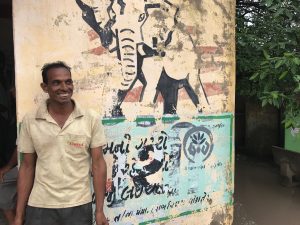
    A smile that distracted you from Dinesh’s dirty shirt that he has worn for a week now.

  3. My Privilege. When young me would visit India, my source of comfort for dealing with the immense poverty surrounding me was the fact that I would leave. Now, I understood that it is a privilege, one that I am not happy about. I hated leaving people’s homes after they would detail their hardships for us. Even though I felt a little bit better because our interviews would help them in the future, I didn’t like how I would withdraw from these communities, and subsequently India, to return back to my comfortable lifestyle here in America. Towards the end, I felt so guilty wanting to come back home, craving my big bed and burritos. To be honest, I am not proud to admit this at all.

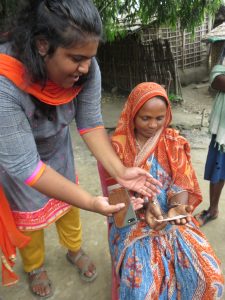
    Here, I am directing a woman on how I want her to hold a card for when I take a photo using my iPhone 7.

  4. My Support System. Bless Maya’s soul. There is not that many people who I could live with for two months while completing a project that was emotionally-draining at times. I don’t think I could ever describe how comforting she was at times.  Sometimes her presence was enough for me. As well, the team members of Awaaz.De supported both of us through our project, both mentally and physically. Special shoutout out to Drishty and Anamika from the Engagement team! Drishty became our mother while Anamika was our cool older sister. I miss those two dearly and hopefully, I will see them both very soon.

    Anamika’s First Field Visit!

    My partner for life

    Drishty Madaam yelling at Maya and I for some reason.

  5. My Future. Despite this blog post being about reflecting our time from summers, I feel as if I am still in that process, and I don’t think I will ever be capable of doing so. I have always felt guilty about my immense privileges, not just in India but also here in America. When I was young and would witness the many social inequalities, I always accepted those realities as something I couldn’t fix. Truth is, I can never fix them. But I can at least do something about them, and I saw a group of individuals who are doing that right now in India. From Awaaz.De to the organizations we visited, there were a group of change makers who were doing something. Through this summer experience, I realized that I want to work in the Indian social sector. I may never be able to explain fully why that is my calling, but I want to help make India a better place for all of its residents. For that, I owe the Miller Center everything for helping me visualize it.

    Posing for the camera.

What Does It Mean to Be a Woman

A common sight for us during our first three field visits

“Guess it’s just us two females hanging out in a crowd of just males once again.” This common phrase was jokingly uttered between Maya and I multiple times throughout our travels in India. Gender inequality is not a new concept to me as it is something I have become very conscious of every summer spent in India. Even though gender inequality exists in America, it is more apparent here in India. Even before I embarked on this fellowship, multiple family members expressed their concerns over my upcoming travels. During our first week here, we only saw one woman in our hotel, working at the front desk, while surrounded by men every morning as we ate breakfast. Everywhere men dominate public spaces while most women stay inside their houses. When we arrive to the rural areas to conduct our interviews with the end-beneficiaries, the men would crowd around us while the women would be outside their houses looking at us afar.

To see the social impact of Awaaz.De’s technology, we visited a total of five organizations: Precision Agriculture for Development (PAD), Self-Employed Women Association (SEWA), Ambuja Cement Foundation (ACF), CRISIL, and Jan Jagaran Shakti Sangathan (JJSS). All of these organizations uses Awaaz.De’s technology to further promote their mission. For example, PAD sends out voice messages regarding agricultural practices to rural farmers in Gujarat. Our interactions with the end-users during our first three visits—respectively PAD, SEWA, ACF—were filled with males. During these fields visits, our only interactions with women would be at the homes/fields we visited, and even then, women would only interact with us when they would give us chai.

The first woman we interviewed was on ACF Day 2

At first, it didn’t bother me as much because I was used to it, but I never thought I would be so excited to interact with women before. Sometimes, I would find myself drawn to the women crowded on the the steps of a house and approach them with a simple head nod. They would immediately return the same greeting back to me, but I would have to leave soon after to conduct our interviews. However, for brief moments, when I would be able to have conversations with these women with my limited Hindi, I would feel immense happiness.

Our last two field visits were to CRISIL and JJSS where we interacted with mainly women, which may have been a factor to why these field visits were my favorite. For CRISIL, these women became financially empowered after going through a two-day financial literacy workshop and were receiving voice messages post-training to supplement what they learned. We met with many groups of women where they patiently answered all of our questions, expressed their gratitude for us visiting them, and repeatedly offered us food. One group even gave us gamuchas, traditional Assamese white rectangle pieces of cloth with red embroidery that is given to others as a sign of high respect.

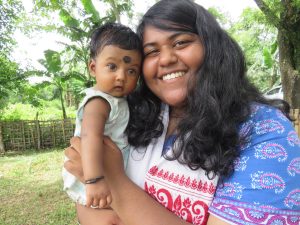
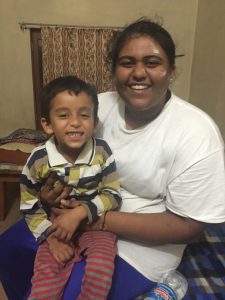
Sweaty me wearing a gamucha ft. cute baby

Our field visit to JJSS happened in Bihar, the only place where my parents were hesitant for me to go to due to Bihar’s reputation for crime. Before we came here, all of my family members expressed their worries over us going there and were immediately relieved once they learned we were going with two men. As a trade union for unorganized sector workers, JJSS started after individuals conducted a survey in Bihar looking at the effectiveness of the National Rural Engagement Guarantee Act (NREGA), which they found was not effective at all. Originally founded to help individuals gain work through the NREGA, JJSS expanded to talk about a variety of social issues including gender inequality.

When we embarked on our first day of our JJSS field visit, one of the founders, Kamayani, accompanied us to a village. On the bumpy car ride, she explained a major issue in this area is   reluctance to inter-caste marriages. In this specific village, a young couple, an 18 year old boy from the Dalit caste and a 17 year old girl from the upper caste, ran away from home to be together, but they were found in Delhi. The girl was brought back to her house while the boy was put into jail where they both remain till this day. A month ago, she wrote a letter consenting to this relationship and explained that she left her home due to her abusive family. However, when she came back to her family’s home, she released an official statement where she stated that the boy kidnapped her and left her at a narcotics dealer’s place in Delhi before she was found. Because these two written statements from the girl didn’t match up, Kamayani explained that the family probably influenced the girl’s latest statement in order to preserve their reputation, as a girl running off with a member of a lower caste doesn’t look good on the family.

No matter what, nothing can be done to save the boy as he did break the law—the minimum age to marry is 18 in India. However, the boy’s father, grandfather, and maternal uncle have been in jail for 2.5 months now for no real charges, and JJSS believes the girl’s father bribed the local police to put them there. This situation is a clear unjust power difference, which is why JJSS is stepping in. Today, Kamayani will attend a meeting with all the other women in this village to write a petition to ask the police commissioner to take the girl’s statement again without the influence of her family. As well, JJSS is scared that the girl may be in an unsafe home situation, so they will also ask for the girl to be taken to a safe place without her family.

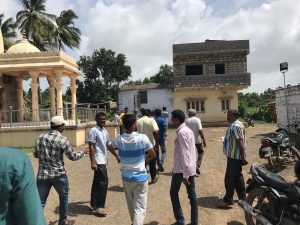
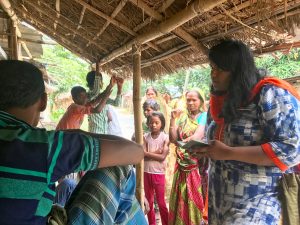
Typical day in JJSS field visit

If I am being very honest, I was in complete awe that an organization would step in to help this girl. I gained so much respect for JJSS as Kamayani explained this situation to us. As well, throughout our field visit, we interacted with so many women that it felt unreal at times. The hard truth is social norms are hard to change in any society, especially ones so ingrained like gender roles. Something I’ve always had to grapple with whenever I was in India was the limitations of my freedom, especially my freedom of movement, and comparing what I could do versus what my brother was able to do. For example, I could never walk outside in the villages without being accompanied by a male while my brother could play cricket with other children. I knew that my parents never meant to promote this inequality between my brother and I, but instead their actions were due to the stark reality of Indian society.

As a young child, I used to think that India needed to be more like America regarding many aspects, but as I grew up, I realized there was no such thing as gender equality in my homeland. Even then, who am I to say how Indian society should be like, especially as an outsider. What makes JJSS amazing in my opinion is how they tackle issues that the community members want to talk about, not what issues JJSS want to talk about. I feel that in order for me to understand what societal structures keep this inequality in place, I have to talk to Indians who grew up in India. I may never have the solution or even know what the solution may be to this social injustice, but if I ever wanted to do something about it, I knew that I need to follow JJSS’ footsteps and live among the community in order to hear the voices of Indian society to understand what the true issue is.

I’m All In for Mangoes

ABCD.

As my sweet and sticky childhood memories, mangoes are an inherent component of my identity as an ABCD: American Born Confused Desi. For all who may not know, this phrase, common among Indians, refers to the new emerging group of Indians born on foreign soil, experiencing the conflicting aspects of these two diverse cultures. But back to the mangoes. Every summer, I would spend a month in India at my mother’s childhood home in the bustling city of Hyderabad. I would sit on the swing in front of the house, sucking on the delicious mango seed while listening to the chaos happening on the main road down my little gully. Even though I wasn’t tall enough to see over our main gate, I knew the main road was filled with cars, buses, and motorcycles fighting to be one centimeter closer to their destination. Occasionally, you would hear silence, but that’s when you knew that there was a cow on the road.

Global Citizenship. 

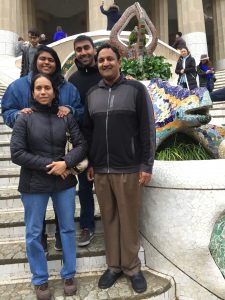
My family and I at our most recent trip to Spain


I owe my parents everything. They worked hard to provide me and my older brother a life free of worries. Both immigrants from India, my parents ensured that my older brother and I had the privilege to spend time in India as well as in other countries. I’m proud to say that I have visited all continents except Australia and Antarctica. Because of these experiences, I have gained a love for immersing myself in different cultures. Most importantly, I began to view myself as a global citizen, with ties to all over the world.


Social Justice. 

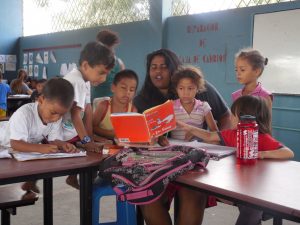
Reading to my children at an after-school program in Ecuador

Growing up, I had no idea what social justice meant. Despite noticing extreme poverty in many places and experiencing inequality due to my gender, I never thought about the causes or potential solutions to these social wrongs. After my first year in college, I went on a 2-week immersion trip where I lived in a small village in Ecuador, conversed with residents, and participated in after-school programs with children. One day, we visited a leprosy clinic, and I had the opportunity to talk to the Director, a nun who dedicated her life to serve others. She explained to me her fundamental belief in life is that every human being deserves to be treated with dignity, even those rejected by society.

That made me think about those who live on the sides of the roads, dig through garbage to eat, and feel invisible from the rest of society. My parents, as protective as always, would make my interactions with beggars quick. I never took it upon myself to learn about their experiences and struggles. But, that immersion trip cultivated a strong desire within myself to serve those less fortunate than me, even if that only meant listening.

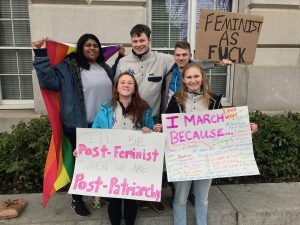
At the Women’s March in San Francisco with my fellow SCCAPers

At university, I found myself becoming deeply involved with Santa Clara Community Action Partner (SCCAP), a chartered student organization that focuses on service, activism, and advocacy for the marginalized groups. Working with our community partners, I have learned more about the daily struggles faced by senior citizens with neurodegenerative disorders, LGBTQ+ youth, and other vulnerable populations. As a staff member, I am an activist, from lobbying the school’s administration to divest from fossil fuels to gathering signatures on a petition to prevent housing discrimination in the Silicon Valley.

First Exposure. 

Last summer, I participated in a study abroad program in India, focusing on healthcare, that allowed me to spend time in rural Himalayan communities. We learned in depth about various health systems, from Ayurveda to Tibetan medicine. Also, we visited multiple community health clinics to learn about the complications of serving rural communities with limited resources.

Before this experience, I knew I wanted to serve impoverished communities but was unsure of what profession would be right for me. In Nainatal, everything clicked for me. We spent time with a local NGO, Aarohi, that dedicated itself to improving the livelihood of the rural Himalayan communities it served. Here, I saw a social enterprise through one of Aarohi’s initiatives. After learning about the communities, Aarohi took waste products – seeds of apricots – and turned them into body products, such as soap and face scrub. Through these products, Aarohi provided jobs to the local community. As my first exposure to social entrepreneurship, I understood how successful a business could uplift a community, especially through community involvement.

Mangoes. 

My homestay brothers in Nainatal, Paras and Manu, have a special place in my heart. Paras is beautiful beyond words, with a diva-like personality and his bright orange hair—which may be due to malnutrition because he only eats roti and ghee. Sweet Manu may be the incarnate of some demon with his mischievous smile and incoherent chatter. At first, the children were somewhat shy to spend time with my partner Erica and I, but our love for mangoes brought us together. Us four would spend the afternoons playing in a nearby playground and coming home to Munaji, our homestay mother, who would have mangoes ready for us to devour.

Manu and I after a flour fight

One afternoon, Manu and I were playing in our favorite playground, running around and yelling at each other. Out of nowhere, Manu told me that he has to go and started running home. Concerned, I gathered our stuff and followed him only to see Manu pooping in the middle of the two-lane road. In contrast to the dark asphalt of the road, his poop was bright orange as the four mangoes he ate that morning. We made eye contact and he flashed me his smile, and I started laughing so hard that I was crying. His father heard all this commotion and popped his head out of the family shop, only to start yelling at Manu to pull up his pants. Laughing, Manu ran toward me with his pants still down until Dadiji yelled at the both of us to stop.

My Vocation. 

Stories like these always bring a smile to my face but a sense of worry in my heart. Despite wonderful NGOs like Aarohi that are committed to improving the livelihood of communities that Manu, Paras, and the rest of my homestay family are a part of, the sad reality is that the systems that allow this family, and many other, to face many social injustices will continue to stay in place.

I feel a strong connection to India and a desire to dedicate my life to serve others. I know now that I hope to work in the field of social entrepreneurship when I grow up. Recognizing my many privileges, I hope to use my experiences from this fellowship to achieve my goal. I am beyond excited to work with Awaaz.de, spend another summer in India, and eat more mangoes.