Looking Back, Looking Forward

December is just around the corner and it’s still weird to really reflect and think deeply about this past summer. I know it was the most eye opening, forming, and transformative experience I’ve had in my life, and if I’m being honest, I don’t know how to deal with that. Looking at how much my mindset and beliefs have changed since the beginning of it all is uncomfortable in many ways. While in Kolkata, I was concerned that the experiences I was having would slip away from me if I didn’t internalize them. For a while now, it has felt like a series of fragmented memories lies in front of me, waiting for me to make meaning out of them. But with school, work, relationships, and other obligations to maintain, it’s been easy to brush the importance of piecing this puzzle together aside. Now, with Thanksgiving break allowing some time for reflection and a new chapter quickly unfolding in my life that I’m having trouble coming to terms with, it seems like a more important time than ever for me to take lessons away from this summer that I can move forward with.

Teamwork

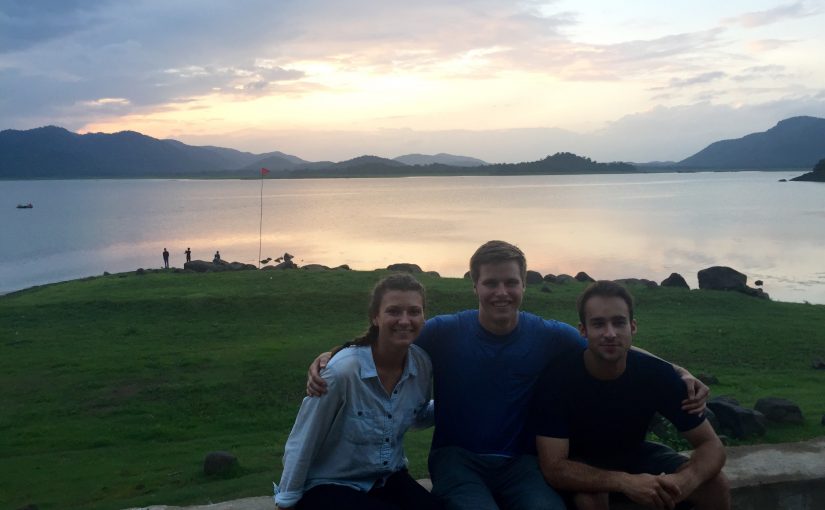
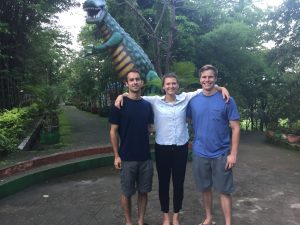
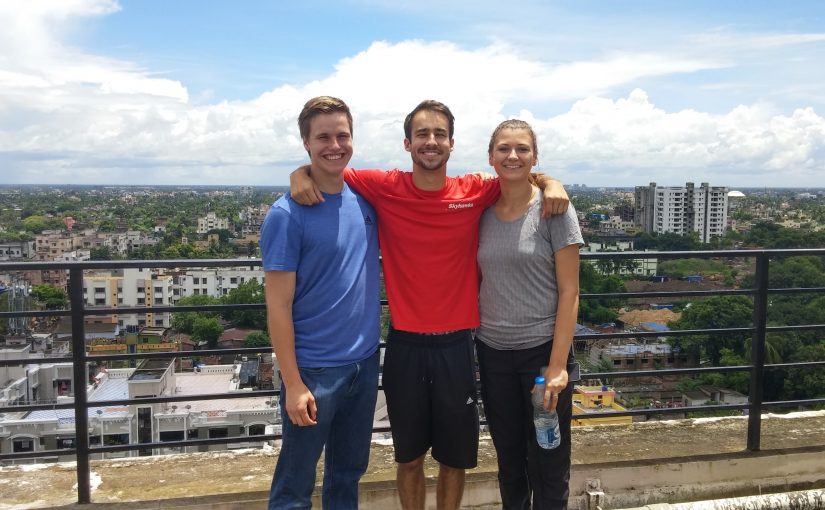
The dynamic of a three person team this summer came with its fair share of both positives and negatives. I love the hell out of my teammates, and there aren’t many people whom I care about more than them, but I’d be lying if I said that working together was always easy. It’s a common consensus that group projects in college are dreadful. I think the main reason for this is that a lot of people don’t understand how to work in a team, and they are not willing to learn how to work in a team through firsthand experience. This summer, I feel like I finally became proficient in the skill of teamwork. Here are some lessons I took away from the process.

  • Learning how to work in a team requires one to explore, realize, and understand their own strengths and weaknesses.
  • It also requires a desire to understand your teammates strengths and weaknesses, what they need to be successful, and how they can help you to be successful.
  • Too often, differing expectations and ways of getting work done is seen as conflict in a group setting that brings productivity to a standstill.

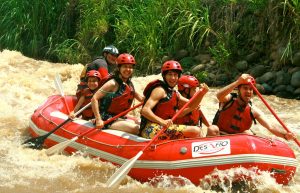
This summer, we did not have the luxury of shying away from confronting these imminent disconnects in ideas and expectations. I learned to embrace opposing ideas and use disagreements to develop more powerful ideas. The more time I spent working with Carson and Erika, the more I began to realize negative tendencies I had and personal weaknesses they were rooted to. I don’t think it’s possible to truly identify weaknesses without the help of others and I can’t thank my teammates enough for being honest with me when I was falling short in certain areas. My realization and increased awareness of some of my weaknesses and blindspots was probably the most important thing that happened to me this summer. I have not completely overcome many of them and still have countless more to realize, but the process of coming to terms with parts of myself that I don’t like and practicing self awareness was defining to my personal growth.

Changes in Understanding

In addition to my understanding of myself being challenged this summer, I was forced to question my personal beliefs and understanding of the world. I think I became more comfortable with reality, a concept that my life in the Silicon Valley had rarely forced me to confront. Every day we witnessed people struggling to survive and over the course of our time in India had various conversations with people living in poverty. This summer, I felt like I experienced raw, real human nature in a way I never really had before. I felt a sense of being grounded in reality there that I have held onto since returning in August.

My view of the way things should be was challenged. I think one of the greatest reasons to immerse yourself in new cultures and engage in relationship with people very different from yourself is to rethink what you define as good and bad in life. For instance, the culture I grew up in taught that being respectful and polite in conversation is more important than being honest and transparent. In Kolkata, the way people speak to each other has a harshness and confrontational sound that I initially thought was problematic and… bad. However, I began to realize that this way of speaking was not malicious like I had originally thought, and had benefits of creating more honesty in conversation and prevented miscommunication. 

Note: Almost everyone we met in India was extremely kind, welcoming, and polite towards us.

New Role Modelz

Although the experiences I had in the field were the most memorable and significant ones I had as a GSBF, these alone did not change the course of my life. However, the fellowship as a whole, from March to November, did. Learning about social entrepreneurship gave me hope for this world. It made me believe in humans and gave me a newfound appreciation for the potential that each and every one of us has to change the world.

For the first time in a long time I began to seriously consider my dreams again. Before the fellowship I had fallen into a rut of lowering expectations to curb disappointment. During the latter half of the fellowship, we studied and had the opportunity to be in the presence of a wide range of highly successful and influential people. A trend I began to realize among these people who I aspired to be like is that they got to where they are because of their expectations for themselves. Highly successful people believe they will do great things and expect great things of themselves. Sometimes, I now see, it is good to be a little unreasonable when thinking about my future.

This characteristic of relentlessly striving to fulfill gigantic, sometimes unreasonable expectations is something I also think makes entrepreneurship unique. It seems that in order to be a social entrepreneur, one must have a dream that the suffering of this world can be cured. They dream that we can live in a world of equity and prosperity. Their visions might not always be realistic, but they are grounded in reality and determined to use the resources at hand, the social structures in place, and the unpredictable markets they are working in to make this change.

In my mind, this type of life is a successful one, even if dreams are not always fulfilled and we sometimes fall short of our personal expectations. In the process of forming a better world, this type of person forms a better version of themselves. This is the type of person I want to be.

My Future

Around me, I hear about and feel the anxiety of many of my peers as they try to find a job post graduation. I like to think of anxiety as the intersection of uncertainty and perceived powerlessness. I am uncertain, just like every single other one of my peers about the future, but I refuse to let myself feel powerless. I have been blessed with an outstanding education, a wide range of experiences that have helped me to develop a unique skill set, and a handful of God-given talents, many of which I still have to discover. Important decisions are ahead for me and I’m excited to pursue upcoming opportunities as a means of following my dreams.
 

A Personal Journey in Self Discovery, Awareness

When friends ask what it what was like returning home from India, my first response is usually that home seemed much more mundane than I remembered. Even the most the most exciting experiences here pale in comparison to what I experienced in India. Living in the city of Calcutta was a thrilling experience, but trips to rural villages were where the real adventures and most exciting cultural experiences happened.

img_7188-1
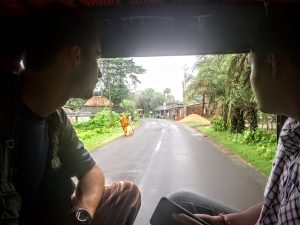
Riding in the back of a Rickshaw through the Sunderbans

On these trips to rural villages, our control of the present situation was always limited. We didn’t speak the language, we didn’t understand the culture, we didn’t have much of an idea where we were, and we didn’t have cell reception. Our fate was in the hands of the ONergy employee accompanying us and the people of the villages we visited.

img_3919
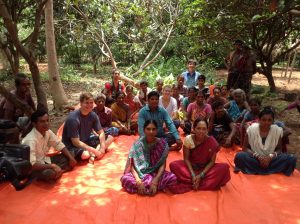
The people of a small village in southern Odisha

Control is my heroine, and hence I am what most would call a control freak. Starting with our first field visit, I was forced to give up control. Once I had given this up, I felt a new sense of power and belief in myself that allowed me to approach every new experience fearlessly with an openness and acceptance for the unknown. A beauty began to emerge in the people we met and the cultures that we experienced that made me feel a part of the situation we were in, instead of an out of touch, outside observer.

I saw a unique wisdom in the people we met that I hadn’t encountered before. It seemed to be a wisdom of survival. A wisdom marked by the defeat of fear and appreciation for the moment. Living with only a little and struggling to stay afloat every day seemed to cement the values of these people. They seemed grounded, sure of the parts of their life that were most important to them.

img_0757
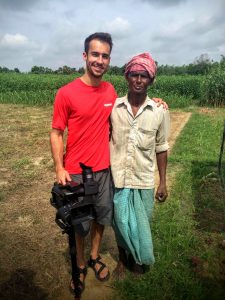
Rabin Dranath Mondal

I felt a connection to one older man we spent some time with who appeared to be the leader of his large family. He had a solemness to him, a patience for those around him, and a gentleness towards his family members and us as outsiders. Rabin Mondal, as he was called, had a unique aura and wisdom about him that I have tried to embody since we met.

After our first field visit, I made it my focus to be a perceiver and not a judger. I tried not to make any assumptions and to approach every situation with an open mind. I learned to feel the joys and pains of those around me as my own. I approached new experiences with an open spirit and a gentleness towards others, attempting to convey my respect for them as a fellow human. I did my best to express a gratefulness for their presence.

As we met more and more people, I began to realize how little I knew about the world and life in general. I saw problems in my life and the pain caused by these problems in a new light. Witnessing real suffering like children going hungry made me realize how minimal most of the pain I experience is in the scope of it all.

img_0942
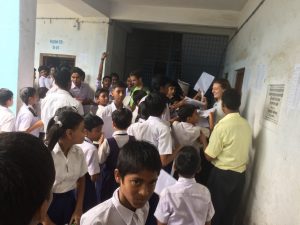
Signing autographs at a school

Even though the backgrounds of myself and people of rural villages we traveled to were vastly different, I found that our emotions were not so different. In particular, we shared excitement and joy in the midst of a new experience, meeting someone so much different than us. Seeing emotions of love among families and friends made me realize how much I cherished my own family and close friends in my life.

All in all, these experiences made me realize how small I am. They helped me to gain a better understanding of my relationship to the world. I was able to identify a source of true joy: connecting with people. Now, I feel like I have a better understanding of what’s really important to me in life.

Finding Hope: West Bengal, India


35 days here in India have brought a lifetime of experiences, but have gone by in a flash. As we enter the final stretch of our time in West Bengal I find myself grasping to hold on to the experiences, memories, and lessons that I fear will slip away. Every day brings with it a bundle of new situations that force us to stay on our toes, test our critical thinking skills, and follow our instincts.

IMG_6925
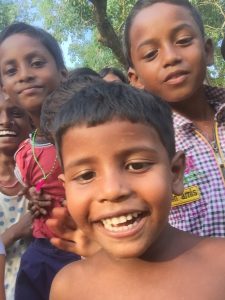
Children from a village in the Mednipur area

The various backgrounds and walks of life that we encounter never cease to amaze me. Rural farmers and villagers welcome us to their land with open arms, excited for the chance to share their way of life with outsiders. They spoil us with tea, biscuits, and if we’re lucky a plate of sweets. The children of the villages shyly follow us through roads of their village, giggling to each other along the way. Young adults try out their English with us, excited for the chance to practice the language that has become a vital skill to have in countries like India. After rising in the early morning to maintain their land, farmers return to work in the heat of the day to give us a glimpse of their working lives.

In these low income areas, every day is a hustle. The smallest occurrences can have an effect on the livelihood of families, and decisions that might seem unimportant carry a weight that someone like me can never fully understand.

IMG_7369
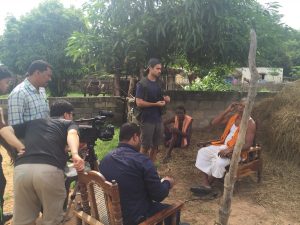
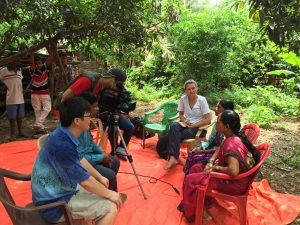
Interviewing the leader of a village in the hills of Odisha

A man we spoke to last week in Odisha shared with us how an unpredictable event had created dire circumstances for him. His son had been badly injured and required emergency medical attention that stretched his budget of only about 2,000 Rs ($30) per month of income. After paying for his son’s care he found himself with almost no money for the most basic of necessities. One of these was electricity. However, the installation of a solar micro grid in his village shortly after brought light back to his home and as the leader of his village said, “It has been like giving a blind man new eyes.”

One of the decisions that all of the people we speak to have made is to take a considerable amount of time out of their day to be with us. As we interviewed one woman about the joint liability group she was a part of, she told us that if she wasn’t with us at that moment she would be selling fabrics at the local market. Leaders of solar projects from various NGO’s have sacrificed entire days of work to travel with us to villages to ease the process we go through of connecting with locals. ONergy employees travel with us as well to translate and make sure everything is going according to plan. We can’t express how grateful we are to all of these people.

IMG_0769
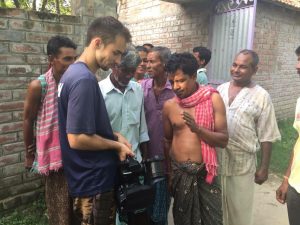
Showing farmers video I took of them earlier in the day

The locals of these villages always stare at us upon arrival. There’s a good chance that for many of them, we are the first white people they have seen in person. After a while, they begin to ease up and ask for pictures with us. Erika always draws a crowd of girls and young women who want to take and share pictures with her. I usually manage to draw my own crowd of people interested in the camera.

IMG_0867
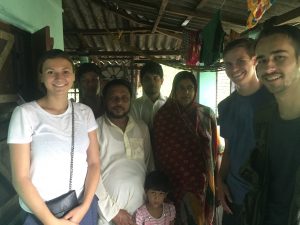
A family in the Sunderbans who we interviewed about their home lighting system

The language barrier is tough to overcome. Non-verbal communication skills have taken on a whole new level of importance. I’ve grown a lot in this area, but have learned that the first step to connecting with people is as simple as exchanging a soft smile.

Exchanging a smile is easy enough, but getting people to smile for photos is not.
We frequently take pictures with people,and almost always find that Carson, Erika, and I are the only ones smiling. The smug stare seems to be the cool thing to do here.

IMG_1246-min
An interview we did with micro-entrepreneurs in Odisha

In general, I find that people are much more honest and genuine here. They don’t sugar coat the situation they are in and express their opinions freely. Using hyperboles and exaggeration have become ingrained in American conversation, but here they are almost non-existent. People tell it to you how it is.

This sometimes makes it harder for interviews since people are very matter-of-fact in their answers to our questions. Beneficiaries of ONergy’s solar products are more than able to tell us the impact that something like a solar home lighting or irrigation system has had on their lives, but they fail to do so with any emotion. Emotion was one of the ways we hoped to connect viewers to our video, so this cultural difference has forced us to make some changes to our approach.

Prior fellows stressed that we would need to pivot many times in the field, but this concept wasn’t tangible until we got here. Circumstances are constantly changing and with each new field visit we seem to gain a clearer idea of what makes ONergy’s story special. We now feel that we have a good understanding of the message we want to communicate through our main video. Our advisor Spencer Arnold shared a quote with me the other day that perfectly describes what the key to success for us has been and will continue to be.
“Do what you can, with what you have, where you are” -Theodore Roosevelt.

This fellowship was never supposed to be easy, and I am finding that although some situations that we have to deal with are extremely frustrating, they are making the eventual success of our fellowship that much more sweet. I look forward to returning home to family and friends, but just the thought of leaving creates a pit in my stomach.

The world I’ve become accustomed to in Silicon Valley seems so fake and superficial from the outside. Our idea of what’s important becomes clouded so quickly living in a society that says what you own is who you are and how much you earn is what you’re worth. Not being influenced by this upon return is an unrealistic expectation to have. However, I will not let go of the experiences I have had this summer that remind me of the more important things in life.

There is something special happening here in West Bengal, India and all the other locations that the Miller Center has sent students this summer. People everywhere are beginning to realize that our world is broken. There are a variety of beliefs about how to fix it, but one of the most promising is social entrepreneurship. Experiencing the inner workings of a social enterprise in ONergy this summer has been eye opening, and has showed me that significant positive impact is possible.

There is a growing sentiment in the world that things don’t have to be the way they are. About a billion people go hungry every day and another 1.2 billion don’t have access to electricity. The movement to fix this is gaining momentum and now I understand how I can be a part of it.

Who I Am and Why I Am a Fellow

My Calling

What is life but an adventure? A journey, that with each new experience becomes evermore exciting. A journey that with each low and subsequent high brings us closer to finding who we are, and our place in the web of adventures happening around us.

I find that life is full of secrets, awaiting discovery. The more we experience, the more secrets unveil themselves to us. With each new secret uncovered comes a greater appreciation for life. One of the most important secre338633_1388997003182_1332490759_ots of life that we discover the first time we lose our parent in the grocery store is that the most valuable parts of our lives are the people around us and the relationships we have with them.
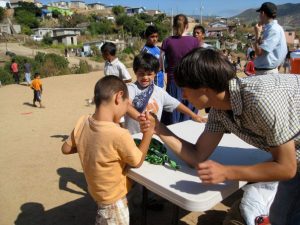
I’ve clung onto this secret as a truth of life that directs my aspirations. Establishing relationships and connecting with others has become the base for which everything else in my life stems from.

I have been extremely lucky to be exposed to many different parts of the world. While every place I visited had its own wonderfully unique c268874_1942585122539_4497876_nulture, there was a constant element I recognized in each setting. No matter the location (Mexico, Italy, Guatemala, Sweden, etc.) I felt a sense of unity with others despite our differences. We were all human.
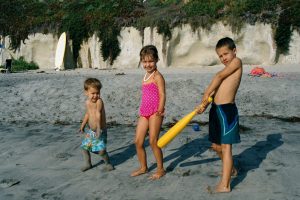

A defining characteristic of humans is that we need each other. There is a mutual reliance among human beings, for we know that without others the scope of what can be accomplished is much smaller.

I have come to understand that humans, by nature, are powerful. This power multiplies itself when we work together.

My education has taught me that this power can be used in destructive ways as well. The earth we live in today is plagued by abuse of power as ISIS continues to murder innocent civilians, North Korea builds nuclear weapons, and the United States and China do little to combat extreme environmental conditions that they have created.

This is what my calling stems from. An admiration of the radiant light that we as humans have the ability to spread. I believe this light is so powerful that it can ultimately overcome the darkness and evil that has pushed our earth into a dire state.
221352_1791200938029_4109237_o

Where it all started

Growing up my parents preached the beauty and value of human life constantly, along with the importance of helping and serving others who had less than us. We went on a few service trips to Mexico during my childhood (including one to Juarez, the murder capital of the world at the time) which were great experiences for me, but lacked substance. The impacts we were making in these communities were rewarding, but temporary and hollow.

During my first quarter at Santa Clara University, I was introduced to the idea of an immersion trip. I’ve been on two of these so far. Instead of blindly attempting to fix a community’s problems, these trips were focused on learning about a group of people, their culture, and the societal injustices looming in their everyday lives. With this knowledge, we had the tools to do more than provide a bandaid for the suffering that these people were experiencing.

But immersion trips only introduced me to the first step of change: understanding. I became eager to use my personal skills and talents to build upon my understanding of problems facing the world. Sitting in my apartment room during my semester abroad in Lund, Sweden, I felt called to act on my aspirations. A little research led me to discover the Miller Center’s Global Social Benefit Fellows program.

At first I was hesitant to pursue the opportunity, unsure of h37656_1387382042809_4344261_now prepared I would be for the drastic culture shock that locations in Africa and Asia would confront me with. But then I spent some
time evaluating my journey to that point: where I had been, where I currently was, and
the direction I wanted to go. Immediately my uncertainty was gone.

Development

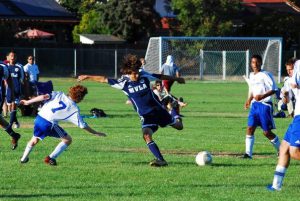
It all started with sports. Sports was where I learned growth and improvement. It was where I learned to communica67752_1500019178667_2093722_nte and to work in a team. Most of all, sports was where I learned that confidence is the key to success.
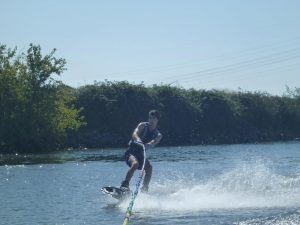
Reading the sports section of the newspaper with my bowl of cereal every morning was a nessecity. Tossing a baseball to myself, dribbling my basketball through imaginary defenders, and juggling my soccer ball were what made me happy as a kid. As I grew older, I found that writing about sports also made me happy. Sports were what made me tick.

Sports were the commonality I used to connect with pe621619_3899565365822_1605406941_oople in my own communities and ones I was visiting. Some of my fondest memories are from a dirt field in Ensenada, Mexico where I spent hours on end playing soccer with local kids. The summer after my first year in college I directed and coached sports camps in my hometown.

When entering college, my career vision was to enter the sports media industry. I had written about sports for my high school’s newspaper and picked up blogging about sports as a side hobby. I was well versed in everything sports, and although the field was competitive I was motivated to carve out a spot for myself in it.

I took on a role as the Assistant Editor and Producer of a news program at Santa Clara University my second year in school, and used that experience coupled with a class in digital filmmaking to score what I thought would be the job of my dreams at the bay area’s local sports station, CSN Bay Area. I truly enjoyed my time there and took away a handful of valuable experiences and skills from it, but also realized that my calling was somewhere else. I wanted to go out into the world and make a difference.

I put my love of sports to the side, and focused on a new passion that was growing in me to use the skills I had developed thanks to my love of sports to make positive change in the world. I’m still figuring out exactly how I want to do this, but I see the fellowship as an extraordinary opportunity in bringing more clarity to how my vocation and passion for a better world intersect.

I do know this. No matter what I am doing, I want to be fighting for the beauty of human life and the beauty of this world from which life comes. I want to be a source of light in these times when light can sometimes be hard to see.