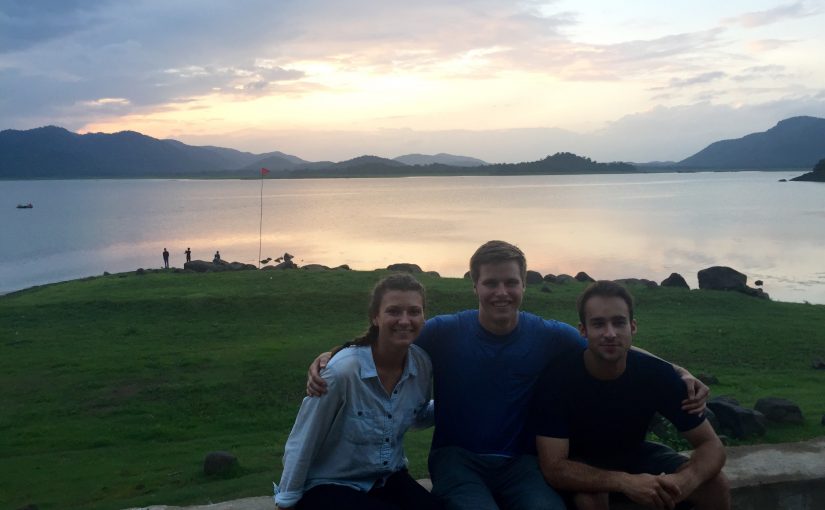
35 days here in India have brought a lifetime of experiences, but have gone by in a flash. As we enter the final stretch of our time in West Bengal I find myself grasping to hold on to the experiences, memories, and lessons that I fear will slip away. Every day brings with it a bundle of new situations that force us to stay on our toes, test our critical thinking skills, and follow our instincts.
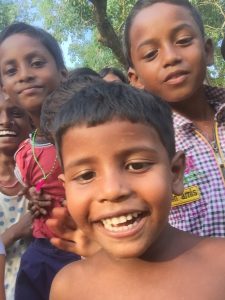
The various backgrounds and walks of life that we encounter never cease to amaze me. Rural farmers and villagers welcome us to their land with open arms, excited for the chance to share their way of life with outsiders. They spoil us with tea, biscuits, and if we’re lucky a plate of sweets. The children of the villages shyly follow us through roads of their village, giggling to each other along the way. Young adults try out their English with us, excited for the chance to practice the language that has become a vital skill to have in countries like India. After rising in the early morning to maintain their land, farmers return to work in the heat of the day to give us a glimpse of their working lives.
In these low income areas, every day is a hustle. The smallest occurrences can have an effect on the livelihood of families, and decisions that might seem unimportant carry a weight that someone like me can never fully understand.
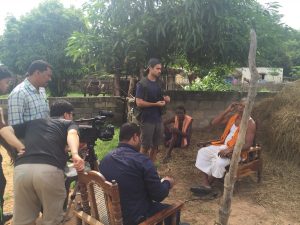
A man we spoke to last week in Odisha shared with us how an unpredictable event had created dire circumstances for him. His son had been badly injured and required emergency medical attention that stretched his budget of only about 2,000 Rs ($30) per month of income. After paying for his son’s care he found himself with almost no money for the most basic of necessities. One of these was electricity. However, the installation of a solar micro grid in his village shortly after brought light back to his home and as the leader of his village said, “It has been like giving a blind man new eyes.”
One of the decisions that all of the people we speak to have made is to take a considerable amount of time out of their day to be with us. As we interviewed one woman about the joint liability group she was a part of, she told us that if she wasn’t with us at that moment she would be selling fabrics at the local market. Leaders of solar projects from various NGO’s have sacrificed entire days of work to travel with us to villages to ease the process we go through of connecting with locals. ONergy employees travel with us as well to translate and make sure everything is going according to plan. We can’t express how grateful we are to all of these people.
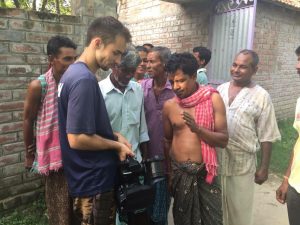
The locals of these villages always stare at us upon arrival. There’s a good chance that for many of them, we are the first white people they have seen in person. After a while, they begin to ease up and ask for pictures with us. Erika always draws a crowd of girls and young women who want to take and share pictures with her. I usually manage to draw my own crowd of people interested in the camera.
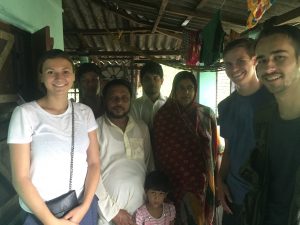
The language barrier is tough to overcome. Non-verbal communication skills have taken on a whole new level of importance. I’ve grown a lot in this area, but have learned that the first step to connecting with people is as simple as exchanging a soft smile.
Exchanging a smile is easy enough, but getting people to smile for photos is not.
We frequently take pictures with people,and almost always find that Carson, Erika, and I are the only ones smiling. The smug stare seems to be the cool thing to do here.
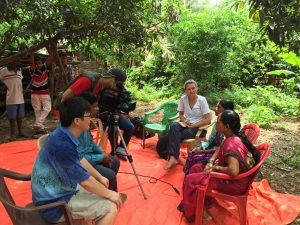
In general, I find that people are much more honest and genuine here. They don’t sugar coat the situation they are in and express their opinions freely. Using hyperboles and exaggeration have become ingrained in American conversation, but here they are almost non-existent. People tell it to you how it is.
This sometimes makes it harder for interviews since people are very matter-of-fact in their answers to our questions. Beneficiaries of ONergy’s solar products are more than able to tell us the impact that something like a solar home lighting or irrigation system has had on their lives, but they fail to do so with any emotion. Emotion was one of the ways we hoped to connect viewers to our video, so this cultural difference has forced us to make some changes to our approach.
Prior fellows stressed that we would need to pivot many times in the field, but this concept wasn’t tangible until we got here. Circumstances are constantly changing and with each new field visit we seem to gain a clearer idea of what makes ONergy’s story special.  We now feel that we have a good understanding of the message we want to communicate through our main video. Our advisor Spencer Arnold shared a quote with me the other day that perfectly describes what the key to success for us has been and will continue to be.
“Do what you can, with what you have, where you are” -Theodore Roosevelt.
This fellowship was never supposed to be easy, and I am finding that although some situations that we have to deal with are extremely frustrating, they are making the eventual success of our fellowship that much more sweet. I look forward to returning home to family and friends, but just the thought of leaving creates a pit in my stomach.
The world I’ve become accustomed to in Silicon Valley seems so fake and superficial from the outside. Our idea of what’s important becomes clouded so quickly living in a society that says what you own is who you are and how much you earn is what you’re worth. Not being influenced by this upon return is an unrealistic expectation to have. However, I will not let go of the experiences I have had this summer that remind me of the more important things in life.
There is something special happening here in West Bengal, India and all the other locations that the Miller Center has sent students this summer. People everywhere are beginning to realize that our world is broken. There are a variety of beliefs about how to fix it, but one of the most promising is social entrepreneurship. Experiencing the inner workings of a social enterprise in ONergy this summer has been eye opening, and has showed me that significant positive impact is possible.
There is a growing sentiment in the world that things don’t have to be the way they are. About a billion people go hungry every day and another 1.2 billion don’t have access to electricity. The movement to fix this is gaining momentum and now I understand how I can be a part of it.