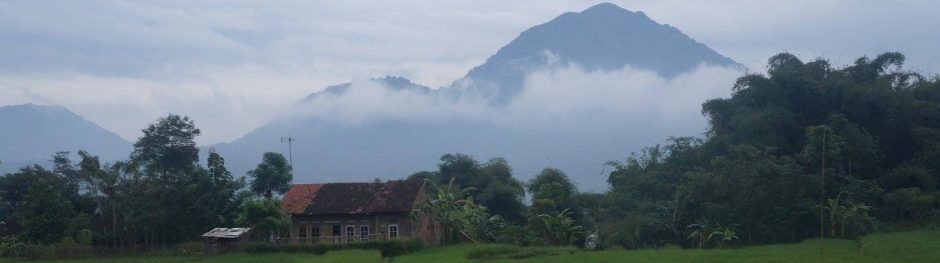
As we reach the halfway point of this incredible experience, I have so many things I wish I could share but no way to fully capture them with words. It seems the best things in life are often like that so I will give it my best shot. We began our work here in Bandung at Nazava’s office. We were welcomed with a lovely dinner with Lisa and Guido, the founding social entrepreneurs of
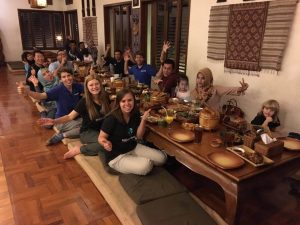
Our first dinner with the Nazava team.
Nazava, along with the rest of the staff. We broke the fast of Ramadan after hearing the call from the mosque nearby. And just like that, we were part of a new culture where we could eat on our knees without shoes or be awakened by the loud speakers around the city, broadcasting from the mosque at 4:30 am. I tried to slowly soak it all in and was struck unexpectedly and frequently with the thought of, “Wow, we are actually in Indonesia.”
Our first few days in the office, we got settled in with meetings as well as revising and preparing our surveys and interview questions for the field. We met our translator Wenty, a smart and sweet university student from Jakarta. We even got to test our skills on Guido’s motorbike. It will be a long time before I drive one of those on my own, especially considering the streets in Bandung are crowded beyond belief and the lines separating lanes appear to have little-to-no real meaning. It was nice to get settled there and get to know the people at the enterprise a little bit, but before we knew it, we were off on an 8-hour train ride to Yogyakarta.
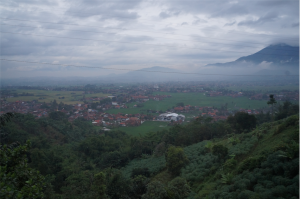
Some of the view during our train ride from Bandung to Yogyakarta.
The scenery on the train ride was beautiful and unlike any place I had ever seen before. Green fields and mountains, palm trees, volcanoes, rice fields and small towns were scattered across the entire ride. We spent our time in Yogyakarta learning the basics of the national language, Bahasa Indonesian. We were able to have delicious Indonesian meals cooked by Heru, our “mom” during our time at the school. Most of the time Katie and I had no idea what we were eating (and we still usually don’t) but most of the time it was delicious and I felt glad to be experiencing more of the culture first-hand. We met an eclectic group of travelers there from all walks of life, many of whom were doing research in Indonesia. It was exciting for us to share the purpose and goals of our research with the other people we met there.
When we first arrived in Yogya, we had some free time and were able to spend a day hitting some of the major sites of the city. We started off with an early
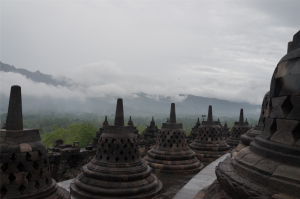
The views from Borobodur temple in the morning mist.
morning at Borobudur, a huge, gorgeous Buddhist temple. The fog was still clearing around the surrounding hillsides and walking around the rain-soaked temple, those walls held more years of history than I could fathom and they radiated a sense of peace and tranquility. From this calm and serene experience we made our way up to Mount Merapi, an active volcano. When our driver dropped us off in front of a Jeep rental place, we had no idea what we were doing, but we channeled our inner Indiana Jones, hopped in the back of the Jeep, and hung on through the bumpy roads around Merapi. We ended the afternoon seeing a beautiful Hindu temple called Candi Prambanan. This little adventure was filled with “Wow, we’re in Indonesia” moments, as well as “I don’t know what we’re doing but sure, sounds good” moments (another staple of the fellowship, I have found).
Our main purpose for being in Yogya, however, was to take a language course at Alam Bahasa, where we received one-on-one instruction, conducted completely in Indonesian. We participated in six hours of language school each day and slowly but surely absorbed bits and pieces, even having homework assignments to complete at night. It was a strange and somewhat tiring experience as it had been so long since I had tried to learn a new language from scratch. There are some words that are close to English words with the same meaning, such as taxi and “taksi,” but then there are other
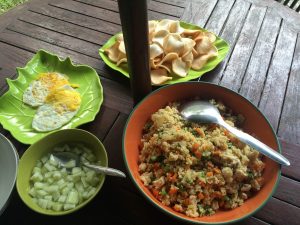
The Nasi Goreng (Fried Rice) that I made during our cooking class.
words where I just have no frame of reference to help deduce the meaning besides simply memorizing it, such as “morning” and “pagi.” We learned about a range of topics, and we even got to have a cooking class session, during which I made Nasi Goreng while Katie made Sate Ayam. That week served as a wonderful adjustment period for us to get to know Indonesian food, language and culture. We have already seen some of the things we learned both about the language and the wider culture come in very handy during our data collection. When it was time to leave Yogya, I felt much more reassured knowing even just a few simple phrases and words to help us get by, rather than the zero knowledge of Bahasa that I came into the country with.
From Yogya we made our way to Kupang, a town on the coast of another island with a harbor for ferries, which go to various other small islands. It was from here that we were to make our way out to Sabu Island. Through out the two weeks prior that we had been in Indonesia, no one we met had been to Sabu and few had even heard of the place before. Going into this portion of the field work, we had pretty much no idea what ferry to take, how long it would be, where we would be staying on the island, what day we would be leaving the island, or who exactly we would be meeting with. I went in with a lot of prayers and was prepared for multiple things to go wrong. Wow, was I pleasantly surprised.
With Wenty as our translator, we were able to navigate onto the correct ferry as well as handle countless other logistics issues. Before we even got on the ferry though, we began to experience the unbelievable kindness that seems to be characteristic of the Indonesian people. A man named Simon, sitting with his
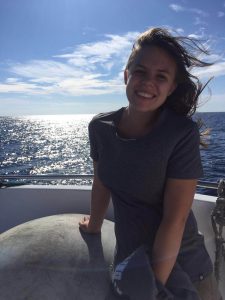
Feeling free on the ferry ride to Sabu!
uncle waiting for the ferry, started discussing our research with us as he was doing work related to water resources and sustainable development as well. Because we didn’t know what we were doing, he guided us onto the ferry and to our seats as we struggled through a crowd of people with our giant backpacks on our backs and smaller backpacks strapped to our fronts. Once on the ferry, we started to understand that, especially in this area of Indonesia, we were going to stand out. But the people absolutely love foreigners and it wasn’t long before people were dying to take a couple (thousand) pictures with us. The captain invited us into the control room and let us stand out on the front deck. As we stood there with the wind and waves rushing past us, I was still amazed at the fact that we had found a ferry to take us to this island that no one seemed to know anything about. It was a moment where I felt like I was truly standing strong on my own, facing wide-open uncertainty with actual excitement instead of fear.
Once on the island, we were greeted by Tethy and Ibu Tri, two people working in different areas of the intricate partnership network addressing water sanitation issues and promoting Nazava on Sabu. Over the next three days, we would be ushered all over Sabu by Tethy, Ibu Tri and a posse of about eight other people in the cars that one of the government agencies lent to us for the duration of our stay. We had heard that we were actually one of the first, if not the first, foreigners to come to Sabu for research purposes and, because of that, they seemed to pull out all the stops to facilitate that research. We met with the leader of Bappeda, the government agency in charge of research and regional development for the island. He is a strong, warm man that kept joking that we weren’t allowed to leave because there is so much for us to see on Sabu (which probably would have been funnier if we weren’t actually warned that our return trip might get cancelled due to weather, leaving us on the island at least an extra three days without access to an ATM to pay the cost of our lodging).
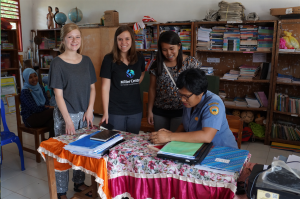
We interviewed one of the teacher’s from a Sabu school that uses Nazava filters in each of their classrooms and she also completed our mobile social impact survey.
We met with two different schools that are using Nazava filters and heard about new legislation that will require all schools to have the filters. We visited three villages and met with two village leaders who are trying to promote the filters to their people and find themselves dealing with the typical problems that come with public health education and habit change, as well as a host of other issues such as people’s inability to cover the cost of the filter or the difficulty in finding water sources in the first place since Sabu is a very dry island. We even met with the mayor of Sabu at his home, where ten older men in traditional clothing, each from a different village, sang a song of greetings and blessings for us. We met with a health clinic and health workers and, through it all, we saw this tiny
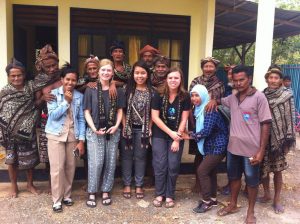
Our greeting party at the mayor’s house consisted of these men from different villages who performed a beautiful song of blessing for us.
powerhouse-of-a-lady, Ibu Tri, driving a big change for her community through the advocacy, education and sale of Nazava filters. Through all the people we talked to we saw the impact metrics of Nazava come to life as people described not only the time and money they have saved compared to other purification methods but also the drastic health benefits they received after using the filter. For Sabu, Nazava is the solution to their water sanitation issues. They place great hope in its ability to help their people and placed an enormous amount of hope in us to tell their story.
Through out all these meetings we were also ushered around to the sites of the island such as the “Grand Canyon” of Sabu or the big black rocks found off the coast. We saw giant piles of sea salt being collected and even witnessed a
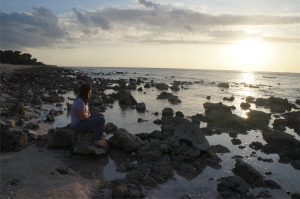
Watching the sunset on Sabu.
beautiful sunset on the beach. The typical houses on Sabu are like big huts made with thatch roofs touching almost to the ground, with really no other portion of the house included except a wooden bench underneath the roof covering to store things and sleep on. These houses were scattered all around the island, and when I saw them, I tried to imagine the kind of lifestyle one lives in those houses, on this island, so far away and so different from any life I had experienced. Despite multiple warnings for potential cancellations we were able to leave Sabu on the planned ferry and head back to Kupang, saying good-bye to some of the most welcoming people I have ever met.
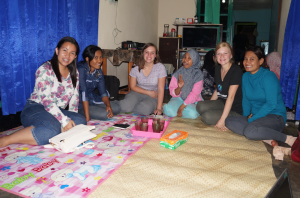
Having dinner and interviewing Ibu Tri and two of the resellers she’s recruited who also work in her health group to spread the impact of Nazava to more people who are struggling to drink clean water.
From left to right: Wenty (our translator), Aline (a Sanitarian and a Nazava reseller); Me; Ibu Tri (the head reseller for Nazava’s Sabu partnership, a Sanitarian and a leader for the professional environmental health group HAKLI); Katie; Paulina (a Sanitarian and a Nazava reseller).
The kindness, incredibly enough, did not stop there. We spent the next few days in Kupang meeting with Tethy and compiling our work. Especially after seeing the work the people of Sabu are doing to try to help their people with water sanitation, as well as other sanitation issues, Katie and I were committed and inspired to make sure our research was collected and presented in a detailed way that would reveal the truth of the work being done there. Additionally, we hoped to present the recommendations that were given concerning ways Nazava can improve the partnership and continue to have a greater and greater impact for the people of Sabu.
Also in Kupang, we had the opportunity to meet with Nazava consumers and non-consumers through a reseller who lives there named Osden. Through him, we were able to meet with more lovely and welcoming people and continue our social impact assessment surveys. Even outside of our work, we again found ourselves receiving undeserved generosity since Simon, the man we met before
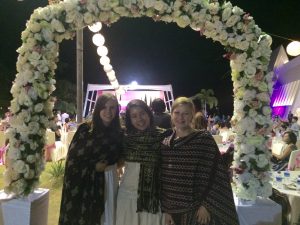
Myself, Wenty and Katie at the wedding in Kupang.
boarding the ferry to Sabu, was also on our returning ferry and invited us to his niece’s wedding taking place that weekend. Katie, Wenty and I attended, wearing the beautiful shawls we had received as a gift from Ibu Tri and were amazed by this huge, picturesque gathering of people, celebrating the marriage of this couple we had never met. We were welcomed into that celebration and at the end of the night, when we offered our deepest thanks to Simon, he simply explained that when he had visited Thailand, someone had done the same thing for him and taken him under their wing. He only hoped that we would, “pay forward the kindness” to someone else we meet along our journeys.
Over the first half of this fieldwork experience, it has been exhilarating to engage in the research we spent so long planning for. It has been trying yet exciting to overcome logistical or personal barriers on our own. It has been overwhelming to experience the hospitality and generosity of the people here. It has been incredible to witness the impact of a social enterprise at work. Through all of this, I think the most important lesson still remains to “pay forward the kindness.” I hope to do that each day as we continue our work, learn from the people and commit to telling their stories in the most honest and sincere way possible. I know that is one of many lessons I am learning here that will extend far beyond this experience.
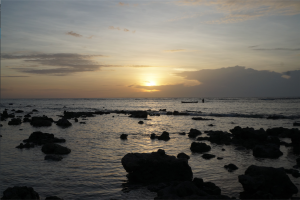
Looking forward to what the rest of this experience has in store for us!