
To Thane, Keith and the other fellows in Uganda for keeping me sane and loving me through the ups and the downs.
Vulnerability and Authenticity
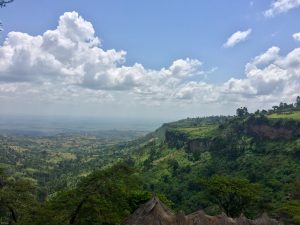
Beautiful Uganda.
I packed two books with me when I left for Uganda: Man’s Search for Meaning and Eat, Pray, Love. If it wasn’t obvious from the book choices, clearly I was looking for something. Junior year was a whirlwind of over-commitment and stress and I could not have been more ready to get away from all of it. My goals for my time in Uganda were two-fold. First, I wanted to disconnect from the craziness of university life in America and fully engage with every experience in Uganda. I find a lot of things in modern American culture to be pretty pointless, so I was eager to be able to focus on things that really matter, like learning about new cultures, reducing poverty and improving maternal and child health. Second, I wanted to focus on myself and seriously contemplate my vocation and direction in life. These goals may sound ambitious, but I was committed! I deleted all my social media accounts and said goodbye to my iPhone, opting instead for one of those Nokia brick phones. The place that Will and I were living had no Internet so I truly had nothing to distract me from achieving my goals. The other fellows in Uganda may have made fun of my new lifestyle, calling me “Grace off the grid,” but I knew it was what I needed to rebalance and focus my life.
I’d never considered myself a terribly emotional person before this summer, mainly because I never made time for emotions. I pride myself on being a person who’s independent, involved in a lot of things, has a wide social circle and seemingly has it all together. I keep myself so busy that during the school year I typically have about 30 minutes of free time a day. I usually like to use that time to shower or lay down and very rarely do I find myself reflecting on or contemplating life and my happiness. I like to keep myself unemotionally attached because I find it easier that way. It’s less messy, but I’ve also found that it’s less authentic.
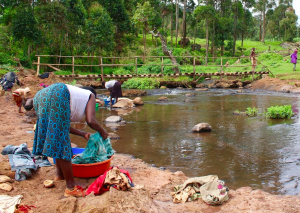
A woman washing her clothes in the river.
In Uganda I experienced just about every emotion possible. I was so over-stimulated and overwhelmed by the things we were seeing in the field that I had absolutely no idea what to make of it all. It also didn’t help that I suddenly went from having about 30 minutes of free time a day to about 7 hours a day. And with no distractions from my phone, the Internet or social media, I was truly alone with my thoughts. And boy did I dwell on the experiences I was having and the emotions I was feeling. I spent a lot of time alone in my room thinking and crying and feeling sad and lonely. I felt sad because of the poverty and healthcare disparities I was seeing and because I didn’t know how to process how immensely privileged I am. I felt lonely because my experiences and emotions were difficult to put into words and I thought that no one else would understand.
When I came home from Uganda, I found myself not even wanting to talk about my experiences. When I passed friends on campus they’d ask how Uganda was and I would say “Great!” and keep on walking. While my experience this summer was great, it was so much more than that. It was lonely, it was inspirational, it was exhilarating, it was uncomfortable, it was eye-opening, it was empowering, and it was heartbreaking. It was indescribable and full of contradictions and it shook me to my core. How could I explain that to friends I passed by on campus? I couldn’t, so I went with the easy answer, “great.” But after a while I hated that answer. I hated the way it tasted in my mouth and I hated how inauthentic it felt.
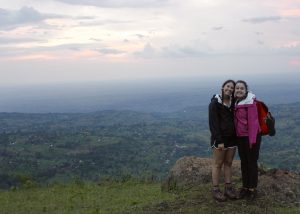
Forever thankful for my friendship with Lauren.
I think I had a really hard time reflecting on my experiences and figuring out how to explain them to people because I didn’t want to revisit the emotions I felt. When I returned to the U.S. and to school, I reverted back to that busy, emotionally unattached girl. I avoided reflecting on Uganda because I didn’t know how to make sense of it all and it made me sad when I did think about it. But as the fellowship came to a close, I got scared that if I didn’t internalize and make sense of these memories that they’d soon slip away from me. So here are some things I’ve learned throughout this reflection process. First, it’s okay to not be okay sometimes. Everyday isn’t going to be perfect and emotions are a part of human life. My emotions don’t make me weak, but instead powerful if I channel them into something productive. Second, people care when you open up to them. I never liked to express my emotions to friends because I didn’t want to be needy. But when you’re out of your comfort zone in a developing country, friends who understand what you’re going through are invaluable. The friendships I formed with the other fellows in Uganda continue to be some of my most cherished relationships. Third, too little or too much free time isn’t good for me. Too little free time leaves me emotionally disconnected, and too much free time can cause me to overthink things and become emotionally overwhelmed. While I’m still working to find the right balance, I’m trying to stay more connected to my emotions by meditating and keeping a daily journal. It’s these times in my day that I can hear the still, small voice inside me and re-center myself. I’m an imperfect and flawed person, but I’ve never felt more connected with who I am and who I want to be than I do at the end of this fellowship.
Next Steps
Since returning from Uganda, I’ve completely eliminated becoming a doctor from my list of potential career paths. And it feels great! Don’t get me wrong, being a doctor is a noble profession, but it’s just not for me. After happening upon and exploring the field of global health, I’ve decided that’s what I want to dedicate my life to. Having experienced the health disparities in the developing world first hand, I’m inspired to combat the unjust social equilibriums that hold these disparities in place.
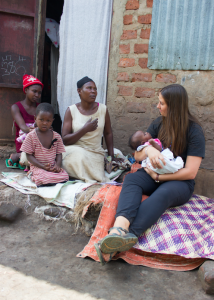
My favorite type of social engagement.
As I think back to Getting Beyond Better, I went through the “Understanding the World” stage while I was in Uganda. I apprenticed with the problems and became outraged by the current social equilibriums. Directly engaging with the beneficiaries of Nurture Africa allowed me to realize that that’s the type of social engagement I enjoy. While Will excelled at writing the surveys and extracting data from the patient database, my favorite part of our research project was sitting with clients and hearing their stories. It was hearing the pain and the joy in their voices, and seeing the emotions on their face that was truly inspiring to me.
Now I’m in the “Envisioning a New Future” stage. While I’m young and unattached, I want to work as proximal to the beneficiaries as possible. Ideally, after graduation I would move back to the developing world (hopefully Africa) and work with a health related social enterprise for a few years. After that I’d like to return to the U.S. and get my Master’s degree in Global Health or Public Health. Ultimately, I’d like to work for a global health firm like PATH. Will my career path end up like this? I don’t know, but what I do know is that I sure have a lot more direction in my life than I did before this fellowship.
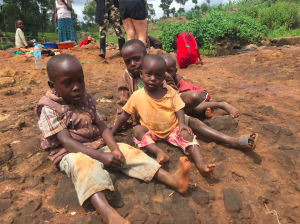
What’s calling me back.
After having such an emotionally draining experience, why do I want to go back to Africa? While this experience shook me to my core and broke me, it also gave me direction. Neafsy says, “One of the most privileged and sacred places where the Voice can be discerned today is in the needs and sufferings of our fellow human beings. We hear it by listening with an open heart to the cry of the poor and the oppressed.” I think the raw emotions and vulnerability I felt in Uganda this summer represent my listening with an open heart. Hearing the cry of the poor up close is both deafening and enraging. It’s maddening to me that the poor need to cry in the first place. And it’s maddening that so many people in the developed world have gone deaf to this cry or choose to put earplugs in. It’s a cry that rings in my ears and I can’t get out of my head. But it’s not just a cry anymore, it’s a call. Africa is chaotic and uncomfortable but it’s taught me more about myself and about the world than any class or professor has. And I don’t think it’s done teaching me yet.
Looking Forward
It’s funny, I never finished either of the books I brought with me to Uganda. The parts I did read were great, but I think I realized that instead of reading other people’s stories of finding themselves, I needed to write my own. While these books could offer me hope, only I could piece together and make meaning out of the experiences I had.
They say that sometimes, you need to lose yourself to find yourself. I lost myself in Uganda. It was one of the most challenging, vulnerable, and powerful chapters of my life. It made my question my worldview, my values and what I believe about myself and my place in this world. But in the time following my return, I’m slowly finding myself again. Not the same me, but a new me. For a long time I think I was scared of listening to the still, small voice inside me. But I’m not anymore. I feel powerful and inspired and ready to tackle all that life has to offer. While I have a lot more chapters of my life to write, the chapter on Uganda and my time as a Global Social Benefit Fellow will always be one that’s dog-eared. One that I can turn back to when I feel lost or when I’m questioning what really matters in life. This chapter represents one of the most formative periods of my life and one that truly altered my sense of direction for the better. And for that, I could not be more thankful.
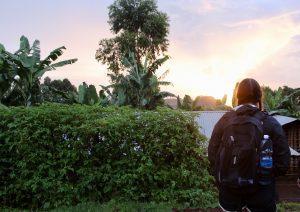
The sun setting in Sipi Falls.