Tech, Helping or Hindering Writing?

future-technology-2014The amount of technological advancement that has occurred in the last 20 years is astonishing. The world of smart phones, social networks, and instant streaming video have taken over. People have invented things that no one even knew they needed. There’s no doubt that these new technological inventions have changed communication between people, but the question is: Has it changed communication for better of for worse?


With all the new social media cites in the palm of everyone’s hands the amount of writing has increased among the younger generation especially. The type of writing usually consists of multimodal croppedfoxkidcompositions such as tweets, memes, or video posts. I believe these kinds of writings have really pushed the creativity of the people using these outlets because they have to figure out ways to portray larger amounts of information in very few words, one picture, or short nine second videos.

 

Aside from the benefits these new avenues of writing have provided they also come with some negative consequences. For example, there is undoubtedly less face-to-face communication between people. This is a negative because the fewer human interactions there are the less people will be “in-tuned” with reality. So even though the population’s writing ability has increased the substance of the things they are writing about has become superficial and meaningless.
xcgkdqMcA

This is where the idea of moderation comes into play. There are definitely some benefits that come with the new age social networking and smart phones, but people need to find a happy balance so that their use of these devices does not affect their human interactions.

Need to Be Versatile

YBGgi9BO

Video blogs, podcasts, tweets, Instagram, Tumblr. These are just a few of all the outlets people use nowadays to communicate to an audience. The avenues of communication have changed so much in recent history. It used to be basically limited to letters, speeches, and in person communication. Now someone can tweet 140 characters and get a large message out to a huge audience.


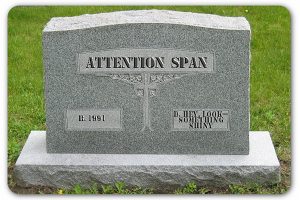
These changes in the forms of communication are why it is so important that we understand how to effectively use multimodal writings. It is important to have different tools of communication at your disposal because you must be able to communicate iRIP-attention-spann ways your audience can comprehend. For example, in today’s world young people have drastically short attention spans.
A majority of kids can not focus through an entire speech or read a well written essay without losing focus. This is the main reason why the forms of communication have changed so much. People have turned to shorter and quicker forms of communication so that they keep the attention of their audience, and as your audience changes often times so must your form of communication.


The benefits of these shorter forms of communication are that people can put out information way quicker than ever before, and the new forms of writing encourage creativity. On the other hand, these new mediums of writing also have negative effects. The writings we see displayed on outlets like twitter often lack a lot of context. What I mean is that a person might write something and make a claim, but they have given no background to the preexisting conversation they have joined. This is a problem because an audience needs to know what is being said or has already been said in a topic of discussion in order to form an educated opinion on a topic.


Overall, as far as writing goes I do not think we can form a conclusion that these new forms of communication are neither good nor bad, but what we can say is that they have changed our world for the mean time.

Everything’s an Argument

Back in high school I was bhead-on-desklessed to have great teachers in advanced placement English courses. They thoroughly explained material from the class, but it never clicked for me. My writing was weak and lacked the ever escaping characteristic of “flow”. The frustrating part of it was that I watched powerful speeches and read interesting articles, but I still could not figure out the techniques they used to have effective writing. That was until Ms. Lueck graced us with the book of They say; I say.


They say; I say revealed to me the hidden aspect all of the famous speeches and writings held in common. Every one of them, at some point, treated their material as an argument. Essentially they addressed what the opposition was saying, and then th1-19-Martin-Luther-King-ftrey disputed their claims and furthered them with evidence. Ronald Reagan’s speech “A Time for Choosing” first addressed the statements of the democrats in America, and then he proceeded to tell his audience what his thoughts were.


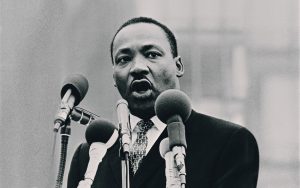
Martin Luther King Jr. in his “Letter from a Birmingham Jail” first pointed out what those who believed in segregation and racism were saying about him, the black community, and the country as a whole, and then he eloquently proved to those people and a larger audience why they were so terribly wrong.


The ironic thing about my late discovery of this tactic was that in one of my advanced English courses in high school we were actually working with a book titled Everything’s an Argument. I guess I just never gave it the attention it deserved, but as the old saying goes, better late than never. Now I can at least have a better opportunity at writing effective essays or speeches in my future.

All Kinds of Communication

Throughout the year we have been working with three different mediums of writing: academic writing, blog posts, and multimodal writing. When these different types of writing take form they look very different. The format of each one varies from the next, but these writings are more interconnected than what the eye can infer.

man-talking-on-business-presentation-behind-a-podium-with-a-mic_318-62429

The goal of writing is to communicate an idea or opinion to an audience. The three different styles of writings we have practiced act as three separate avenues of communicating the ideas and opinions to the audience. All three styles of writing can be equally effective. So how does one decide which avenue to take? The choice of writing style will more than likely depend on someone’s audience.

519749781


If someone’s audience is a committee of professors or professionals in a specific field then they would most likely take the avenue of an academic writing. They would choose this style of writing because it gives credibility to the author because the audience would respect the more serious and professional tone of the paper.


If someone’s audience is mostly a younger generation with short attention spans then they would most likely use a blog in order to convey their message. They would do this because they realize their academic writing would be ineffective in holding the younger reader’s attention.


A person could choose the path of a multimodal writing for various reasons. One reason could be they are trying to reach a broad audience in a campaign style approach, and they need a visual image that communicates a message in a very short amount of time. Examples of this would be billboards, memes, and other forms of advertisement. A second reason could be the subject they are addressing has been discussed for a long time and people have become accustomed to just ignoring the conversation, so in turn they need to capture the audience’s attention again with a stirring image, video, or other form of media.billboard-1260x840


As a result, all three forms of writing work together. They work together to effectively communicate information from an author to an audience. The type of writing that the author chooses can depend on their audience or the environment in which they are presenting this information. Regardless, each one of these forms of writing lends itself as a tool to authors all over the world.

Multimodal Composition’s Role in Writing

Making multimodal compositions has a big role in a writing classroom. It is a practical way of communicating in the real world. It is a necessity for marketing majors and other communication focused jobs. Compared to writing essays multimodal compositions are like another language. The creator of one is trying to get across the same information and analysis that he would in an essay but just in a different way.


The-Brand-Brief-For-Nikes-Just-Do-It-Campaign

The United States of America spends about 200 billion dollars a year on various forms of media advertising. Multimodality is central to most forms of advertisement; Nike, Apple, Google, etc. all use forms of multimodality in their advertising campaigns. The workers who create these compositions for the campaigns are essential to the businesses. So it would be advantageous to students if they had the skills to be able to fill these positions companies are searching for.


Aside from giving students a future advantage in the workplace, multimodal compositions nurture the creativity of students. I will concede a student must be creative when writing an essay, but multimodal compositions require an artistic creativity too. A student must be able to express an idea more often with images than only with writing. This forces students to think “outside-the-box”. This kind of thinking leads to a lot of innovation, and gives students a wider range of rhetorical tools to be able to use in the future.

Two Examples of Successful Composition

My research topic was about alcohol on college campuses. Specifically I focused on binge drinking and under-age drinking, and how colleges could curb the negative effects they both have on students. Below are two examples of images that were successful in their attempt to limit alcohol abuse:

99728745466fd80cb4f78381ac0cb62e

I immediately found this picture to be very shocking. Which in retrospect is actually what the creator of this image was intending to do. He or she wanted to grab their audience’s attention. They wanted to grab their attention so they would actually listen to what they had to say. Without assuming too much about what the author was thinking, I believe the author understood  young adults have constantly heard people telling them to drink responsibly and over time they have become unaffected by these attempts, so they put a gripping image of a man with a beer as his head on display so the people reading it would naturally be drawn to read the text. If the audience reads the text then the goal would be that they begin to associate drinking with violent crimes and other negative results. This would provide a better opportunity to limit binge drinking.

keep-calm-and-stop-binge-drinking-17

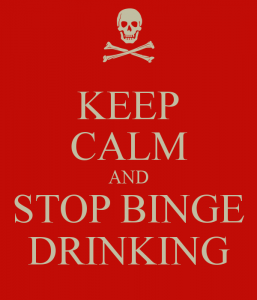
In a way the designer of this image took the same route as the previous one. He or she took an image that would take the audiences’ attention, but the image they chose this time was a familiar image rather than an out of the ordinary one. The author most likely assumed if a person saw this image they would stop and read it because they associate the format of it with the branded image “Keep Calm and Chive On”, but at second glance they would notice the message it had on it. The skull and cross-bones along with the writing gives a negative connotation toward binge drinking which is a smart rhetorical move by the creator of this image. This is another effective way of conditioning people to make more responsible decisions.

The Path to Surveys

Hello informed readers. This past week in class we were given instructions to begin constructing our survey for our research topic. My research topic has recently become more focused:

What are the different alcohol policies on college campuses and are they effective?

So my topic is pretty precise compared to more general topics such as gender inequality or leadership, but my questions are not as simple as one would assume.

vector-of-a-cartoon-caucasian-guy-taking-a-survey-by-ron-leishman-34954

I have been thinking about the possible questions I could ask and I have bouncing around between two different categories of questioning. I could survey to better understand the drinking habits of students which would in turn give me information on if alcohol policies are effective, at least on Santa Clara’s Campus. Or I could ask the students questions more in line with the idea of what policy they believe would work best.


FIRST OPTION

The first possibility of questions revolving around the drinking habits of students would be helpful because they would help to answer my question about which alcohol policy is effective. Although, since I will only be taking a sample survey of around 30 individuals might results make be skewed because of how small my sample was. To make this line of questioning more effective I could ask them if any of the drinking policies had a direct effect on whether they engaged in under-age or binge drinking.


SECOND OPTION

In regards to my second option of questions they could be effective even in a small sample size. They would be useful because I could get a general consensus on the policy students think would be more effective on a college campus. The good thing would be I would not need a lot of people to see which way of thinking was more common. Also the other line of questioning could lead people to be dishonest because they do not want to seem like a bad person based off their answers to the questions.

lNxW6

CONCLUSION

What I am leaning toward is having a mixture of both types of questions. Asking students if they’ve been effected by the alcohol policies, and also which policies they believe would be most effective in helping the problems of illegal use of alcohol and alcohol abuse.


The Value of Creativity

I was reading Alex Perlman’s blog on creativity and if current schooling systems are killing this used to be valued ability. I was intrigued about this subject because it has been something I thought about before. Hearing stories from my parents and other older generation people I got a sense that people strongly valued creativity over anything else. All the famous inventors and notable historic figures of the past were all creative in their own way. They somehow thought differently than other people. After reading Alex’s blog I could see how school systems could be the problem, but I think it goes even bigger than the school systems.

Following the Herd

I think that the lack of creative thinking results from the society we live in today not necessarily the schools we go to, although I would not suggest that they help at all. I’ve begun to realize that people are afraid to say anything that challenges the thoughts or beliefs of the majority. They are afraid the minute they speak out people will silence them if their ideas or opinions are different. This alone is a cancer to creative thinking. What good is thinking creatively if you never get to share or put to use your creative thoughts.

Try Hards

Another detriment to creativity is the constant casting-down of “try-hards”. Most everyone has witnessed someone else making fun of someonetQOWy80 who was not acting “cool” because he was trying harder than they were at something. In my generation I see it all the time. For example, let’s take a look at talent shows. Talent shows are a great example of a display of someone’s creativity. Talent shows used to be very popular in the past generation, but in today’s world sadly it’s not seen as a very trendy thing to be a part of. A large reason is because if someone goes on stage and gives there all they will be made fun of because they tried to hard or they were just trying to act cool for the crowd.


Moving Forward

This societal thinking is killing creativity and work ethic in kids. People are starting to believe it’s not good to try your hardest and share your talents or creativity. But were would the human race be today if people did not try hard and act on their creative impulses? We would have nothing. No new innovations. No new inventions. No art. No joy. That sounds like a pretty dismal life to me and I hope that society’s views on creativity and hard work change.


BEAM Blog

light

The BEAM style of labeling different types of research argues the traditional way of naming them (primary, secondary, tertiary) actually hinders the rhetorical writing process. The traditional terms are too vague to actually aid us in understanding what sort of research products we come out with. The BEAM method aims to organize our research outcomes by their use in our writings. This is important in our own writings but also in analyzing the work of others because we can more clearly state exactly why and how the writer used a certain piece of evidence or information in their work.

Looking back at my archival research writing I see a lot of ways to classify my research products by how they were used in my writing, and I could not have done this using the traditional methods. For instance, in my writing I mentioned an article in an old newspaper regarding wine. Going off the BEAM method I would say this was Background material. It’s main purpose was just to provide some more evidence to my claims and add even more understanding to my topic. Without using this new method I would have had to label this finding as a primary source which would then give no indication for how I used it in my rhetorical writing. In other words, we all understand it’s a primary source but what does that have to do with your work? What did you do with that article?

Perhaps the main archival finding I used in my writing was an old article in a Santa Clara from 1978. Again with the traditional methods of naming sources I would have said this was a prim56616003ary source, but with the BEAM method you would get more of a sense of how I used this article. I would have labeled it as an Exhibit source.
This explains that I “analyzed or interpreted” this source which would give you way more detail about its value to my writing.


Overall, the BEAM style of organizing research findings is way more practical than the traditional way. Now when I am looking through my findings I can think to myself

hmmm… How am I going to use this? Will it just add general information to my topic? Am I going to use it as evidence for one of my claims? Will I use it to show others’ support for the same claim I am making? Or will I use it as a “governing concept” in my paper?

This could potentially help me in my writing process because maybe I have a good finding that will be valuable to my writing, but I am unsure of how to use it effectively in my paper. I would then go over the BEAM method and see which category would best suit my finding. That alone would keep my writing more focused and coherent.

Research: Time Wasted vs. Knowledge Gained

Looking back I believe I have only written one research paper in my life. I do not remember the subject matter of the paper, but I do remember the process. I thought of the research paper as sort of a “show and tell” event. I was given a topic to research and I would then present it to the teacher once I understood the topic. It seemed simple but it would require a lot of time to fully grasp the topic. In high school, time was something I did not have. So, I looked for ways to expedite the research process.

Like we read in the “The Great Research Disaster” my first inclination was to visit Wikipedia, the forbidden fruit. Now don’t get me wrong I’ve read the bible, and I know to eat the fruit would only bring bad things, but then again I’m only a man. As I began to read a great summary of my topic I only gained as much knowledge about it as would allow me to at least fake that I knew it inside and out. The truth was I had a very shallow understanding of my subject. As a result, my grade reflected this.

I have not done another research paper since this old high school assignment, but I know what I will do for my next paper. I’m going to try not to cut corners and do an in-depth study of my topic. I think I’ve realized that research is one of those things in life that you cannot shorten. There is a reason why it takes so long. It is one of those instances where the journey has almost as big of an impact as the destination. Chevy Chase said it best in the movie Vacation when he said, “The journey sucks. But that’s what makes you appreciate your destination.” Along the way to finishing your paper there is so much knowledge out there that you have no idea exists. One little fact could change your whole perception of your topic. Which would in turn change your whole paper. I look forward to testing this hypothesis of more detailed research on my next paper, and seeing if it benefits me more than a quick Google of the topic.