Reap What You Sow

Life as a university student in the US essentially revolves around one single question, “What are you going to do after college?” The process is as follows: attend a good university, choose a major with career opportunities, get good grades, find a prestigious internship, and finally secure a comfortable job that you enjoy. This is how it is supposed to be and so long as you do this, you have succeeded. The linear progression of such a strategy is comforting and reassuring to university graduates that are just simply trying to live a normal, secure, and enjoyable life. As a matter of fact, most of us don’t even see this path as optional. It is the only thing we’ve ever been taught to expect. So long as we put our heads down and do our part, we will reach this happy secure life. But what happens if we pick our heads up? What if suddenly we realize that there might be another way forward?

Exactly how I came to pick up my head I cannot say, except that it was inadvertent and happened somewhere between getting good grades and getting a prestigious internship. I had decided to matriculate at Santa Clara University and was about halfway done with an Environmental Science degree and until this point, I was under the impression that I would end up pursuing a traditional career within my field of study. Just like my many friends in the business school who wanted to be accountants or marketing experts, I saw myself working toward some type of environmental policy or conservation career, because what else would I do?

But in the spring of my sophomore year, I was introduced to a whole new way of looking at what it meant to be successful. I was fortunate enough to take a class focused on social entrepreneurship as a method for addressing global poverty. Immediately I became obsessed by the notion. Its not to say that I was blind to the fact that there were over a billion people living in extreme poverty on our planet, I just could not see what could be done about it. The more I learned, the more enthralled I became. The concept resonated with me in that part of my desire to study environmental science was based on my belief that we can and should try to make the world a better place than it is now. Of course, there are always problems in the world, but this does not mean that progress is not possible.

Suddenly, the thought of pursuing the normal became almost entirely unappealing. I had stumbled upon something that had no answer, just an idea. Rather than being linear, this concept was barely getting off the ground and aside from a few successes, remained largely unproven. A normal job started to seem dull compared to this unsolved global issue. It required critical thinking, creativity, and perseverance, rather than simply the following of a predetermined path and doing the expected. Eventually, the obsession led me to this fellowship, and before I knew it, I was flying halfway around the world to test it out.

I remember flying over San Francisco and looking down at the neat streets, the tall offices, and the bustling of normality. Many of my fellow students at Santa Clara were down there, fulfilling the next step on the road to success. I, on the other hand, was about to embark on what I thought would be a life changing and awe-inspiring adventure to solve an unsolvable problem. I had spent months preparing for this adventure, reading about Zambia, about Africa, about the enterprise I would be working for, and everything else I could get my hands on. Hours of preparation, meetings, and phone calls had inspired me and filled me with expectations and ambition. How boring I thought the work below was at that moment.

IMG_0046

The normal

Of course, it was not long after we landed that the realities of the developing world began to erode my pretentiousness. Almost immediately, our plans fell apart and we were left scrambling to do anything that would be of some use. The inspiration I had derived from learning about social entrepreneurship was reduced to desperation. I saw my expectations crumble before my eyes and felt a very real sense of irony sweep over me. I began to think back on that beautiful city, with its progress, its motivation, and its growth. Suddenly, normal began to seem less boring and it was my ambition that started to look foolish. What was I thinking? Who was I to think I could make any sort of difference here? Perhaps there is a reason social entrepreneurship hasn’t taken off, maybe it just doesn’t work! Everything that had formerly captivated me began to cause me to second-guess myself. How easy it would have been to just stay at home and get a regular internship just like everyone else. My initial arrogance was slowly replaced by envy for my friends who not only had comfortable jobs, but who were also able to live life blissfully unaware of how bad the world really is.

I learned very quickly to distinguish between knowing and understanding. Possessing knowledge is to acquire facts and information from the classroom, books, TV, and the Internet. Before coming to Zambia, I knew a lot. Understanding, on the other hand, is something far less accessible. To understand is to comprehend or perceive the meaning, significance, or cause of something. This is a far more abstract form of intellect that deals more with experience and engagement than it does with the regurgitation of facts and information. Unfortunately, the more I came to understand about the developing world, the less I could rely on my knowledge. Plagued with envy, frustration, and a sense of defeat, in a final act of desperation I decided to hunker down and do the best I could to salvage this project.
pic-4-225x300

My cubicle for the summer

When I returned home, my thoughts turned back to the same old question, “what am I going to do after college?” Only now it seemed that the foundation on which I had constructed my alternative path had crumbled. What would I do with this experience? Had I just set myself back a whole summer? Was it too late to get back on the normal track? To say the least, I felt lost. It was not until many months after my return that I was able to dissect my frustration more objectively. Today, we rely so much on instant gratification. Communication between two people even across the world from each other requires only a text, an email, or a call. Information can be found instantaneously on the Internet. Even paychecks can be deposited electronically the second they are issued. I began to realize that perhaps I had a similar expectation about my experience.

The gratification for this project, however, was very different. At first, very few people know about what we had done. Even those closest to me never got much deeper than asking, “how was Africa?” But little by little, as we began to pull together what we had done, more and more people became interested in our work. Not only was I surprised by the positive feedback that we received from CEOs, department chairs, and others interested in this type of work, but I was also surprised by how much we had actually done. I had spent so much energy being preoccupied with what I was missing out on back at home, that I had not realized how much work we had truly learned. I felt particularly validated when a Jesuit working in Malawi expressed interest in reading my work on agro-forestry.  After reviewing the guide, he explained how fascinating it was and how he would like to use some of the findings at the school he was opening in Malawi. I began to see that even though our plans had fallen through, we had still accomplished something. I may have had some lofty expectations at the beginning that did not come to fruition, but at least my work was going to be of use to someone and was not a complete failure.
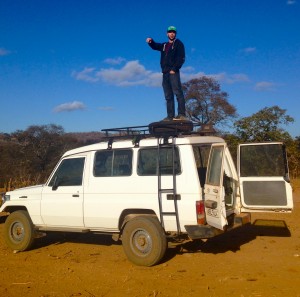
IMG_0359

The view from the top floor of my office building


I have come to a sort of equilibrium in terms of how I feel about my work in Zambia this summer. Have I been hired? No. Have I solved global poverty? No. But am I any closer to knowing what I want to do after college? Certainly. I can draw several lessons from this experience that have taken me until now to understand. To begin, working in the developing world to combat poverty is not easy. If it were, the problems would have been solved by now. Second, simple goals produce simple outcomes. I do not look down on those following the normal path in life as I did in June from the plane. The choice to follow this path is for each person to make and there is nothing wrong with it. I sometimes get overwhelmed with where I will go in life and do sometimes wish that I had never lifted my head. But I no longer envy those on this path as I did during the hardest moments in Africa. This fellowship continues to bear fruit for me in ways that I could have never foreseen, whereas many of the normal internships taken by my colleagues have produced nothing more than a few lines on a resume and some spending money. Third, understanding is more valuable than knowledge. My knowledge did little to prepare me for what I would experience in Zambia, yet the understanding that I gained there has changed my perspective on life and led me to an intellectual position that will continue to open doors for me. Finally, and perhaps most importantly, I have realized that no matter how hard it might be at times, I will never be able to escape the fascinating and perplexing problem that is global poverty. The fact that this problem remains unsolved is not a source of cynicism or doubt, but rather a source of inspiration and motivation. I will never see the world the same way, and for that, I am grateful.

So where does this leave me as I look ahead? This remains a good question. I have no specific answer as of yet. But I do have what I would consider to be a good compass. I do not think I can turn my back on development, even for the most comfortable of jobs. I think that no matter what I do, it will be influenced in some way by what I have learned from this experience. Furthermore I realize that I have something to offer the field of global development. Being dropped in the middle of one of the poorest countries on the planet, watching my plans disintegrate, and still being able to produce something valuable has taught me that. It has also taught me that I can be resilient and resourceful, even though I may not recognize that I am being so in the moment. The hardships of working in the developing world are not a deterrent, though they are frustrating. The gratification of having a positive impact on someone’s future through my work on agro-forestry has far outweighed any gratification I have ever achieved from a paycheck, and that is no platitude. I believe that my passion for environmental science fits perfectly with my newfound passion for development. But for me to synthesize these requires more than knowledge; it requires understanding, which can only be attained through experience. My desire is to continue to learn more so that I can be a larger agent of change. Do I see myself returning to the developing world? Without a doubt. Although being young comes with naïveté and foolish ambition, it also comes with energy and vigor, and an openness to new ideas. So long as I remember the lessons I have learned from this fellowship, and make sure not to keep my head down, I think I will find that alternative path to success, whatever that may mean. I do believe that if those who plant the seeds of critical thought, vigor, and perseverance, will be able to reap a success that is far more fulfilling than that expected by society. I am excited to see where else this experience will take me, and it may be hard to measure, I consider it to be one of my wildest successes.
IMG_0288


Posted in Uncategorized | Leave a comment

The Garden

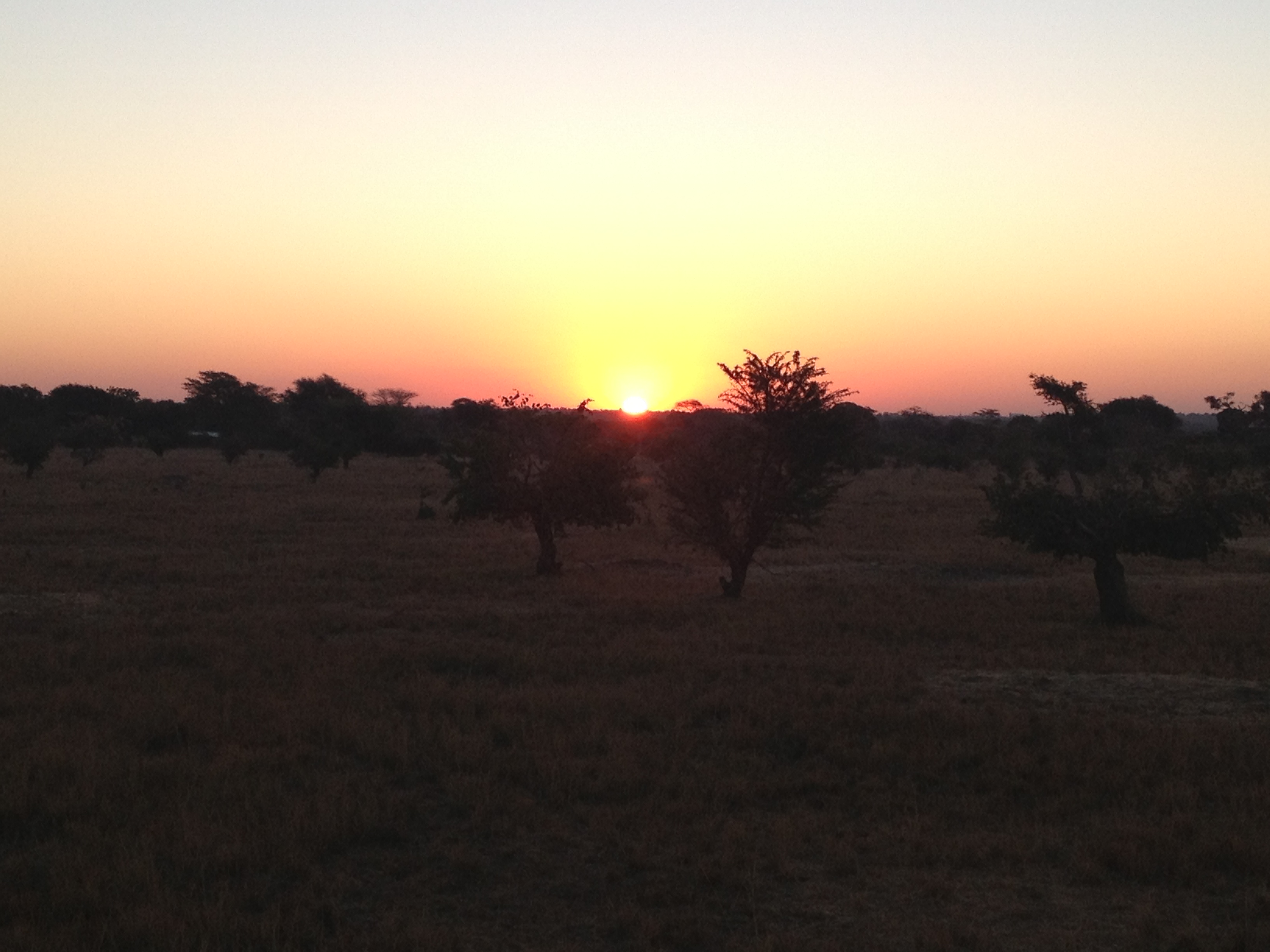
The sound of barking dogs and crying roosters prompted me to reluctantly crawl from my warm sleeping bag and step onto the cold concrete floor in my bare feet. Rubbing the sleep from my eyes and shivering, I opened my curtains and saw that the sun seemed even more loath to rise than I did. I thought Afirica was supposed to be hot! I said to myself. But then again, I thought Africa was many things before getting here. Prior to leaving my room for breakfast, I crossed another day off my calendar, noting that we were now four and a half weeks into our adventure in Zambia. In those four and a half weeks, I had seen my idealistic picture of working in Africa crumble into a barely recognizable reality, tainted by the difficulties of trying to be productive in a place where productivity was as rare as my white skin. Inspiration had turned to cynicism and I was beginning to wonder if we would even make any sort of difference at all.

A reticent sun

A reticent sun

Months of preparation, studying, drawing up itineraries, and constructing seemingly flawless plans had not prepared us for what we would encounter, or for that matter, not encounter, once we reached Zambia. Right from the start, we ran into systemic issues with the under resourced and bureaucratic Ministry of Education. Once we began researching, the language barrier quickly became a stumbling block, reducing the number of people we could talk to. The terrain and the dirt roads, not to mention the distance between centers and the small Chikuni Mission where we were staying, limited our mobility. Yet even though I did not foresee these specific issues, I was at least prepared to have some logistical difficulties.

What I was not prepared for, and what truly eroded my original image down to reality, was how interconnected and seemingly inescapable the issues of poverty are. There is no silver bullet for ending global poverty, and no silver bullet for poverty in Zambia. In fact, even just one person cannot be lifted out of poverty with a single solution. Witnessing some of the world’s poorest people had created within me both an intense desire to do something, and an overwhelming sense of helplessness in the face of such a complex issue. Today was a day on the hopelessness side of things.

I sat staring at the bottom of my mug, savoring in the taste of my morning tea, and waiting for my mentor, Boniface, to arrive. I wondered what this day would bring, largely expecting to discover another facet of poverty that would further complicate whatever solution was out there as well as deepen my sense of helplessness. As it would turn out, I was only half right.

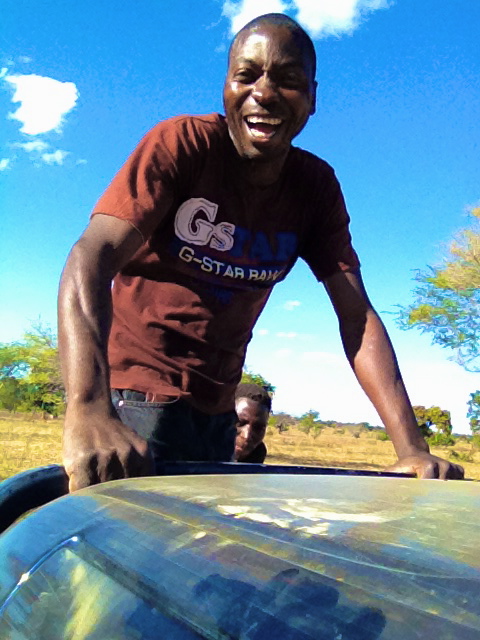
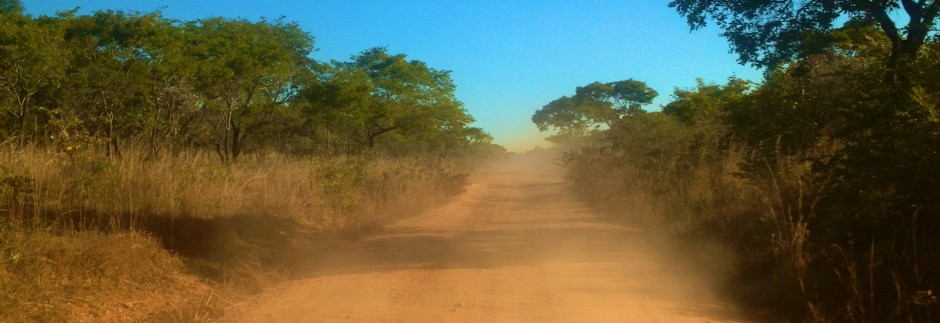
“Mwabugabuti Jahk!” Boniface greeted me as he pulled up on his motorcycle, flashing his ear-to-ear grin. “Kabotu, mwabuga” I struggled to say in response. “Kabotu!” he said with a laugh, “Today, I propose we have an adventure!” And with that, I pulled on my helmet, clambered onto the back of his motorbike and held on tight as we set off down the road. By the time we made our first stop, we had nearly hit several chickens, my entire body was sore, and I had gotten my fair share of looks from the villagers who must have been wondering what this ‘Mazungu’ was doing hanging on for dear life on the back of the motorbike in the middle of Zambia.

My guide and mentor Mr. Boniface Hangala

My guide and mentor Mr. Boniface Hangala

We had come to an area known as Nakabwe, a hilly region served by the Chikuni Parish. Boniface pulled over on the side of the road and beckoned me over. His wide grin had been replaced with a solemn look. We looked out over a hillside that had recently had about an acre of trees cleared from its slopes, all of which now littered the ground, grey and dying, marking the land like a scar. “It’s just… so painful” Boniface said. As we gazed out over the scene, he talked of a time when the hills of Nakabwe were covered in trees and dense thickets and growths characterized the forests. He told me that the only roads had been small trails that wound through the hilly landscape from village to village. The forests once harbored many wild animals and the people spent their time collecting mushrooms and tubers to sell. I had been under the impression that this time was long gone, and was amazed to learn that it had only been five years since the forests had been there.

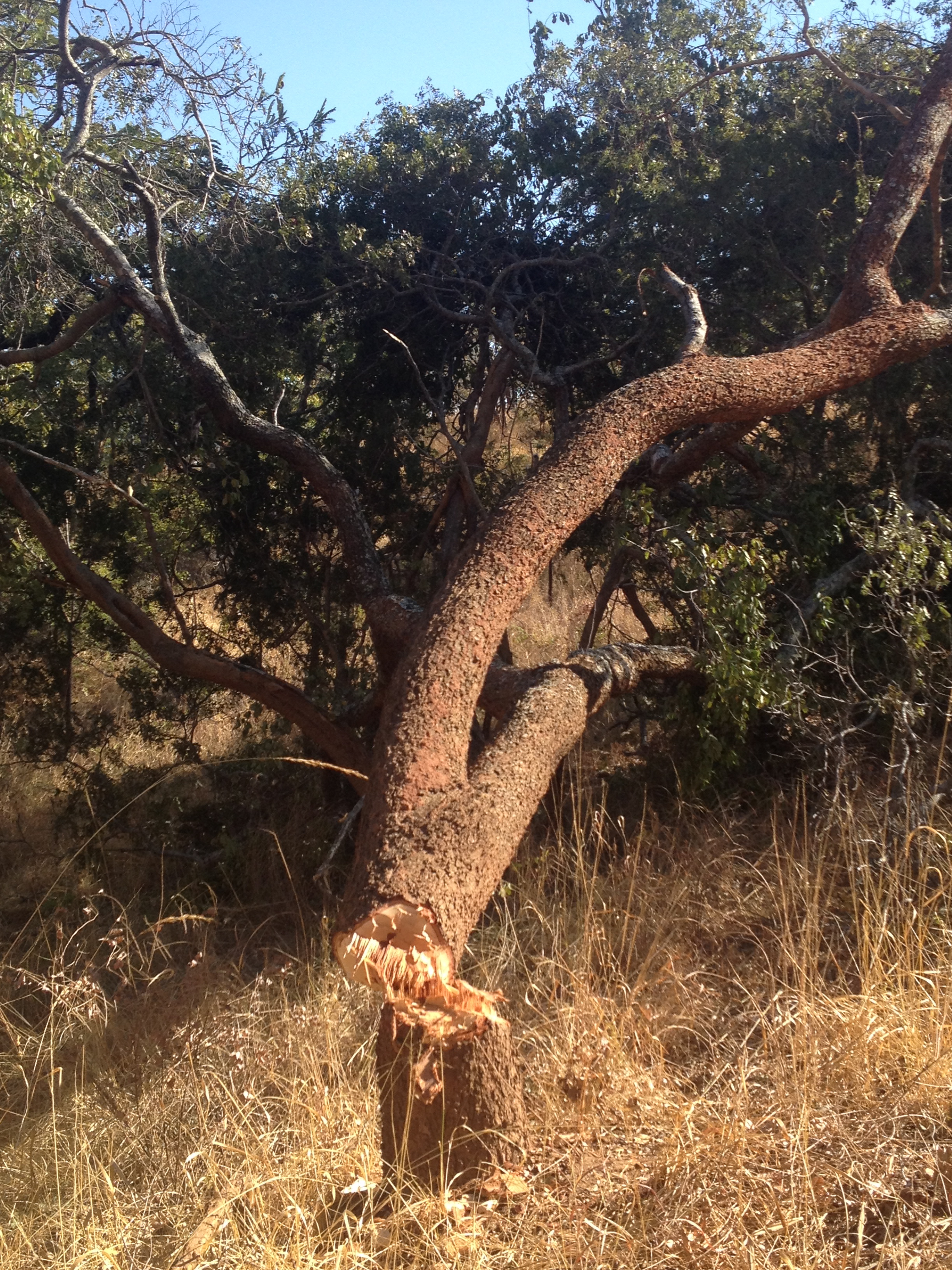
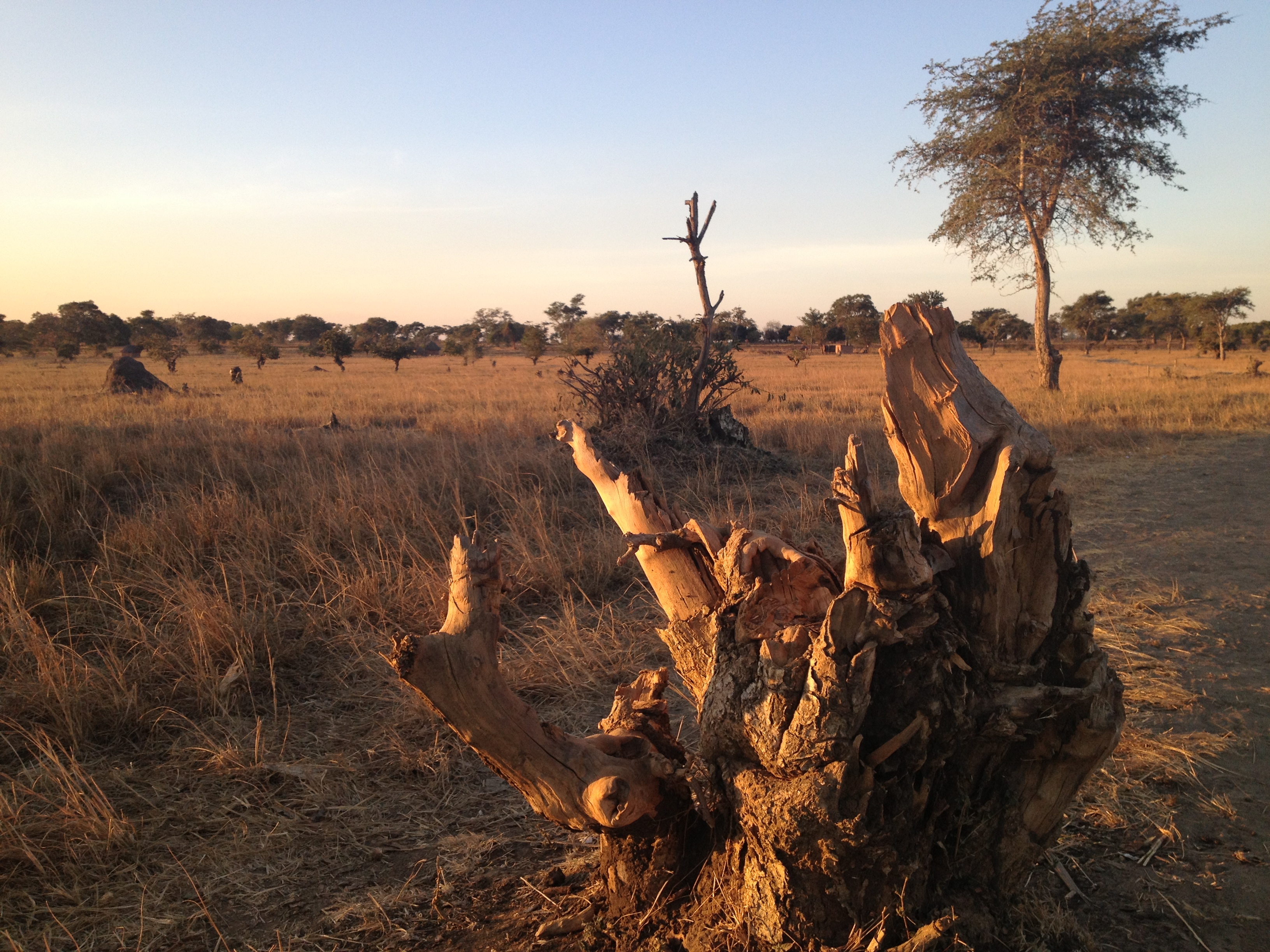
Boniface sighed and kicked a nearby stump. “This tree was 100 years old,” he said “now, gone. Gone for charcoal.” The stump was the butchered remains of a Mu’umba tree, normally a beautiful hardwood tree with a spreading canopy. Stumps like these scattered the landscape in every direction.

A freshly cut tree waiting to be turned to charcoal

A freshly cut tree waiting to be turned to charcoal

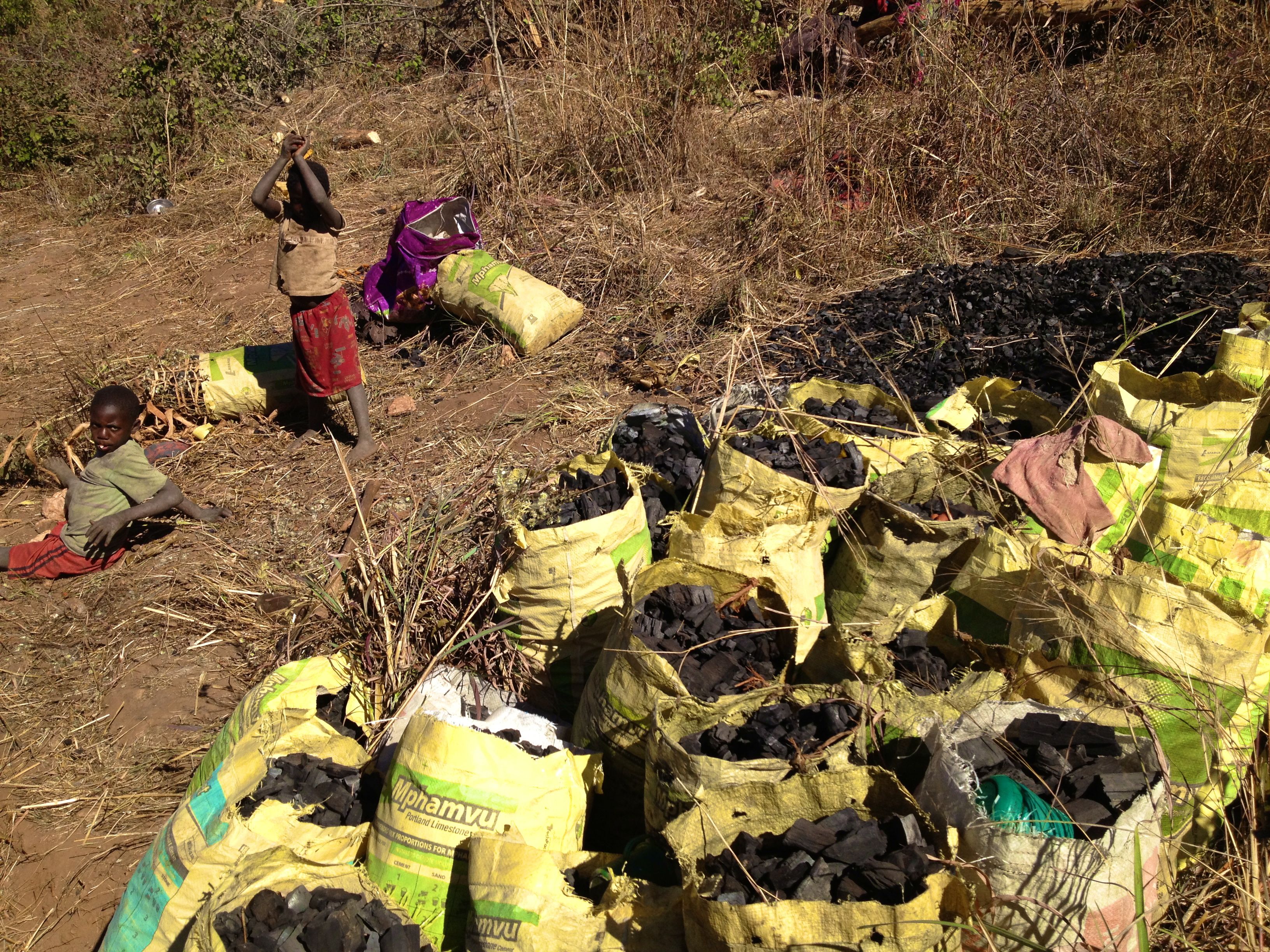
While in Lusaka, we had visited one of the poorest compounds in the city, Ngombe, and seen some of the worst levels of poverty imaginable. One distinct image I had was of a group of children playing on a huge mound of charcoal. That same charcoal would later be sold to their parents at an inflated price and used for cooking and heating in the family’s small brassiere. While burning, it would spew carbon monoxide and other toxic fumes into the household, which would eventually find their way to the lungs of the children who were now playing on it.

Children playing with charcoal in Nakabwe

Children playing with charcoal in Nakabwe

As if that wasn’t a powerful enough image, here I was staring at the remains of one of the trees that had been turned into a briquette that literally meant both life and death, to the people of Zambia. Eventually, we hopped back on the bike and travelled a bit further before coming to a valley where a family was sitting around a smoldering, heap of dirt. Boniface introduced me to the father who was in the process of producing charcoal. Like their urban counterparts, and in an odd but poetic sort of full circle symmetry, the children of the family were playing with charcoal, only stopping to stare with gaping mouths at my strangeness. With Boniface translating, the man and I talked, and I began to understand not only another dimension of poverty but also how it is so inextricably linked with the environment.

The lack of electricity in urban areas coupled with rapid urbanization has fueled the demand for charcoal, thus driving up the cost. Therefore, people in urban areas, such as this family, have transitioned away from agriculture to charcoal production. In some cases, Charcoal is nearly twice as lucrative as standard agriculture and has become a major part of the rural economy in Zambia. The evidence is two-fold, an increasingly sparse landscape, and thousands of scorched parcels of land, turned black and poisoned by the charcoal making process.

“I cannot be angry with them,” Boniface said after we left, “they just don’t know what else to do.” It is true. The concept of long-term environmental degradation is hard to grasp when you need money to feed your family. Yet for every tree that is cut down, the land loses more fertile soil, temperature swings get more volatile, and the winds grow faster, spreading fires and damaging buildings. It is painful not only because of the level of destruction, as illustrated by the ability of one man to clear an entire hillside, but also because of the difficulties that these people will have to face in the future if deforestation continues at such a rate. Indeed, my teacup contemplations seemed to be coming to fruition, another dynamic of poverty had been revealed and I was beginning to feel even more hopeless.

I spent the next leg of the journey with my thoughts. The further we rode, the more desolate the landscape looked. Black spots dotted the land and everywhere I looked I saw another stump. I began to think of what this place would become. Once the full effects of widespread deforestation set in, the soils would be washed away and frosts would kill whatever crops people could still manage to grow. The beautiful landscape would become barren and dry with flash floods occurring every rainy season and fires sweeping the land when it was dry.

To say the least, I was feeling even more helpless. But as I said, I was only half right about what I would discover that day. We finally reached the school building in Nakabwe. We parked the bike and greeted the children who were in class. Boniface then led me out of the classroom and down a long path down the hillside. We were headed to the school’s agroforestry garden, one of the many that Boniface had been designing and building at each of the 17 schools served by the Chikuni Parish. The idea was to teach the students to grow crops in an environmentally friendly way. This would increase their nutrition as well as their incomes and offer a viable alternative to the charcoal paradigm. I had seen several of these gardens before, but most had been in poor condition or were not very far along in their construction.

As we walked, Boniface described the many difficulties of building a garden in the hills. Rocky soil, deeper groundwater, and the slope of the land were all serious impediments. I listened and expected the worst as we continued along. Before long, we came to a line of trees. “Gliricidia sepium” Boniface said casually. He never ceased to impress me with his botanical genius. He stepped into the trees and over a small fence of piled logs. I followed suit, keeping my eyes down so as not to trip.

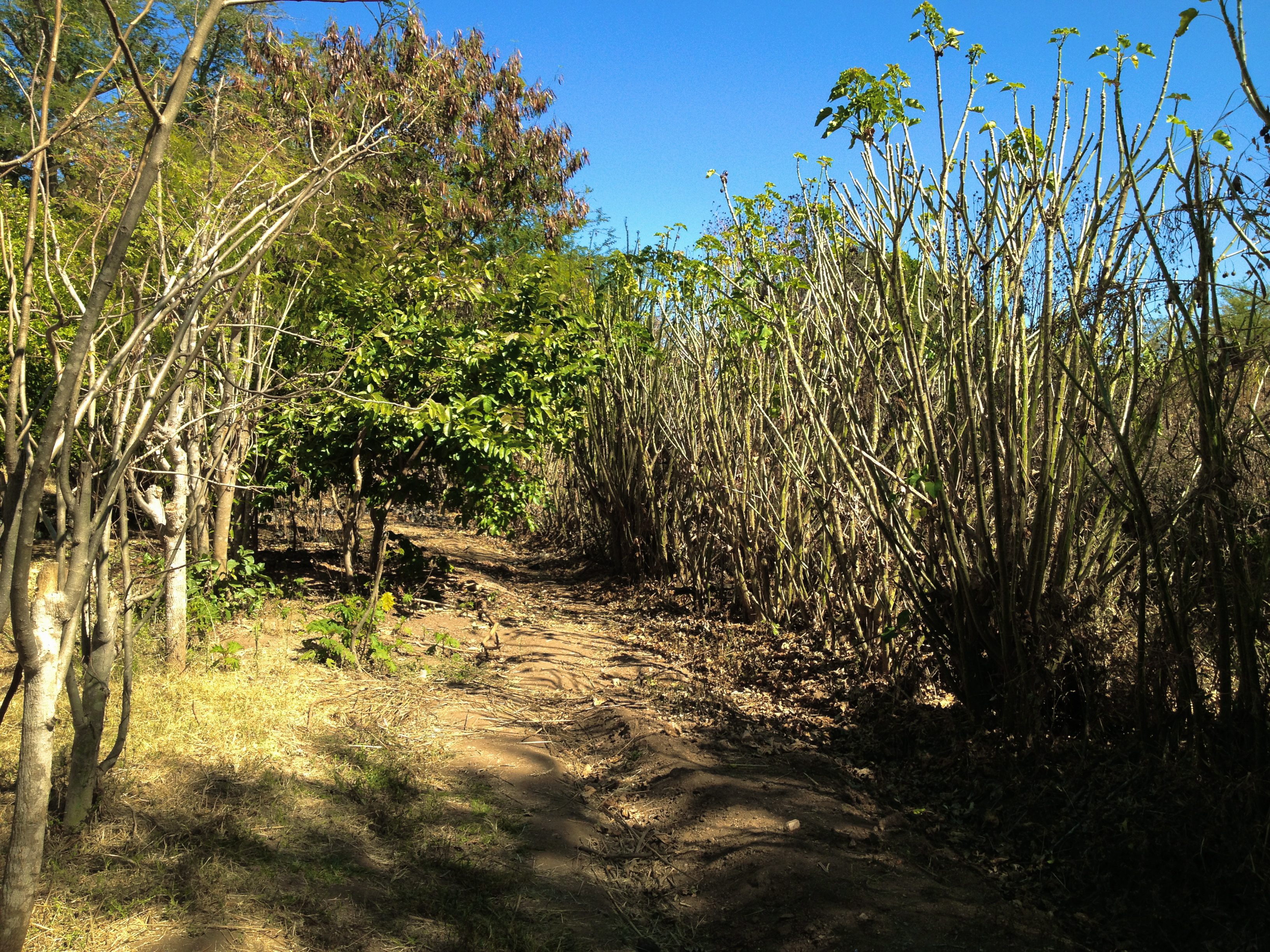
The world we emerged into was so different that I began to wonder if the darn Gliricidia trees had some hallucinogenic aroma to them. What lay before me was a lush garden, bursting with every shade of green imaginable. The borehole pump was a few feet away; water dripping from its spout into a puddle above which giant white bumble bees buzzed lazily. Rows of trees and plants were laid out, creating pillars and hallways within the garden. I stood in speckled sunlight under the canopy of a fully-grown Jatropha plant, looking at the wonder before me.

Eden

Eden

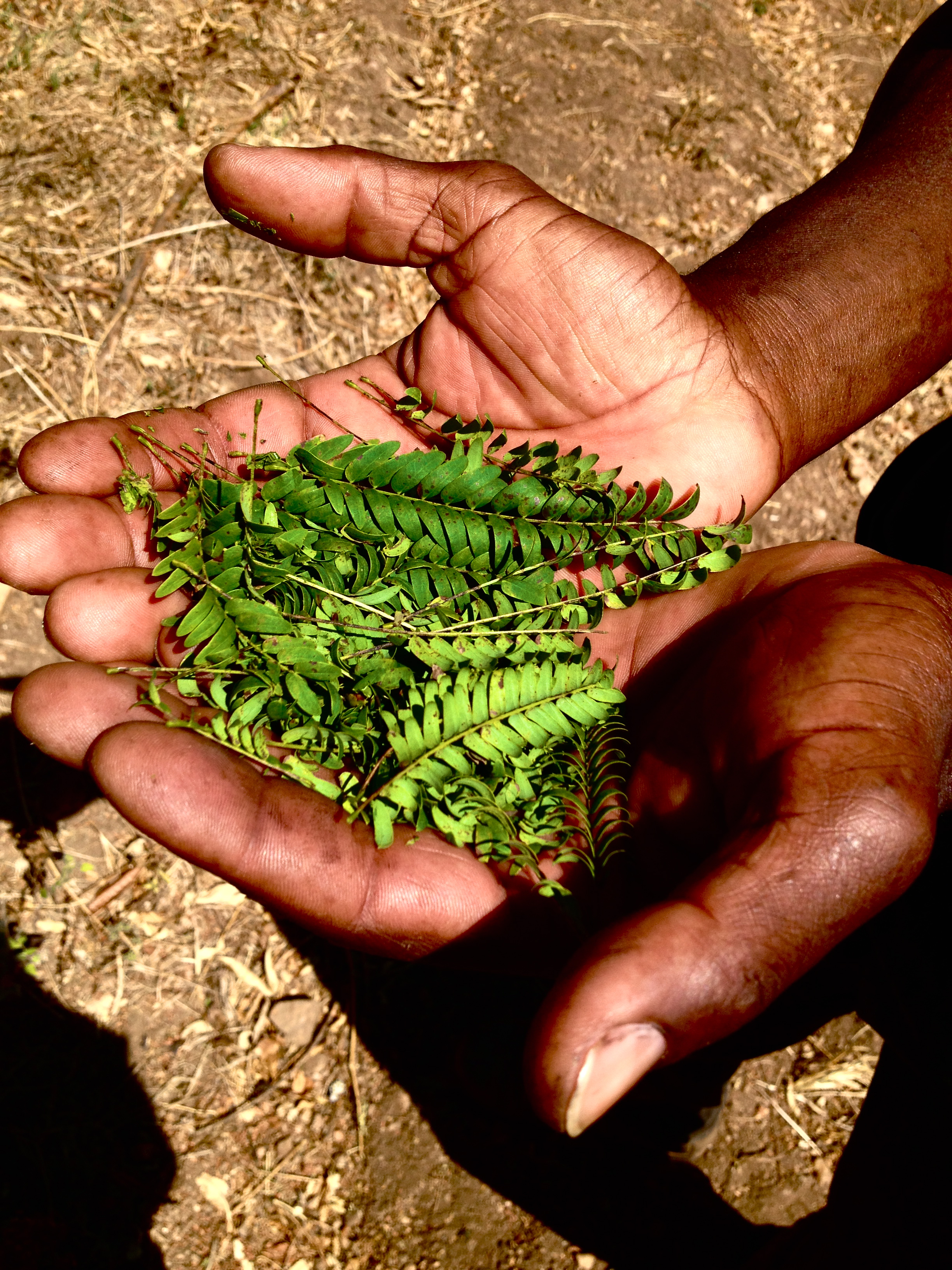
A second ago, I had been in a dry, deforested landscape. But here, there was life! I had come to some sort of African Eden. Boniface gave me a tour, showing me the different features of the garden, all which contributed to the health of the other plants, but also to the health of the children in the community and their families. Multipurpose plants like Gliricidia were good fertilizer trees and animal fodder, but also could be used as a source of firewood that would regenerate quickly even when cut to a stump. Jatropha trees, which served as a formidable living fence to protect the garden from wandering cattle and pigs also provided seeds, which could be turned into oil and biofuel. And of course, Moringa. Oh what a wonderfully nutritious and useful plant Moringa is. Just wait until Whole Foods gets wind of this plant… you’d better watch out kale. Growning happily in the conditions of the garden were traditional vegetables and fruits of every kind. What a heavenly place.

I sat there listening to Boniface, and observing this secret garden that we had come to. I was so bemused that I forgot to take any good photos, but then again, they would not do it justice. Boniface left me to do some routine checkups and I took a seat under a tree and began to ponder the splendor of the place. Here I was, in the heart of one of the world’s poorest countries, witnessing a beautiful display of perseverance and most importantly, success. This garden was, in essence, a thriving monument to the possibilities that exist for the people of rural Zambia. I began to realize the importance of educating these people about the benefits of these gardens, the reason Boniface gets out of bed everyday. The wide-ranging benefits of agroforestry extend beyond nutrition into economics and environmental protection. Educating people about such a robust and sturdy alternative to the destructive practice of charcoal production is crucial for the future of Zambia’s people and the Zambia’s environment. It may not be a silver bullet, but it sure is a good place to start.

Boniface describing the properties of Gliricidia sepium

Boniface describing the properties of Gliricidia sepium

My cynicism melted away that day and was replaced by a new, more refined and realistic idealism, an idealism based on practical action and self-empowerment. The ride home was much easier on my body and I made sure to wave at all the onlookers this time around. When I returned, covered in red dust and exhausted, I slumped into my bed. Rather than finding another reason to feel helpless, I had found many reasons to feel inspired. My commitment to the project was renewed as well and for the rest of our time, I began to see opportunity where once I had only seen failure. I began to see Zambia not as a place devoid of progress and wrought with problems, but rather as an unplanted garden, waiting for the right gardeners to come along a bring it to life. From a more global standpoint, the garden reinstilled in me a belief that our world is what we make it. We can turn our planet into an industry driven machine fuelled by consumption, or we can make it a beautiful, flourishing, paradise. I know this because even in the most desolate of places, I have seen it.

Though I may never be back to that garden, I have a belief, a conviction, to look for new places and new ways to bring it to life.

Posted in Uncategorized | Leave a comment