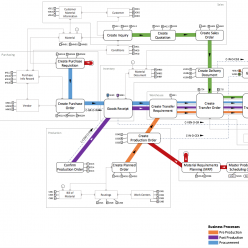
This week we discussed about Master data, Organizational Data from a Procurement perspective and also about the whole Procurement Process.
The different steps in a Procurement Process are :
1) Determination of Requirements: This process involves determining what services and materials are needed.
2) Creating Purchase Requisition : the purchasing department is informed about what items or services are required.
3) Creating Purchase Order : when the requisition is approved it becomes a purchase order.
5) Goods Receiving and Inventory Management : Process in which the goods or services are received and receipt of goods are confirmed by entering PO number. Inventory is updated.
6) Invoice Verification : In this process the PO order and Invoice are checked and matched.
Some the different business models in a Procurement Process are
1) Vendor-managed inventory ( VMI ) is inventory that is managed by the vendor and vendor(supplier) decides when and how much to stock. In Vendor Managed Inventory process the vendor and distributor are linked via Electronic Data Interchange or a secure internet connection due to which vendor has access to the retailer or distributor’s stock levels This is done by linking the companies ERP (Enterprise Resource Planning) systems together.
2) Consignment Inventory is inventory that is in the possession of the retailer, but is still owned by the supplier. Usually used when the retailer is not confident of sales and the supplier uses the retailer for carrying inventory. It creates a condition of shared risk/shared benefit and both parties are benefited by the sale of the product.