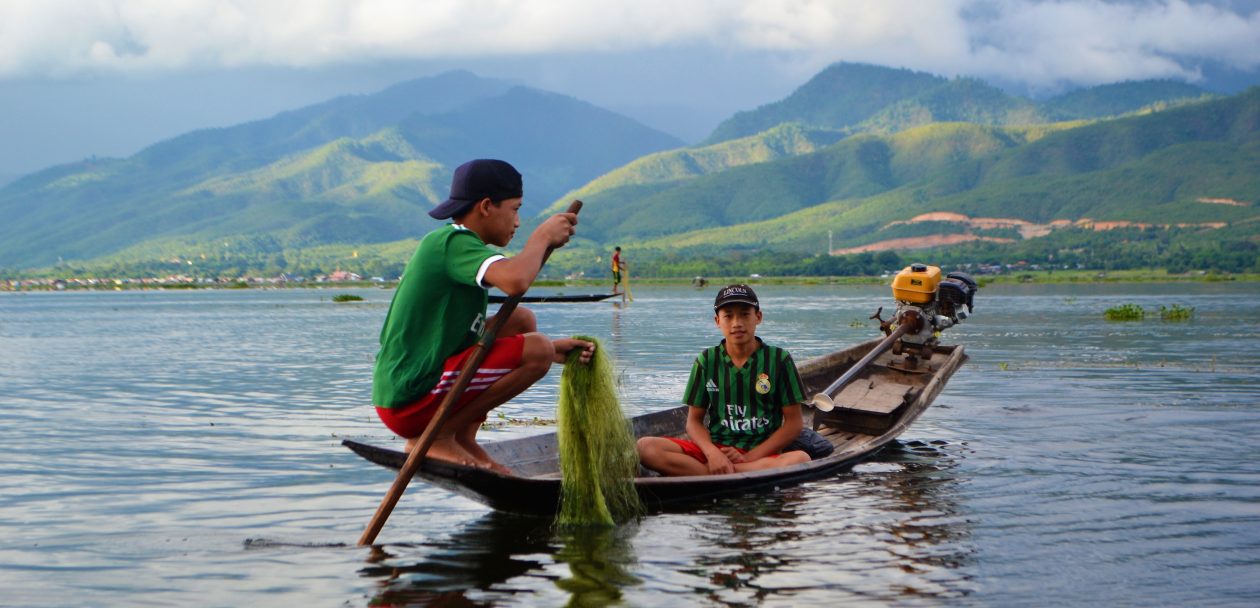
“Could the Burmese trade for themselves? Can they make machinery, ships, railways, roads? They are helpless without you. What would happen to the Burmese forests if the English were not here? They would be sold immediately to the Japanese, who would gut them and ruin them. Instead of which, in your hands, actually they are improved. And while your business men develop the resources of our country, your officials are civilising us, elevating us to their level, from pure public spirit. It is a magnificent record of self-sacrifice.” ― George Orwell, Burmese Days
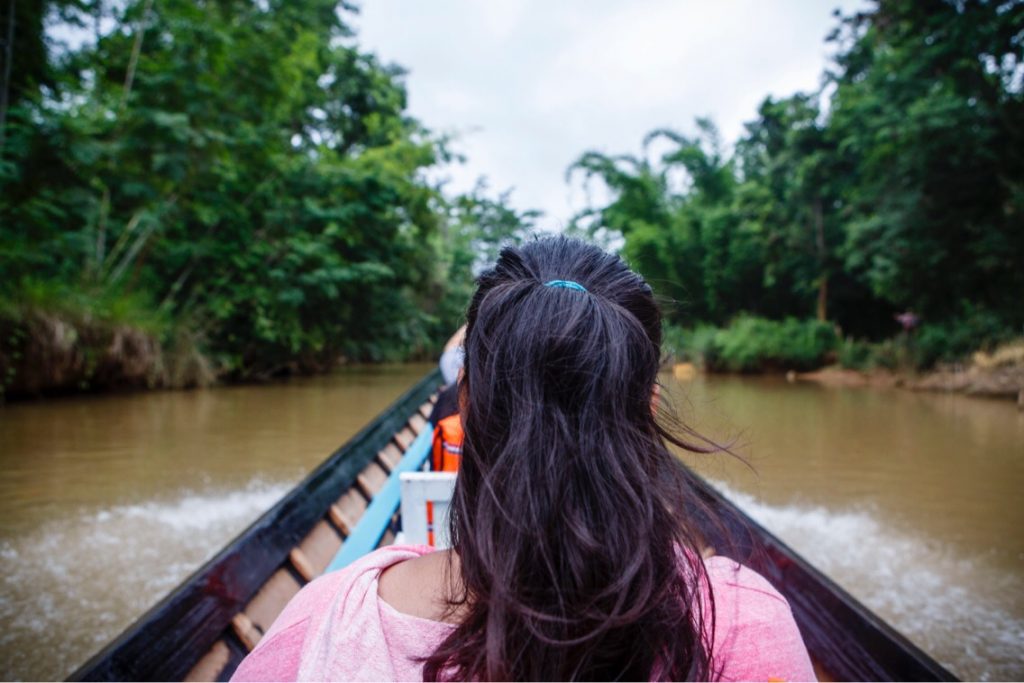
Yeah, I think I’ve heard of Myanmar…it’s near Brazil…right?
Before I left for Myanmar in June, none of my friends knew its location. However, now, in September, the Myanmar refugees are all over the news. Myanmar jumped from obscurity to unfavorable fame. Upon the change of its name in 1989, Burma lost its rich and tumultuous history. How many of us recall the books George Orwell wrote in the time of British colonialism–the warnings he had, the history he recorded? We do not realize that this Burmese history is, in fact, the same history of Myanmar. Burma was erased from this planet after once being the richest hub of Southeast Asian trade. Colonialism killed it. Yet now, Myanmar seems to be coming across hard times yet again with political and ethnic unrest. But what about the generations of people who have lived here? Who are they? Where do they belong? What stories hide in their eyes?
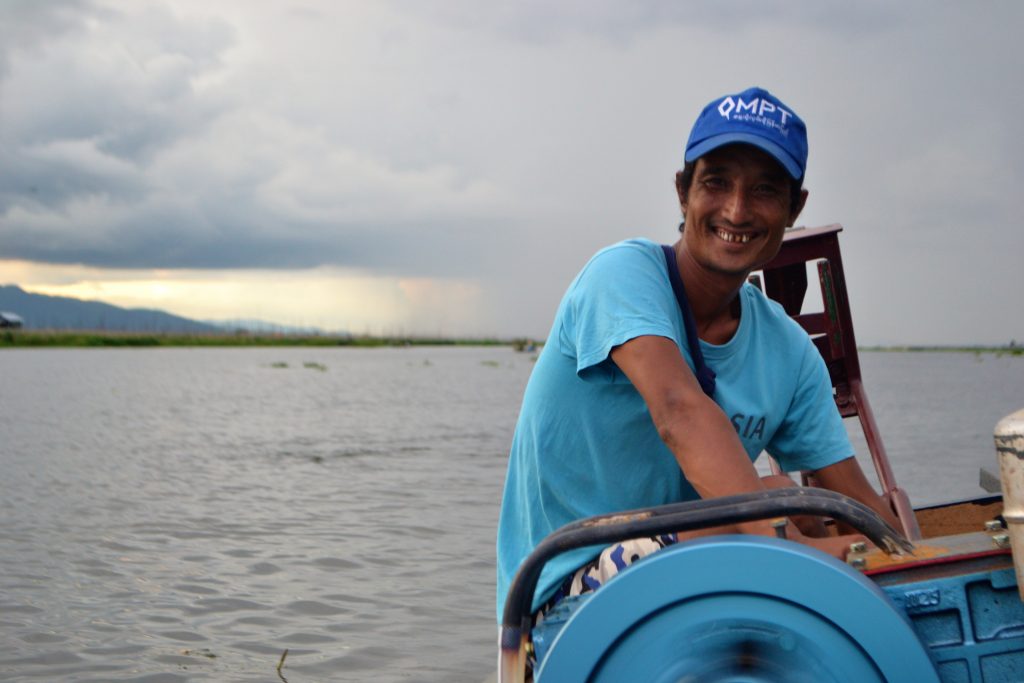
This summer I was invited into the homes and communities of the beautifully unique cultures that comprise Myanmar. I began to uncover Myanmar: what its history entails and who its many people are. As I worked with Koe Koe Tech –a social enterprise that is changing the local healthcare context and providing agency to men and women throughout the country –I felt the passion its employees had for the people of Myanmar as they used their talents and skills to expand the company’s impact. And in this adventure of a lifetime, I found a new dimension in my confidence and self-being as I spent time with the locals and witnessed how fundamentally interconnected we all are.
Proceed, for now you have the baby’s approval!
How do you interview someone about extremely private matters without speaking their language? How do you honor the wishes of your interviewee with respect? How do you form a bond of trust when you must speak through a translator?
I found that it’s all in the eyes.
I was humbled to be in Myanmar and have the opportunity to hear the stories of those that Koe Koe Tech has touched. Yet, I was overly self-critical of myself. Scared to repeat the history of the British coming in with a savior complex embodied by subconscious superiority, I began my time in Myanmar unsure of how to carry myself. Though I looked like one of Myanmar’s Sri Lankan neighbors, my American upbringing emitted from my being (it is very easy to spot an expat despite their apparent ethnicity). Somehow, western culture had erroneously convinced me that I should be ashamed of the way I was brought up and of my bold disposition whenever I entered a new and different culture. I was under the impression that I had to apologize for my privilege.
Yet in Myanmar, just as I did not desire to change those whom I came into contact with, I was not asked to change myself. Instead, I felt an unspoken need to understand who my new friends were and love them for that. It took some time, but as I figured out how to communicate with this new culture without a common tongue, I learned how to believe in myself and my self-worth. I centered myself, and I focused on why I was here and what my goals were.
I am an extrovert and have no problem communicating with and relating to my neighbors in the States. Because at home, I am confident and sure. I realized that it was this disposition — and not necessarily just my language — that needed to be translated across the seas. So I took a step back, and I connected: I gently looked the locals in the eyes and smiled whenever our team began an interview.
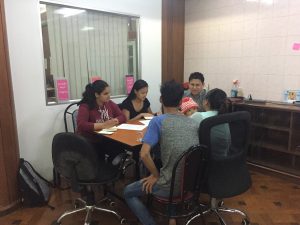
Quickly, our team learned that the interview began the moment we stepped into the household and greeted our hosts. Our very first interview consisted of a steep learning curve. We made the mistake of simply entering the house and introducing ourselves before busying ourselves with the film setup and immediately proceeding with the interview. Not only was the family uncomfortable in the presence of foreigners and the camera, but we did not know how to ask our questions in a conversational way in order to get the most robust answers. It was awkward, to say the least, because there was no empathy or trust.
Come round two, we knew better. We entered the household, introduced ourselves to the parents, and then introduced ourselves to the newly born baby. We spent a good fifteen minutes getting to know the family. I got the joyful approval of the baby, who laughed at my playful gestures, and by the time we were ready to begin filming, the underlying and awkward tension had dissipated. The room had become filled with friends who were about to share stories.
Guess which interview was better.
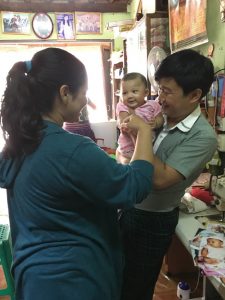
It was the baby in this second interview that refocused my mind and reaffirmed my heart. The moment that child acknowledged my love for her was the moment my confidence escalated and I was able to build upon this simple and fundamental connection. Her parents and I had met only five minutes earlier, and we could not easily communicate. Yet it was almost as if we all agreed on this one thing: that the precious baby before us had stolen our hearts. This fundamental shift in our emotions allowed us all to see that we were all radically connected. It allowed me the courage to look into their eyes and say that I stood in solidarity with them and wanted to hear their stories. I was able to smile genuinely and gesture appropriately in a way that portrayed my utmost respect and willingness to understand.
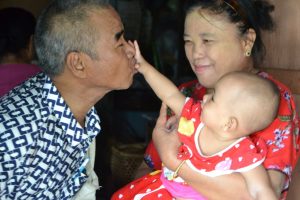
And what did I understand in my seven weeks? I identified the pride in the husband’s eyes as his wife shared her story. I admired the abounding love in the mother’s eyes as she played with her babies. I recognized the innate strength that held these families together, generations upon generations. It is so very easy to look at the environment in which another human being inhabits and subconsciously separate oneself in judgment and aversion. I believe this is what my own western culture was trying to teach me and to keep in check. It is a learned attribute to think of another as apart from oneself, and so it is a learned attitude to disregard this and value said person. We traveled to the poorest slums of Myanmar as well as visited some very well-off families. There were houses made of cardboard and wood, and there were houses reinforced with cement. But in most every interview that we carried out, it wasn’t hard to find the common denominators: households filled with loving family members, ambition, and hope. And unique to our research in Myanmar were the gleeful eyes of a baby and his/her resounding laughter which worked so immediately to set those differences aside and help all of us remember where we come from and the innate worth that each person bears.
I won’t apologize.
I am not the British in the 1800’s. This summer was key to helping me identify my place in a global world as a global citizen. I left for Myanmar fully aware of my privileges as an American citizen and daughter of a relatively well-off family. However, this led to uncertainty in this new and contrasted environment. I froze and could not connect. Though I did find a healthy balance, I still did not know how to carry my privilege and what to do with it. I was afraid that when I went home, I would not be able to define how this experience influenced my character and understanding of my identity.
However, in my last week there, the CTO of Koe Koe Tech unknowingly summarized my struggle and gave me the answer. He told our team how lucky we are to grow up as citizens of the United States and to have so many opportunities available to us. Having prefaced this conversation by talking about his struggles in Myanmar, he encouraged us to commit our lives to taking advantage of our unique and privileged situations. He evoked the experiences we had this summer and people we met when he commended us for being some of Myanmar’s youngest expats. Why would he applaud this? Because it portrayed how we have already begun taking advantage of the gifts and opportunities this life and our families have afforded us in order to better understand the world’s many cultures and actively give back to society. The message came across loud and clear: do not approach this life with unwarranted meekness; instead, boldly prove to yourself and the world that you will not waste what has been given to you.
On to a new adventure!
I am excited to actively pursue my medical degree over the next few years. I know without a doubt that my future will consist of service and intentional living. My fundamental mission is to directly impact and love individuals both at home and abroad. Before this summer, I saw this undertaking embodied by the life of a medical missionary. Though I am still considering this profession, my eyes have now been opened to so many more diverse vocations which greatly impact the world. Nevertheless, I am fully interested in the stories of others, and I know that my passions and talents will allow me the platform to connect. I am thrilled to spend this next year focusing on my future vocation and trusting God to call me towards new opportunities for social impact. I just need to remember to keep my eyes open!