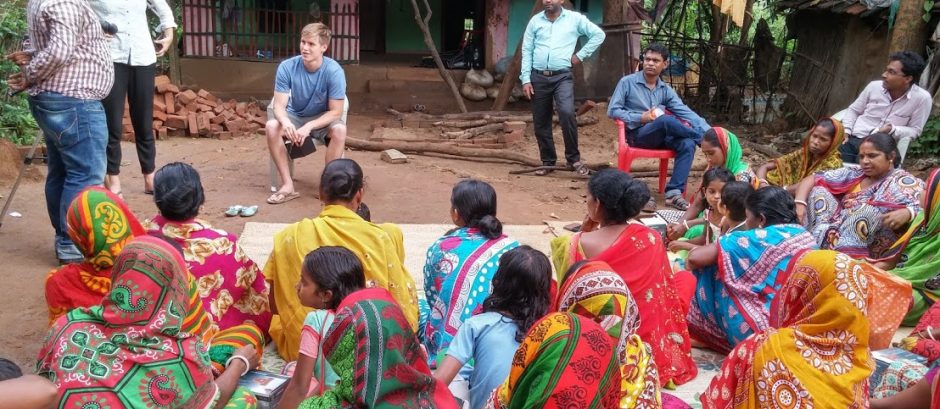
This summer was impactful to me in both ways expected and unexpected. Going into it, I thought the fellowship would have a huge impact on me emotionally, as the work I anticipated doing would put me in direct contact with people in underserved communities that face a variety of intersectional adversities. This was largely true, but I also grew in other ways, developing soft skills, along with technical and interpersonal skills. Better yet, I became much more in tune with myself as a person, my future aspirations, and what service means to me.
Doing action research gave me a unique perspective on how I can best serve others. One big takeaway is that my gifts aren’t best utilized working with people in a capacity where I work directly with the emotional needs of underserved communities and build relationships is the best use of my talents. Seeing the way someone like PJ interacted with people, it often felt like it came more naturally to him than me.
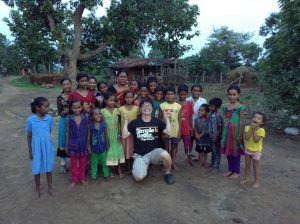
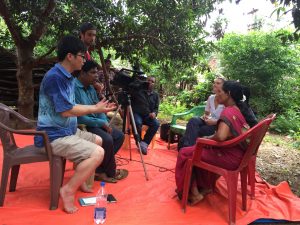
PJ has an astounding ability to connect with people across a language barrier
This doesn’t mean that I can’t work at the ground level with the poor, but I also think it rules out some potential careers, such as being a teacher or working with communities that are dealing with a disastrous experience. Instead, I think I can best use my abilities to serve the poor by serving in a role where I analyze and collect data, or develop processes.
During the fellowship, I discovered that I am gifted at developing processes and making intuitive decisions on the spot. After our first field visit, it became apparent that we weren’t going to be able to utilize some of the data collection methods we’d prepared in a time efficient manner and would have to completely rebuild them. At first this was discouraging, as we’d worked hard on the methods section of our research proposal and it was disheartening to throw a large chunk of it out the door. On the next field visit, I began developing new processes as we spoke to the engineer on the walk out to the site. I kept implementing these steps and noticed data improved. I was also getting through the important details faster.
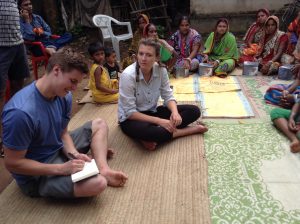
I nearly filled my notebook collecting data and writing interview questions.
Improving this data also helped with interviews by asking better questions because we were able to understand what might be unique about a certain location and discover better narratives to ask end-beneficiaries about. This required us to consolidate data and think critically about its meaning in a timely manner. Discovering such skills will be a major asset to me as I begin to make decisions about what to do vocationally.
One thing that I’ve come to appreciate from this fellowship is the importance of finding a job that will help me develop a skills that can make me an asset in creating social impact in the long-term. Coming back from India, I was very gung-ho about being directly in-touch with the social enterprise and impact capital sectors regardless of the capacity, but after seeing professionals at the GSBI accelerator and talking to former GSBFs, I’ve had second thoughts. Seeing the amount of technical skill and high level thought GSBI mentors provided to social entrepreneurs showed me the type of thinking and hard business skills that it takes to provide quality feedback to these organizations. Talking to Ashley Armstrong further helped me to understand this dichotomy, as she discussed the idea of developing wide skillsets before going into more specific sectors that might appear riskier to other businesses. It was especially important for me to hear this from someone like Ashley, who has done a lot of work in industries I’m interested in. This isn’t to say that I’m opposed to working for an SE or impact investing firm. The job would just have to be in a capacity that allows me to pursue my interest in economic data analysis. Ideally, this work would be related to some of my key learnings from the fellowship.
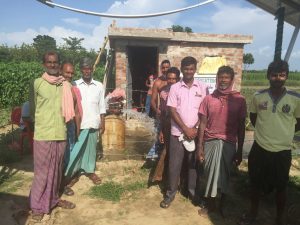
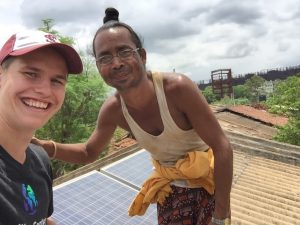
My biggest takeaway from this fellowship on a global perspective is the need for a sense of urgency when it comes to serving the global poor. Often times, there is a sense of caution when it comes to developing policies and programs to serve them, but oftentimes these people don’t have time to wait. This is especially true when it comes to climate change, which was already causing severe problems and uncertainty in some of the communities we worked in. One of the most impactful field visits we had was a in a community that had just received a solar irrigation pump. We learned that prior to receiving this pump, droughts in the preceding years had kept them from growing rain-dependent crops like paddy. This story, along with many others, touched me and taught me a lot about what is important to me.
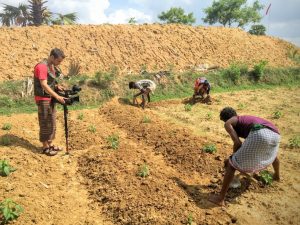
These farmers were already feeling the negative impact of climate change!
Aside from learning from constituents, I think it’s important to talk about how much I learned from our team of fellows. Working with Nate and Erika taught me so much about interpersonal communication, trying to understand the viewpoint of others, and also considering the emotional impact my actions have on others. Nate and Erika also helped me to discern my own skills by observing their gifts, whether it was Nate’s willingness to look out for the needs of others or Erika’s ability to communicate a complex thought in a tightly worded sentence. These relationships, along with what i saw in the field, helped me to reflect upon my view of self.
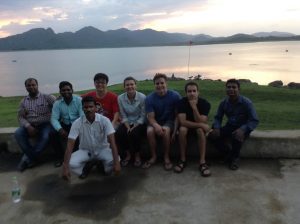
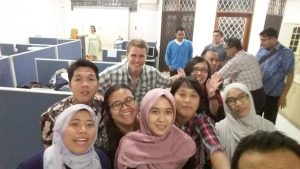
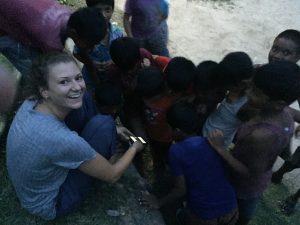
I learned many a ton from the people I worked with this summer. Especially the group we worked with in Odisha, picture here!
There was plenty of silence on this fellowship for me to fill with my own thoughts. Time away from 3g on multi-day visits to the field proved to be a godsend, as I was frequently forced to face myself and discern what was important to me. I spent much time thinking about my shortcomings and what actions to take to be a better team member. While I was far from perfect, I think that this time with my own thoughts proved crucial to my contributions to our work and relationships. Aside from this negativity, I engaged with thoughts I had about the communities we worked with, sights we passed by in the car, and the world at large. Confronting these issues made me think about my own life, beliefs, and what actions I can take vocationally to live a meaningful life. Ultimately, I learned to accept my shortcomings, embrace my beliefs, and also deal with uncertainty on a larger scale. This reflection has ultimately led to a newfound self-confidence and awareness that I previously lacked. While I don’t know where I’m headed next, I know where I stand in the long run. And in that, I find comfort.
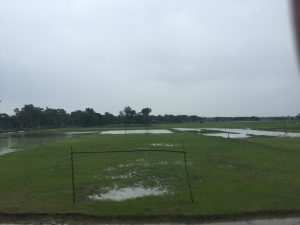
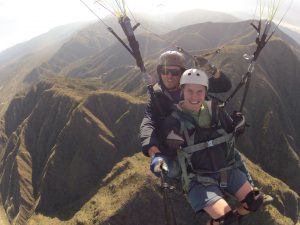
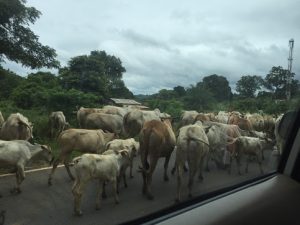
I spent many hours this summer looking out at landscapes like this one.
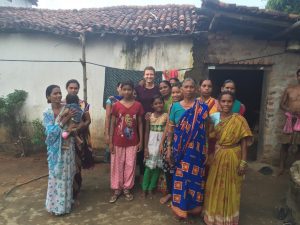
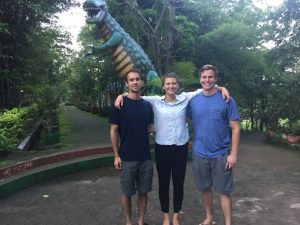 We’ve grown to become a family, which sometimes means we fight like a family. I don’t know what’s more frustrating – arguing with Erika or realizing that once in a blue moon she might actually be right (maybe that’s just the heat talking). That being said, I don’t know where I would be without these two with all the highs and lows that come and go in this fellowship. Having such a great team has definitely smoothed out the experience a thousand times over.