
Scared. Apprehensive. Excited. Nervous. My emotions were all over the place as I boarded the KLM Airbus. After spending the previous summer in The Gambia I had a general idea of what to expect when I landed in Uganda, but I was trying so hard to let go of my preconceived notions of Africa and the inevitable list of expectations my mind wanted to create. I couldn’t help but laugh because it didn’t take long before my senses were bombarded with familiar smells, sounds, and sights that reminded my body of what it was like to be in Africa- wafts of burning trash in the distance, rings of African music coming from car speakers, waves of hot, humid air filling my lungs, and bumper to bumper traffic consisting of taxi cars filled with people of all ages to the brim. While there were many similarities to my experience in The Gambia- “African time” was no joke, it was not unusual to see more kids than adults in any given day, people are generally more open to receiving guests than in America- it is safe to say my time living and working in Uganda was truly an authentic and immersive experience. It is still hard for me to articulate all of the feelings and emotions I felt while in the field, but one thing is certain and easy for me to say and that is that I am forever changed. One of the most underrated, yet priceless gifts anyone can receive (in my newfound opinion after traveling abroad these past two summers) is global engagement. It is a humbling reminder of life’s simple purpose- to love others without limits. Not every moment of global engagement consists of warm, fuzzy feelings, in fact most of it is uncomfortable, confusing, and challenging. However, I am certain that it expands your heart for others and gives you the opportunity to reflect on the importance of human relationships. Here are a few thoughts that I contemplated while on my own journey of global engagement:
Contradiction. My mind keeps going back to the word contradiction. My experience in the Ugandan village of Kasana-Luweero consisted of many contradictions. I saw both poverty and joy like I have never seen before. Infants sitting in sewage run-off with ripped t-shirts, snot dripping down both of their nostrils, playing with a dirty, ragged tire, all while smiling and laughing at each other. A blind person could have walked by, only listening to the children laughing and engaging in conversation, and he or she might suspect that they were playing in a grassy, well-manicured backyard. But, the reality was they weren’t. Their playground was filth. Every time Maggie and I would walk onto the village main road to catch a matatu (or taxi), go to the market to purchase groceries, or visit the town we would walk past these same kids.
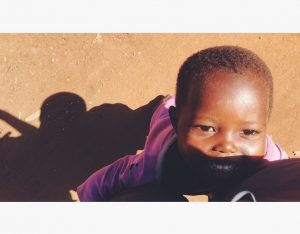
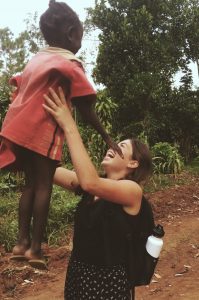
Each time during the day there was no father to be seen (he was most likely away at work), mothers were working together inside or directly outside the house (often times preparing meals or sweeping the compound floor, which was dirt), and multiple groups of kids playing with each other in the dirty streets (most likely because their parents could not afford school fees). It was a heart breaking scene to walk by every day. But amidst the poverty, there was also raw joy. My favorite memories are those with the village children. Walking to and from Shanti Uganda, we experienced children running up to us carrying smiles on their faces and genuine joy that exuded from their laughs and desire to be thrown up in the air by the Muzungus (a local name for a white person or foreigner). It was apparent that these kids, whom we quickly learned their names and befriended, suffered physically to some degree. Yet, within a world of hardship they found joy. Joy with each other and joy with the world around them. It was clear that the village kids had built a system of resilience for themselves. A skill that even some grown adults struggle to build.
Another contradiction prevails within the culture of childbirth. Many of the women we interviewed expressed their gratitude for Shanti Uganda’s ability to provide safe and respectful births. At first, Maggie and I were confused by the term “safe and respectful births.” We had a hard time conceptualizing what a disrespectful birth consisted of. Although we have never given birth, it is generally expected in the United States that all pregnancies should be treated with utmost caution, care, and compassion. However, throughout our interviews it became clear that in Uganda that is often not the case. Many pregnant women are abused at local hospitals and clinics. They are not allowed to show any signs of pain during childbirth and if they do, they are chastised and sometimes even physically abused. As a result, women who came to Shanti Uganda were relieved by the midwives’ acceptance of showing signs of pain and were encouraged by their quality of care. We interviewed mothers pre- and post- birth and sometimes even when they were experiencing contractions (always with their permission).
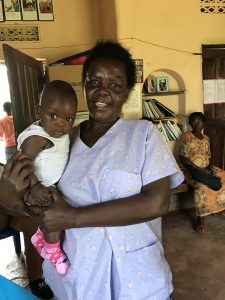
Even though Shanti Uganda explicitly tries to go show all mothers compassion and care throughout their pregnancies, many of the mothers were still reluctant to show pain. It is still hard for me to fathom that during one of the most painful events in a woman’s life, she is expected to be quiet and poised. But, witnessing the pride local women share for Shanti Uganda due to their ability to provide dignified births reemphasized what a privilege it is to have quality, respectful medical care. When I visit the doctor’s office, I don’t think twice about whether or not my doctor will chastise or abuse me, it is a given. It’s easy to pick apart the United States’ medical system and complain about certain qualities, but at the end of the day just having care that identifies the dignity of the patient and cares for the individual in a respectable manner is a great privilege.
While these are just two of the many contradictions I observed, they have taught me a lot about who I am currently and the person I want to become. I’ll start with the village kids first. I’ve known for a while that I want to work with kids. But spending time with the village kids in Uganda and the babies at Shanti Uganda, reignited my passion to nurture kids at a young age so that they grow up knowing they are worthy of a bright future and are motivated throughout their childhood to achieve the things other people tell them they can’t do. This realization is a win-win because at the same time I desire to inspire children from a young age, the village kids inspired me at such a young age. Joy is not a result of your circumstance, but rather it is a product of your mindset. I have also been inspired by the beneficiaries we interviewed at Shanti Uganda. Their horror stories about some of the healthcare experiences they have endured, motivates me to be the best healthcare provider I can be for those without quality care. I firmly believe that safe, respectable births, as well as all other medical procedures and services, should be accessible to all, even those in the rural villages of Kasana-Luweero, Uganda.