Starting my Vocational Journey

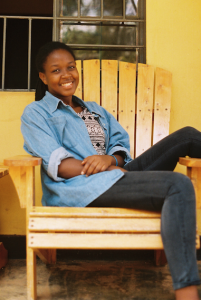
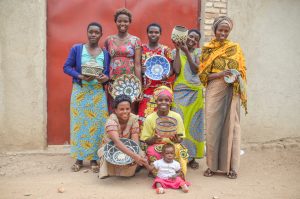
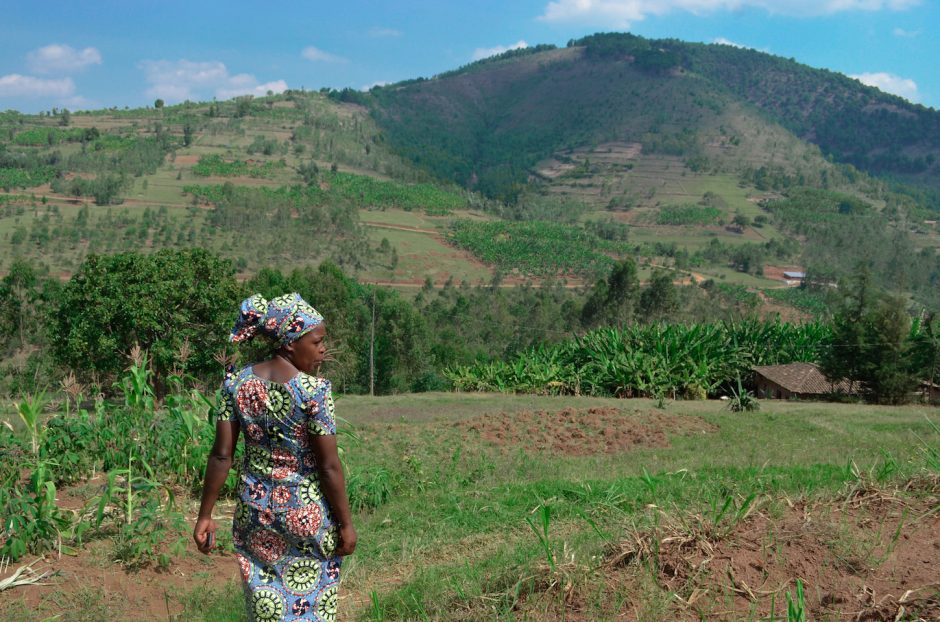
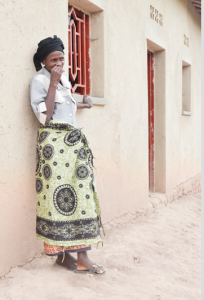
Nyirahabineza Restute, an AAA Artisan outside her home

As I mentioned in an earlier blog, I have always had a passion and interest in service and social justice. I think this is a quality in most students that apply for the fellowship and part of what draws them to work with social entrepreneurs. Reflecting on my time in Rwanda, I realized that while I was applying I was focused more on what the fellowship could do for me in the long run more than what I could do for the beneficiaries. Initially, I was dead set on working with an enterprise that was involved in maternal and child health, a topic I had always been interested in and wanted more experience in. I ended up with All Across Africa, an artisan enterprise that’s mission aims to economically empower women. Although I thought I understood the concept of economic empowerment it wasn’t until working with the women directly that I realized what a powerful impact this can have. Instead of providing the Rwandan women with a one time service or good, All Across Africa supported the creation of a livelihood.
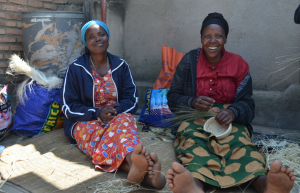
Two cooperative leaders (Speciose and Marceilline) at the dye center in the district of Muhanga

As part of the research in the field, we conducted artisan profiles that gathered anecdotes and stories about the artisan’s experiences before and after working with All Across Africa. Before having the ability to earn income, a lot of the women felt helpless. They wanted to care for their families while searching for better future for themselves and their children. I realized that the transition of their lives from before working with AAA and after was incredible. The women were now confident and respected leaders in the household and the community. This was a dynamic change I was not expecting to witness. My whole life, participating in service was rewarding but lacked the long-term shifts in society I really wanted to see. My placement with All Across Africa showed me that these shifts are possible, specifically through the development of women. I never considered myself active in the fight against gender inequality or particularly outspoken about women issues. My participation in the fellowship created this new passion for me to focus on helping women gain personal agency no matter what field of work I am in. Furthermore, as I mentioned earlier I started this process with the wrong mindset. Looking back I realized it was the field experience with the artisan women that changed my outlook on future vocation. Not only did I obtain this new passion but also I started to realize moving forward I need to focus on what I can bring to a job no matter the field. I believe if I enter the workforce with this framework in the end I will be happier because I am contributing something meaningful, which in return fulfills my vocational advancement.
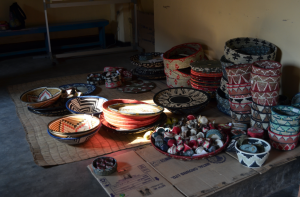
Some of the AAA products created by Artisans

This then brings me to the final part of the fellowship during the fall quarter class. Much of this time was focused on discussion about future vocation and the next steps we want to take after the fellowship. I expected to come out of this part knowing exactly what it is I want to do and participate in. The exact opposite happened, I became more confused. However, this confusion came with enhanced and difficult reflection. I started to realize that vocation was going to be much bigger than my first job. It is something that would partly define who I am as a person and how I want to live my time here. Due to this much broader recognition of vocation, I accepted this is something that will take me a long time to figure out. I hope to return to the world of social entrepreneurship and create change that shifts societies injustices.
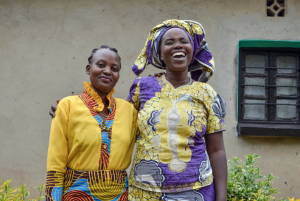
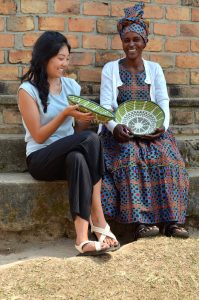
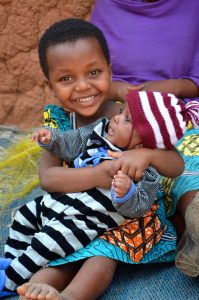
Mujawamariya & Natalie, two AAA artisans

Before being able to contribute meaningfully I need to build up skills, strengths I can later use. In the field of social entrepreneurship there is an abundance of passion, but so many different areas that could use more technical experience. I am excited to move forward and see where this takes me, and hope to maintain the constant self-reflection and awareness the fellowship has taught me to have.
 

Posted in Uncategorized | Leave a comment

Unexpected Friendships

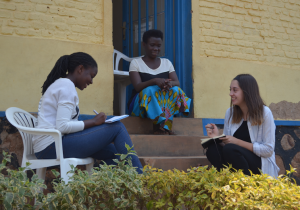
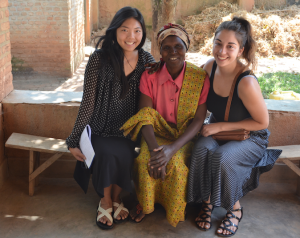
Haley and I with an AAA artisan after an interview

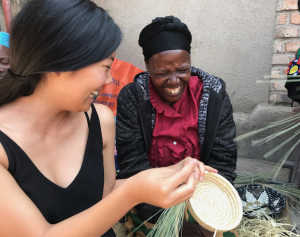
Haley learning how to weave from an Artisan

Agnes and I conducting an interview

Months in the classroom were spent preparing for time in the field, learning the ins and outs of social entrepreneurship and the companies we would be working with. A large part of this preparation consisted of trying to learn more about the culture we were about to spend two months in. When I found out I would be working in Rwanda, my first thought immediately jumped to the genocide. I think it is what most people first think of, especially when unfamiliar with the region. The role the genocide played in my interactions with artisans and overall time in Rwanda is still very difficult to talk about. Partly because of the gruesome events that occurred but another is people in the country want to move past it and show others the beauty in Rwanda.

I knew that working in a developing country would mean confronting degrees of poverty and marginalization, but I was not prepared to confront the truth of such an inhumane occurrence. Part of our work with the social enterprise was interviewing artisans about past experiences before working for All Across Africa. Almost all of these interviews lead to different anecdotes about personal experiences in the genocide. Most describes moments of watching friends and family being killed in front of them, or losing children from starvation while trying to escape into refugee camps. Hearing their experiences was one of the most moving parts of my time there because they shared with us such personal stories when they didn’t have to. I was amazed with the strength of the women to reflect upon such traumatic events and label it as a tragedy but also as something that they can grow from. Furthermore, I was even more amazed with the sheer joy each artisan had while meeting with us. Although they lived through something so horrific they still have an immense appreciation and love for life and other people. In fact, every single person I met in the country greeted me with love and a sense of welcoming. It is important to reflect upon how the genocide impacted my time in Rwanda because I still don’t think I have understood it completely yet. Despite this, I came back wanting to share with everyone how impressive the country and people are. The relationships I made in Rwanda were what really showed me how beautiful the country is despite its history.

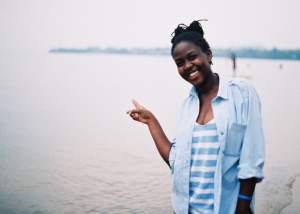
Agnes at Lake Kivu

With that being said, one of the most treasured relationships I will always hold onto is that with our translator Agnes. The All Across Africa staff is all men and this was an interesting environment to be working in. Haley and I got along well with everyone but having another woman of the same age work with us made it easier. Although I felt a welcoming love from all of the artisans, there was a true bond of friendship formed with Agnes. We might come from different places and have complete different backgrounds yet the way I was able to interact with her was how I would with a friend from home and it some aspects even better. It was amazing to see as the weeks went on how cultural barriers started to disappear and we began to learn from each other without any judgment. Growing up we are hopefully taught to respect differences and understand others point of view. I have always tried to do this, but my relationship with Agnes helped me realize prior to the fellowship I had been surrounding myself with people similar to me. It can be easy to respect differences and understand others when they come from almost identical backgrounds. Part of the reason why our friendship was so exciting was because we brought such different experiences and understanding to the table. Whether we discussed heavy topics such as religion and politics or fun ones like food and relationships it was always interesting to see what we agreed or disagreed on.

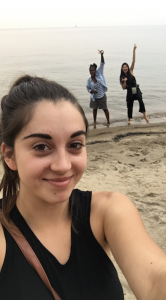
Selfie of me, Agnes, and Haley at Lake Kivu

A lot of my respect and love for Rwanda came from my relationship with Agnes because she was able to show me a world outside of the social enterprise. I had a great experience with All Across Africa and I don’t think it will be my last time working within the field of social entrepreneurship. Furthermore, my exciting relationships with Agnes and the artisans are what have started to make me think about future vocation. I am still wrestling with how I will move forward from this fellowship but the open conversations and experiences I had in Rwanda made me want to create similar relationships between other people. I learned the most when I engaged thoughtfully with different people within the country and I think our country and others could benefit from these honest conversations. Hopefully I can accomplish this by continual work with developing countries through some form of international development or relations.


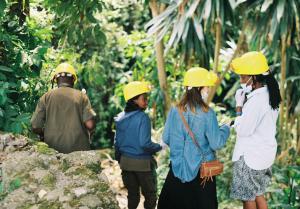
Agnes and I right before entering bat caves on our vacation

Agnes outside our home in Kigali


Posted in Uncategorized | Leave a comment

In Country Experience

 “Any woman who understands the problems of running a home will be nearer to understanding the problems of running a country.”
                     -Margaret Thatcher

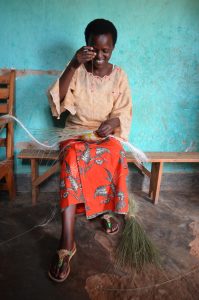
All Across Africa weaver showing us how the baskets are crafted

Reflecting upon my time and work in Rwanda there were many instances that made me stop and think. Memorable moments were created from the experience of seeing and visiting homes in a rural area, which gave me a picture of living that I hadn’t had before, visiting the genocide memorial, an experience I will probably never completely wrap my head around, and working in a cross cultural company with people from such diverse backgrounds. Although there is something to learn from each experience I have found that my time spent collecting artisan profiles about women has had the greatest impact. Haley and I set out with a goal to conduct interviews with individual artisans weekly to discover more about the struggles they have had to overcome in life, their jobs as weavers with All Across Africa, and how weaving has improved their livelihood. As we gained more experience interviewing the women we gained the confidence to ask questions that revealed more about who the women really are and how they view their life.

Haley admiring baskets weaved by artisan Concilide

Just this past week, one of our last weeks in Rwanda, we met with a cooperative leader named Concilide who shared her story with us. To me her interview encapsulated what we were truly learning from all these weavers, what it really means to be a woman both generally and in Rwandan society. More specifically, how their gender has defined their lives for the better and the worse. Unlike most other women we talked to she didn’t grow up in extreme poverty but was rather well off thanks to her fathers various businesses. What struck me was her confession that although having the ability to pay for school her father prevented her from continuing past the eighth grade. She described to us how he seemed ignorant of the value of education and that as a girl he didn’t believe it was worth the money. Rather he wished to see her married as a form of economical exchange. Soon she was married but lived in a very poor way because the genocide took away her husbands job and she wasn’t working. She had several kids to care for including a niece she adopted because her sister passed away from HIV infection. Luckily, Concilide learned how to weave and became very successful working for All Across Africa. She has developed her home, feeds her family, clothes them, and takes pride in her ability to send her eight children to school. Even her daughters have been able to complete high school.

Weavers gathered at All Across Africa basket house, a place to finish orders for the week but also an opportunity to socialize and build a stronger community

From this point in the interview, I asked her about what she thinks of women’s role in Rwandan society. How does she feel now that as a woman she earns the family income and cares for everyone, whereas before she was prevented from advancing due to her gender? Her answer to these questions is what I think will stick with me and helped me appreciate every other artisan we have talked to. She started by explaining, people in Rwanda used to call women, “the heart of the home”. Which at first I took this as expressing a stereotypical gender role but she explained to us it is something that makes women powerful. Concilide explained when you give a woman money she spends it well, because she knows what to do with it. Women are responsible. If you give them a chance to do something with their lives they will improve, opportunities are created. Not only within the household but also for the society as a whole. Rwanda has seen great strides in development over the past few years and she attributes this to their recognition of women and the government’s priority to give women a sense of agency. She said we think quickly, communicate well, and understand every situation. Concilide concluded by saying, “I was hurt I didn’t get a chance to finish more school because of my gender, but weaving has given me and other women a chance to be powerful and create a better life for us and our children”.

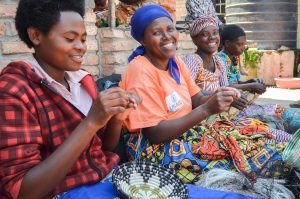
A strong and energetic group of weavers from cooperative Copdar with All Across Africa orders

I think that Concilide’s response represents the power of enterprises like All Across Africa. It also speaks to the Rwandan government who are working to empower women. Women have the capability to do so much for a family, a community, a country, and a nation. Concilde and the other women of All Across Africa have faced struggles I couldn’t even imagine going through, yet they have the courage to look forward towards improvement. All of these weavers are doing amazing things, because they have been given the opportunity to do so through economic empowerment. They are breaking conventional social roles for the better.

Rwanda’s future female leaders and learners

I see these artisans as not only beneficiaries but also entrepreneurs themselves, constantly innovating ways to move ahead. Being given the chance to work with All Across Africa and the weavers has reminded me that gender dictates certain areas of life but that given the opportunity it can be used as a powerful tool towards development.

Posted in Uncategorized | Leave a comment

What Brought Me Here

“The best way to find yourself is to lose yourself in the service of others”- Mahatma Gandhi

The moment I was accepted into the Global Social Benefit Fellowship was a moment that marked the start of a new chapter for me. This is something I have been searching and yearning for in my past twenty years. Growing up for me was relatively easy. I have an extremely loving family who always motivated me to work harder and discover my true passions. Despite all the amazing aspects of my childhood that I will always be grateful for, I was constantly searching for something more. I had the curiosity to go different places and try new things; I wanted to embrace change.

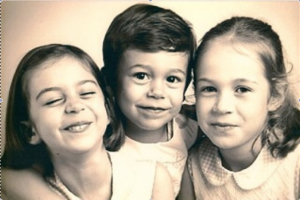
Portrait of me (left), younger brother (middle) and older sister (right). I was caught laughing mid photograph.

  Growing up as a middle child and in the east coast shapes a lot of who I am today. I was a sassy and dramatic girl who was always fighting to be noticed between my two siblings. I didn’t want to be stuck behind the scenes, and wanted to establish a place within the family unit. Although at times this might have been difficult for my parents, I am thankful to this aspect of my personality because it has helped pushed me to further limits. Furthermore, being from the east coast gave me even more of a kick. As some argue we are slightly more aggressive, which I wasn’t even aware of until moving across the country to California. I thought everybody was like that. These traits played a big role in different aspects of my life. The first was in my passion for horseback riding.

Photograph of me riding in a show jumping competition in Wellington, FL

As a young kid I started horseback riding and immediately fell in love with it. This passion carried me through my years of education. When things got difficult at school I knew I always had this safe haven. I spent hours after school at the barn training, and working hard. The sport taught me discipline, and the importance of patience and dedication. At times the dedication was exhausting but it also brought me incredible joy. Among all the other things horse back riding gave me it also introduced me into the world of community service. For a while I volunteered at a therapeutic riding center for kids with different disabilities. It was the perfect way to combine my love for horses and helping other people. Although I always liked engaging in service and it was something I recognized brought others and me happiness, it wasn’t long lasting or sustainable. It felt like there was more that could be done.

The non-profit I volunteered at throughout high school

My enjoyment for service also brought me different travel opportunities. Travel was something that was always a big part of my life. From a young age I was always trying to find different ways to leave Massachusetts and discover new places. When I was eleven years old my mom sent my sister on a service trip to Costa Rica to expose her to new environments. I remember begging her to let me go on a program too and travel alone. The day she let me apply to that program was the day I knew I would never stop traveling. From there I kept looking for new opportunities whether it was a language immersion in Spain or an art trip to Eastern Europe. I was hungry for exposure to new places. This is largely why I chose to go to school in Santa Clara so far away from home. I wanted to push myself to live somewhere different without a family close by to always rely on.

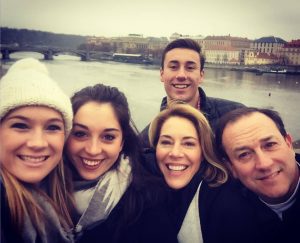
A photograph of my entire family visiting me abroad in Prague, Czech Republic. The photo was taken on the Charles Bridge.

Starting freshman year at Santa Clara so far away from home was not an easy feat. It was the first time I understood the true meaning of homesickness. I was no longer the rambunctious middle child, nor did I truly understand the difference in California lifestyle. The things I knew I could hold onto were my love for travel and service. I immediately started volunteering at different organizations such as the Santa Clara senior center and the Ronald McDonald House. I wanted to continue to help others and learn from the Jesuit tradition. I declared a psychology major, which seemed like an area of study that would encourage my passion to help others while trying to understand their behavior. I was enamored by the ability to quantify and measure observable behaviors and even feelings. As I continued through my psychology major I was looking for more ways I could get involved with social change. One of the greatest gifts California has ever given me is an increase in environmental awareness. I was suddenly very passionate about becoming more educated in this field and using this as a means for promoting change. This led me to an innovation for climate justice class where I first heard of the fellowship and the concept of social entrepreneurship. Social entrepreneurship was a field that gave me a chance to expand my love for service and research. I instantly registered for another class to explore the field more and it taught me the most practical values I have learned yet at Santa Clara. It encompassed not only the values behind my Jesuit education but also the innovation of the Silicon Valley.

Everything from the social impact, quantitative research, and ability to push myself into new environments attracted me to the fellowship. For the next nine months I plan to employ my enthusiasm and new knowledge to create a worth wile experience for my  social enterprise, All Across Africa and myself.


Posted in Uncategorized | Leave a comment