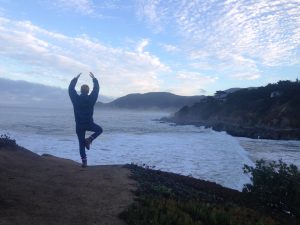
It’s unbelievable how much you can change in such a short amount of time when you put yourself in new and challenging environments. Two years ago, I had never been out of the continent and was in a blissful yet empty state of unawareness. One year ago, I had just returned from the most incredible two months of my life and was in a euphoric state of idealism. Now, I have experienced one of the most difficult yet growth-inspiring periods of my journey and am in a painful and perplexing state of hope. A year from now, I will be back in my African home, perhaps in a peaceful state of realism and rich acceptance. Two years from now, I will be returning from an extended time of travel to enter a graduate program that will perhaps lead me to an exciting state of inquiry and passion.
Thinking about the constantly changing landscape of my life gives me the perspective to view each difficulty as a catalyst rather than a catastrophe. Stepping back from the chaos of my present state, I can see that in the long run, even the painful parts of my Global Social Benefit Fellowship experience have profoundly affected me and my vocational decisions in invaluable ways—ways that having an easier experience could not have.
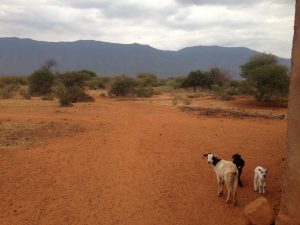
First of all, I learned that the method of impact that fits me best is direct connection with the population being served. One of my big questions entering the fellowship was whether “direct” or “indirect” impact work would better utilize my skills and passions for the advancement of a more just world. I also wondered if there was one particular method of development work that was superior to the other overall. Having experienced direct service in a non-profit last year, and impact assessment for a social enterprise this year, I can say that comparing the two is like comparing apples to oranges. I would never be able to say which strategy of affecting positive change is better or more powerful, and I don’t know that anyone can with certainty. All I can say is that no non-profit, social enterprise, or traditional business has the perfect model, but that I have the utmost respect for multiple strategies of impact work and have witnessed firsthand the positive effects of them all. While I cannot make any blanket statements about models of impact, I can let my own emotional and intellectual responses guide me towards where I best fit in the broad range of global justice work. And for me, I want to be directly working with the people I am serving. I want to be living in a village together. I want to be sitting on the ground sharing a bowl of rice together. I want to be laughing and speaking the local language together.
I was hesitant to admit this for a while. It felt like a somehow “immature” or “elementary” picture of instigating change. I believed that in order to devote my life to global improvement, I needed to find the absolute most impactful way to spend my life, no matter what that may be, where that may take me, or how that might make me feel. But, obviously, there is not one clear most impactful way to spend one’s life. Even if there was, there would be no way for us to objectively measure that. And most importantly, the personal fit and passion one feels for their chosen career is what makes whatever they’re doing that much more impactful for everyone involved.
Making this realization felt like a weight being lifted off of my shoulders. I no longer have to pressure myself to find the best job making the most impact at the perfect organization. I just have to find a fitting job making a positive impact at a good organization. It will be my the alignment of my own talents, passions, and attitude with whatever I am doing that will turn a good career into a deeply impactful vocation.
In contemplating these vocational questions, I have determined the next two major steps in my path. First, I will return to Starfish International in The Gambia in July right after I graduate. Pending funding, I will stay there between 3 and 12 months doing volunteer coordination, teaching, implementing a social impact assessment, and helping with the public health clinic. After that, I would like to begin graduate school, and am especially interested in the combined MPH (Masters of Public Health) and LCSW (Licensed Clinical Social Worker) program at UC Berkeley. I believe that this unique program would perfectly integrate my global health justice perspective with my desire for personal connection in service. Specifically, I have recently become inspired to work with counseling underserved LGBTQ+ youth. After experiencing firsthand this summer the effects that intolerance towards one’s identity can have on one’s mental health, I have pledged to do everything I can to ease this burden for others. This calling is the perfect example of painful experiences affecting my life and future in positive ways. I look forward to seeing how I can continue to turn my hardships into strength and passion.
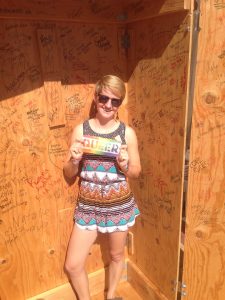
My experiences in the Global Social Benefit Fellowship brought me from a myopic idealist to a hopeful realist. There is grieving involved in this, but as Father John wished us all at our final dinner, “may you have a life full of grief and growth”. I no longer believe that simply having the mission to create positive change in the world is actually enough to do that. I no longer believe that there is one clear correct path for us to travel upon. I no longer believe that everyone will accept me for who I am. What I do believe is that there is good in the world, that I will find my vocation, and that I am strong.