The plan.
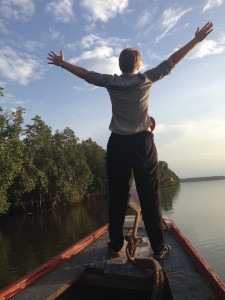
I thought I had it all figured out. I thought I knew exactly who I was and where I was going. I thought I knew what I wanted my life to be like.
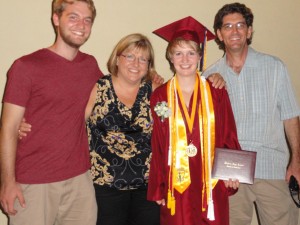
I grew up in a picturesque American family: I lived with my mother, father, brother, and two cats in a middle-class suburb outside of Sacramento, CA. I took piano lessons, played soccer, attended church, and excelled at school. My childhood was exceedingly normal, loving, and happy.
I had only travelled outside of California a handful of times and had never been out of the country. I said I didn’t want to travel—that I had everything I could ever need or want right here. I was set on being pre-med at a big-name college, and getting through my education as quickly as possible so that I could return to the Sacramento area, get settled in a career, and start a family.
Before starting at Santa Clara University, I’d heard people say things like “Life’s a journey” or “The only constant is change” but I never really liked those sayings because I thought I knew who I was and where my life was going. Spoiler alert: I DIDN’T. And I couldn’t be happier that I was so blatantly wrong.
I want to tell you about some of the journeys that brought me here: the first is philosophical which opened me up to the rest, which are real, physical, journeys. And more importantly, I want to share with you how each of these journeys profoundly changed me from the person I was to the person I am and brought me here.
The disruption.
My first major journey was a philosophical one. During my first year, I took the class that I still consider to be my most life-changing class at SCU. It was my Honors 20 Class: Existentialist Philosophy, with an incredible professor and mentor, Dr. Lawrence Nelson. Every Monday, Wednesday, and Friday, I would sit around a table with 16 other engaged Honors Students and Dr. Nelson, discussing the controversial works of people like Camus, Sartre, Nietzsche and Heidegger. I would walk out of class each day with my mind wonderfully blown. It’s hard to explain just how this class changed me, but let me just say that both myself and the people around me perceived a transformation. The person I was on the first day of class was afraid of the future, afraid of freedom, and afraid of change; the person I was on the last day of class was excited about the unknown, empowered to live freely, and a philosophy minor.
At the same time, I was getting increasingly involved in SCCAP (Santa Clara Community Action Program) on campus and was realizing more and more that service was really what fed and sustained me. I started to dabble more in the activist groups of SCCAP as well and began to question the structural social injustices and root causes of many of the symptoms of poverty we were observing in the communities we served.
The drive.
A year later, I had the opportunity to embark on a journey that delved deep into one of these social injustices which I knew very little about: immigration. I spent 8 days on an Ignatian Center Immersion trip to Tucson, Arizona with 7 other students learning about the complex issue of immigration and all the many implications of its problematic system. We met with a diverse collection of individuals ranging from humanitarian aid organization members to lawyers to border patrol officers to undocumented individuals to business owners. While the stories and methods were different, the overarching message was the same: immigration reform, now! I can’t say that this trip necessarily made me want to spend my life fighting for immigration reform (though it certainly will inform my voting), but I can say that this trip made me want to spend my life fighting for something. I was inspired by the numerous individuals devoting their lives to their passion and wanted to find that passion of mine and devote my life to it. The person I was on that first day of the trip was unsure about my immigration views and reluctant to look deeper into social justice issues; the person I was on that last day of the trip was participating in an expressive action for immigration reform and on fire for social justice, no matter how difficult it may be.

The passion.
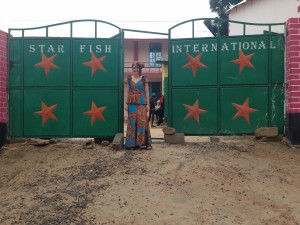
I took the biggest journey of my life last year. Through the Global Fellows Program and my Johnson Leadership Stipend, I spent 8 weeks teaching and serving at Starfish International School in The Gambia, West Africa. Starfish is a non-profit dedicated to building an integrated school for girls that educates, empowers, and teaches important life skills while simultaneously benefitting the community. Those 8 weeks were the best in my life. I learned to find the peace and beauty in each present moment and appreciate life and connections with others in a new, more meaningful way. I was inspired and energized every day by teaching my beautiful, brilliant, and hard-working students. I felt more loved by more people than ever living in my community of Lamin Village. My understandings of what privilege, service, and social justice meant were transformed through developing profound connections with the individuals I was serving. To show a bit of what I mean, I’ll share a story and reflection from my last summer’s blog, this is one is about the “day-in-the-life” experience I had:
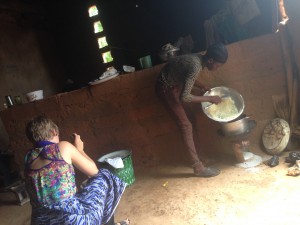
“Adama had fried 2 fish and then we started pulling the meat off from the bones to prepare to make fish pies. Adama and Binta sell about 60 of these fish pies at Starfish for 2-3 dalasis (about 4-7 cents) each, making approximately 150 dalasis ($4.29) a day (minus whatever it costs to make the pies) to support their family. I don’t want to sound like I pity these girls when they are learning hard work and self-sufficiency, thriving in their education, and living in such a loving community, and I really don’t—their amount of money does not define their well-being, much less who they are. But that does not mean that it wasn’t mind-boggling for me to do the math and see that a whole family can spend hours to earn the same amount that Americans throw away daily on a cup of coffee. Of course I’d heard these statistics countless times before, but actually walking in the shoes of these people is a whole different story. I could just as well have been born into any one of my Gambian brothers and sisters’ families instead of my own just as they could easily have been born into mine. We do not choose our birth and we do not choose our privilege. Yet because of that fateful roll of the dice that determines where, when, and in which body we are born, we immediately have different advantages and disadvantages. Working side-by-side her family and experiencing firsthand the vast income inequality that exists in the world was such an illuminating lesson that no textbook or lecture could have taught me. I now realize more than ever what an immense amount of privilege I have in this world. Not only was I born into one of the safest, wealthiest, freest countries in the world, I was also born with a loving family, a safe neighborhood, a stable family income, light skin, a healthy body, and the list goes on and on. Sure, I’ve worked hard in school and done my best to secure future opportunities for myself, but I’ve only been able to get these opportunities because I’ve had the family and family resources supporting me all along. I felt that many of my students at Starfish were actually more naturally intelligent as me (they were SUCH fast learners!) but because of their other daily responsibilities that limit the time they can devote to their studies, the limited resources they have that may prevent them from receiving consistent schooling, and the overall lack of top-notch education in The Gambia (other than Starfish), these girls have received nowhere near as much knowledge as me. While their IQs are likely equal to mine, they’re worrying about not being hungry the next day while I’m worrying about whether to go to graduate school or medical school. This is not to say that my life is objectively better than these girls either. I have really come to believe that suffering is suffering, and joy is joy, no matter what causes it. And while I feel lucky to have the equality, freedom, and basic needs provided in the U.S., I also very much envy the sharing community, lack of prejudice, and lack of materialism in the Gambia. It seems to me that if we could combine the technological and political development of the U.S. with the social and emotional development of The Gambia we would have the perfect society.”
Through experiences like this, my life goals and vocation completely changed to be fully centered on bettering the lives of my fellow humans. And most importantly, I gained a second family at Starfish and feel so blessed to be continuing to work with them as their Assistant Volunteer Coordinator. The person I was on that first 33 hours of travel was anxious, selfish, fearful, and had never been out of the continent; the person I was on that last 33 hours of travel was full of inner peace, compassionate, empowered and may very well end up living in The Gambia.
The perspective.
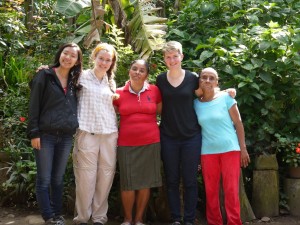
I never would have thought that anything could build off of that incredible of an experience, but then I had the opportunity to attend another Ignatian Center immersion trip to Nicaragua this past December with 10 other students. This time, I had the extra privilege of being the student leader for the trip and through engaging in extended training sessions with other trip leaders, learned a lot about effective, communicative, and reflective leadership. The trip was a whirlwind week learning about the history, politics, economy, and coffee industry of Nicaragua, with the highlight being spending two days in El Sontule, a rural village in the mountains of Northern Nicaragua which functions as an organic, fair-trade coffee cooperative. The bonds formed with our host families were extremely meaningful and led us as a group to want to fundraise for a scholarship for a student in that village- we are hosting an Ethics of Coffee and Chocolate event on campus in two weeks to do so. The other most significant part of the trip for me was realizing how travelling to one place can help me learn about another place: I felt I viewed some of the issues in The Gambia in a more enlightened way after seeing similar struggles in Nicaragua. In fact, it was this realization that led me to apply for the Global Social Benefit Fellowship rather than want to return directly to The Gambia this summer. I realized that the perspective and skills that I gain with each new experience would only add value to my work with Starfish. The person I was when I agreed to be an immersion leader was ignorant about much of Nicaragua’s story, narrowly focused, and unsure of my leadership style; the person I am now is planning an event to educate campus about Nicaragua, aware of a more global picture of interconnected social justice issues, a much more confident leader, and even a bit better at Spanish!
The future.
And the journeys continue. After I graduate, I’m hoping to use the skills I gain through GSBF in order to return to Starfish in The Gambia to spend one year conducting a social impact study there. While I’ve only been in GSBF class for 2 weeks, I can already tell that the social entrepreneurship model of creating positive change is going to transform my understanding of service and global relationships. I believe that the critical research focus of GSBF will integrate into my prior international service experience to help me gain a more complete perspective of how best to address issues of global poverty and injustice.
I never would have thought I would be doing any of this. My life is more exciting, meaningful, and fulfilling than I ever would have thought. I no longer view my life as a checklist that I have to follow, I see it as a canvas that I get to paint however I want. For me, I know that this will include mutually beneficial service to create a more humane, just, and sustainable world and I am excited to see how my next journey with Solar Sister changes me.